

CLINICAL QUESTION
Does use of frailty scoring in older adults help predict hip fracture outcomes?
EVIDENCE-BASED ANSWER
Frailty scoring is recommended for adults older than 70 years hospitalized for hip fracture to aid in shared decision-making with patients and family members. (Strength of Recommendation: B, meta-analyses of cohort trials and subsequent cohort trials.) Hospitalized adults older than 70 years with hip fracture and frailty have an increased risk of mortality and complications, longer hospital stays, and poorer functional status at discharge vs patients without frailty. In patients with frailty, cardiovascular disease, respiratory complications, and multiorgan system failure contribute to excess mortality after hip fracture.
EVIDENCE SUMMARY
A systematic review and meta-analysis of 22 cohort studies investigated the prognostic significance of frailty scoring in 74,837 patients admitted for hip fracture. Studies were conducted in 11 countries, used 15 different frailty scoring tools, and included patients who were mostly older than 70 years. Frailty was defined differently in each of the scoring tools. The prevalence of frailty across the studies ranged from 6.5% to 80.7%.1
Overall, hospitalized patients admitted with a hip fracture who were deemed frail had a higher risk of mortality than patients without frailty (12 trials; n = 68,081; adjusted odds ratio [OR] = 1.87; 95% CI, 1.44–2.44; I2 = 85.5%). Patients with frailty also had increased rates of perioperative complications (six trials; n = 60,001; adjusted OR = 1.37; 95% CI, 1.15–1.63; I2 = 77.4%), longer hospital stays (two trials; n = 731; unadjusted weighted mean difference = 2.59 days; 95% CI, 1.82–3.36; I2 = 0.0%), and greater likelihood of discharge to a location other than home, such as a nursing home, transitional care facility, or other long-term care facility (five trials; n = 2,287; unadjusted OR = 4.42; 95% CI, 1.54–12.69; I2 = 93.7%). Sub-analyses found no difference in results with retrospective or prospective study designs, follow-up longer or shorter than 6 months, or between the two frailty scoring systems.1
Researchers graded eight studies to be of good quality and 14 studies to be of fair quality. No evidence of publication bias was found. The authors identified lack of information regarding the type of hip fracture as a key limitation.1
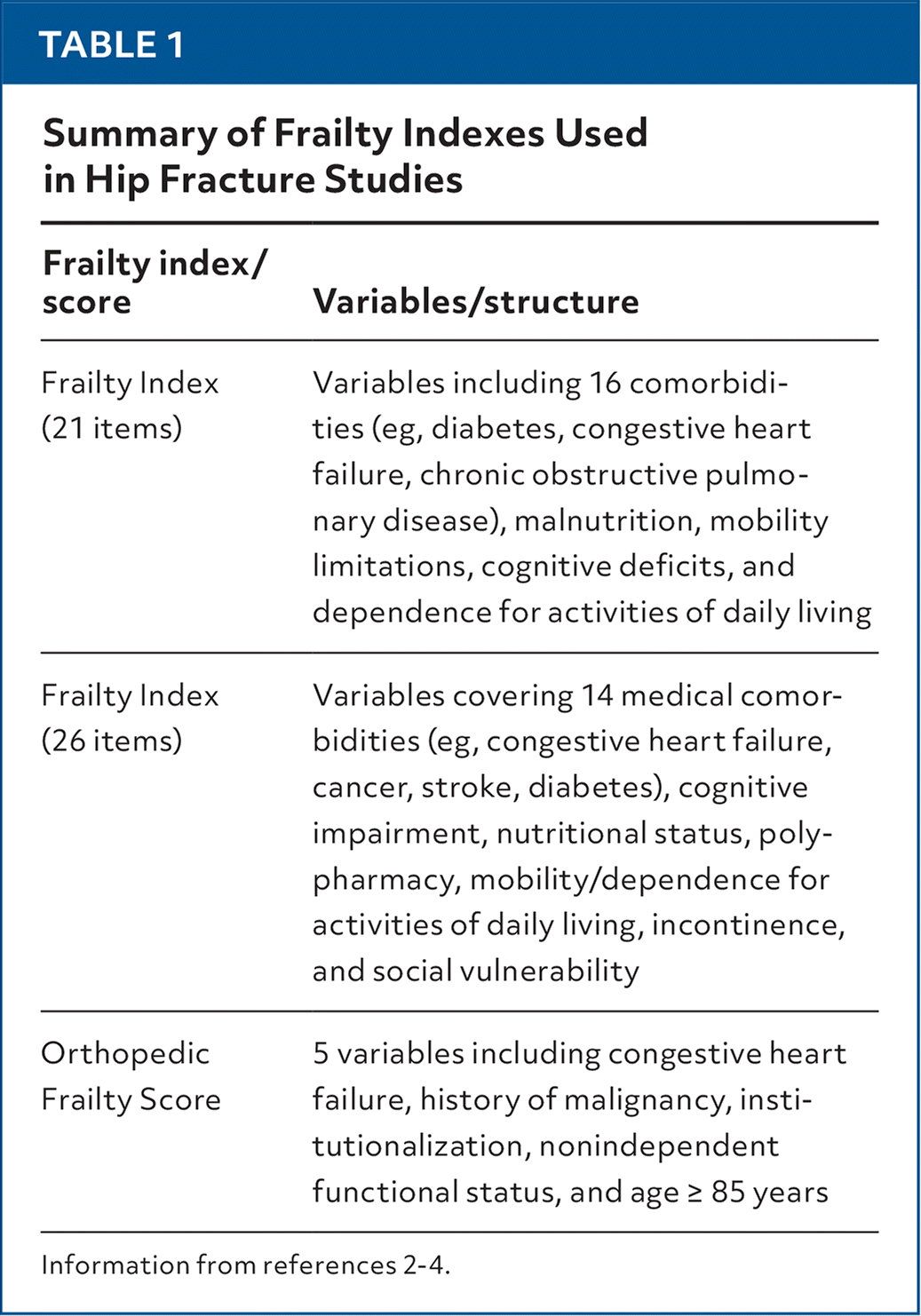
Two prospective, observational, cohort studies in Italy examined the association between frailty and poor functional outcomes after hip fracture requiring surgical repair.2,3 The first study (n = 988) evaluated patients 65 years and older (median = 84.9 years) with a proximal hip fracture admitted to a single university hospital in Monza, Italy, between 2011 and 2019. Researchers assessed frailty using a 21-item Frailty Index2 (Table 12–4).
TABLE 1. Summary of Frailty Indexes Used in Hip Fracture Studies
| Frailty index/score | Variables/structure |
|---|---|
| Frailty Index (21 items) | Variables including 16 comorbidities (eg, diabetes, congestive heart failure, chronic obstructive pulmonary disease), malnutrition, mobility limitations, cognitive deficits, and dependence for activities of daily living |
| Frailty Index (26 items) | Variables covering 14 medical comorbidities (eg, congestive heart failure, cancer, stroke, diabetes), cognitive impairment, nutritional status, polypharmacy, mobility/dependence for activities of daily living, incontinence, and social vulnerability |
| Orthopedic Frailty Score | 5 variables including congestive heart failure, history of malignancy, institutionalization, nonindependent functional status, and age ≥ 85 years |
Read the full article
Get immediate access, anytime, anywhere.
Choose a single article, issue, or full-access subscription.
Earn up to 14 CME credits per issue.
