The baby boom generation will place large demands on the Medicare program and the U.S. health care system. These demands may be extended by a large legal immigrant population that will become Medicare-eligible soon after the baby boom generation does. The U.S. health care system should be prepared for sustained stress from this aging population.
The aging of the baby boom generation or age cohort (born 1947 to 1966) will result in a disproportionately large segment of the U.S. population being older than 65 years beginning in 2012.1 The sizable effect the aging of baby boomers will have on the health care system may be extended into the future by legal immigrants, who account for almost one half of the net annual increase in the U.S. population (see accompanying table).2
Components of Change in the U.S Population, 2000 to 2003
| Population | Annual average (million) |
|---|---|
| Natural increase* | 1.6 |
| Net immigration increase | 1.3 |
| Net change | 2.9 |
*—Births minus deaths.
Information from reference 2.
The age distribution of these new immigrants,3 when compared with that of the general population in 2002,4 shows a rela tively large group of persons between 25 and 44 years of age, who will become eligible for Medicare after the baby boomers do (see accompanying figure).3,4
Figure. Age Distribution of Legal Immigrants and the U.S. General Population, 2002
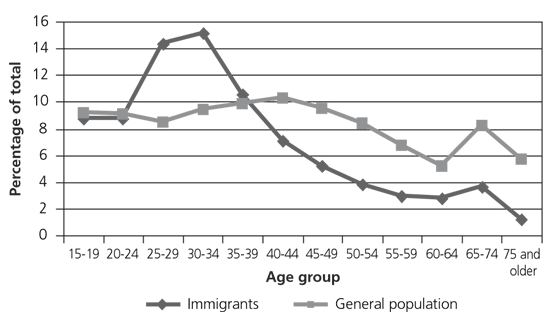
Age distribution of legal immigrants and the U.S. general population, 2002.
Information from references 3 and 4.
The future population of the United States will include more older adults, as not only the baby boomers, but also these new immigrants age. An increased need for medical care by an older population probably will continue for a longer period than was anticipated.