

The Committee on Practice Bulletins–Obstetrics of the American College of Obstetricians and Gynecologists (ACOG) has released a practice bulletin on screening for and managing hemoglobinopathies during pregnancy. Practice Bulletin Number 64, “Hemoglobinopathies in Pregnancy,” was published in the July 2005 issue of Obstetrics & Gynecology.
The ACOG recommendations, which are based on good, consistent evidence, include the following:
- Persons of African, Southeast Asian, and Mediterranean descent are at increased risk of carrying hemoglobinopathies and should be offered screening and genetic counseling. Figure 1 is an algorithm for the antepartum evaluation for hematologic assessment of persons from high-risk groups.
- Appropriate hemoglobinopathy screening should include a complete blood count and hemoglobin electrophoresis. Solubility tests alone should not be used as screening tools.
- Parents at high risk of having a child with sickle cell disease or thalassemia should be offered genetic counseling, and a prenatal diagnosis should be obtained through DNA analysis of cultured amniocytes or chorionic villi.
Figure 1. Antepartum Evaluation for Hematologic Assessment of Persons from High-risk Groups
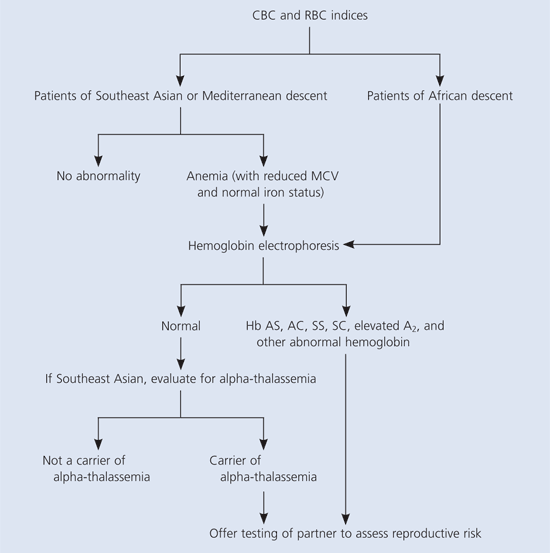
Algorithm for specialized antepartum evaluation for hematologic assessment of patients of African, Southeast Asian, or Mediterranean descent. (CBC = complete blood count; Hb = hemoglobin; MCV = mean corpuscular volume; RBC = red blood cell.)
Adapted with permission from American College of Obstetricians and Gynecologists. ACOG Practice bulletin no. 64. Hemoglobinopathies in pregnancy. Obstet Gynecol 2005;106:206.
