

With a costly obesity epidemic, policy makers must recognize factors that may influence obesity not only for each person, but also across communities. Increased primary care physician density on the county level is associated with decreased obesity rates. As we move to restructure the primary care workforce and engage our patients and communities in behavior change, the implications of this association merit closer investigation.
The obesity epidemic in the United States has worsened over the past 50 years.1 Annual cost estimates range from $70 to $100 billion.2 In light of the well-established primary care effect and the increased likelihood of primary care physicians to engage in behavior counseling, we note that an increased density of primary care physicians at the county level is associated with a decreased obesity prevalence3 (see accompanying figure4–6).
Figure. Obesity and Primary Care Density
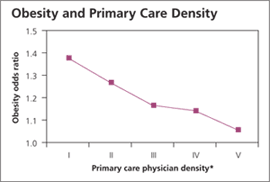
Association of the density of primary care physicians with obesity odds ratios at the county level.
*— Density divided into quintiles (I = lowest density, V = highest density).
Information from references 4 through 6.
Although this association does not imply causality or account for several confounders, these findings demand further investigation of the impact of primary care physicians on obesity in the communities where they practice. In counties with a higher primary care physician density, physicians may potentially shape the health landscape on a macro level by participating in local advocacy, improving access to care, and linking patients to community resources. The community-level impact observed here is difficult to quantify.
Obesity is a complex disease, and treatment approaches will have to be equally complex. Because of its multifactorial causes, discerning the impact of any one intervention is difficult. However, the magnitude of the problem warrants an active exploration of new approaches, despite methodologic challenges. In 2003, obesity was the second leading cause of preventable death in the United States, and it is projected to overtake smoking as the leading cause if current trends continue.7
We know that where we live has significant ramifications for our health, and we also know that primary care access improves health outcomes and reduces costs. This association begs further study of the potentially significant and yet unmeasured impact that the density of primary care physicians has on the overall health of communities, and has important potential implications for distribution of the primary care workforce, especially amid current efforts to restructure the patient-centered medical home.
