

Title VII, Section 747 is a source of federal funding intended to strengthen the primary care workforce. Despite evidence that Title VII has been successful, its funding has declined over the past three decades, threatening the production of primary care physicians.
Title VII, Section 747 of the Public Health Services Act is intended to increase the quality, quantity, and diversity of the primary care workforce, with special emphasis on increasing capacity to care for the underserved. It supports the development of innovative primary care curricula and programming at the medical school, residency, fellowship, and departmental levels.
The nation's physician training pipeline is steadily producing fewer primary care physicians. The number of graduating U.S. allopathic medical students choosing primary care declined steadily over the past decade, and the proportion of minorities within this workforce remains low.1,2
Title VII is associated with increased primary care physician production and practice in underserved areas.3,4 Despite this, funding has declined since 1978 (see accompanying figure).5,6
Figure.
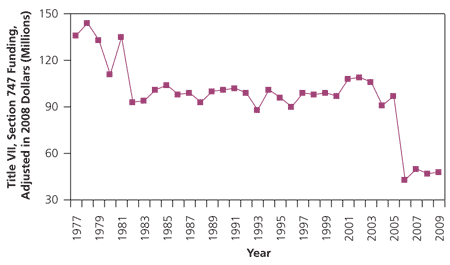
Total appropriation of Title VII funding over time, adjusted to 2008 dollars.
Information from references 5 and 6.
Access to primary care is in jeopardy. The nation needs renewed or enhanced investment in programs, like Title VII, that support the production of primary care physicians and their placement in underserved areas.
