

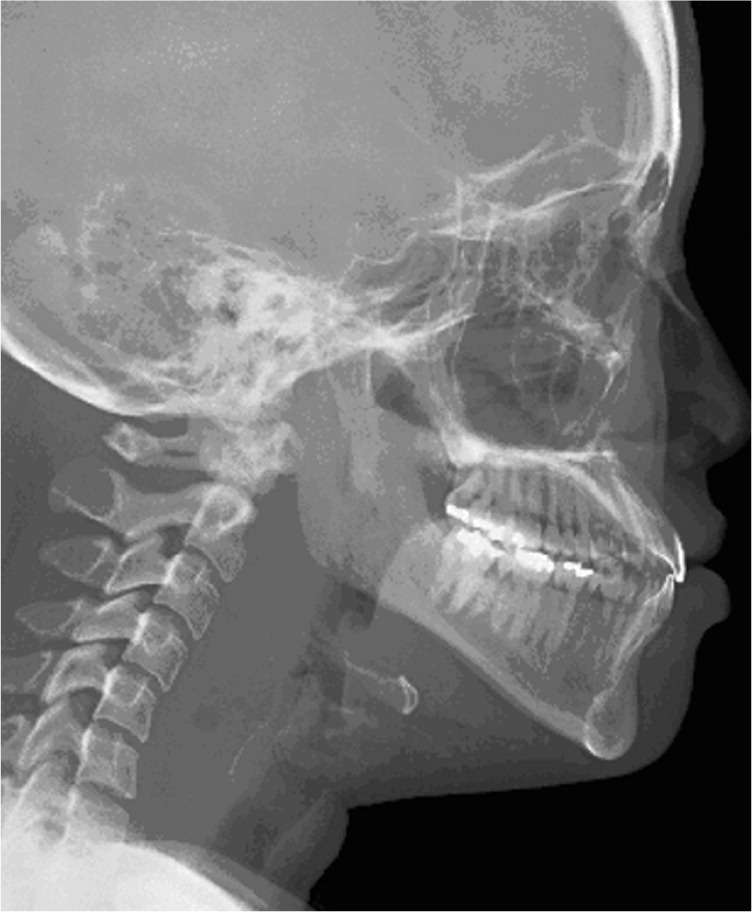
A 22-year-old woman presented to the emergency department five days after eating lettuce that she said had scratched her throat. She had seen two physicians in the outpatient setting and was given pain medication. However, she was now unable to tolerate oral fluids. She had an intact airway with moderate trismus and mild anterior cervical lymphadenopathy. She was afebrile. Computed tomography (Figure 1) and radiography (Figure 2) were performed.
Figure 1.
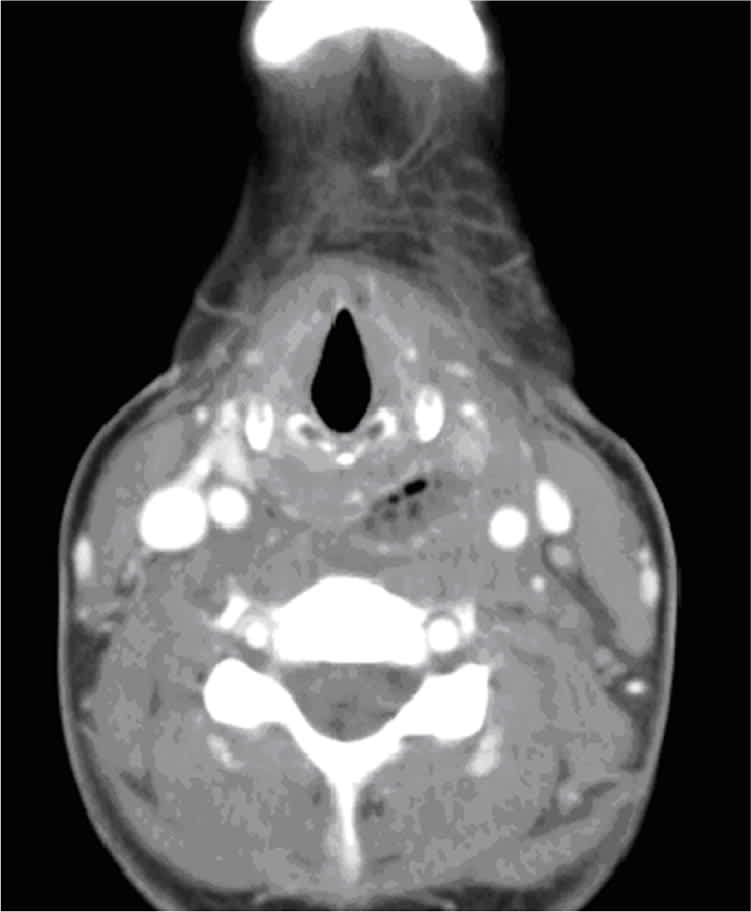
Figure 2.
Question
Based on the patient's history and physical examination, which one of the following is the most likely diagnosis?
A. Angioedema.
B. Epiglottitis.
C. Laryngotracheobronchitis (croup).
D. Peritonsillar abscess.
E. Retropharyngeal abscess.
Discussion
The correct answer is E: retropharyngeal abscess. Although the condition is commonly described as a childhood disease, it can occur in adults.1,2 Even with the use of antibiotics, mortality in patients with retropharyngeal abscess can be as high as 50 percent.2 The retropharyngeal space is a potential area of infection, but normally regresses by six years of age.3 In adults, retropharyngeal abscess commonly causes sore throat, fever, dysphagia, odynophagia, neck pain, and dyspnea. However, most patients also have a history of trauma, such as from endotracheal intubation, endoscopy, or a foreign body in the hypopharyngeal area.
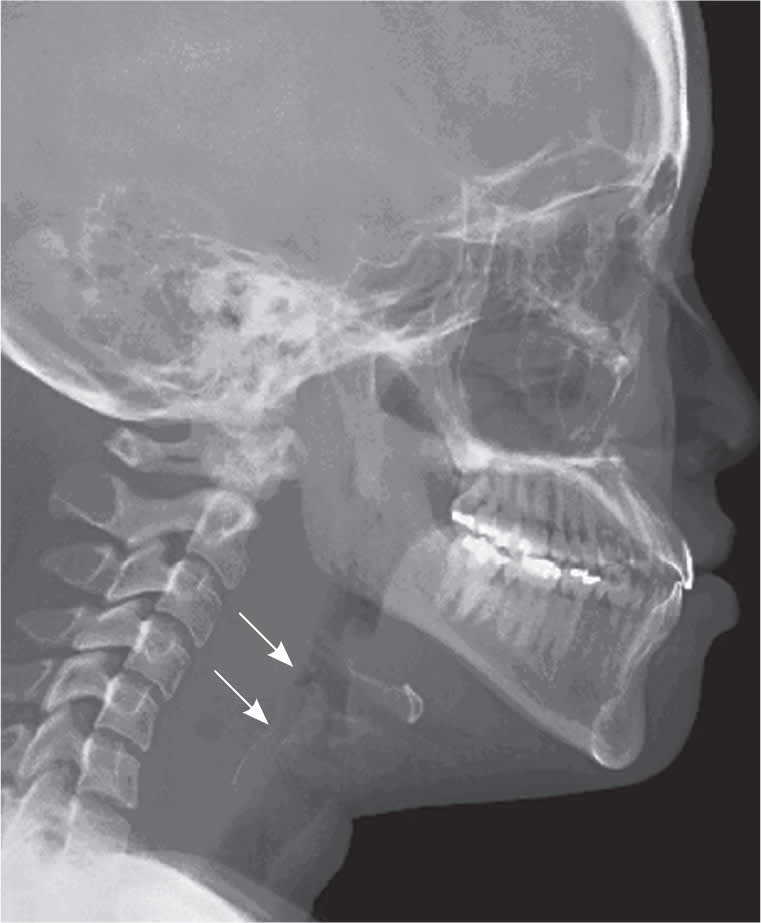
The patient's computed tomography scan demonstrates fluid collection and abscess formation in the retropharyngeal space (Figure 3). There is also significant soft tissue swelling anterior to the abscess (Figure 4).
Figure 3.
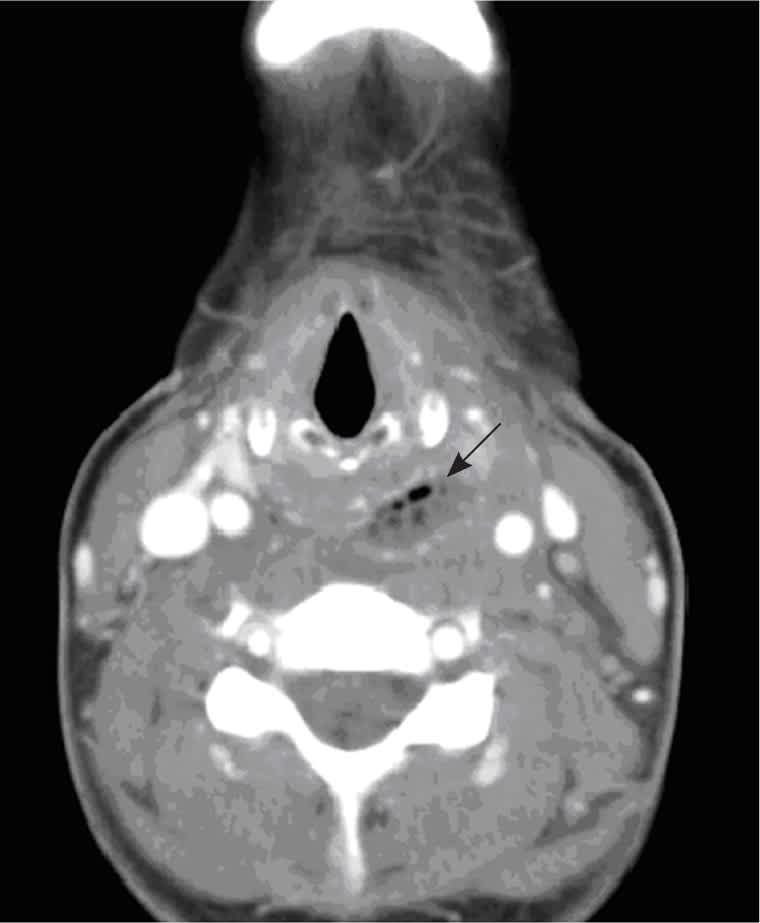
Figure 4.
Potential complications of retropharyngeal abscess are airway obstruction, mediastinitis, aspiration pneumonia, epidural abscess, jugular venous thrombosis, necrotizing fasciitis, sepsis, and erosion into the carotid artery. In the outpatient setting, protection of the airway is crucial, with emergent surgical consultation for drainage of the abscess.4
With angioedema, painless and nonpitting soft tissue edema would be evident on clinical examination and imaging. The edema is most pronounced in the head and neck.
Epiglottitis causes fever, difficulty swallowing, drooling, and stridor. The infection is usually confined to the epiglottis. Occurrence of this disease has decreased dramatically since the introduction of Haemophilus influenzae type b vaccine.
Laryngotracheobronchitis (croup) usually occurs in children three months to three years of age. Symptoms include a “barking” cough, stridor, hoarseness, and potentially dyspnea. Anteroposterior radiography may show subglottic narrowing (steeple sign).
A peritonsillar abscess may lead to similar symptoms as retropharyngeal abscess. Typically, patients with peritonsillar abscess have unilateral sore throat and tender lymphadenopathy on the affected side.
Summary Table
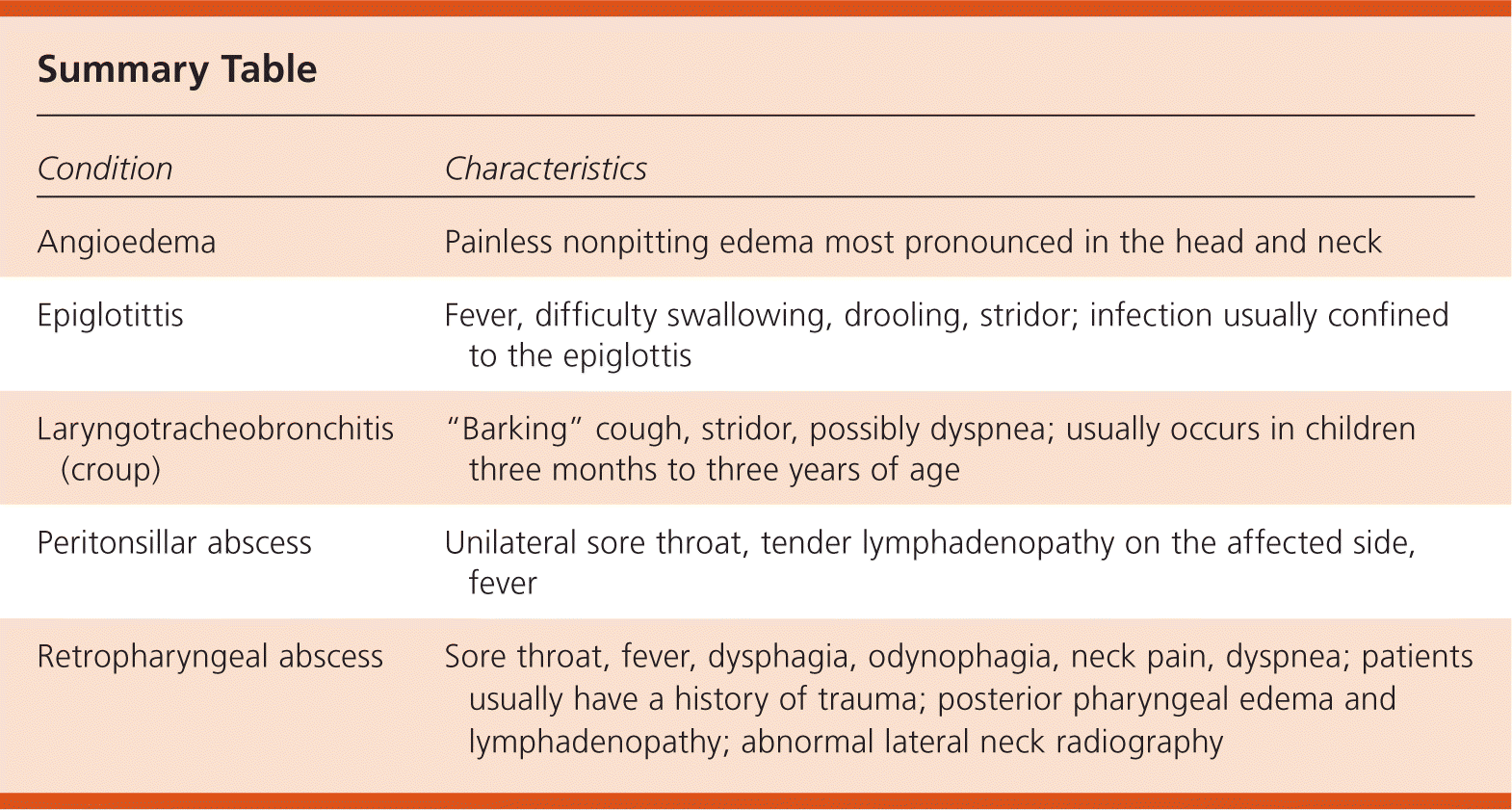
| Condition | Characteristics |
|---|---|
| Angioedema | Painless nonpitting edema most pronounced in the head and neck |
| Epiglotittis | Fever, difficulty swallowing, drooling, stridor; infection usually confined to the epiglottis |
| Laryngotracheobronchitis (croup) | “Barking” cough, stridor, possibly dyspnea; usually occurs in children three months to three years of age |
| Peritonsillar abscess | Unilateral sore throat, tender lymphadenopathy on the affected side, fever |
| Retropharyngeal abscess | Sore throat, fever, dysphagia, odynophagia, neck pain, dyspnea; patients usually have a history of trauma; posterior pharyngeal edema and lymphadenopathy; abnormal lateral neck radiography |
