

Physician assistants (PAs) and nurse practitioners (NPs) are often proposed as solutions to the looming shortage of primary care physicians. However, a large and growing number of PAs and NPs now work outside of primary care, which suggests that innovative policy solutions to increase access to primary care are still needed.
NPs and PAs initially emerged in response to a shortage and uneven distribution of physicians. They play important roles in many health care fields, including the delivery of primary care services; however, a lack of consistent and comprehensive data has hampered the understanding of how many NPs and PAs are clinically active or where they practice.
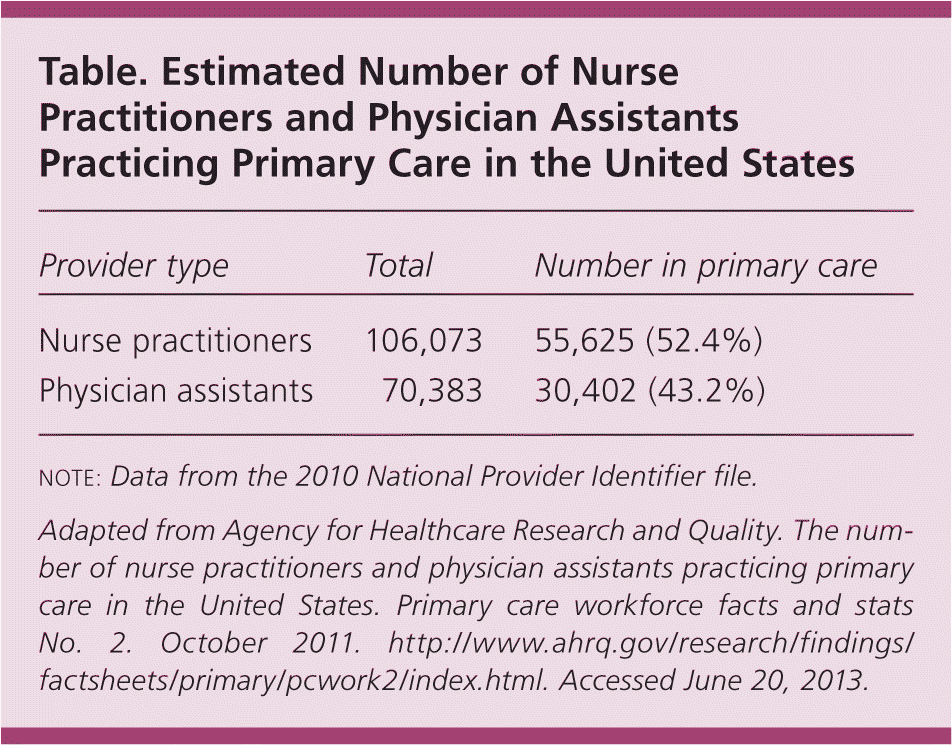
The National Provider Identifier is now required for clinicians who file insurance claims for care. The National Provider Identifier identifies NP and PA clinic locations and also identifies physicians working in the same location. This permits identification of PAs and NPs practicing primary care, based on the proportion of colocated primary care physicians within a clinic site. Those practicing without a physician were assumed to be in primary care. This inferential assignment suggests that less than one-half of PAs currently practice primary care, and slightly more than one-half of NPs are practicing primary care (see accompanying table). Data from the American Academy of Physician Assistants and the 2008 National Sample Survey of Registered Nurses suggest that this method overestimates the percentage of PAs and NPs practicing primary care.1,2
Table. Estimated Number of Nurse Practitioners and Physician Assistants Practicing Primary Care in the United States
| Provider type | Total | Number in primary care |
|---|---|---|
| Nurse practitioners | 106,073 | 55,625 (52.4%) |
| Physician assistants | 70,383 | 30,402 (43.2%) |
NOTE: Data from the 2010 National Provider Identifier file.
Adapted from Agency for Healthcare Research and Quality. The number of nurse practitioners and physician assistants practicing primary care in the United States. Primary care workforce facts and stats No. 2. October 2011. http://www.ahrq.gov/research/findings/factsheets/primary/pcwork2/index.html. June 20, 2013.
Some factors that influence physicians to choose subspecialty careers may have similar effects for NPs and PAs, including student debt and income gap disparities.3 Although NPs and PAs may also benefit from factors that increase the likelihood of choosing primary care careers, such as training experiences in rural and underserved communities, debt reduction, and selection of students intent on caring for underserved populations, further studies are needed to know for sure.4 Relying on NPs and PAs to solve the problem of a growing shortage of primary care physicians may not be an option, and policy makers should not abandon policy solutions designed to increase the number of primary care physicians, NPs, and PAs.
