

Guideline source: Advisory Committee on Immunization Practices
Evidence rating system used? No
Literature search described? No
Guideline developed by participants without relevant financial ties to industry? Yes
Published source: Morbidity and Mortality Weekly Report, September 20, 2013
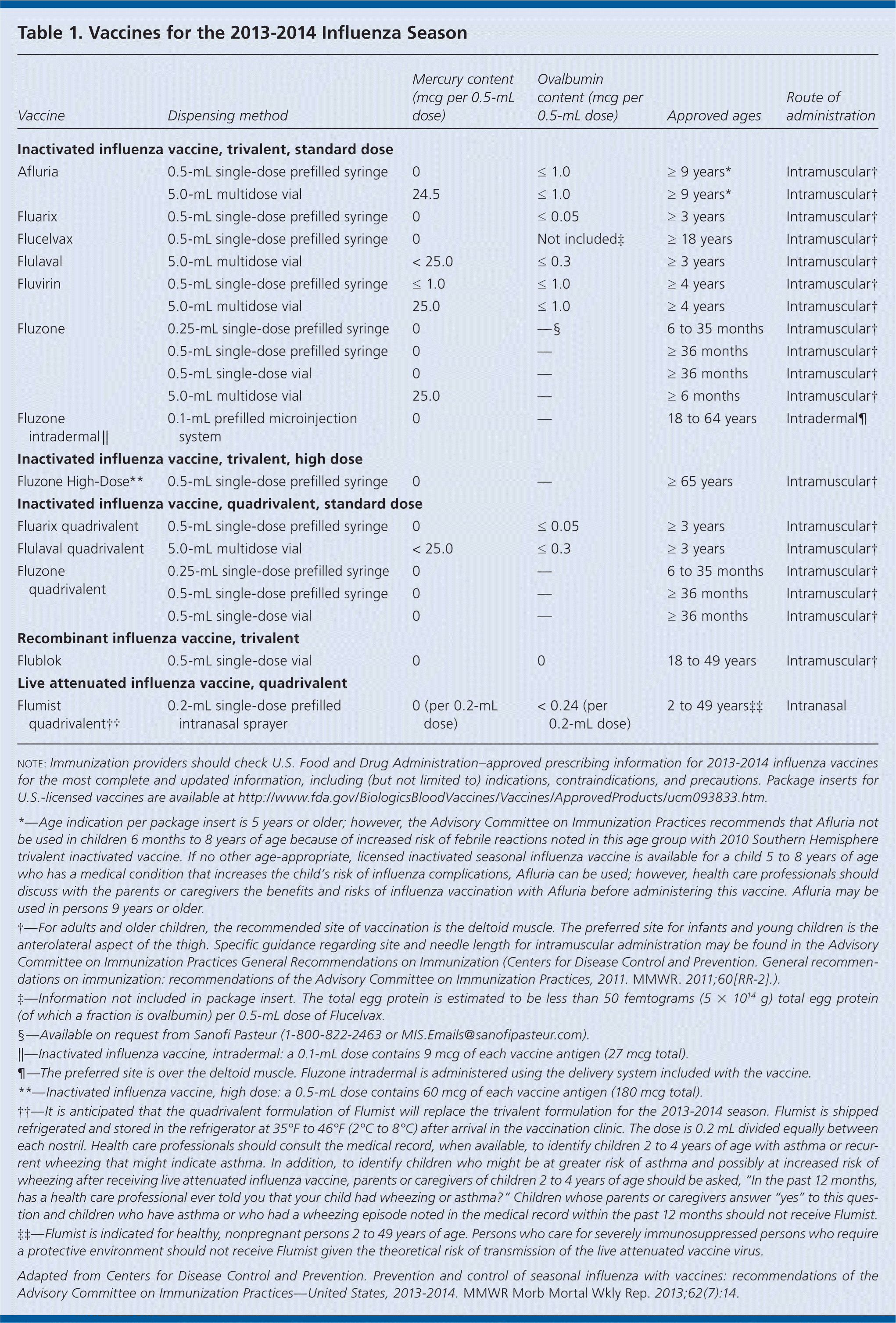
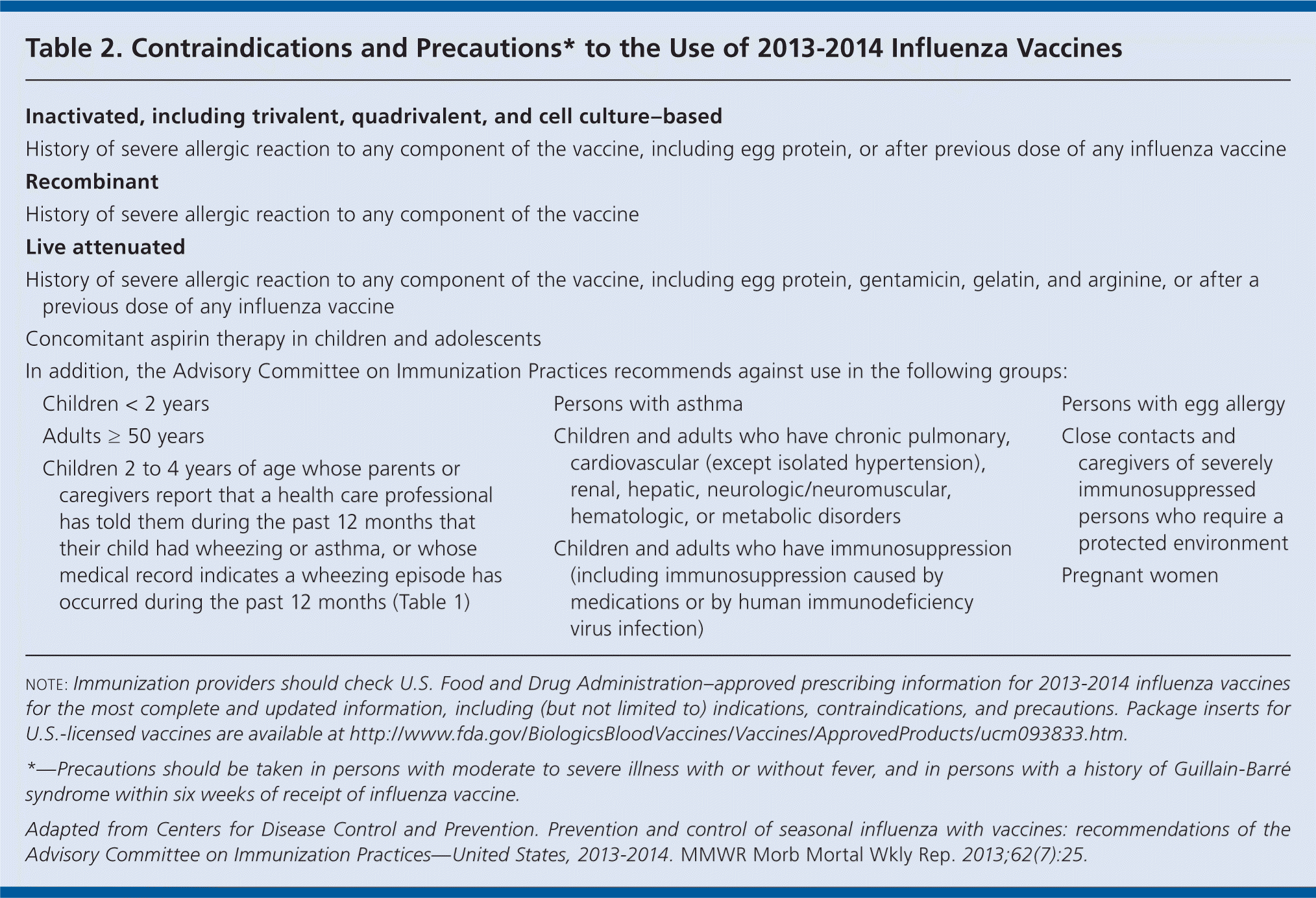
The Centers for Disease Control and Prevention's Advisory Committee on Immunization Practices (ACIP) has updated its annual guidelines for routine influenza vaccination in 2013–2014. Vaccination is recommended for all persons six months or older who do not have contraindications. No specific vaccine product is preferable to another if more than one product is appropriate for an individual patient. This year's updates include changes to the U.S. trivalent influenza vaccine and the quadrivalent influenza vaccine, the availability of new recently licensed vaccine alternatives for specific populations, and a new vaccine option for adults with egg allergy. Table 1 lists the influenza vaccines available for 2013–2014; contraindications and precautions to the influenza vaccine are presented in Table 2.
Table 1. Vaccines for the 2013–2014 Influenza Season
| Vaccine | Dispensing method | Mercury content (mcg per 0.5-mL dose) | Ovalbumin content (mcg per 0.5-mL dose) | Approved ages | Route of administration |
|---|---|---|---|---|---|
| Inactivated influenza vaccine, trivalent, standard dose | |||||
| Afluria | 0.5-mL single-dose prefilled syringe | 0 | ≤ 1.0 | ≥ 9 years* | Intramuscular† |
| 5.0-mL multidose vial | 24.5 | ≤ 1.0 | ≥ 9 years* | Intramuscular† | |
| Fluarix | 0.5-mL single-dose prefilled syringe | 0 | ≤ 0.05 | ≥ 3 years | Intramuscular† |
| Flucelvax | 0.5-mL single-dose prefilled syringe | 0 | Not included‡ | ≥ 18 years | Intramuscular† |
| Flulaval | 5.0-mL multidose vial | < 25.0 | ≤ 0.3 | ≥ 3 years | Intramuscular† |
| Fluvirin | 0.5-mL single-dose prefilled syringe | ≤ 1.0 | ≤ 1.0 | ≥ 4 years | Intramuscular† |
| 5.0-mL multidose vial | 25.0 | ≤ 1.0 | ≥ 4 years | Intramuscular† | |
| Fluzone | 0.25-mL single-dose prefilled syringe | 0 | —§ | 6 to 35 months | Intramuscular† |
| 0.5-mL single-dose prefilled syringe | 0 | — | ≥ 36 months | Intramuscular† | |
| 0.5-mL single-dose vial | 0 | — | ≥ 36 months | Intramuscular† | |
| 5.0-mL multidose vial | 25.0 | — | ≥ 6 months | Intramuscular† | |
| Fluzone intradermal || | 0.1-mL prefilled microinjection system | 0 | — | 18 to 64 years | Intradermal¶ |
| Inactivated influenza vaccine, trivalent, high dose | |||||
| Fluzone High-Dose** | 0.5-mL single-dose prefilled syringe | 0 | — | ≥ 65 years | Intramuscular† |
| Inactivated influenza vaccine, quadrivalent, standard dose | |||||
| Fluarix quadrivalent | 0.5-mL single-dose prefilled syringe | 0 | ≤ 0.05 | ≥ 3 years | Intramuscular† |
| Flulaval quadrivalent | 5.0-mL multidose vial | < 25.0 | ≤ 0.3 | ≤ 3 years | Intramuscular† |
| Fluzone quadrivalent | 0.25-mL single-dose prefilled syringe | 0 | — | 6 to 35 months | Intramuscular† |
| 0.5-mL single-dose prefilled syringe | 0 | — | ≥ 36 months | Intramuscular† | |
| 0.5-mL single-dose vial | 0 | — | ≥ 36 months | Intramuscular† | |
| Recombinant influenza vaccine, trivalent | |||||
| Flublok | 0.5-mL single-dose vial | 0 | 0 | 18 to 49 years | Intramuscular† |
| Live attenuated influenza vaccine, quadrivalent | |||||
| Flumist quadrivalent†† | 0.2-mL single-dose prefilled intranasal sprayer | 0 (per 0.2-mL dose) | < 0.24 (per 0.2-mL dose) | 2 to 49 years‡‡ | Intranasal |
NOTE: Immunization providers should check U.S. Food and Drug Administration–approved prescribing information for 2013–2014 influenza vaccines for the most complete and updated information, including (but not limited to) indications, contraindications, and precautions. Package inserts for U.S.-licensed vaccines are available at http://www.fda.gov/BiologicsBloodVaccines/Vaccines/ApprovedProducts/ucm093833.htm.
*—Age indication per package insert is 5 years or older; however, the Advisory Committee on Immunization Practices recommends that Afluria not be used in children 6 months to 8 years of age because of increased risk of febrile reactions noted in this age group with 2010 Southern Hemisphere trivalent inactivated vaccine. If no other age-appropriate, licensed inactivated seasonal influenza vaccine is available for a child 5 to 8 years of age who has a medical condition that increases the child's risk of influenza complications, Afluria can be used; however, health care professionals should discuss with the parents or caregivers the benefits and risks of influenza vaccination with Afluria before administering this vaccine. Afluria may be used in persons 9 years or older.
†—For adults and older children, the recommended site of vaccination is the deltoid muscle. The preferred site for infants and young children is the anterolateral aspect of the thigh. Specific guidance regarding site and needle length for intramuscular administration may be found in the Advisory Committee on Immunization Practices General Recommendations on Immunization (Centers for Disease Control and Prevention. General recommendations on immunization: recommendations of the Advisory Committee on Immunization Practices, 2011. MMWR. 2011;60[RR-2].).
‡—Information not included in package insert. The total egg protein is estimated to be less than 50 femtograms (5 × 10¹⁴g) total egg protein (of which a fraction is ovalbumin) per 0.5-mL dose of Flucelvax.
§—Available on request from Sanofi Pasteur (1-800-822-2463 or MIS.Emails@sanofipasteur.com).
||—Inactivated influenza vaccine, intradermal: a 0.1-mL dose contains 9 mcg of each vaccine antigen (27 mcg total).
¶—The preferred site is over the deltoid muscle. Fluzone intradermal is administered using the delivery system included with the vaccine.
**—Inactivated influenza vaccine, high dose: a 0.5-mL dose contains 60 mcg of each vaccine antigen (180 mcg total).
††—It is anticipated that the quadrivalent formulation of Flumist will replace the trivalent formulation for the 2013–2014 season. Flumist is shipped refrigerated and stored in the refrigerator at 35°F to 46°F (2°C to 8°C) after arrival in the vaccination clinic. The dose is 0.2 mL divided equally between each nostril. Health care professionals should consult the medical record, when available, to identify children 2 to 4 years of age with asthma or recurrent wheezing that might indicate asthma. In addition, to identify children who might be at greater risk of asthma and possibly at increased risk of wheezing after receiving live attenuated influenza vaccine, parents or caregivers of children 2 to 4 years of age should be asked, “In the past 12 months, has a health care professional ever told you that your child had wheezing or asthma?” Children whose parents or caregivers answer “yes” to this question and children who have asthma or who had a wheezing episode noted in the medical record within the past 12 months should not receive Flumist.
‡‡—Flumist is indicated for healthy, nonpregnant persons 2 to 49 years of age. Persons who care for severely immunosuppressed persons who require a protective environment should not receive Flumist given the theoretical risk of transmission of the live attenuated vaccine virus.
Adapted from Centers for Disease Control and Prevention. Prevention and control of seasonal influenza with vaccines: recommendations of the Advisory Committee on Immunization Practices—United States, 2013–2014. MMWR Morb Mortal Wkly Rep. 2013;62(7):14.
Table 2. Contraindications and Precautions* to the Use of 2013–2014 Influenza Vaccines
| Inactivated, including trivalent, quadrivalent, and cell culture–based | ||
| History of severe allergic reaction to any component of the vaccine, including egg protein, or after previous dose of any influenza vaccine | ||
| Recombinant | ||
| History of severe allergic reaction to any component of the vaccine | ||
| Live attenuated | ||
| History of severe allergic reaction to any component of the vaccine, including egg protein, gentamicin, gelatin, and arginine, or after a previous dose of any influenza vaccine | ||
| Concomitant aspirin therapy in children and adolescents | ||
| In addition, the Advisory Committee on Immunization Practices recommends against use in the following groups: | ||
| Children < 2 years | ||
| Adults ≥ 50 years | ||
| Children 2 to 4 years of age whose parents or caregivers report that a health care professional has told them during the past 12 months that their child had wheezing or asthma, or whose medical record indicates a wheezing episode has occurred during the past 12 months (Table 1) | ||
| Persons with asthma | ||
| Children and adults who have chronic pulmonary, cardiovascular (except isolated hypertension), renal, hepatic, neurologic/neuromuscular, hematologic, or metabolic disorders | ||
| Children and adults who have immunosuppression (including immunosuppression caused by medications or by human immunodeficiency virus infection) | ||
| Persons with egg allergy | ||
| Close contacts and caregivers of severely immunosuppressed persons who require a protected environment | ||
| Pregnant women | ||
NOTE: Immunization providers should check U.S. Food and Drug Administration–approved prescribing information for 2013–2014 influenza vaccines for the most complete and updated information, including (but not limited to) indications, contraindications, and precautions. Package inserts for U.S.-licensed vaccines are available at http://www.fda.gov/BiologicsBloodVaccines/Vaccines/ApprovedProducts/ucm093833.htm.
*—Precautions should be taken in persons with moderate to severe illness with or without fever, and in persons with a history of Guillain-Barré syndrome within six weeks of receipt of influenza vaccine.
Adapted from Centers for Disease Control and Prevention. Prevention and control of seasonal influenza with vaccines: recommendations of the Advisory Committee on Immunization Practices—United States, 2013–2014. MMWR Morb Mortal Wkly Rep. 2013;62(7):25.
This season, the U.S. trivalent influenza vaccines include an A/California/7/2009 (H1N1)–like virus, an H3N2 virus antigenically like the cell-propagated prototype virus A/Victoria/361/2011, and a B/Massachusetts/2/2012–like virus. The quadrivalent vaccines include an additional virus strain, which is a B/Brisbane/60/2008–like virus.
There are several newly licensed vaccine alternatives expected to be available. A quadrivalent live attenuated influenza vaccine (Flumist) is anticipated to replace the trivalent formulation; it is appropriate for healthy, non-pregnant persons two to 49 years of age. Three quadrivalent inactivated influenza vaccines are available in addition to their previous trivalent formulations; Fluarix and Flulaval are indicated for persons three years or older, and Fluzone is indicated for persons six months or older. Finally, a trivalent cell culture–based inactivated influenza vaccine (Flucelvax) is indicated for persons 18 years or older, and a recombinant hemagglutinin vaccine (Flublok) is available for persons 18 to 49 years of age.
Although this is the first season both the trivalent and quadrivalent inactivated influenza vaccines are available, the quantity of quadrivalent doses may be limited. The quadrivalent dose provides broader protection against circulating influenza B viruses during seasons when the B virus in the trivalent vaccine is not an optimal match. There is no preference between the trivalent and quadrivalent inactivated vaccines; therefore, if only the trivalent vaccine is available, it should be used so as not to delay vaccination. Additionally, the high-dose trivalent inactivated influenza vaccine (Fluzone High-Dose) is approved for persons 65 years or older. Three prelicensure studies among persons in this age group showed that, compared with the standard dose, the high-dose vaccine elicited higher hemagglutination inhibition antibody titers against the three virus strains included in the seasonal influenza vaccine during the study period. However, there is no recommendation for using the high-dose vaccine vs. the standard-dose vaccine in this population.
Persons 18 to 49 years of age who have an egg allergy of any severity now have the option of receiving trivalent recombinant influenza vaccine, an egg-free vaccine. In persons who have no known history of egg exposure but who have received allergy test results suggestive of an egg allergy, consultation with a physician who has expertise in allergy management is recommended before vaccination. Figure 1 provides an algorithm for influenza vaccination in persons who report an allergy to eggs.
Figure 1. Influenza Vaccination in Patients with Egg Allergy
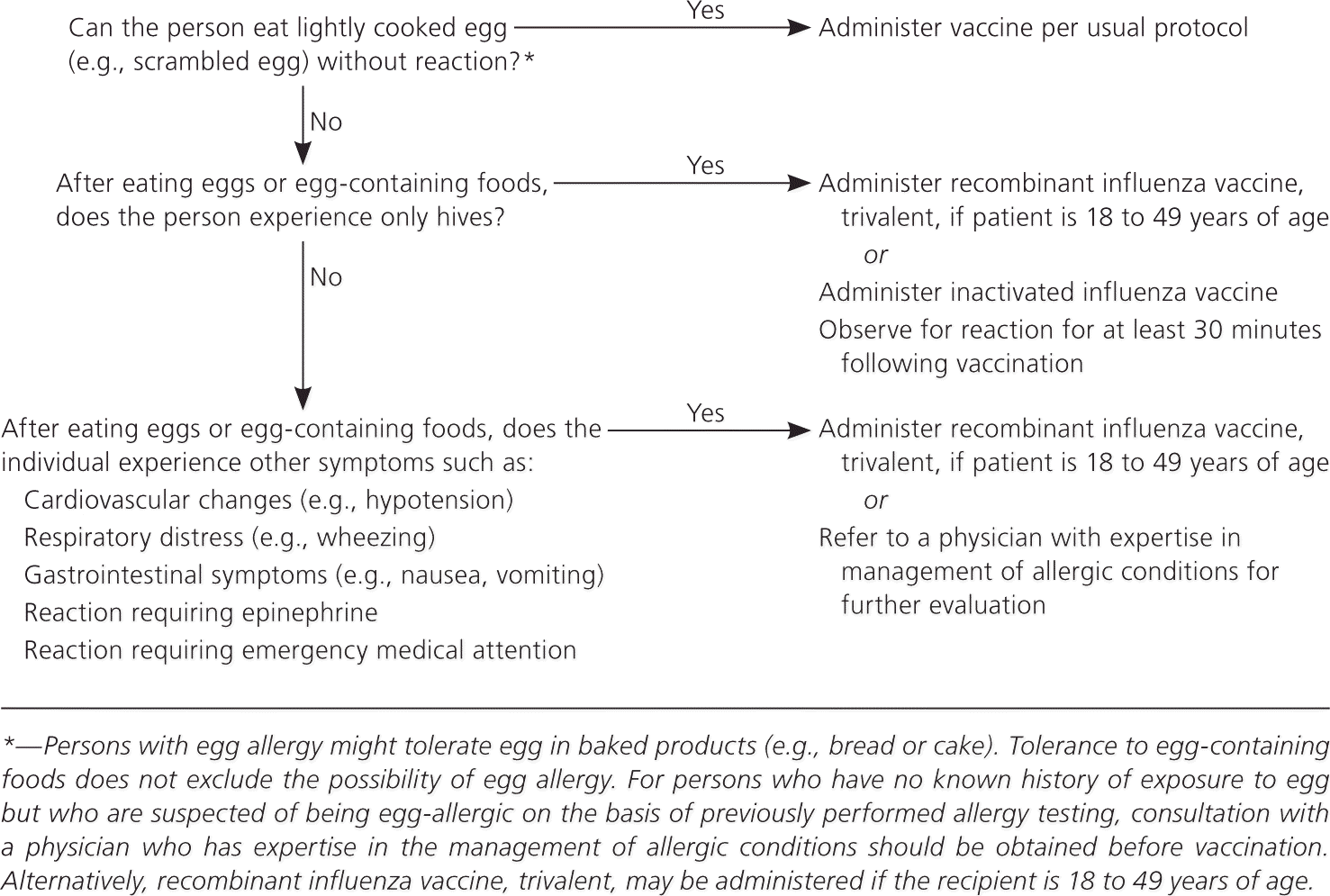
Algorithm for influenza vaccination in persons who report egg allergy.
Adapted from Centers for Disease Control and Prevention. Prevention and control of seasonal influenza with vaccines: recommendations of the Advisory Committee on Immunization Practices—United States, 2013–2014. MMWR Morb Mortal Wkly Rep. 2013;62(7):31.
