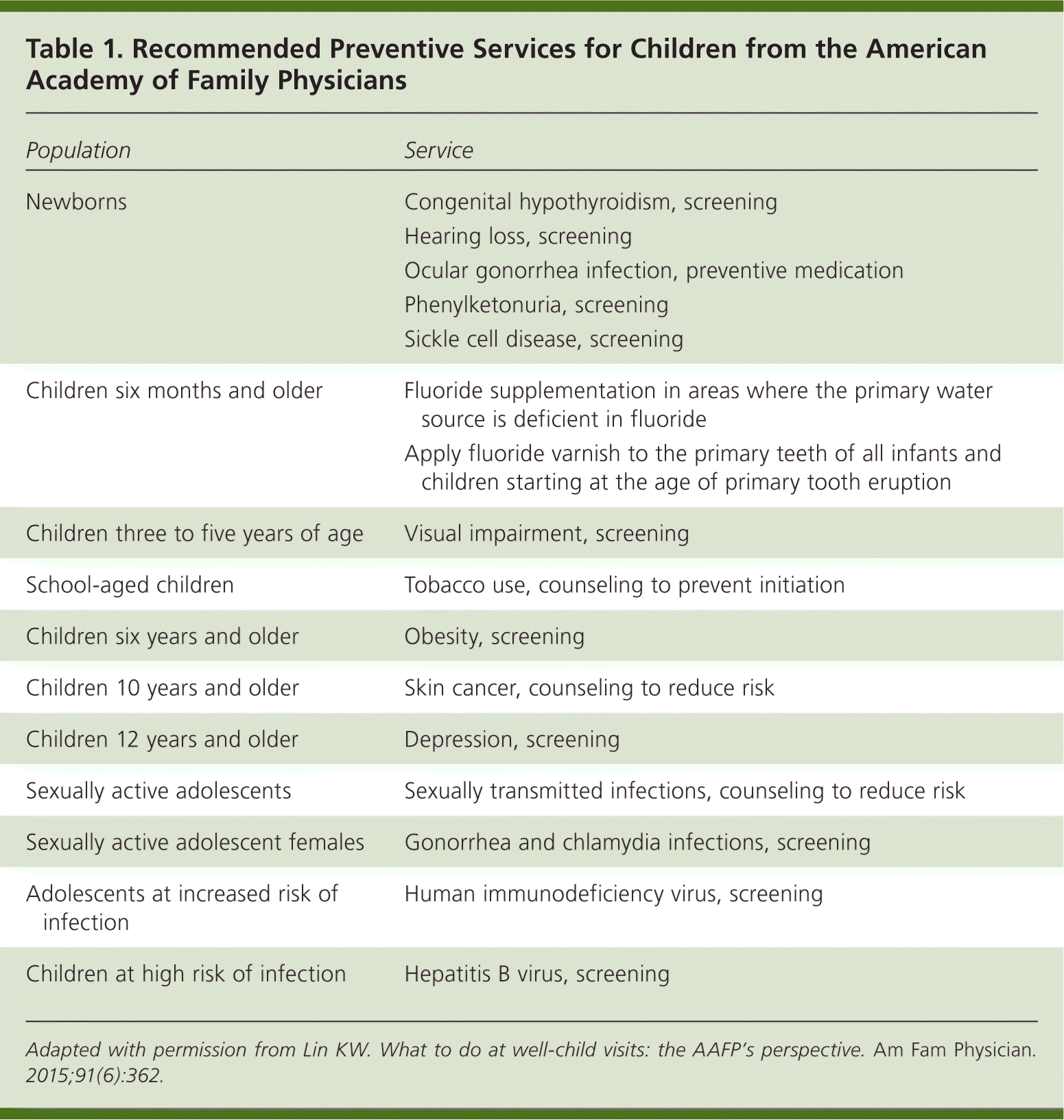
A previous editorial in American Family Physician1 discussed important differences between the American Academy of Pediatrics' (AAP's) 2014 Recommendations for Preventive Pediatric Health Care and the clinical preventive services recommendations of the American Academy of Family Physicians2 (AAFP; Table 11) and the U.S. Preventive Services Task Force (USPSTF). This issue's Practice Guidelines summarize recent changes to the AAP schedule.3 The AAP continues to recommend routine screening for autism spectrum disorder at 18 and 24 months of age and cholesterol screening between nine and 11 years of age, two services for which the USPSTF found insufficient evidence to assess the balance of benefits and harms.4,5 However, the AAP also made several changes that are concordant with USPSTF and AAFP recommendations.
Table 1. Recommended Preventive Services for Children from the American Academy of Family Physicians
| Population | Service |
|---|---|
| Newborns | Congenital hypothyroidism, screening |
| Hearing loss, screening | |
| Ocular gonorrhea infection, preventive medication | |
| Phenylketonuria, screening | |
| Sickle cell disease, screening | |
| Children six months and older | Fluoride supplementation in areas where the primary water source is deficient in fluoride |
| Apply fluoride varnish to the primary teeth of all infants and children starting at the age of primary tooth eruption | |
| Children three to five years of age | Visual impairment, screening |
| School-aged children | Tobacco use, counseling to prevent initiation |
| Children six years and older | Obesity, screening |
| Children 10 years and older | Skin cancer, counseling to reduce risk |
| Children 12 years and older | Depression, screening |
| Sexually active adolescents | Sexually transmitted infections, counseling to reduce risk |
| Sexually active adolescent females | Gonorrhea and chlamydia infections, screening |
| Adolescents at increased risk of infection | Human immunodeficiency virus, screening |
| Children at high risk of infection | Hepatitis B virus, screening |
Adapted with permission from Lin KW. What to do at well-child visits: the AAFP's perspective. Am Fam Physician. 2015;91(6):362.
The AAP recommends that primary care clinicians apply fluoride varnish to children's teeth from six months through five years of age. This guidance is consistent with that of the USPSTF and AAFP, which also recommend prescribing oral fluoride supplementation starting at six months of age for children whose water supply is deficient in fluoride.6 Clinicians who desire further training in fluoride varnish application can visit a number of online resources, including the Society of Teachers of Family Medicine's Smiles for Life curriculum (http://www.smilesforlifeoralhealth.org/).7
The AAP recommends annual screening for depression starting at 11 years of age. This guidance is largely consistent with that of the USPSTF and AAFP, which recommend screening for major depressive disorder starting at 12 years of age, but found insufficient evidence for screening in younger children.8 Unlike the AAP, the AAFP does not specify an optimal screening interval, but notes that opportunistic screening is appropriate because many adolescents visit physicians infrequently. Screening should be implemented with adequate systems in place to ensure accurate diagnosis, effective treatment, and appropriate follow-up.8
The AAP recommends screening for human immunodeficiency virus (HIV) infection in adolescents once between 16 and 18 years of age. Although the USPSTF recommends starting routine screening for HIV at 15 years of age,9 the AAFP supports starting at 18 years of age in adolescents without risk factors.10 In children 15 to 17 years of age who are not at increased risk of HIV infection, the positive predictive value of the HIV testing algorithm currently recommended by the Centers for Disease Control and Prevention is estimated to be 1.2%, with 81 false-positive results for every true-positive result and a number needed to screen of 12,500 to 100,000 to identify one child with true HIV infection.11
Finally, the AAP no longer recommends screening for cervical dysplasia before 21 years of age. Similarly, the USPSTF and AAFP discourage screening for cervical cancer in women younger than 21 years based on adequate evidence that regardless of sexual history, screening in this age group does not reduce cervical cancer incidence or mortality.12
Although a few areas of disagreement remain, the increased alignment between preventive services recommendations from the two major physician specialty groups who care for children is a welcome sign. To improve the efficiency and effectiveness of well-child visits, future recommendations from both groups should be supported by good evidence that these services lead to improved health outcomes.
editor's note: Dr. Lin is Associate Deputy Editor of AFP Online and Chair of the AAFP's Subcommittee on Clinical Practice Guidelines of the Commission on the Health of the Public and Science.