

Key Clinical Issue
What are the benefits and harms of noninvasive treatments for acute, subacute, and chronic low back pain?
Evidence-Based Answer
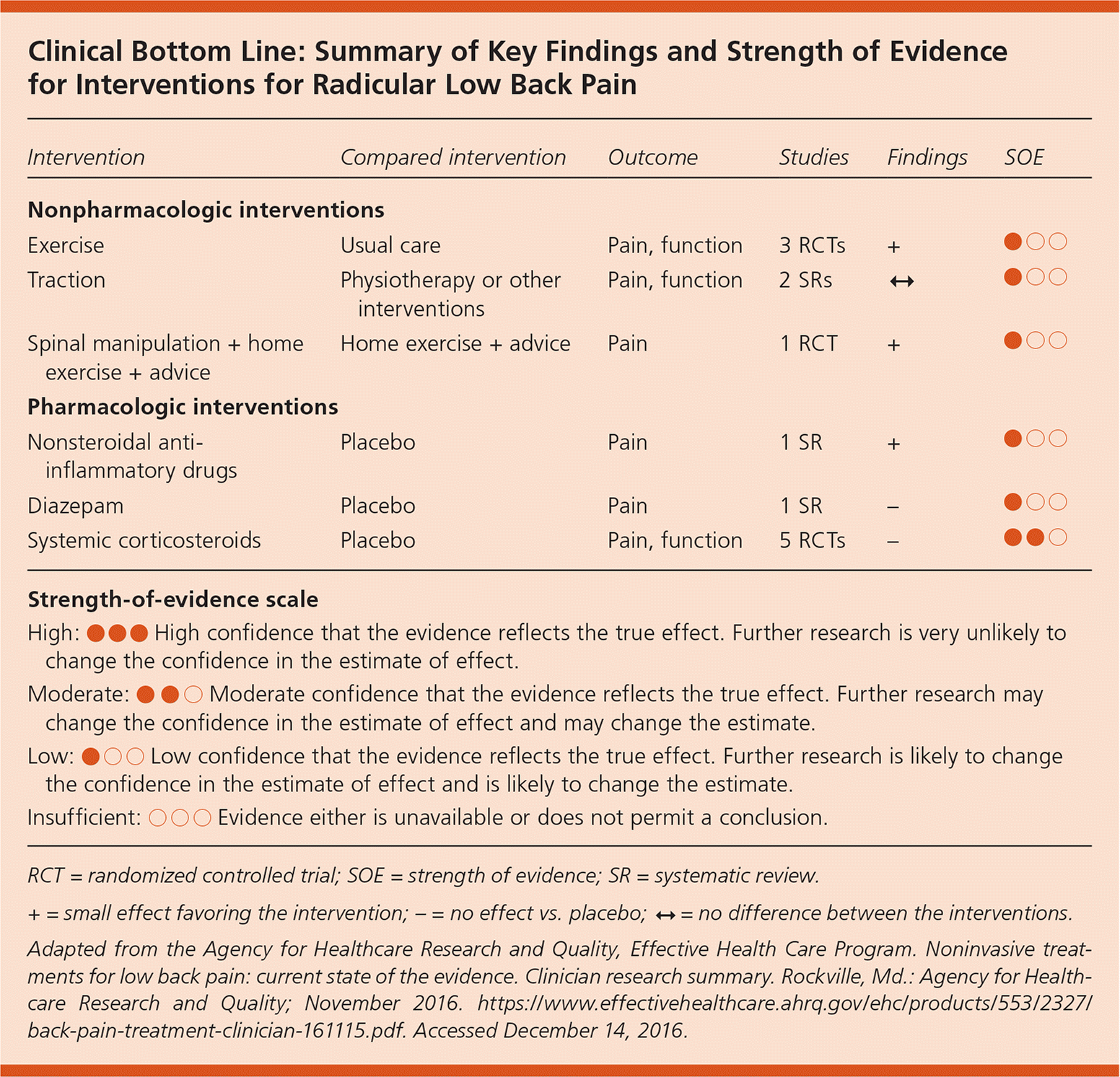
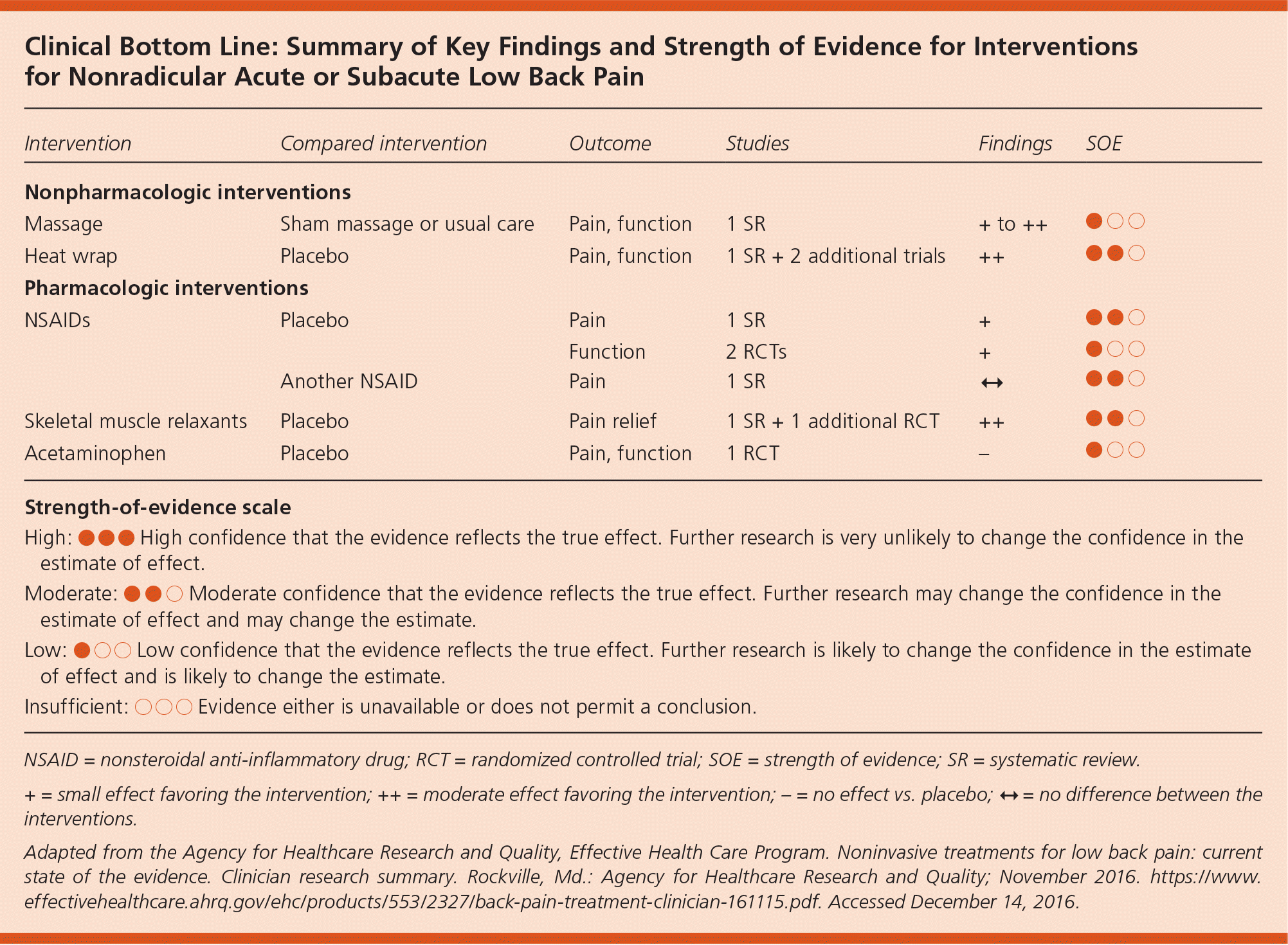
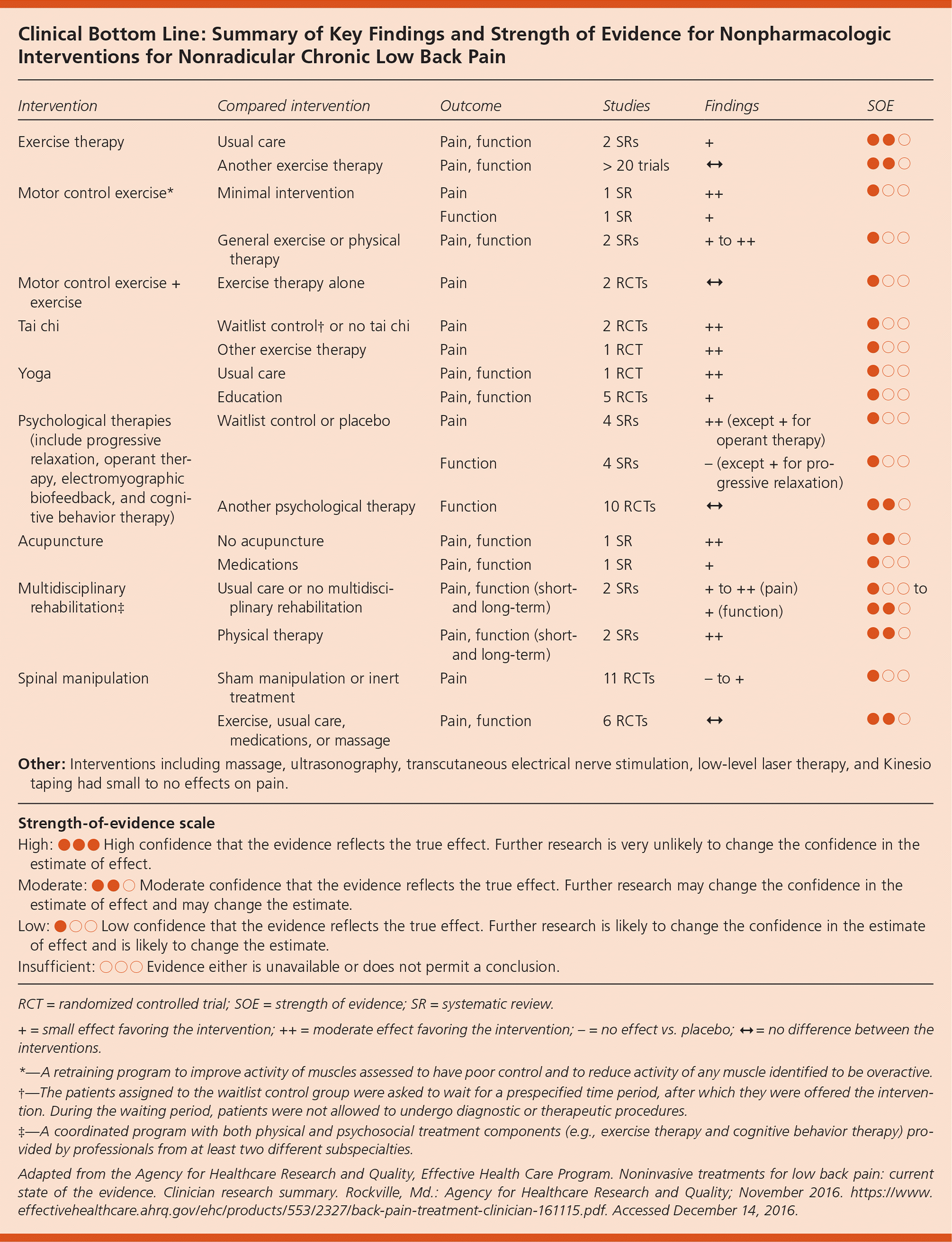
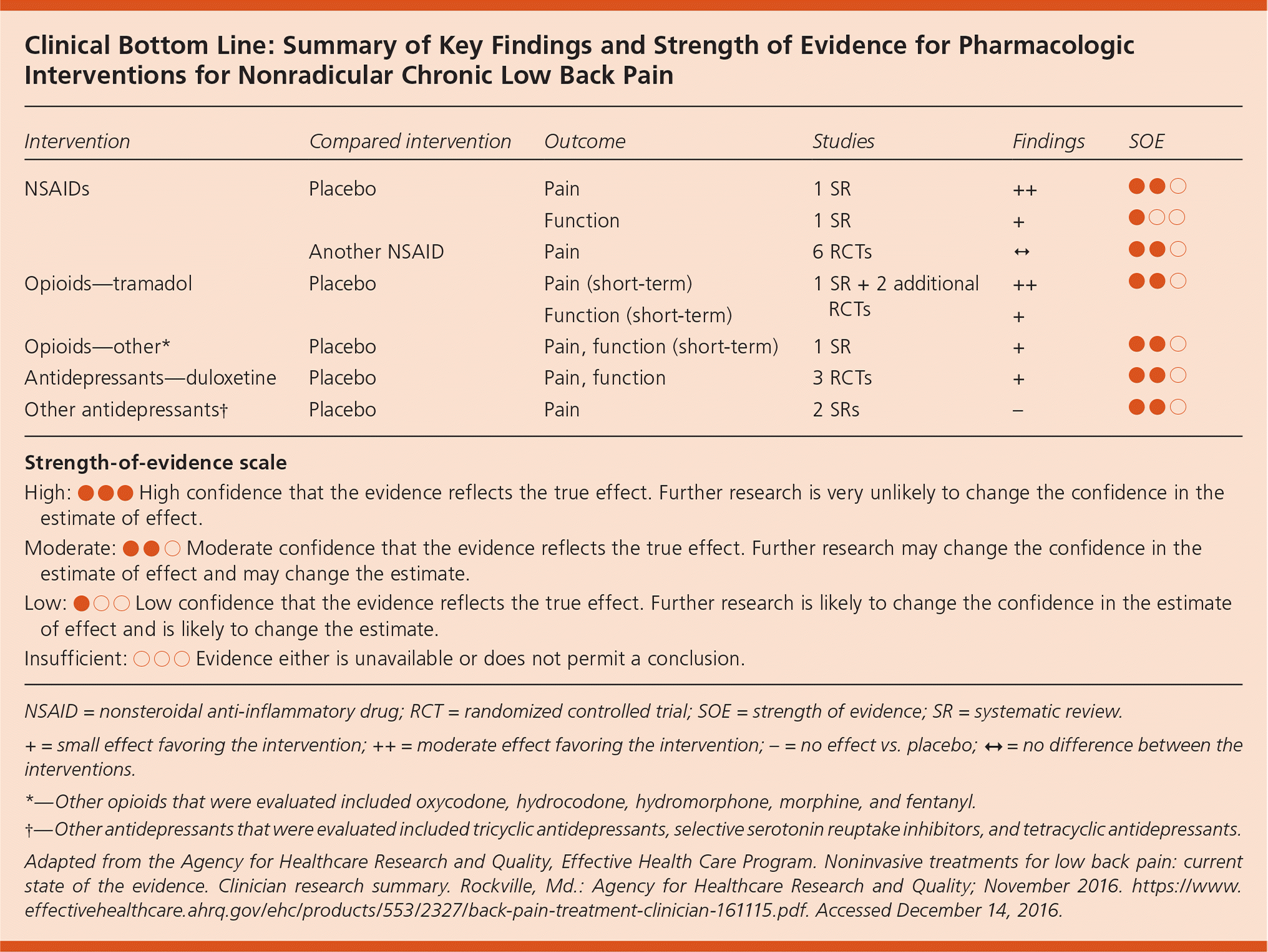
Exercise, nonsteroidal anti-inflammatory drugs (NSAIDs), and spinal manipulation with home exercise and advice have small benefits for radicular low back pain. (Strength of Recommendation [SOR]: B, based on inconsistent or limited-quality patient-oriented evidence.) Massage, heat wrap, and NSAIDs improve pain and function for non-radicular acute and subacute low back pain, whereas skeletal muscle relaxants improve pain alone. (SOR: B, based on inconsistent or limited-quality patient-oriented evidence.) Multiple exercise programs improve nonradicular chronic low back pain, in addition to acupuncture and multidisciplinary rehabilitation. (SOR: A, based on consistent, good-quality patient-oriented evidence.) Psychological therapies improve chronic low back pain, but not function. (SOR: B, based on inconsistent or limited-quality patient-oriented evidence.) NSAIDs and antidepressants improve pain and function in nonradicular, chronic low back pain. Opioids show small, short-term improvements in pain and function. (SOR: A, based on consistent, good-quality patient-oriented evidence.)
Clinical Bottom Line: Summary of Key Findings and Strength of Evidence for Interventions for Radicular Low Back Pain
| Intervention | Compared intervention | Outcome | Studies | Findings | SOE |
|---|---|---|---|---|---|
| Nonpharmacologic interventions | |||||
| Exercise | Usual care | Pain, function | 3 RCTs | + | ●○○ |
| Traction | Physiotherapy or other interventions | Pain, function | 2 SRs | ↔ | ●○○ |
| Spinal manipulation + home exercise + advice | Home exercise + advice | Pain | 1 RCT | + | ●○○ |
| Pharmacologic interventions | |||||
| Nonsteroidal anti-inflammatory drugs | Placebo | Pain | 1 SR | + | ●○○ |
| Diazepam | Placebo | Pain | 1 SR | – | ●○○ |
| Systemic corticosteroids | Placebo | Pain, function | 5 RCTs | – | ●●○ |
Strength-of-evidence scale
High: ●●● High confidence that the evidence reflects the true effect. Further research is very unlikely to change the confidence in the estimate of effect.
Moderate: ●●○ Moderate confidence that the evidence reflects the true effect. Further research may change the confidence in the estimate of effect and may change the estimate.
Low: ●○○ Low confidence that the evidence reflects the true effect. Further research is likely to change the confidence in the estimate of effect and is likely to change the estimate.
Insufficient: ○○○ Evidence either is unavailable or does not permit a conclusion.
RCT = randomized controlled trial; SOE = strength of evidence; SR = systematic review.
+ = small effect favoring the intervention; − = no effect vs. placebo; ↔ = no difference between the interventions.
Adapted from the Agency for Healthcare Research and Quality, Effective Health Care Program. Noninvasive treatments for low back pain: current state of the evidence. Clinician research summary. Rockville, Md.: Agency for Health-care Research and Quality; November 2016. https://www.effectivehealthcare.ahrq.gov/ehc/products/553/2327/back-pain-treatment-clinician-161115.pdf. Accessed December 14, 2016.
Clinical Bottom Line: Summary of Key Findings and Strength of Evidence for Interventions for Nonradicular Acute or Subacute Low Back Pain
| Intervention | Compared intervention | Outcome | Studies | Findings | SOE |
|---|---|---|---|---|---|
| Nonpharmacologic interventions | |||||
| Massage | Sham massage or usual care | Pain, function | 1 SR | + to ++ | ●○○ |
| Heat wrap | Placebo | Pain, function | 1 SR + 2 additional trials | ++ | ●●○ |
| Pharmacologic interventions | |||||
| NSAIDs | Placebo | Pain | 1 SR | + | ●●○ |
| Function | 2 RCTs | + | ●○○ | ||
| Another NSAID | Pain | 1 SR | ↔ | ●●○ | |
| Skeletal muscle relaxants | Placebo | Pain relief | 1 SR + 1 additional RCT | ++ | ●●○ |
| Acetaminophen | Placebo | Pain, function | 1 RCT | – | ●○○ |
Strength-of-evidence scale
High: ●●● High confidence that the evidence reflects the true effect. Further research is very unlikely to change the confidence in the estimate of effect.
Moderate: ●●○ Moderate confidence that the evidence reflects the true effect. Further research may change the confidence in the estimate of effect and may change the estimate.
Low: ●○○ Low confidence that the evidence reflects the true effect. Further research is likely to change the confidence in the estimate of effect and is likely to change the estimate.
Insufficient: ○○○ Evidence either is unavailable or does not permit a conclusion.
NSAID = nonsteroidal anti-inflammatory drug; RCT = randomized controlled trial; SOE = strength of evidence; SR = systematic review.
+ = small effect favoring the intervention; ++ = moderate effect favoring the intervention; − = no effect vs. placebo; ↔ = no difference between the interventions.
Adapted from the Agency for Healthcare Research and Quality, Effective Health Care Program. Noninvasive treatments for low back pain: current state of the evidence. Clinician research summary. Rockville, Md.: Agency for Healthcare Research and Quality; November 2016. https://www.effectivehealthcare.ahrq.gov/ehc/products/553/2327/back-pain-treatment-clinician-161115.pdf. Accessed December 14, 2016.
Clinical Bottom Line: Summary of Key Findings and Strength of Evidence for Nonpharmacologic Interventions for Nonradicular Chronic Low Back Pain
| Intervention | Compared intervention | Outcome | Studies | Findings | SOE |
|---|---|---|---|---|---|
| Exercise therapy | Usual care | Pain, function | 2 SRs | + | ●●○ |
| Another exercise therapy | Pain, function | > 20 trials | ↔ | ●●○ | |
| Motor control exercise* | Minimal intervention | Pain | 1 SR | ++ | ●●○ |
| Function | 1 SR | + | |||
| General exercise or physical therapy | Pain, function | 2 SRs | + to ++ | ●○○ | |
| Motor control exercise + exercise | Exercise therapy alone | Pain | 2 RCTs | ↔ | ●○○ |
| Tai chi | Waitlist control† or no tai chi | Pain | 2 RCTs | ++ | ●○○ |
| Other exercise therapy | Pain | 1 RCT | ++ | ●○○ | |
| Yoga | Usual care | Pain, function | 1 RCT | ++ | ●○○ |
| Education | Pain, function | 5 RCTs | + | ●○○ | |
| Psychological therapies (include progressive relaxation, operant therapy, electromyographic biofeedback, and cognitive behavior therapy) | Waitlist control or placebo | Pain | 4 SRs | ++ (except + for operant therapy) | ●○○ |
| Function | 4 SRs | – (except + for progressive relaxation) | ●○○ | ||
| Another psychological therapy | Function | 10 RCTs | ↔ | ●●○ | |
| Acupuncture | No acupuncture | Pain, function | 1 SR | ++ | ●●○ |
| Medications | Pain, function | 1 SR | + | ●○○ | |
| Multidisciplinary rehabilitation‡ | Usual care or no multidisciplinary rehabilitation | Pain, function (short- and long-term) | 2 SRs | + to ++ (pain) + (function) | ●○○ to ●●○ |
| Physical therapy | Pain, function (short- and long-term) | 2 SRs | ++ | ●●○ | |
| Spinal manipulation | Sham manipulation or inert treatment | Pain | 11 RCTs | – to + | ●○○ |
| Exercise, usual care, medications, or massage | Pain, function | 6 RCTs | ↔ | ●●○ | |
| Other: Interventions including massage, ultrasonography, transcutaneous electrical nerve stimulation, low-level laser therapy, and Kinesio taping had small to no effects on pain. | |||||
Strength-of-evidence scale
High: ●●● High confidence that the evidence reflects the true effect. Further research is very unlikely to change the confidence in the estimate of effect.
Moderate: ●●○ Moderate confidence that the evidence reflects the true effect. Further research may change the confidence in the estimate of effect and may change the estimate.
Low: ●○○ Low confidence that the evidence reflects the true effect. Further research is likely to change the confidence in the estimate of effect and is likely to change the estimate.
Insufficient: ○○○ Evidence either is unavailable or does not permit a conclusion.
RCT = randomized controlled trial; SOE = strength of evidence; SR = systematic review.
+ = small effect favoring the intervention; ++ = moderate effect favoring the intervention; − = no effect vs. placebo; ↔ = no difference between the interventions.
*—A retraining program to improve activity of muscles assessed to have poor control and to reduce activity of any muscle identified to be overactive.
†—The patients assigned to the waitlist control group were asked to wait for a prespecified time period, after which they were offered the intervention. During the waiting period, patients were not allowed to undergo diagnostic or therapeutic procedures.
‡—A coordinated program with both physical and psychosocial treatment components (e.g., exercise therapy and cognitive behavior therapy) provided by professionals from at least two different subspecialties.
Adapted from the Agency for Healthcare Research and Quality, Effective Health Care Program. Noninvasive treatments for low back pain: current state of the evidence. Clinician research summary. Rockville, Md.: Agency for Healthcare Research and Quality; November 2016. https://www.effectivehealthcare.ahrq.gov/ehc/products/553/2327/back-pain-treatment-clinician-161115.pdf. Accessed December 14, 2016.
Clinical Bottom Line: Summary of Key Findings and Strength of Evidence for Pharmacologic Interventions for Nonradicular Chronic Low Back Pain
| Intervention | Compared intervention | Outcome | Studies | Findings | SOE |
|---|---|---|---|---|---|
| NSAIDs | Placebo | Pain | 1 SR | ++ | ●●○ |
| Function | 1 SR | + | ●○○ | ||
| Another NSAID | Pain | 6 RCTs | ↔ | ●●○ | |
| Opioids—tramadol | Placebo | Pain (short-term) | 1 SR + 2 additional RCTs | ++ | ●●○ |
| Function (short-term) | + | ||||
| Opioids—other* | Placebo | Pain, function (short-term) | 1 SR | + | ●●○ |
| Antidepressants—duloxetine | Placebo | Pain, function | 3 RCTs | + | ●●○ |
| Other antidepressants† | Placebo | Pain | 2 SRs | – | ●●○ |
Strength-of-evidence scale
High: ●●● High confidence that the evidence reflects the true effect. Further research is very unlikely to change the confidence in the estimate of effect.
Moderate: ●●○ Moderate confidence that the evidence reflects the true effect. Further research may change the confidence in the estimate of effect and may change the estimate.
Low: ●○○ Low confidence that the evidence reflects the true effect. Further research is likely to change the confidence in the estimate of effect and is likely to change the estimate.
Insufficient: ○○○ Evidence either is unavailable or does not permit a conclusion.
NSAID = nonsteroidal anti-inflammatory drug; RCT = randomized controlled trial; SOE = strength of evidence; SR = systematic review.
+ = small effect favoring the intervention; ++ = moderate effect favoring the intervention; − = no effect vs. placebo; ↔ = no difference between the interventions.
*—Other opioids that were evaluated included oxycodone, hydrocodone, hydromorphone, morphine, and fentanyl.
†—Other antidepressants that were evaluated included tricyclic antidepressants, selective serotonin reuptake inhibitors, and tetracyclic antidepressants.
Adapted from the Agency for Healthcare Research and Quality, Effective Health Care Program. Noninvasive treatments for low back pain: current state of the evidence. Clinician research summary. Rockville, Md.: Agency for Healthcare Research and Quality; November 2016. https://www.effectivehealthcare.ahrq.gov/ehc/products/553/2327/back-pain-treatment-clinician-161115.pdf. Accessed December 14, 2016.
Practice Pointers
Low back pain is one of the most common presenting problems in primary care, affecting 84% of adults at some point in their lives.1 At an estimated $87.6 billion in 2013, neck and back pain was the third most expensive condition in the United States behind diabetes mellitus and ischemic heart disease.2
This Agency for Healthcare Research and Quality (AHRQ) review identified 156 randomized controlled trials and systematic reviews of randomized controlled trials on the effectiveness of pharmacologic and noninvasive nonpharmacologic treatments for low back pain. Acute low back pain was defined as pain lasting less than four weeks, subacute as pain lasting four to 12 weeks, and chronic as pain lasting more than 12 weeks. Acute low back pain had generally favorable outcomes. The outcomes included changes in pain, function, or both. Benefits of treatments for pain were in the small to moderate range—less than a two-point change on a 10-point pain scale. Effects on function were included in studies less often than effects on pain, and showed even smaller benefits.
This AHRQ review found moderate strength of evidence that heat, NSAIDs, and muscle relaxants are effective for acute and subacute low back pain. The American Pain Society and American College of Physicians also found good evidence that these three interventions have a positive effect.3,4
For chronic low back pain, exercise therapy, acupuncture, multidisciplinary rehabilitation, NSAIDs, opioids, and duloxetine all produced improvements in pain and function.1 Studies on opioids found only short-term effects.
The American Pain Society/American College of Physicians review showed evidence for moderate improvement in pain with cognitive behavior therapy and progressive relaxation.3 This AHRQ review found an improvement with psychological therapy, although this finding is based on low strength of evidence.1 Beneficial psychological therapies included progressive relaxation, electromyographic biofeedback, and operant therapy; 10 trials showed no difference among these therapies, and a systematic review showed no difference between psychological therapy and exercise therapy. There was insufficient evidence in two trials of cognitive behavior therapy because each study included only 34 patients, and one did not report treatment details.5
Although prior reviews of lower-quality studies concluded that acetaminophen was effective for acute back pain, the first placebo-controlled trial of acetaminophen found that it is not effective.6 The second new finding is that duloxetine is more effective than placebo for pain and function in patients with chronic low back pain, although the benefit is small and all trials were funded by the manufacturer.5 No studies compared duloxetine with tricyclic antidepressants or with other pharmacologic interventions for low back pain.
Back pain is a highly prevalent problem with no clear algorithmic treatment strategy. Based on this review, physicians may want to reassess what noninvasive treatments they are using for low back pain. When treating nonradicular acute and subacute back pain, physicians may consider muscle relaxants for patients who can tolerate the adverse effects because of their moderate effect size and moderate-quality evidence, and avoid acetaminophen because it has no benefits for these patients. Physicians can recommend exercise treatment options for patients with chronic low back pain that have shown a moderate benefit: motor control exercise, tai chi, and yoga. If available, physicians should also consider referring these patients for progressive relaxation, acupuncture, and exercise therapy.
editor's note: American Family Physician SOR ratings are different from the AHRQ Strength of Evidence (SOE) ratings.
