

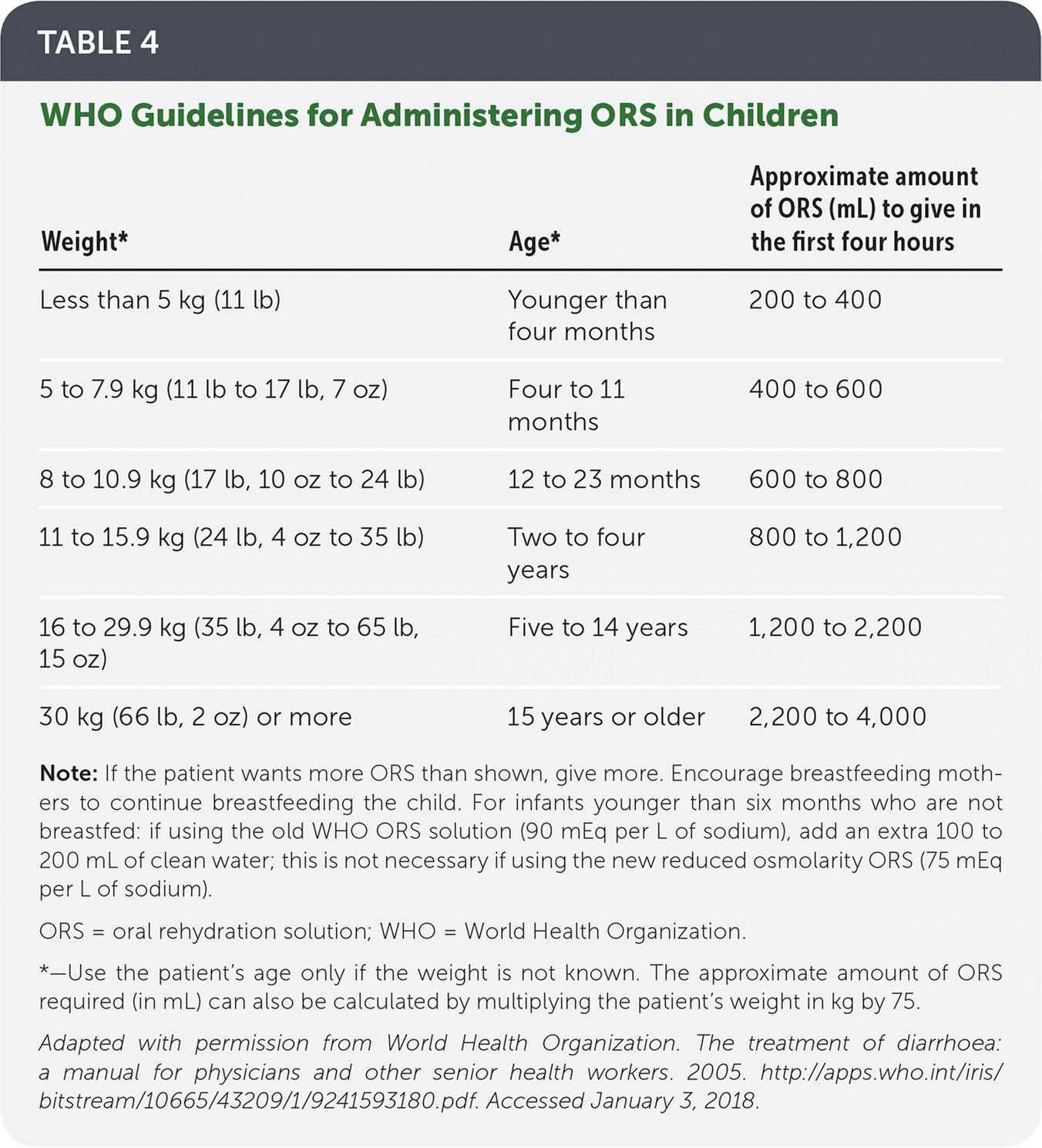
Incorrect amount listed in table. The article “Gastroenteritis in Children” (February 1, 2019, p. 159) contained an error in the last column of row two of Table 4 (page 162). The table incorrectly identified the amount of oral rehydration solution (ORS) to give in the first four hours for children weighing 5 to 7.9 kg (11 lb to 17 lb, 7 oz) as 200 to 400 mL rather than 400 to 600 mL. Table 4 is reprinted below and the online version of the article has been corrected.
TABLE 4 WHO Guidelines for Administering ORS in Children
| Weight* | Age* | Approximate amount of ORS (mL) to give in the first four hours |
|---|---|---|
| Less than 5 kg (11 lb) | Younger than four months | 200 to 400 |
| 5 to 7.9 kg (11 lb to 17 lb, 7 oz) | Four to 11 months | 400 to 600 |
| 8 to 10.9 kg (17 lb, 10 oz to 24 lb) | 12 to 23 months | 600 to 800 |
| 11 to 15.9 kg (24 lb, 4 oz to 35 lb) | Two to four years | 800 to 1,200 |
| 16 to 29.9 kg (35 lb, 4 oz to 65 lb, 15 oz) | Five to 14 years | 1,200 to 2,200 |
| 30 kg (66 lb, 2 oz) or more | 15 years or older | 2,200 to 4,000 |
Note: If the patient wants more ORS than shown, give more. Encourage breastfeeding mothers to continue breastfeeding the child. For infants younger than six months who are not breastfed: if using the old WHO ORS solution (90 mEq per L of sodium), add an extra 100 to 200 mL of clean water; this is not necessary if using the new reduced osmolarity ORS (75 mEq per L of sodium).
ORS = oral rehydration solution; WHO = World Health Organization.
*—Use the patient's age only if the weight is not known. The approximate amount of ORS required (in mL) can also be calculated by multiplying the patient's weight in kg by 75.
Adapted with permission from World Health Organization. The treatment of diarrhoea: a manual for physicians and other senior health workers. 2005. http://apps.who.int/iris/bitstream/10665/43209/1/9241593180.pdf. Accessed January 3, 2018.
