

Summary of Recommendation
The USPSTF concludes that the current evidence is insufficient to assess the balance of benefits and harms of screening for cognitive impairment in older adults (Table 1). I statement.
TABLE 1. Screening for Cognitive Impairment in Older Adults: Clinical Summary of the USPSTF Recommendation
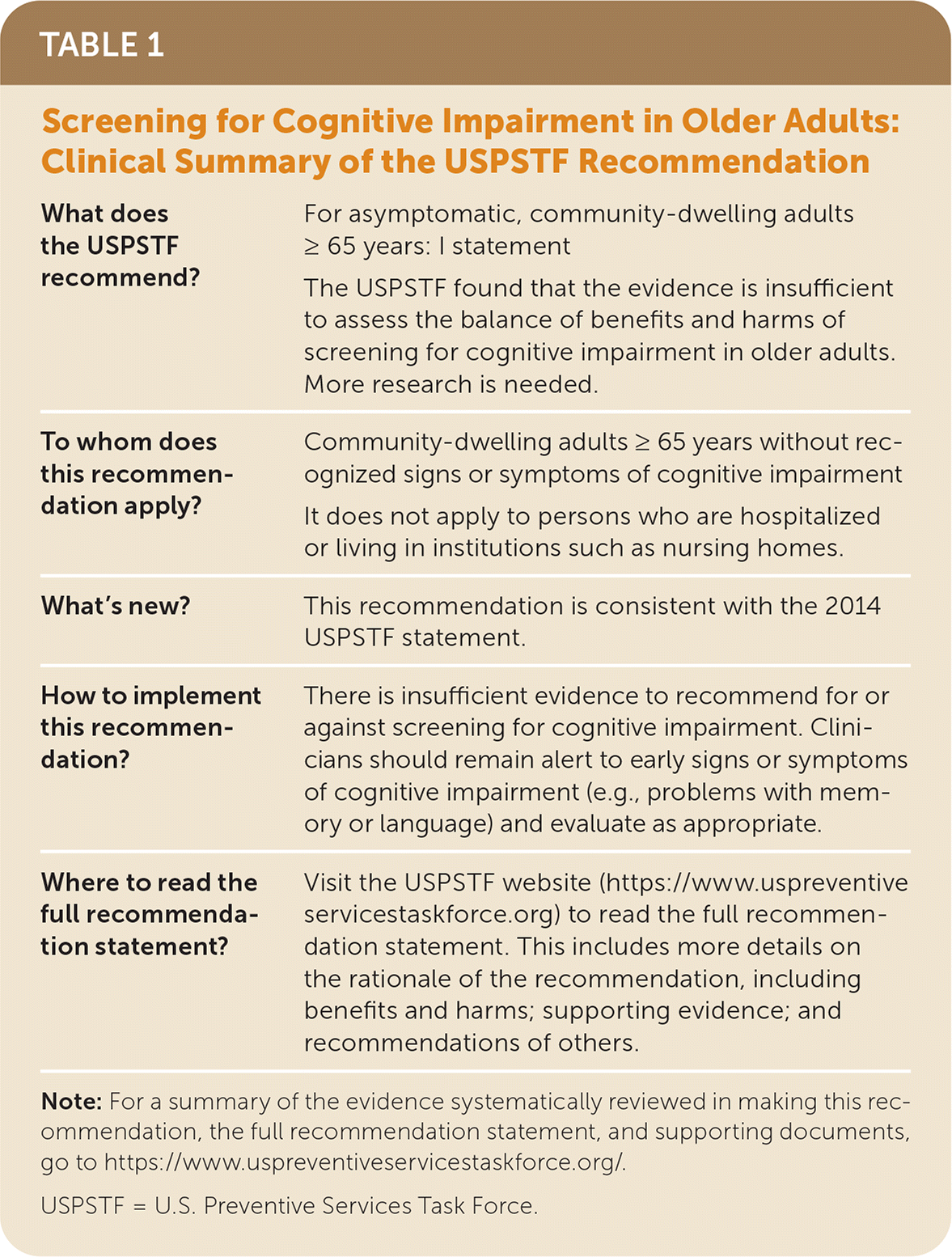
| What does the USPSTF recommend? | For asymptomatic, community-dwelling adults ≥ 65 years: I statement The USPSTF found that the evidence is insufficient to assess the balance of benefits and harms of screening for cognitive impairment in older adults. More research is needed. |
| To whom does this recommendation apply? | Community-dwelling adults ≥ 65 years without recognized signs or symptoms of cognitive impairment It does not apply to persons who are hospitalized or living in institutions such as nursing homes. |
| What’s new? | This recommendation is consistent with the 2014 USPSTF statement. |
| How to implement this recommendation? | There is insufficient evidence to recommend for or against screening for cognitive impairment. Clinicians should remain alert to early signs or symptoms of cognitive impairment (e.g., problems with memory or language) and evaluate as appropriate. |
| Where to read the full recommendation statement? | Visit the USPSTF website (https://www.uspreventiveservicestaskforce.org) to read the full recommendation statement. This includes more details on the rationale of the recommendation, including benefits and harms; supporting evidence; and recommendations of others. |
Note: For a summary of the evidence systematically reviewed in making this recommendation, the full recommendation statement, and supporting documents, go to https://www.uspreventiveservicestaskforce.org/.
USPSTF = U.S. Preventive Services Task Force.
See Table 1 for a more detailed summary of the recommendation for clinicians. See the Practice Considerations section for suggestions for practice regarding the I statement.
Importance
According to the American Psychiatric Association’s Diagnostic and Statistical Manual of Mental Disorders, 5th ed. (DSM-5), dementia (also known as major neurocognitive disorder) is defined by a significant decline in 1 or more cognitive domains that interferes with a person’s independence in daily activities. The 6 cognitive domains identified in the DSM-5 are complex attention, executive function, learning and memory, language, perceptual motor function, and social cognition.1 Dementia affects an estimated 2.4 to 5.5 million persons in the United States, and its prevalence increases with age. Dementia affects an estimated 3.2% of persons aged 65 to 74 years, 9.9% of those aged 75 to 84 years, and 29.3% of those 85 years or older.2
Mild cognitive impairment (MCI) differs from dementia in that the impairment is not severe enough to interfere with independent daily functioning. Some persons with MCI may progress to dementia, whereas some do not. One systematic review found that 32% of persons with MCI develop dementia over 5 years.3 However, studies have also shown that between 10% and 40% of persons with MCI may return to normal cognition over approximately 4 to 5 years.4–6 The prevalence of MCI is difficult to estimate, in part because of differing diagnostic criteria, leading to a wide range of prevalence estimates (3%–42%) in adults 65 years or older.7,8 In this recommendation statement, cognitive impairment refers to both dementia and MCI.
USPSTF Assessment of Magnitude of Net Benefit
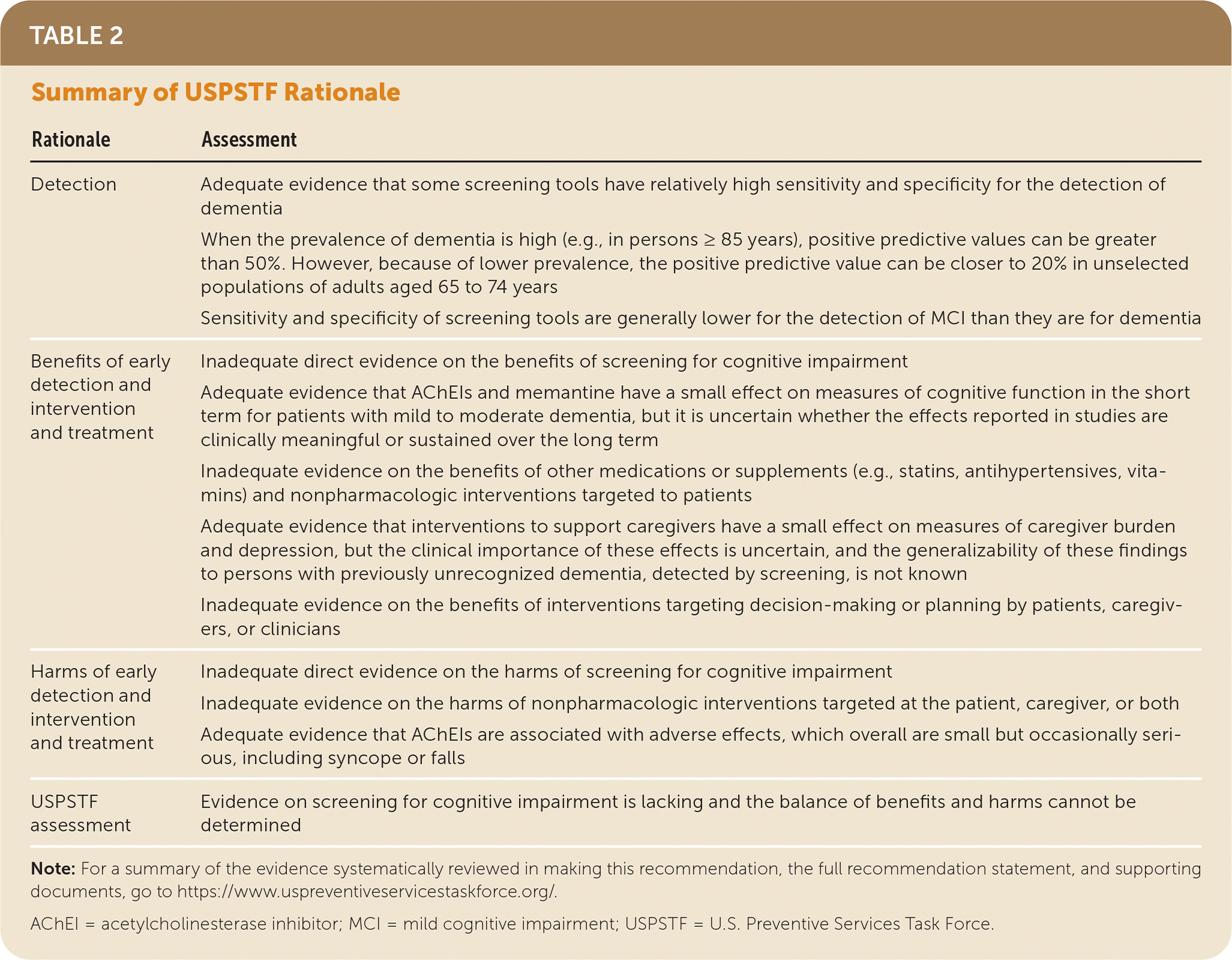
The USPSTF concludes that the evidence is lacking, and the balance of benefits and harms of screening for cognitive impairment cannot be determined (Table 1 and Table 2).
TABLE 2. Summary of USPSTF Rationale
| Rationale | Assessment |
|---|---|
| Detection | Adequate evidence that some screening tools have relatively high sensitivity and specificity for the detection of dementia When the prevalence of dementia is high (e.g., in persons ≥ 85 years), positive predictive values can be greater than 50%. However, because of lower prevalence, the positive predictive value can be closer to 20% in unselected populations of adults aged 65 to 74 years Sensitivity and specificity of screening tools are generally lower for the detection of MCI than they are for dementia |
| Benefits of early detection and intervention and treatment | Inadequate direct evidence on the benefits of screening for cognitive impairment Adequate evidence that AChEIs and memantine have a small effect on measures of cognitive function in the short term for patients with mild to moderate dementia, but it is uncertain whether the effects reported in studies are clinically meaningful or sustained over the long term Inadequate evidence on the benefits of other medications or supplements (e.g., statins, antihypertensives, vitamins) and nonpharmacologic interventions targeted to patients Adequate evidence that interventions to support caregivers have a small effect on measures of caregiver burden and depression, but the clinical importance of these effects is uncertain, and the generalizability of these findings to persons with previously unrecognized dementia, detected by screening, is not known Inadequate evidence on the benefits of interventions targeting decision-making or planning by patients, caregivers, or clinicians |
| Harms of early detection and intervention and treatment | Inadequate direct evidence on the harms of screening for cognitive impairment Inadequate evidence on the harms of nonpharmacologic interventions targeted at the patient, caregiver, or both Adequate evidence that AChEIs are associated with adverse effects, which overall are small but occasionally serious, including syncope or falls |
| USPSTF assessment | Evidence on screening for cognitive impairment is lacking and the balance of benefits and harms cannot be determined |
Note: For a summary of the evidence systematically reviewed in making this recommendation, the full recommendation statement, and supporting documents, go to https://www.uspreventiveservicestaskforce.org/.
AChEI = acetylcholinesterase inhibitor; MCI = mild cognitive impairment; USPSTF = U.S. Preventive Services Task Force.
Practice Considerations
PATIENT POPULATION UNDER CONSIDERATION
This recommendation applies to community-dwelling adults 65 years or older, without recognized signs or symptoms of cognitive impairment. Early detection and diagnosis of dementia through the assessment of signs and symptoms recognized by the patient, family, or clinician, which may be subtle, are not considered screening and are therefore not the focus of this recommendation.
RISK ASSESSMENT
Increasing age is the strongest known risk factor for cognitive impairment.9 The ε4 allele of the apolipoprotein E (apoE) gene is a reported risk factor for Alzheimer disease in white and Asian populations.10 Other risk factors include cardiovascular risk factors (e.g., diabetes, hypertension, or hypercholesterolemia), depression, physical frailty, low education level, and low social support level.10–13 Several dietary and lifestyle factors have been reported as associated with decreased risk of cognitive impairment. These include adequate folic acid intake, low saturated fat intake, higher longer-chain omega-3 fatty acid intake, high fruit and vegetable intake, the Mediterranean diet, moderate alcohol intake (1 to 6 drinks per week vs. abstention), higher educational attainment, cognitive engagement, social engagement, and higher physical activity levels.10,11,14,15
SCREENING TESTS
Many different brief screening tests for cognitive impairment are available. Screening tests generally include asking patients to perform a series of tasks that assess 1 or more domains of cognitive function. These tests are not intended to diagnose MCI or dementia. A positive screening test result should lead to additional testing that can include blood tests, radiology examinations, and a medical and neuropsychologic evaluation to confirm the diagnosis of dementia and determine its subtype.
The most well-studied screening instrument is the Mini-Mental State Examination (MMSE). Other screening instruments include the clock drawing test (CDT), Memory Impairment Screen (MIS)/MIS by Telephone (MIS-T), Mental Status Questionnaire (MSQ), Mini-Cog verbal fluency, 8-Item Informant Interview (AD8), Functional Activities Questionnaire (FAQ), 7-Minute Screen (7MS), Abbreviated Mental Test (AMT), Montreal Cognitive Assessment (MoCA), St. Louis University Mental Status Examination (SLUMS), Telephone Instrument for Cognitive Status (TICS), and Informant Questionnaire on Cognitive Decline in the Elderly (IQCODE). For more information on all screening instruments reviewed by the USPSTF, see the full evidence report.16,17
TREATMENT AND INTERVENTIONS
Treatment of cognitive impairment may focus on one or more signs and symptoms, including cognition, quality of life, mood, and behavioral impairments.
Several pharmacologic and nonpharmacologic interventions aim to slow, prevent, or reverse cognitive impairment; stabilize or improve functional performance; improve caregiver burden and depression; or improve patient, caregiver, and clinician decision-making. Pharmacologic treatments approved by the U.S. Food and Drug Administration for Alzheimer disease include acetylcholinesterase inhibitors (AChEIs) and memantine. Nonpharmacologic inter ventions include cognitive training, cognitive rehabilitation, cognitive stimulation inter ventions, exercise, peer support, psychoeducation, and care management.
SUGGESTIONS FOR PRACTICE REGARDING THE I STATEMENT
Potential Preventable Burden. Dementia affects an estimated 2.4 to 5.5 million persons in the United States, and its prevalence increases with age. Dementia affects an estimated 9.9% of persons aged 75 to 84 years and 29.3% of those 85 years or older.2 Subjective memory issues are common in adults, with studies showing that approximately 50%18 to 75%19 of adults have at least minor concerns about their memory.
Although there is insufficient evidence to recommend for or against screening for cognitive impairment, there may be important reasons to identify cognitive impairment early. Burdens of cognitive impairment include direct effects on the patient (e.g., loss of function and relationships, financial misjudgments, nonadherence with recommended therapies), direct effects on caregivers (e.g., burden, depression), and effects on society (e.g., costs of care). Early detection of cognitive impairment can allow for identification and treatment of reversible causes, may help clinicians anticipate problems patients may have in understanding and adhering to medical treatment plans, and may also be useful by providing a basis for advance planning on the part of patients and families. Clinicians should remain alert to early signs or symptoms of cognitive impairment (e.g., problems with memory or language) and evaluate the individual as appropriate. However, none of the potential benefits of screening have been clearly demonstrated in clinical trials.
Potential Harms. Evidence about the harms of screening is limited. One potential harm is labeling a person with an illness that is typically progressive and for which treatment appears to have limited effectiveness. Some studies have shown higher stress, greater depression, and lower quality of life in persons aware of a diagnosis of cognitive impairment,20 whereas others have found no such association.21,22 Evidence about the effects of false-positive results is limited. AChEIs are associated with harms, some of which are serious, including central nervous system disturbances, bradycardia, and falls. Evidence about the harms of nonpharmacologic interventions is limited, but these harms are assumed to be small.
Current Practice. Most commonly, evaluation for or diagnosis of cognitive impairment occurs as a result of patient- or caregiver-reported concerns or symptoms or clinician’s suspicion. As many as 29% to 76% of patients with dementia are unrecognized in the primary care setting.23–25 In 2011, Medicare added detection of cognitive impairment to its annual wellness visit. The Centers for Medicare & Medicaid Services recommends assessing a patient’s cognitive function by direct observation; considering information and concerns reported by the patient, family members, friends, caregivers, and others; and, if deemed appropriate, using a brief validated, structured cognitive assessment tool.26
Additional Tools and Resources
The National Institute on Aging has useful information on the definition, detection, and management of cognitive impairment for patients and clinicians, including links to some screening instruments, on its website.27
The USPSTF has recommendations related to several risk factors for cognitive impairment, including pharmacotherapy and counseling for tobacco cessation28; screening and counseling to reduce unhealthy alcohol use29; counseling to promote healthful diet and physical activity30,31; statins to reduce cardiovascular disease risk32; and screening for hypertension,33 abnormal blood glucose levels,34 and depression.35
This recommendation statement was first published in JAMA. 2020;323(8):764–785.
The USPSTF recommendations are independent of the U.S. government. They do not represent the views of the Agency for Healthcare Research and Quality, the U.S. Department of Health and Human Services, or the U.S. Public Health Service.
The “Update of Previous USPSTF Recommendation,” “Supporting Evidence,” “Research Needs and Gaps,” and “Recommendations of Others” sections of this recommendation statement are available at https://www.uspreventiveservicestaskforce.org/uspstf/recommendation/cognitive-impairment-in-older-adults-screening#fullrecommendationstart.
