

Sarecycline (Seysara) is a tetracycline-class medication. It is labeled for the treatment of inflammatory lesions of non-nodular moderate to severe acne vulgaris in patients nine years and older.1
Safety
As with other drugs in the tetracycline class, sarecycline can cause teratogenic effects. Limited human data demonstrate an association between tetracycline use and subsequent birth defects or miscarriage. Tetracyclines are known to cross the placenta into fetal tissues. Animal studies have shown skeletal defects in offspring. Due to the risk of fetal harm, sarecycline should not be used by pregnant women. Patients suspected of being pregnant should immediately discontinue treatment.1 Sarecycline should not be taken by breastfeeding women because of the risk of adverse effects on infant bone and tooth development.1 In animal studies, sarecycline decreases spermatogenesis at high doses, and decreased fertility may occur in men taking sarecycline.
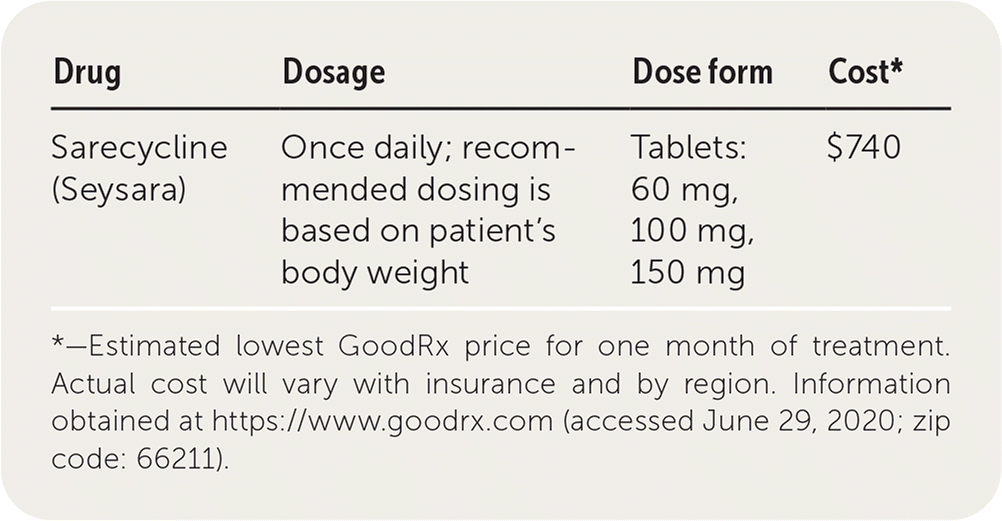
| Drug | Dosage | Dose form | Cost* |
|---|---|---|---|
| Sarecycline (Seysara) | Once daily; recommended dosing is based on patient's body weight | Tablets: 60 mg, 100 mg, 150 mg | $740 |
*—Estimated lowest GoodRx price for one month of treatment. Actual cost will vary with insurance and by region. Information obtained at https://www.goodrx.com (accessed June 29, 2020; zip code: 66211).
Like other antibiotics, sarecycline can cause Clostridioides difficile–associated diarrhea.1 Sarecycline should not be administered with oral retinoids because the combination may increase intracranial pressure. Antacids may decrease absorption and should be taken on a separate dosing schedule. Sarecycline can interfere with the bactericidal action of penicillin and should not be administered concurrently. Sarecycline may decrease plasma prothrombin activity, and decreased anticoagulant dosing may be required due to an increased risk of bleeding. Sarecycline has not demonstrated any clinically significant effects on oral contraceptives containing ethinyl estradiol and norethindrone acetate.1
Tolerability
Sarecycline is generally well-tolerated.2 In clinical trials, the most common adverse effect is nausea, which occurred in about 3% of patients vs. about 2% of those taking placebo.1 As with other tetracyclines, sarecycline may cause an increased risk of sunburn, and during treatment patients should minimize exposure to sunlight or tanning beds and optimize sun protection measures. Sarecycline may cause lightheadedness, vertigo, and dizziness. Esophageal irritation and ulceration may occur if sarecycline is not swallowed completely. Patients should be instructed to take the medication with a full glass of water.
Effectiveness
Sarecycline has been studied in two 12-week multicenter, randomized, double-blind, placebo-controlled trials of 2,002 patients with moderate to severe acne, an average of 30 inflammatory lesions, and an Investigator's Global Assessment of severity of 3.1 out of a possible 4.0. After 12 weeks of treatment, patients taking sarecycline had about 15 fewer lesions compared with 10 fewer lesions in those taking placebo (P < .0001). Approximately one in five patients (21.9% to 22.6%) will have treatment success, defined as at least a two-point drop in the Investigator's Global Assessment and a designation of either “clear” or “almost clear” skin vs. approximately one in 10 patients (10.5% to 15.3%) taking placebo. Patient satisfaction was not assessed in either study. These results are similar to those seen with oral doxycycline and minocycline (Minocin).3
In these studies, sarecycline was used alone without concurrent topical therapy, and it has not been studied in combination with other treatments. Sarecycline has also not been studied in patients with mild to moderate acne or in those with nodular acne. It has not been compared directly with other tetracyclines.
Price
A one-month supply of sarecycline costs approximately $740. It is significantly more expensive than other tetracyclines commonly used for acne, including doxycycline and minocycline, which cost about $20 for a 30-day supply. It is not covered by Medicare part D and may not be covered by all insurance plans.
Simplicity
Sarecycline is taken once daily with or without food. The recommended starting dose is determined by body weight (60 mg for persons weighing 33 to 54 kg [73 to 120 lb], 100 mg for those 55 to 84 kg [121 to 186 lb], and 150 mg for those 85 to 136 kg [187 to 300 lb]).
Bottom Line
Sarecycline is a once-daily oral medication for patients with moderate to severe non-nodular acne. Its benefit over less expensive options has not been demonstrated. Due to its high cost, sarecycline should be reserved for patients who have not responded to other conventional treatments for moderate to severe non-nodular acne.
The authors assume full responsibility for the ideas and opinions expressed in this article, which should not be considered the opinions of the U.S. Air Force or the Department of Defense.
