

Lasmiditan (Reyvow) is a 5-HT1F receptor agonist labeled for the treatment of acute migraine with or without aura in adults.
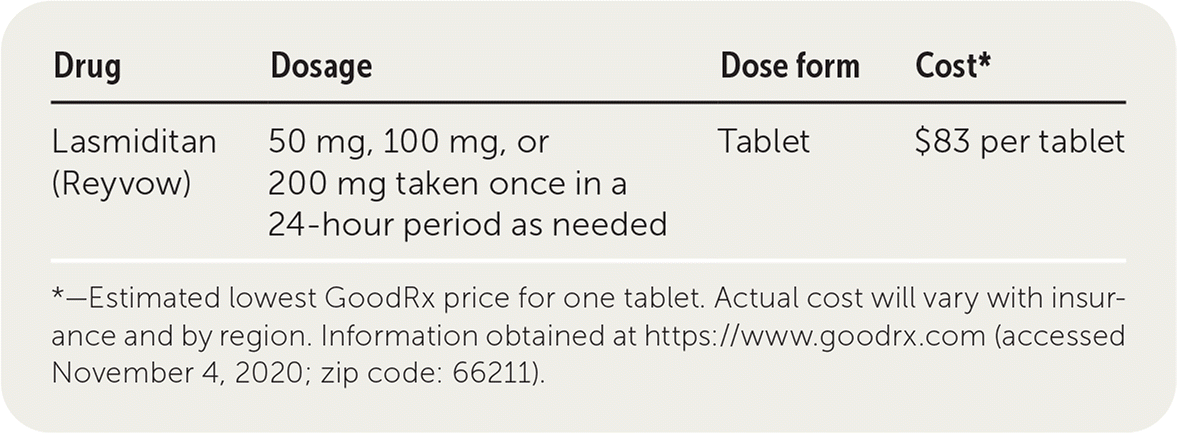
| Drug | Dosage | Dose form | Cost* |
|---|---|---|---|
| Lasmiditan (Reyvow) | 50 mg, 100 mg, or 200 mg taken once in a 24-hour period as needed | Tablet | $83 per tablet |
*—Estimated lowest GoodRx price for one tablet. Actual cost will vary with insurance and by region. Information obtained at https://www.goodrx.com (accessed November 4, 2020; zip code: 66211).
Safety
Lasmiditan may cause impairment and sleepiness due to central nervous system depression. Patients should be advised not to drive for at least eight hours after taking lasmiditan, or longer if they still feel impaired. Combining the medication with other central nervous system depressive agents requires caution.1 Less common severe adverse effects include serotonin syndrome, which occurred in two out of 4,878 patients in initial trials, and bradycardia (average reduction of 10 beats per minute), which was more pronounced in combination with propranolol (average reduction of 19 beats per minute).1,2 Some patients (about 1%) may experience hallucinations or euphoria, and there is a potential for abuse; as a result, lasmiditan is a controlled substance (schedule V).1 Lasmiditan has not been studied in pregnant or breastfeeding patients.
Tolerability
The most common adverse effects include dizziness (up to 15%), paresthesia (up to 9%), somnolence (up to 7%), and fatigue (up to 6%), which are dose-dependent and appear to decrease with subsequent use.2 Dizziness was more common in patients older than 65 years.1 Over three to 12 months of study, about 11% to 14% of patients discontinued lasmiditan because of adverse effects, with higher rates of discontinuation at higher doses.1
Effectiveness
In two studies that included a total of 3,981 patients 18 years and older with a history of three to eight migraine attacks per month, a significantly greater number of patients were pain free two hours after taking lasmiditan vs. placebo (30% to 36% vs. 20%, respectively; number needed to treat [NNT] = 6 to 10).3 These two studies also evaluated the effectiveness of lasmiditan for acute treatment of migraine attack in patients taking daily preventive medication (n = 698). In these patients, all three dosages of lasmiditan produced a significantly higher number who were pain free at two hours compared with placebo (24% to 30% vs. 12%, respectively; NNT = 5 to 8).3 In patients who do not respond to the initial dose, a second dose does not provide additional likelihood of benefit compared with placebo.4
In a study of 1,978 patients with severe migraine-related disability receiving a daily preventive treatment, about one-half experienced a 50% reduction in disability scores over 12 months of treatment with lasmiditan as needed.5 Lasmiditan has not been studied as a preventive treatment for migraine. The effectiveness of lasmiditan has not been compared with other acute migraine treatments.
Price
Lasmiditan costs approximately $83 per tablet. This is significantly more expensive than many other oral migraine abortive treatments.
Simplicity
Lasmiditan should be taken as a single dose of 50 mg, 100 mg, or 200 mg per day as needed. The manufacturer does not specify a starting dose, but response rates have been shown to be similar with all doses. Dosing should not be repeated within 24 hours, and patients should not drive for eight hours after taking a dose.
Bottom Line
Lasmiditan is a costly alternative to other more extensively studied medications for acute migraine. It should be reserved for those patients who lack relief with other available agents or who cannot tolerate other abortive medications.
