

The murders of George Floyd and countless other members of the Black community by police prompted family medicine journals and professional societies to publish antiracism statements that provide actions, plans, and accountability structures to eliminate systemic anti-Black racism in medicine.1,2 Health disparities in cancer outcomes, diabetes mellitus management, and pain treatment are evidence of the results of systemic anti-Black racism in medicine.3 Other examples include exclusionary practices such as fewer patients who are Black receiving organ transplants4 and disrespect toward women who are Black5 (e.g., mistreatment during childbirth,6,7 the death of family physician Dr. Susan Moore8).
Anti-Black racism is perpetuated by the limited compositional diversity of health systems, and racism happens in the absence of overtly racist people.9–11 Policies regarding promotion, hiring, access to resources, and assigning value to work that advantages White people and disadvantages Black people (and other people of color) are the hallmark of systemic anti-Black racism.12 Such policies similarly affect the medical community, with fewer opportunities available to physicians, residents, and students who are Black. The resulting diminished supply of Black physicians negatively impacts the care family physicians provide to Black patients,13 and increasing the number of physicians who are Black has been identified as a means to eliminate health disparities.3 Table 1 outlines specific actions that physicians can take to eliminate systemic anti-Black racism.10,13–18
TABLE 1. Individual Actions That Physicians Can Take to Eliminate Systemic Anti-Black Racism
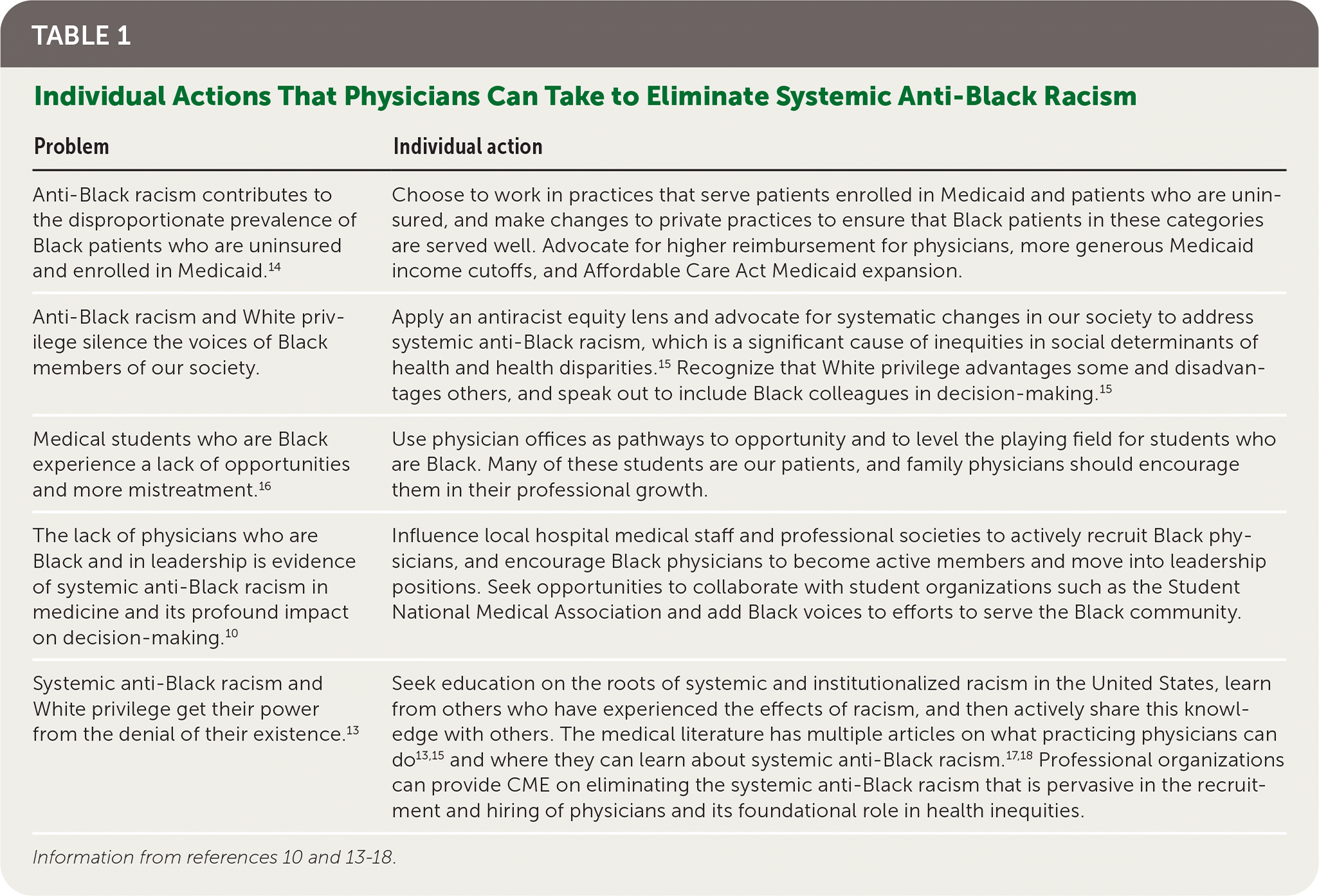
| Problem | Individual action |
|---|---|
| Anti-Black racism contributes to the disproportionate prevalence of Black patients who are uninsured and enrolled in Medicaid.14 | Choose to work in practices that serve patients enrolled in Medicaid and patients who are uninsured, and make changes to private practices to ensure that Black patients in these categories are served well. Advocate for higher reimbursement for physicians, more generous Medicaid income cutoffs, and Affordable Care Act Medicaid expansion. |
| Anti-Black racism and White privilege silence the voices of Black members of our society. | Apply an antiracist equity lens and advocate for systematic changes in our society to address systemic anti-Black racism, which is a significant cause of inequities in social determinants of health and health disparities.15 Recognize that White privilege advantages some and disadvantages others, and speak out to include Black colleagues in decision-making.15 |
| Medical students who are Black experience a lack of opportunities and more mistreatment.16 | Use physician offices as pathways to opportunity and to level the playing field for students who are Black. Many of these students are our patients, and family physicians should encourage them in their professional growth. |
| The lack of physicians who are Black and in leadership is evidence of systemic anti-Black racism in medicine and its profound impact on decision-making.10 | Influence local hospital medical staff and professional societies to actively recruit Black physicians, and encourage Black physicians to become active members and move into leadership positions. Seek opportunities to collaborate with student organizations such as the Student National Medical Association and add Black voices to efforts to serve the Black community. |
| Systemic anti-Black racism and White privilege get their power from the denial of their existence.13 | Seek education on the roots of systemic and institutionalized racism in the United States, learn from others who have experienced the effects of racism, and then actively share this knowledge with others. The medical literature has multiple articles on what practicing physicians can do13,15 and where they can learn about systemic anti-Black racism.17,18 Professional organizations can provide CME on eliminating the systemic anti-Black racism that is pervasive in the recruitment and hiring of physicians and its foundational role in health inequities. |
Systemic anti-Black racism is pervasive; therefore, antiracism needs to be pervasive to combat it. Antiracism is more than abandoning racist attitudes and practices; it is identifying anti-Black racism and undoing it. Family physicians can adopt antiracist attitudes such as identifying policies, not people, as the problem, celebrating racial differences, confessing when we are racist, and believing we can overcome racism.19 Family physicians can move initiatives from web pages to actions by participating in these initiatives, and we can use our influence as physicians to seek out and dismantle systemic anti-Black racism. Small, individual actions collectively have a large impact on creating a more equitable society for everyone.
