

Screening for Prediabetes and Type 2 Diabetes: Clinical Summary of the USPSTF Recommendation
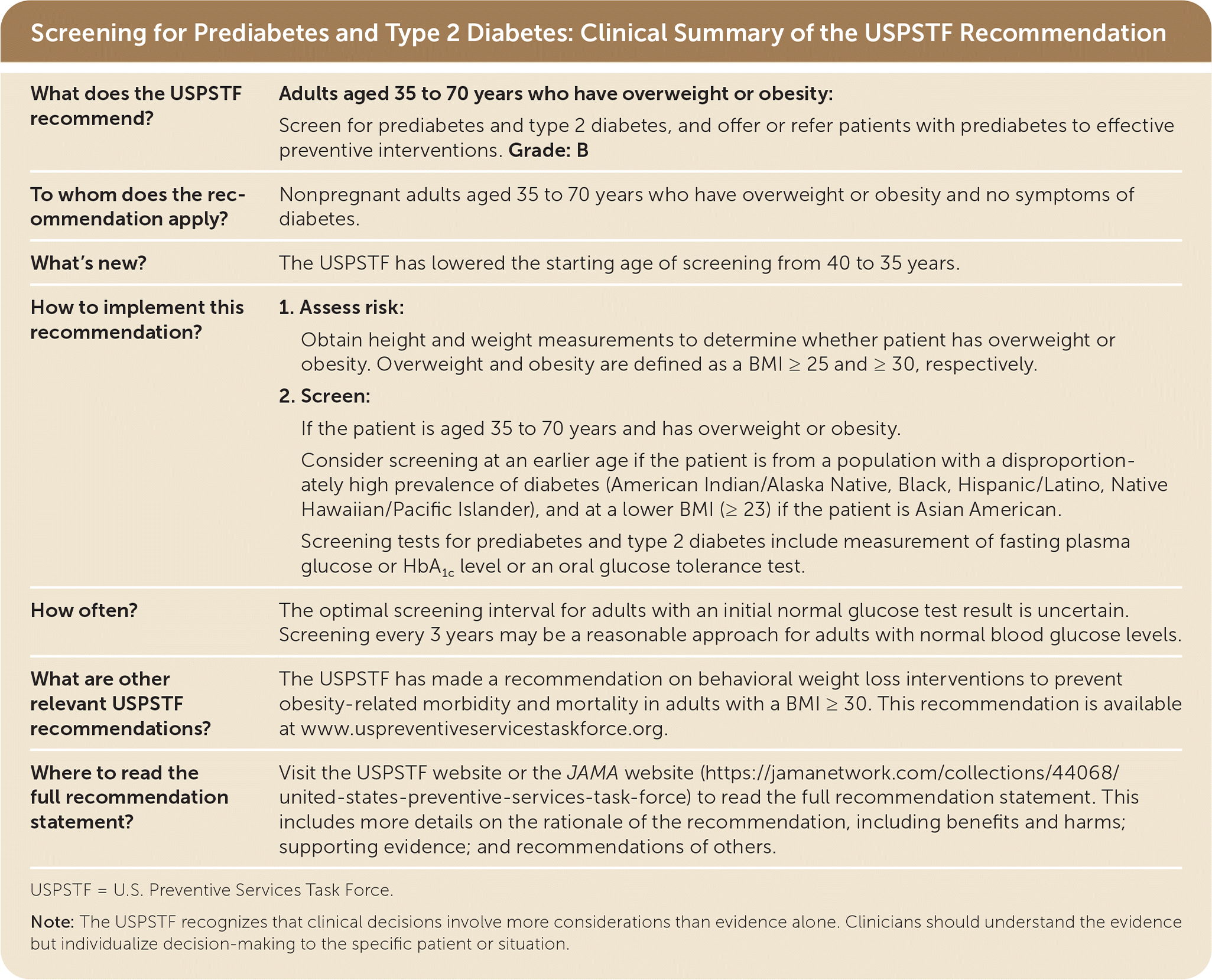
| What does the USPSTF recommend? | Adults aged 35 to 70 years who have overweight or obesity: Screen for prediabetes and type 2 diabetes, and offer or refer patients with prediabetes to effective preventive interventions. Grade: B |
| To whom does the recommendation apply? | Nonpregnant adults aged 35 to 70 years who have overweight or obesity and no symptoms of diabetes. |
| What's new? | The USPSTF has lowered the starting age of screening from 40 to 35 years. |
| How to implement this recommendation? | 1. Assess risk: Obtain height and weight measurements to determine whether patient has overweight or obesity. Overweight and obesity are defined as a BMI ≥ 25 and ≥ 30, respectively. 2. Screen: If the patient is aged 35 to 70 years and has overweight or obesity. Consider screening at an earlier age if the patient is from a population with a disproportionately high prevalence of diabetes (American Indian/Alaska Native, Black, Hispanic/Latino, Native Hawaiian/Pacific Islander), and at a lower BMI (≥ 23) if the patient is Asian American. Screening tests for prediabetes and type 2 diabetes include measurement of fasting plasma glucose or HbA1c level or an oral glucose tolerance test. |
| How often? | The optimal screening interval for adults with an initial normal glucose test result is uncertain. Screening every 3 years may be a reasonable approach for adults with normal blood glucose levels. |
| What are other relevant USPSTF recommendations? | The USPSTF has made a recommendation on behavioral weight loss interventions to prevent obesity-related morbidity and mortality in adults with a BMI ≥ 30. This recommendation is available at www.uspreventiveservicestaskforce.org. |
| Where to read the full recommendation statement? | Visit the USPSTF website or the JAMA website (https://jamanetwork.com/collections/44068/united-states-preventive-services-task-force) to read the full recommendation statement. This includes more details on the rationale of the recommendation, including benefits and harms; supporting evidence; and recommendations of others. |
USPSTF = U.S. Preventive Services Task Force.
Note: The USPSTF recognizes that clinical decisions involve more considerations than evidence alone. Clinicians should understand the evidence but individualize decision-making to the specific patient or situation.
