

Dog and Cat Bites: Rapid Evidence Review

David D. Ortiz, MD
Federico Orlando Lezcano, MD

American Family Physician. 2023;108(5):501-505.

Author disclosure: No relevant financial relationships.

Animal bites are a significant burden to health care systems worldwide. In the United States, dog bites account for an average of 337,000 emergency visits and generate medical costs of up to $2 billion per year. Most animal bites in adults and children are from a dog, and most bite patients are children who have been bitten by animals known to them. Dog bites may cause crush and soft-tissue avulsion, whereas cat bites usually cause deeper puncture-type wounds. Children most often present with dog bites on the head and neck, and adolescents and adults usually present with dog bites on the extremities and hands. Bite wounds should be examined, cleaned, and irrigated with warm water or normal saline solution, and any foreign bodies and devitalized tissue should be removed. Neurovascular function (e.g., pulses, sensation) and range and movement of adjacent joints should be examined and documented. Antibiotic prophylaxis, with amoxicillin/clavulanate as the first-line choice, should be considered for all bites, particularly for those at increased risk of infection. Imaging and laboratory studies are usually not required unless there is suspicion of a retained foreign body, damage to underlying structures, infection, or extensive injury. Primary closure of bite wounds may be performed if there is low risk of infection. The need for tetanus vaccination and rabies postexposure prophylaxis should be evaluated for each patient; bites that do not break the skin generally do not require rabies postexposure prophylaxis.

Dog and cat bites are a common presentation in primary care clinics and emergency departments worldwide. This article summarizes the best available evidence for the evaluation and management of dog and cat bites.

SORT: KEY RECOMMENDATIONS FOR PRACTICE
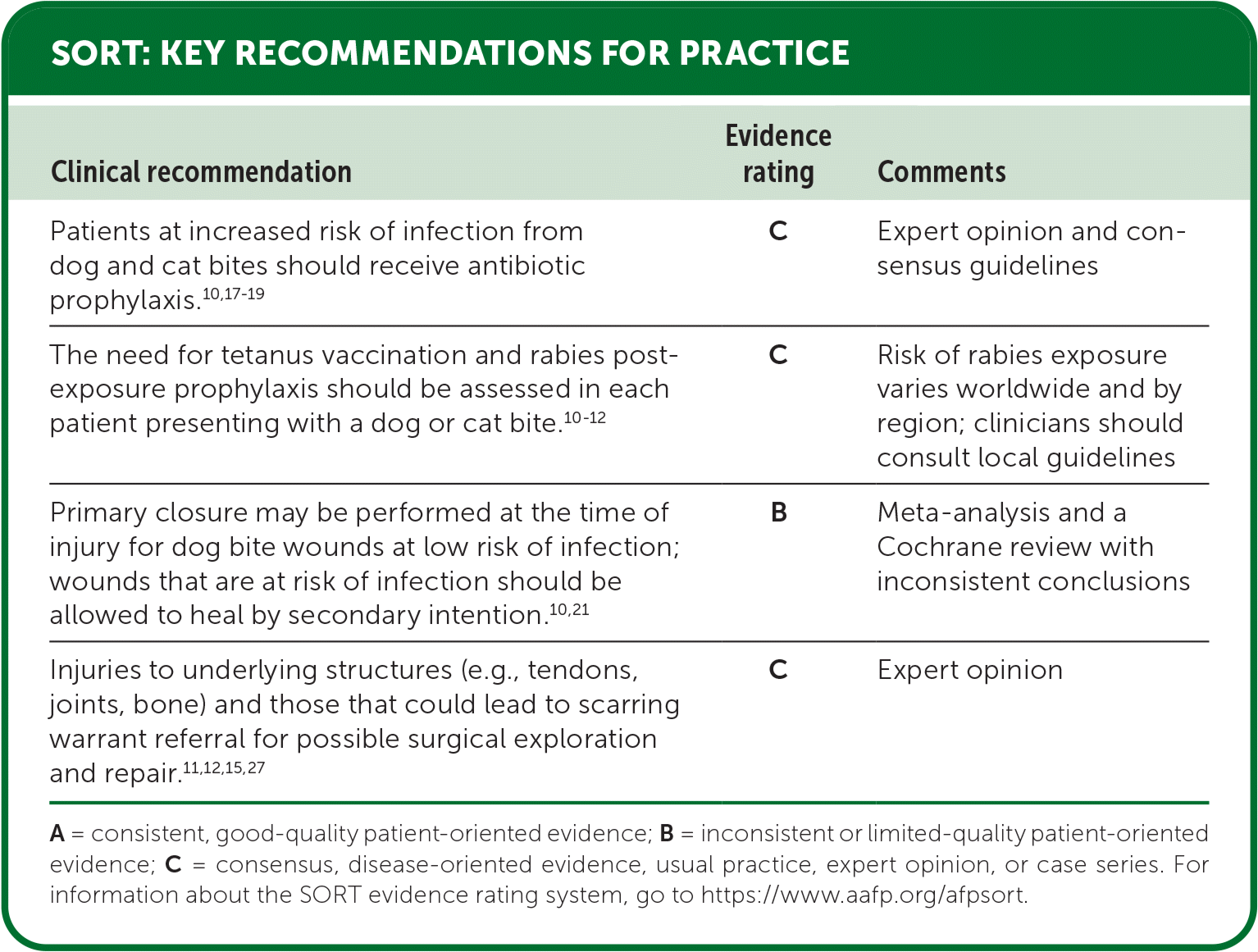
A = consistent, good-quality patient-oriented evidence; B = inconsistent or limited-quality patient-oriented evidence; C = consensus, disease-oriented evidence, usual practice, expert opinion, or case series. For information about the SORT evidence rating system, go to https://www.aafp.org/afpsort.

Epidemiology

  • In the United States, dog bites account for an average of 337,000 emergency visits per year.1 The burden on the health care system is higher in developing regions. For example, in Latin America, approximately 1 million people seek care annually for possible exposure to rabies from dog bites. This means that with a population of about 540 million people, 1 in 500 of the region's inhabitants were bitten by a dog and sought care to prevent rabies in one year.2 Most animal bites in adults and children are from a dog.1
  • Estimates suggest that 20% of patients with an animal bite in the United States seek care in health units.3 Approximately 800,000 cases of dog bites require some type of medical attention and generate $2 billion in medical costs per year.46
  • Dog and cat bites are most common in male, school-aged children. Most bites involving infants and preschoolers occur in their homes with a dog the child is familiar with, whereas adolescents are more often bitten by unfamiliar dogs.4,5,7
  • There is significant regional variation in hospitalization rates for dog bites. In England, the highest hospitalization rates occur in underprivileged areas (27 per 100,000 people).8 Children are more likely than adults to receive medical care for these injuries.9 Children younger than nine years are disproportionately affected by dog bites (17.6 per 100,000 children) and account for two-thirds of hospital admissions among those younger than 18 years.8

Diagnosis

SIGNS AND SYMPTOMS

  • Dog and cat bites may present in different patterns.10 Children most often present with dog bites on the head and neck, and adolescents and adults usually present with dog bites on the extremities and hands.11
  • Cat bites usually cause puncture-type wounds that can penetrate deeply and conta minate joint capsules or periosteum with oral flora.
  • Dog bites may cause crush wounds, extensive lacerations, and soft-tissue avulsion that can result in tissue devitalization.10,12
  • Neurovascular function (e.g., pulses, sensation) and range and movement of adjacent joints should be examined and documented because bites can cause tendon tears or disruption, particularly in the hands.12
  • Dog and cat bites may leave teeth fragments in the wound; therefore, careful examination of the area for foreign objects should be performed.13

DIAGNOSTIC TESTING

  • Ancillary studies are not routinely necessary. In cases of delayed presentation (more than eight to 12 hours since the bite occurred) or if there is suspicion of a wound infection, cellulitis, abscess, or sepsis, a wound culture and blood cultures should be obtained. The wound culture sample should be collected before irrigating the wound, and samples should be studied for aerobic and anaerobic microorganisms.14
  • In deep wounds or extensive wounds to the limbs caused by medium- or large-breed dogs, plain radiography should be performed to rule out fractures or foreign bodies that may have gone unnoticed during the wound exploration.14
  • Plain radiography and computed tomography of the skull and facial bones should be performed for injuries located on the face if the physical examination shows a deformity. It is not uncommon to find associated fractures in these types of injuries.15

Treatment

MEDICAL

  • Bite wounds should be examined, cleaned, and irrigated with warm water or normal saline solution.1012
  • Any foreign body (e.g., teeth fragments) and devitalized tissue should be removed.1,13
  • Routine antibiotic prophylaxis for dog and cat bites is controversial.12,16 For bites that have not broken the skin or drawn blood, antibiotic prophylaxis is not warranted.10
  • Dog and cat bites at risk of infection (Table 11,1012,16,17 ) should receive antibiotic prophylaxis.10,1719
  • When treatment with antibiotic prophylaxis is indicated, it should cover the most common pathogens found in animal bites, including Staphylococcus, Pasteurella, Streptococcus, Capnocytophaga, Moraxella, Corynebacterium, Neisseria, and anaerobic bacteria.11,20 Table 2 outlines antibiotic prophylaxis dosing regimens and alternatives for dog and cat bites.11,12,17,21
  • The need for tetanus vaccination and rabies postexposure prophylaxis should be assessed in each patient presenting with a dog or cat bite. Bites that do not break the skin generally do not require rabies postexposure prophylaxis.1012 Table 3 shows specific guidelines on rabies postexposure prophylaxis for bites that break the skin or expose mucous membranes to the animal's saliva.11,2224 Table 4 lists guidelines for tetanus prophylaxis.10,11,13,25

TABLE 1. Factors That Increase the Risk of Infection in Dog and Cat Bites

Bite location
Face
Feet
Genitalia
Hand
Near a prosthetic joint
Underlying structures (e.g., joints, bone, vascular, tendons) penetrated

Other factors
Cat bites that penetrate the skin
Crush injuries
Delayed presentation (8 to 12 hours or more after bite)
Heavy contamination or foreign body (e.g., dirt, teeth) in wound
Immunosuppression
Preexisting or resulting edema of the affected area
Puncture wounds
Vascular or lymphatic compromise possible

Information from references 1, 1012, 16, and 17.

TABLE 2. Antibiotic Prophylaxis Dosages for Dog and Cat Bites

Adults
First line: amoxicillin/clavulanate, 875 mg/125 mg every 12 hours
Alternative: clindamycin, 300 mg three times per day plus ciprofloxacin, 500 mg twice per day

Children
First line: amoxicillin/clavulanate, 45 mg per kg per day divided every 12 hours
Alternative: clindamycin, 10 to 25 mg per kg per day divided every six to eight hours, plus trimethoprim/sulfamethoxazole, 8 to 10 mg per kg per day of the trimethoprim component divided every 12 hours

Pregnant patients who are allergic to penicillin
First line: clindamycin, 300 mg three times per day, plus trimethoprim/sulfamethoxazole,* 160 mg of the trimethoprim component every 12 hours
Alternative: azithromycin, 250 to 500 mg per day

Note: All regimens should be given for three to seven days.

*—Trimethoprim/sulfamethoxazole should be avoided in first and third trimesters of pregnancy.

†—Azithromycin has variable activity against Pasteurella and a high failure rate.

Information from references 11, 12, 17, and 21.

TABLE 3. Recommendations for Dog and Cat Bite Postexposure Prophylaxis for Rabies

Animal availabilityQuarantine/observationLaboratory testing of animalLaboratory test results/animal statusRecommendation
AvailableQuarantine or home confinement of the animal for 10 days if the animal is healthy and not showing any signs of rabiesNot indicated unless animal dies or develops signs of rabies at any time during the 10-day observation periodNegative or animal successfully completes quarantine/home confinementPostexposure prophylaxis not indicated
Nonnegative (sample not suitable for testing)Postexposure prophylaxis may be indicated, consult a public health official for rabies risk assessment
PositiveAdminister postexposure prophylaxis*
Not available (unknown or escaped animal)Postexposure prophylaxis may be indicated, consult a public health official for rabies risk assessment

*—Rabies postexposure prophylaxis regimen consists of: (1) human rabies immune globulin, 20 IU per kg of body weight, administered around and into the wound, with any remaining volume administered intramuscularly at an anatomic site distant from vaccine administration. Do not use the same syringe to administer human rabies immune globulin and the rabies vaccines, and do not administer more than the recommended dose of human rabies immune globulin to avoid suppression of active rabies antibody production; and (2) human diploid cell vaccine or purified chick embryo cell vaccine, 1.0 mL intramuscularly in deltoid area (adults and older children) or outer thigh (younger children). One dose of either vaccine is given on days 0, 3, 7, and 14. Do not administer rabies vaccine in the gluteal area.

Information from references 11 and 2224.

TABLE 4. Indications for Tetanus Prophylaxis After a Dog or Cat Bite

History of tetanus immunizationClean, minor woundsAll other wounds (e.g., contaminated with dirt, foreign bodies, or saliva; crush injuries; puncture wounds; tearing; avulsions)
VaccineImmune globulinVaccineImmune globulin
Unknown or less than three dosesYesNoYesYes
Three or more dosesNo, unless it has been more than 10 years since last doseNoNo, unless is has been five years or longer since last doseNo

Information from references 10, 11, 13, and 25.

SURGICAL

  • For dog bites at low risk of infection and in areas of cosmetic concern, primary closure is an acceptable option.21,26 Bites at increased risk of infection, including any cat bite that penetrates the skin, should be allowed to heal by secondary intention.10,21,26
  • A Cochrane review identified two trials that compared primary closure with healing by secondary intention, and one that compared primary closure with closure delayed by 48 hours. The small size and limited quality of the studies precluded any conclusions regarding the optimal strategy.21
  • Suspicion of injuries to underlying structures (e.g., tendons, joints, bone) and injuries that are extensive or in cosmetically or functionally important areas (e.g., face, scalp, neck, hands) and could lead to scarring warrant referral for possible surgical exploration and repair.11,12,15,27

Prognosis

  • In most cases, dog bite injuries are not serious. However, worldwide, approximately 50% of bites leave permanent scars, 10% require sutures, 5% to 21% require attention by a specialist,4 and 1% to 5% require hospitalization.28
  • Psychological sequelae of dog bite attacks have been described in children and adults (ranging from fear and avoidance of dogs to posttraumatic stress disorder). Therefore, patients and their caregivers should be counseled about normal reactions to trauma (e.g., nightmares, avoidance) and encouraged to seek care if these symptoms persist.1

Prevention

  • Dog-control, not just breed-specific, legislation for all dogs, including leash laws, stray dog control, and infringements can reduce dog bite rates.29
  • Adult-directed, but not child-directed, educational strategies may be effective in reducing dog bite rates.29,30 Table 5 lists tips to prevent dog and cat bites.1,11,30 The American Veterinary Medical Association also provides dog bite prevention information at https://www.avma.org/resources-tools/pet-owners/dog-bite-prevention.

TABLE 5. Tips to Prevent Dog and Cat Bites

Do not leave children alone or unsupervised with pets.
Socialize dogs with children and other people as puppies.
Ensure pets get regular veterinary care and are up to date on vaccinations.
Train dogs to help reduce the likelihood that they will bite out of fear.
Do not approach a strange or unknown dog without the dog owner's permission.
Use environmental barriers in and around the home (e.g., baby gates, property fences to prevent dogs from escaping or wandering unsupervised, keeping the dog in a separate room if it is hurt or anxious) to help reduce the likelihood of a dog attack.

Information from references 1, 11, and 30.

This article updates previous articles on this topic by Ellis and Ellis11 and Presutti.31

Data Sources: Searches were performed in Essential Evidence Plus, the Cochrane database, Google Scholar, and PubMed using the Clinical Queries function for the term dog and cat bites. Search dates: December 2022, and January and July 2023.

DAVID D. ORTIZ, MD, FAAFP, is director of the Medical Residencies and Rural Internships Directorate at the National Institute of Health, Asunción, Paraguay.

FEDERICO ORLANDO LEZCANO, MD, is faculty in the family medicine residency program at the Asunción Catholic University/Social Security Institute Central Hospital, Asunción, Paraguay.

Address correspondence to David D. Ortiz, MD, FAAFP, National Health Institute, National Public Health Ministry, Manual del Castillo 4929, Asunción, Paraguay (ddortiz1912@gmail.com). Reprints are not available from the authors.

Author disclosure: No relevant financial relationships.

  1. 1.Jakeman M, Oxley JA, Owczarczak-Garstecka SC, et al. Pet dog bites in children: management and prevention. BMJ Paediatr Open. 2020;4(1):e000726.
  2. 2.World Health Organization. Global elimination of dog-mediated human rabies. Report of the Rabies Global Conference, Geneva, Switzerland, 10–11 December 2015. Accessed January 5, 2023. https://www.who.int/publications/i/item/WHO-HTM-NTD-NZD-2016.02
  3. 3.Bykowski MR, Shakir S, Naran S, et al. Pediatric dog bite prevention: are we barking up the wrong tree or just not barking loud enough?. Pediatr Emerg Care. 2019;35(9):618-623.
  4. 4.Essig GF, Sheehan C, Rikhi S, et al. Dog bite injuries to the face: is there risk with breed ownership? A systematic review with meta-analysis. Int J Pediatr Otorhinolaryngol. 2019;117:182-188.
  5. 5.Golinko MS, Arslanian B, Williams JK. Characteristics of 1616 consecutive dog bite injuries at a single institution. Clin Pediatr (Phila). 2017;56(4):316-325.
  6. 6.McGuire C, Morzycki A, Simpson A, et al. Dog bites in children: a descriptive analysis. Plast Surg (Oakv). 2018;26(4):256-262.
  7. 7.Zangari A, Cerigioni E, Nino F, et al. Dog bite injuries in a tertiary care children's hospital: a seven-year review. Pediatr Int. 2021;63(5):575-580.
  8. 8.Health and Social Care Information Centre. Provisional monthly topic of interest: admissions caused by dogs and other mammals. 2015. Accessed December 20, 2022. https://files.digital.nhs.uk/pdf/h/6/animal_bites_m12_1415.pdf
  9. 9.Gilchrist J, Sacks JJ, White D, et al. Dog bites: still a problem?. Inj Prev. 2008;14(5):296-301.
  10. 10.National Institute for Health and Care Excellence. Bites-human and animal: scenario: managing a dog or cat bite. 2021. Accessed December 12, 2022. https://cks.nice.org.uk/bites-human-and-animal#!scenario:1
  11. 11.Ellis R, Ellis C. Dog and cat bites. Am Fam Physician. 2014;90(4):239-243.
  12. 12.Kennedy SA, Stoll LE, Lauder AS. Human and other mammalian bite injuries of the hand: evaluation and management. J Am Acad Orthop Surg. 2015;23(1):47-57.
  13. 13.Rupert J, Honeycutt JD, Odom MR. Foreign bodies in the skin: evaluation and management. Am Fam Physician. 2020;101(12):740-747.
  14. 14.Piñeiro Pérez R, Carabaño Aguado I. Animal bites in Spain: pediatric guideline for primary care. Rev Pediatr Aten Primaria. 2015;17(67):263-270.
  15. 15.Chávez-Serna E, Andrade-Delgado L, Martínez-Wagner R, et al. Experience in the management of acute wounds by dog bite in a hospital of third level of plastic and reconstructive surgery in Mexico. Cir Cir. 2019;87(5):528-539.
  16. 16.Medeiros I, Saconato H. Antibiotic prophylaxis for mammalian bites. Cochrane Database Syst Rev. 2001(2):CD001738.
  17. 17.Stevens DL, Bisno AL, Chambers HF, et al. Practice guidelines for the diagnosis and management of skin and soft tissue infections: 2014 update by the Infectious Diseases Society of America. Clin Infect Dis. 2014;59(2):147-159.
  18. 18.Rerucha CM, Ewing JT, Oppenlander KE, et al. Acute hand infections. Am Fam Physician. 2019;99(4):228-236.
  19. 19.Ramakrishnan K, Salinas RC, Agudelo Higuita NI. Skin and soft tissue infections. Am Fam Physician. 2015;92(6):474-483.
  20. 20.Pardal-Peláez B, Sarmiento-García A. Microbiology of infections caused by dog and cat bites: a review. Rev Chilena Infectol. 2021;38(3):393-400.
  21. 21.Bhaumik S, Kirubakaran R, Chaudhuri S. Primary closure versus delayed or no closure for traumatic wounds due to mammalian bite. Cochrane Database Syst Rev. 2019(12):CD011822.
  22. 22.Rupprecht CE, Briggs D, Brown CM, et al.; Centers for Disease Control and Prevention. Use of a reduced (4-dose) vaccine schedule for postexposure prophylaxis to prevent human rabies: recommendations of the Advisory Committee on Immunization Practices [published correction appears in MMWR Recomm Rep. 2010; 59(69): 493]. MMWR Recomm Rep. 2010;59(RR-2):1-9.
  23. 23.World Health Organization. Rabies vaccines: WHO position paper – April 2018. Wkly Epidemiol Rec. 2018;93(16):201-220.
  24. 24.Tarantola A, Tejiokem MC, Briggs DJ. Evaluating new rabies post-exposure prophylaxis (PEP) regimens or vaccines. Vaccine. 2019;37(suppl 1):A88-A93.
  25. 25.Liang JL, Tiwari T, Moro P, et al. Prevention of pertussis, tetanus, and diphtheria with vaccines in the United States: recommendations of the Advisory Committee on Immunization Practices (ACIP). MMWR Recomm Rep. 2018;67(2):1-44.
  26. 26.Cade A, Low S, Head H. CadeALowSHeadHPrimary closure of animal bites [published online May 1, 2018]. Am Fam Physician2018; 97(9):online. December 12, 2022. https://www.aafp.org/pubs/afp/issues/2018/0501/od2.html
  27. 27.Bula-Rudas FJ, Olcott JL. Human and animal bites. Pediatr Rev. 2018;39(10):490-500.
  28. 28.Palacio J, León M, García-Belenguer S. Epidemiological aspects of dog bites. Gac Sanit. 2005;19(1):50-58.
  29. 29.Duncan-Sutherland N, Lissaman AC, Shepherd M, et al. Systematic review of dog bite prevention strategies. Inj Prev. 2022;28(3):288-297.
  30. 30.Duperrex O, Blackhall K, Burri M, et al. Education of children and adolescents for the prevention of dog bite injuries. Cochrane Database Syst Rev. 2009(2):CD004726.
  31. 31.Presutti RJ. Prevention and treatment of dog bites. Am Fam Physician. 2001;63(8):1567-1572.

Copyright © 2026 by the American Academy of Family Physicians.

This content is owned by the AAFP. A person viewing it online may make one printout of the material and may use that printout only for his or her personal, non-commercial reference. This material may not otherwise be downloaded, copied, printed, stored, transmitted or reproduced in any medium, whether now known or later invented, except as authorized in writing by the AAFP. See permissions for copyright questions and/or permission requests.
