

Acute Uncomplicated UTIs in Adults: Rapid Evidence Review

Peter K. Kurotschka, MD
Ildikó Gágyor, MD
Mark H. Ebell, MD, MS

American Family Physician. 2024;109(2):167-174.

Author disclosure: No relevant financial relationships.

Patient information: A related handout on uncomplicated urinary tract infections is available.

An acute uncomplicated urinary tract infection (UTI) is a bacterial infection of the lower urinary tract with no sign of systemic illness or pyelonephritis in a noncatheterized, nonpregnant adult with no urologic abnormalities or immunocompromise. In women, a self-diagnosis of a UTI with the presence of typical symptoms (e.g., frequency, urgency, dysuria/burning sensation, nocturia, suprapubic pain), without vaginal discharge, is accurate enough to diagnose an uncomplicated UTI without further testing. Urine culture and susceptibility testing should be reserved for women with recurrent infection, treatment failure, history of resistant isolates, or atypical presentation to make a definitive diagnosis and guide antibiotic selection. First-line antibiotics include nitrofurantoin for five days, fosfomycin in a single dose, trimethoprim for three days, or trimethoprim/sulfamethoxazole for three days. Symptomatic treatment with nonsteroidal anti-inflammatory drugs and delayed antibiotics may be considered because the risk of complications is low. Increased fluids, intake of cranberry products, and methenamine hippurate can prevent recurrent infections. Antibiotic prophylaxis is also effective in preventing recurrence but has a risk of adverse effects and antimicrobial resistance. Men with lower UTI symptoms should always receive antibiotics, with urine culture and susceptibility results guiding the antibiotic choice. Clinicians should also consider the possibility of urethritis and prostatitis in men with UTI symptoms. First-line antibiotics for men with uncomplicated UTI include trimethoprim, trimethoprim/sulfamethoxazole, and nitrofurantoin for seven days. Uncomplicated UTIs in nonfrail women and men 65 years and older with no relevant comorbidities also necessitate a urine culture with susceptibility testing to adjust the antibiotic choice after initial empiric treatment; first-line antibiotics and treatment durations do not differ from those recommended for younger adults.

This article provides a rapid evidence review of the best available patient-oriented evidence for acute uncomplicated urinary tract infection (UTI) in adults. An uncomplicated UTI is a bacterial infection of the lower urinary tract in a noncatheterized, nonpregnant adult without urologic abnormalities, immunocompromise, or signs of systemic illness or pyelonephritis. More than 80% of UTIs occur in women; therefore, unless specified, the recommendations in this article are for adult women younger than 65 years. Recommendations for uncomplicated UTIs in other populations, such as men and women and men 65 years or older, are reviewed briefly. Nonbinary and transgender people should be evaluated and treated according to their current urogenital anatomy.

WHAT'S NEW ON THIS TOPIC
Urinary Tract Infections
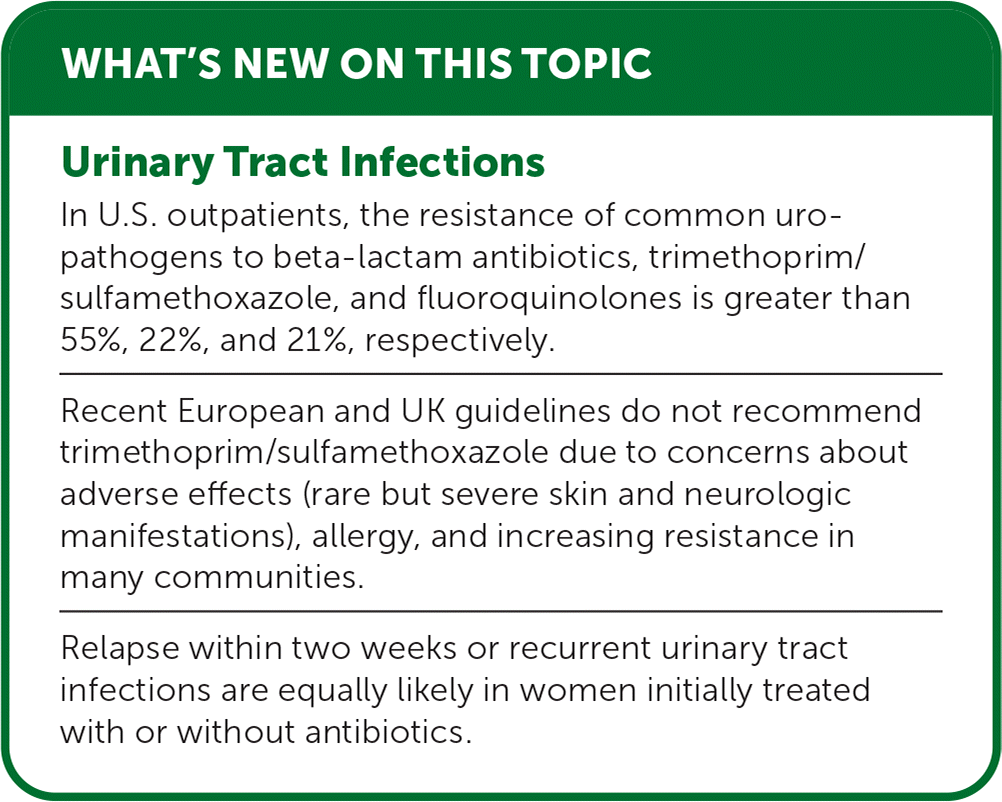
In U.S. outpatients, the resistance of common uropathogens to beta-lactam antibiotics, trimethoprim/sulfamethoxazole, and fluoroquinolones is greater than 55%, 22%, and 21%, respectively.
Recent European and UK guidelines do not recommend trimethoprim/sulfamethoxazole due to concerns about adverse effects (rare but severe skin and neurologic manifestations), allergy, and increasing resistance in many communities.
Relapse within two weeks or recurrent urinary tract infections are equally likely in women initially treated with or without antibiotics.

SORT: KEY RECOMMENDATIONS FOR PRACTICE
Clinical recommendation Evidence rating Comment
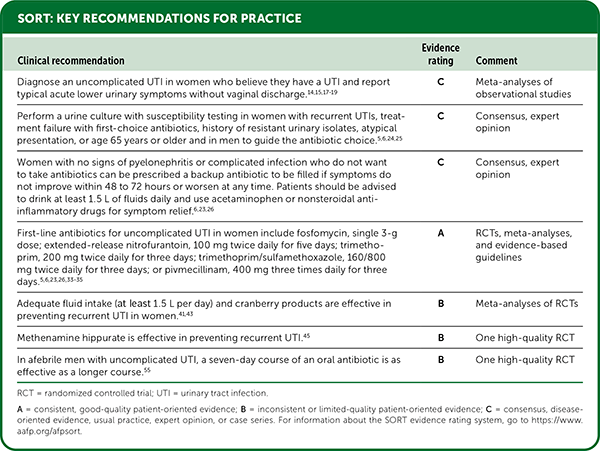
Diagnose an uncomplicated UTI in women who believe they have a UTI and report typical acute lower urinary symptoms without vaginal discharge.14,15,1719 C Meta-analyses of observational studies
Perform a urine culture with susceptibility testing in women with recurrent UTIs, treatment failure with first-choice antibiotics, history of resistant urinary isolates, atypical presentation, or age 65 years or older and in men to guide the antibiotic choice.5,6,24,25 C Consensus, expert opinion
Women with no signs of pyelonephritis or complicated infection who do not want to take antibiotics can be prescribed a backup antibiotic to be filled if symptoms do not improve within 48 to 72 hours or worsen at any time. Patients should be advised to drink at least 1.5 L of fluids daily and use acetaminophen or nonsteroidal anti-inflammatory drugs for symptom relief.6,23,26 C Consensus, expert opinion
First-line antibiotics for uncomplicated UTI in women include fosfomycin, single 3-g dose; extended-release nitrofurantoin, 100 mg twice daily for five days; trimethoprim, 200 mg twice daily for three days; trimethoprim/sulfamethoxazole, 160/800 mg twice daily for three days; or pivmecillinam, 400 mg three times daily for three days.5,6,23,26,3335 A RCTs, meta-analyses, and evidence-based guidelines
Adequate fluid intake (at least 1.5 L per day) and cranberry products are effective in preventing recurrent UTI in women.41,43 B Meta-analyses of RCTs
Methenamine hippurate is effective in preventing recurrent UTI.45 B One high-quality RCT
In afebrile men with uncomplicated UTI, a seven-day course of an oral antibiotic is as effective as a longer course.55 B One high-quality RCT

RCT = randomized controlled trial; UTI = urinary tract infection.

A = consistent, good-quality patient-oriented evidence; B = inconsistent or limited-quality patient-oriented evidence; C = consensus, disease-oriented evidence, usual practice, expert opinion, or case series. For information about the SORT evidence rating system, go to https://www.aafp.org/afpsort.

BEST PRACTICES IN INFECTIOUS DISEASE

Recommendations From Choosing Wisely
RecommendationSponsoring organization
Avoid using a fluoroquinolone antibiotic for the first-line treatment of uncomplicated UTIs in women.American Urogynecologic Society
Avoid presumptive antibiotic treatment of recurrent UTIs in women without first obtaining a urinalysis (culture and sensitivity).American Urogynecologic Society
Do not order urine cultures unless patients have symptoms consistent with a UTI.American Society for Microbiology

Note: For Choosing Wisely recommendations relevant to primary care, see https://www.aafp.org/pubs/afp/collections/choosing-wisely.html.

UTI = urinary tract infection.

Epidemiology and Microbiology

  • The self-reported annual incidence of UTI is 11% in women and 3% in men.1,2 UTIs are most common in women between 18 and 29 years of age.3
  • UTIs are uncommon in men younger than 60 years; by 80 years of age, women and men have similar incidence rates.2,3
  • Most UTIs are uncomplicated. Complicating factors are listed in Table 1.47
  • Uropathogenic Escherichia coli causes 75% to 90% of UTIs; the remaining infections are caused by organisms such as Enterobacteriaceae, Enterococcus species, Staphylococcus saprophyticus, and Pseudomonas aeruginosa (Table 2).8,9
  • In U.S. outpatients, the resistance of common uropathogens to beta-lactam antibiotics, trimethoprim/sulfamethoxazole, and fluoroquinolones is 55.8%, 22.4%, and 21.6%, respectively.10
  • Multidrug-resistant uropathogens are increasingly prevalent. The primary risk factors for bacterial resistance include recent antibiotic use and hospitalization in the past three months.11,12

TABLE 1. Signs and Underlying Conditions Related to Complicated Urinary Tract Infections

Any relevant anatomic abnormality of the urinary tract
Fatigue or malaise
Fever, chills, tachycardia
Flank pain, costovertebral angle tenderness
Immunosuppression
Nausea, vomiting
Permanent bladder catheter or use of a bladder catheter within the past two weeks
Pregnancy

Information from references 47.

TABLE 2. Prevalence of the Most Common Organisms That Cause Acute Uncomplicated Urinary Tract Infections

PathogenPrevalence (%)
Uropathogenic Escherichia coli* 75 to 90
Klebsiella pneumoniae* 6
Staphylococcus saprophyticus6
Enterococcus species5
Group B streptococcus3
Proteus mirabilis* 2
Pseudomonas aeruginosa* 1
Other2

*—Gram-negative.

†—Gram-positive; more common in older patients and pregnant women.9

Adapted with permission from Flores-Mireles AL, Walker JN, Caparon M, et al. Urinary tract infections: epidemiology, mechanisms of infection and treatment options. Nat Rev Microbiol. 2015;13(5):270, with additional information from reference 9.

Diagnosis

  • The typical presentation includes frequency, urgency, dysuria/burning sensation, nocturia, and suprapubic pain or tenderness. Physical examination findings are usually normal.4,5,13
  • The prevalence of culture-confirmed UTI among women with urinary tract symptoms is 45% to 65%.14 Combinations of signs and symptoms suggesting other diagnoses are presented in Table 3.4,5,15,16

TABLE 3. Differential Diagnosis of Urinary Tract Infection in Women

Signs/symptomsSuggested diagnosis
Chronic or recurrent frequency, dysuria, pain with bladder filling and relief with emptying, pelvic pain, nocturia, urgency; typically in women 20 to 40 years of agePainful bladder syndrome/interstitial cystitis*
Costovertebral angle tenderness, flank painKidney stones, pyelonephritis/complicated urinary tract infection
Chills, costovertebral angle tenderness, fatigue, fever, flank pain, nausea, tachycardia, vomitingPyelonephritis/complicated urinary tract infection
Cervical discharge, pustules/ulcers, rash, vulvar vesiclesHerpes simplex virus, lichen planus, other sexually transmitted infections, psoriasis
Discomfort during sexual intercourse, vaginal dischargeVaginitis

*—Diagnosis of exclusion.

Information from references 4, 5, 15, and 16.

SIGNS, SYMPTOMS, AND URINALYSIS

  • According to a systematic review using a positive urine culture result as the reference standard, dysuria, frequency, urgency, nocturia, and hematuria increase the likelihood of UTI, with hematuria showing the highest predictive value, especially if combined with a dipstick test positive for nitrites.17
  • Another systematic review found that dysuria, urgency, nocturia, and sexual activity with simultaneous presence of urgency and dysuria are weak diagnostic indicators of UTI, whereas vaginal discharge is a weak predictor of the absence of UTI.18
  • Self-diagnosis of UTI is a stronger predictor of UTI, or no UTI, than individual symptoms or signs.15,19
  • Based on two meta-analyses, dipstick testing positive for nitrites is helpful in diagnosing a UTI (positive likelihood ratio = 5.3 to 6.5), whereas dipstick testing negative for both leukocytes and nitrites can exclude a UTI (negative likelihood ratio = 0.25).18,20
  • Posttest probabilities and likelihood ratios for positive or negative clinical findings and dipstick test results are presented in Table 4.15,17,18

TABLE 4. Probability of a UTI in Women Based on Symptoms and Dipstick Test Results

Symptom/resultProbability of UTI based on results* Likelihood ratio


PositiveNegativePositiveNegative
Dipstick testing positive for nitrites85%36%5.50.56
Self-diagnosis of UTI80%9.1%4.00.1
Dipstick testing positive for hematuria63%47%1.70.89
Urgency with dysuria60%31%1.50.44
Dipstick testing positive for leukocytes58%29%1.40.40
Nocturia57%42%1.30.72
Dysuria56%40%1.30.67
Urgency55%43%1.20.75
Symptoms associated with sexual activity53%40%1.10.66
Urinary frequency52%41%1.10.71

UTI = urinary tract infection.

*—Posttest probabilities assuming a 50% prevalence (pretest probability) of UTI.

Information from references 15, 17, and 18.

APPROACH TO THE PATIENT

  • No single clinical feature is accurate enough to diagnose or exclude a UTI.14,15,17,18,20
  • If a woman believes she has a UTI and reports typical symptoms without vaginal discharge, there is a high likelihood of UTI.14,17,18 In the absence of signs and symptoms of pyelonephritis or systemic illness (e.g., fever, chills, fatigue, nausea, vomiting, flank pain, costovertebral angle tenderness), the diagnosis can be made without an in-person examination or urinalysis.13,14,1619,21
  • In women with a less clear presentation, the diagnosis should be made during an in-person examination aided by a dipstick urinalysis.13,14,1619,21
  • Clinical decision aids that integrate clinical findings with urine findings can help guide management19,22 (Table 519 ).
  • Most guidelines recommend urine culture with susceptibility testing only in women younger than 65 years of age with recurrent UTIs (i.e., two or more UTIs in the past six months or three or more UTIs in the past year), treatment failure with first-choice antibiotics, history of resistant urinary isolates, or atypical presentation.57,2325
  • Thresholds for positive urine culture results are listed in eTable A.

TABLE 5. Decision Aids for the Diagnosis of UTIs

History-only risk scoreHistory and dipstick testing risk score

SymptomPointsSymptom/signPoints
Patient thinks they have a UTI8Patient thinks they have a UTI11
At least considerable pain with urination4At least considerable pain with urination0
Vaginal irritation present−1Vaginal irritation present−2
Dipstick result
Nitrite positive14
At least 1+ blood8
Total: ______Total: ______

Risk groupLikelihood of a UTI (%)Risk groupLikelihood of a UTI (%)

Low risk (≤ 3 points)16Low risk (≤ 12 points)15
Moderate risk (4 to 8 points)56Moderate risk (14 to 17 points)61
High risk (≥ 11 points)79High risk (≥ 19 points)91

UTI = urinary tract infection.

Adapted with permission from Knottnerus BJ, Geerlings SE, Moll van Charante EP, et al. Toward a simple diagnostic index for acute uncomplicated urinary tract infections [published correction appears in Ann Fam Med. 2016;14(5):399]. Ann Fam Med. 2013;11(5):449.

eTABLE A Commonly Accepted Thresholds for Defining a Positive Culture Result in Midstream Urine Samples

Bacteria pathogenicitySpeciesColony threshold*
Primary pathogensEscherichia coli, Staphylococcus saprophyticus103 CFU per mL
Secondary pathogensEnterobacter species, Enterococcus species, Klebsiella species, Pseudomonas aeruginosa, Proteus mirabilisWomen: 104 CFU per mL
Men: 103 CFU per mL
Women and men: 105 CFU per mL§
Uncommon pathogensGroup B streptococci, others105 CFU per mL

CFU = colony-forming units; UTI = urinary tract infection.

*—Thresholds differ by context and should be considered diagnostic of a UTI only in noncatheterized, symptomatic adults.

†—Threshold applicable to UTI in women if one species is identified and tested for antimicrobial susceptibility.

‡—Threshold applicable to UTI in men if one species is identified and tested for antimicrobial susceptibility.

§—Threshold applicable for UTI in women and men if two species are identified and tested for antimicrobial susceptibility.

Information from Aspevall O, Hallander H, Gant V, et al. European guidelines for urinalysis: a collaborative document produced by European clinical microbiologists and clinical chemists under ECLM in collaboration with ESCMID. Clin Microbiol Infect. 2001;7(4):173–178.

Treatment

NONANTIBIOTICS

  • Treatment failures are increasing due to rising rates of antimicrobial resistance; therefore, alternatives to immediate antibiotics may be considered using patient-centered decision-making.10
  • Women with no signs of pyelonephritis or complicated infection who do not want to take antibiotics can be prescribed a backup antibiotic to be filled if symptoms do not improve within 48 to 72 hours or worsen at any time.23,2628
  • Women should be advised to drink at least 1.5 L of fluids daily and use acetaminophen or nonsteroidal anti-inflammatory drugs for symptomatic relief.5,6,23,26
  • Without antibiotics, women have a higher risk of pyelonephritis, although its overall incidence is low (1.43% without and 0.46% with antibiotics; number needed to treat to avoid one pyelonephritis over 30 days = 105).29 [corrected]
  • Relapse within two weeks or recurrent infections are equally likely in women treated initially with or without antibiotics.30

ANTIBIOTICS

  • Immediate antibiotics should be considered in women who perceive a high burden of symptoms, have a longer symptom duration at presentation, and have risk factors for complications.5,6,23,26,31
  • First-line antibiotics are presented in Table 6.5,6,23,26,3135 The antibiotic choice should be guided by local resistance data and previous susceptibility results, where available.5,6,16, 23,26,32,36
  • A 2010 guideline from the Infectious Diseases Society of America and the European Society for Microbiology and Infectious Diseases recommends extended-release nitrofurantoin for five days, fosfomycin in a single dose, and trimethoprim or trimethoprim/sulfamethoxazole for three days as first-line options. However, trimethoprim/sulfamethoxazole is recommended only if community resistance is less than 20%.32
  • European and UK guidelines do not recommend trimethoprim/sulfamethoxazole due to concerns about adverse effects (rare but severe skin and neurologic manifestations), allergy, and increasing resistance in many communities. European and UK guidelines also include pivmecillinam as a first-line antibiotic for uncomplicated UTIs.5,6,23,26,33,34
  • Fluoroquinolones are effective in treating uncomplicated UTIs but should be avoided as first-line therapy because of the risk of serious adverse effects and increasing bacterial resistance.5,6,23,26,3234,37,38
  • If no susceptibility results are available, beta-lactam antibiotics should also be avoided because they are a less effective empiric treatment.35

TABLE 6. First-Line Antibiotics for Uncomplicated Urinary Tract Infections in Women

Antibiotic Dosage Cost (generic)*
Trimethoprim/sulfamethoxazole 160/800 mg twice daily for three days $5
Nitrofurantoin (extended release) 100 mg twice daily for five days $15
Trimethoprim 200 mg twice daily for three days $15
Fosfomycin Single 3-g dose $30
Pivmecillinam 400 mg three times daily for three days

*—Estimated lowest GoodRx price for a treatment course. Actual cost will vary with insurance and by region. Information obtained at https://www.goodrx.com (accessed October 25, 2023; zip code: 66211).

†—Do not prescribe in the first trimester of pregnancy. Avoid if the local or regional resistance rates are greater than 20%.

‡—Avoid in the first and third trimesters of pregnancy.

Information from references 5, 6, 23, 26, and 3135.

Screening and Prevention

  • Screening for asymptomatic bacteriuria should be avoided except in pregnant women.39,40
  • Adequate fluid intake (at least 1.5 L per day), cranberry products, and methenamine hippurate are effective in reducing the risk of recurrent UTIs, whereas probiotics and D-mannose are not.4147
  • A systematic review of four randomized trials concluded that topical application of vaginal estrogens may reduce the risk of recurrent UTI in postmenopausal women.48
  • Postcoital or long-term antibiotic prophylaxis effectively prevents recurrent UTIs (number needed to treat < 2); however, initiation and duration should be considered carefully because prophylaxis has an increased risk of adverse effects and antimicrobial resistance.49
  • An evidence-based guideline recommends the following regimens for long-term prophylaxis: fosfomycin, 3 g every 10 days; nitrofurantoin, 50 mg or 100 mg once daily; or trimethoprim, 100 mg once daily, for three to six months or after sexual intercourse.24,25

Other Populations

MEN

  • Uncomplicated UTI in men (or people with male anatomy) should be suspected in otherwise healthy men with typical symptoms (e.g., acute dysuria, frequency, urgency, nocturia) and no signs of systemic illness.50
  • Rectal, pelvic, or suprapubic pain and a tender prostate on digital rectal examination suggest acute prostatitis, whereas purulent urethral discharge or multiple or new sex partners suggest acute urethritis.5153
  • The evidence for the optimal diagnostic workup and the type and duration of antibiotic treatment in men with suspected uncomplicated UTI is limited and primarily based on expert opinion.54
  • A urine culture with susceptibility testing should always be performed in men to confirm the diagnosis and adjust the choice of antibiotic once results become available.5,52
  • First-line antibiotics for uncomplicated UTI in men include trimethoprim, 200 mg; trimethoprim/sulfamethoxazole, 160/800 mg; and extended-release nitrofurantoin, 100 mg, twice daily.6,26,52
  • A randomized trial concluded that a seven-day course of an oral antibiotic is as effective as a longer course in afebrile men with an uncomplicated UTI.55
  • The diagnostic approach and treatment options for men with suspected urethritis, prostatitis, or pyelonephritis differ from those for men with suspected uncomplicated UTIs. Those topics are covered in previous American Family Physician articles.5658

OLDER PEOPLE

  • In nonfrail women and men 65 years and older who have no relevant comorbidities and present with typical clinical features of an uncomplicated UTI, the diagnostic workup does not differ significantly from that used for younger patients.23,59,60
  • A urine culture with susceptibility testing should always be performed in older adults to confirm the diagnosis and adjust the choice of antibiotic once the results become available.52,59,60 First-line empiric antibiotics are the same as the medications that are recommended for younger people.52,59,60
  • Short courses of antibiotics (three to six days in women and seven days in men) are likely as effective as longer courses in older adults.55,61

This article updates previous articles on this topic by Colgan and Williams4; Mehnert-Kay62; and Orenstein and Wong.63

Data Sources: This article is based on literature searches in Essential Evidence Plus, the Cochrane database, and PubMed using the Clinical Queries database for the term urinary tract infection. Studies that used gender as patient categories did not define explicitly how these categories were assigned, but they were judged to be essential and, therefore, included in this review. Search dates: August 14, 2023, and November 28, 2023.

Editor's Note: Dr. Ebell is deputy editor for evidence-based medicine for AFP.

PETER K. KUROTSCHKA, MD, is a family physician and research associate in primary care in the Department of General Practice at the University Hospital Würzburg, Germany.

ILDIKÓ GÁGYOR, MD, is a family physician and professor in and chair of the Department of General Practice at the University Hospital Würzburg.

MARK H. EBELL, MD, MS, is a family physician and professor in the Department of Epidemiology at the University of Georgia College of Public Health, Athens.

Address correspondence to Peter K. Kurotschka, MD, University Hospital Würzburg: Universitätsklinikum Würzburg, Josef-Schneider-Str. 2, 97080 Würzburg, Bavaria, Germany (kurotschka_p@ukw.de). Reprints are not available from the authors.

Author disclosure: No relevant financial relationships.

  1. 1.Butler CC, Hawking MKD, Quigley A, et al. Incidence, severity, help seeking, and management of uncomplicated urinary tract infection: a population-based survey. Br J Gen Pract. 2015;65(639):e702-e707.
  2. 2.Foxman B. The epidemiology of urinary tract infection. Nat Rev Urol. 2010;7(12):653-660.
  3. 3.Foxman B, Brown P. Epidemiology of urinary tract infections: transmission and risk factors, incidence, and costs. Infect Dis Clin North Am. 2003;17(2):227-241.
  4. 4.Colgan R, Williams M. Diagnosis and treatment of acute uncomplicated cystitis. Am Fam Physician. 2011;84(7):771-776.
  5. 5.European A ssociation of Urology. Urological infections. 2023. Accessed November 30, 2023. https://uroweb.org/guidelines/urological-infections/summary-of-changes
  6. 6.National Institute for Health and Care Excellence (NICE). Urinary tract infection (lower): antimicrobial prescribing. October 31, 2018. Accessed June 29, 2021. https://www.nice.org.uk/guidance/ng109
  7. 7.Kranz J, Schmidt S, Lebert C, et al. The 2017 update of the German clinical guideline on epidemiology, diagnostics, therapy, prevention, and management of uncomplicated urinary tract infections in adult patients: part 1. Urol Int. 2018;100(3):263-270.
  8. 8.Flores-Mireles AL, Walker JN, Caparon M, et al. Urinary tract infections: epidemiology, mechanisms of infection and treatment options. Nat Rev Microbiol. 2015;13(5):269-284.
  9. 9.Kline KA, Lewis AL. Gram-positive uropathogens, polymicrobial urinary tract infection, and the emerging microbiota of the urinary tract. Microbiol Spectr. 2016;4(2) ): 10.1128/microbiolspec.UTI-0012-2012.
  10. 10.Aronin SI, Gupta V, Dunne MW, et al. Regional differences in antibiotic-resistant enterobacterales urine isolates in the United States: 2018–2020. Int J Infect Dis. 2022;119:142-145.
  11. 11.Bakhit M, Hoffmann T, Scott AM, et al. Resistance decay in individuals after antibiotic exposure in primary care: a systematic review and meta-analysis. BMC Med. 2018;16(1):126.
  12. 12.Mazzariol A, Bazaj A, Cornaglia G. Multi-drug-resistant gram-negative bacteria causing urinary tract infections: a review. J Chemother. 2017;29(supp 1):2-9.
  13. 13.Schmiemann G, Kniehl E, Gebhardt K, et al. The diagnosis of urinary tract infection: a systematic review. Dtsch Arztebl Int. 2010;107(21):361-367.
  14. 14.Meister L, Morley EJ, Scheer D, et al. History and physical examination plus laboratory testing for the diagnosis of adult female urinary tract infection. Acad Emerg Med. 2013;20(7):631-645.
  15. 15.Bent S, Nallamothu BK, Simel DL, et al. Does this woman have an acute uncomplicated urinary tract infection?. JAMA. 2002;287(20):2701-2710.
  16. 16.Gupta K, Grigoryan L, Trautner B. Urinary tract infection. Ann Intern Med. 2017;167(7):ITC49-ITC64.
  17. 17.Giesen LGM, Cousins G, Dimitrov BD, et al. Predicting acute uncomplicated urinary tract infection in women: a systematic review of the diagnostic accuracy of symptoms and signs. BMC Fam Pract. 2010;11:78.
  18. 18.Medina-Bombardó D, Jover-Palmer A. Does clinical examination aid in the diagnosis of urinary tract infections in women? A systematic review and meta-analysis. BMC Fam Pract. 2011;12:111.
  19. 19.Knottnerus BJ, Geerlings SE, Moll van Charante EP, et al. Toward a simple diagnostic index for acute uncomplicated urinary tract infections [published correction appears in Ann Fam Med. 2016; 14(5): 399]. Ann Fam Med. 2013;11(5):442-451.
  20. 20.Devillé WL, Yzermans JC, van Duijn NP, et al. The urine dipstick test useful to rule out infections. A meta-analysis of the accuracy. BMC Urol. 2004;4:4.
  21. 21.Kolman KB. Cystitis and pyelonephritis: diagnosis, treatment, and prevention. Prim Care. 2019;46(2):191-202.
  22. 22.Ebell MH, Gagyor I. Diagnosis of urinary tract infection in women. Am Fam Physician. 2022;106(3):335-336.
  23. 23.Scottish Intercollegiate Guidelines Network. Management of suspected bacterial lower urinary tract infection in adult women. September 2020. Accessed December 15, 2023. https://www.sign.ac.uk/our-guidelines/management-of-suspected-bacterial-lower-urinary-tract-infection-in-adult-women
  24. 24.Anger J, Lee U, Ackerman AL, et al. Recurrent uncomplicated urinary tract infections in women: AUA/CUA/SUFU guideline. J Urol. 2019;202(2):282-289.
  25. 25.Bixler BR, Anger JT. Updates to recurrent uncomplicated urinary tract infections in women: AUA/CUA/SUFU guideline. J Urol. 2022;208(4):754-756.
  26. 26.Kranz J, Schmidt S, Lebert C, et al. The 2017 update of the German clinical guideline on epidemiology, diagnostics, therapy, prevention, and management of uncomplicated urinary tract infections in adult patients. part II: therapy and prevention. Urol Int. 2018;100(3):271-278.
  27. 27.Knottnerus BJ, Geerlings SE, Moll van Charante EP, et al. Women with symptoms of uncomplicated urinary tract infection are often willing to delay antibiotic treatment: a prospective cohort study. BMC Fam Pract. 2013;14:71.
  28. 28.Gágyor I, Strube-Plaschke S, Rentzsch K, et al. Management of urinary tract infections: what do doctors recommend and patients do? An observational study in German primary care. BMC Infect Dis. 2020;20(1):813.
  29. 29.Jansåker F, Li X, Vik I, et al. The risk of pyelonephritis following uncomplicated cystitis: a nationwide primary healthcare study. Antibiotics (Basel). 2022;11(12):1695.
  30. 30.Kaußner Y, Röver C, Heinz J, et al. Reducing antibiotic use in uncomplicated urinary tract infections in adult women: a systematic review and individual participant data meta-analysis. Clin Microbiol Infect. 2022;28(12):1558-1566.
  31. 31.Ross J, Hickling D. Medical treatment for urinary tract infections. Urol Clin North Am. 2022;49(2):283-297.
  32. 32.Gupta K, Hooton TM, Naber KG, et al.; Infectious Diseases Society of America; European Society for Microbiology and Infectious Diseases. International clinical practice guidelines for the treatment of acute uncomplicated cystitis and pyelonephritis in women: a 2010 update. Clin Infect Dis. 2011;52(5):e103-e120.
  33. 33.Swedish Medical Products Agency. Lower urinary tract infections (UTI) in women—treatment recommendations. 2019 update. Accessed February 11, 2023. https://www.lakemedelsverket.se/sv/behandling-och-forskrivning/behandlingsrekommendationer/sok-behandlingsrekommendationer/lakemedel-vid-urinvagsinfektioner---behandlingsrekommendation#hmainbody3
  34. 34.Bouma M, van den Donk M, Platteel T. Herziene NHG-Standaard Urine-weginfecties. Huisarts Wet. 2020;63(5):60.
  35. 35.Knottnerus BJ, Grigoryan L, Geerlings SE, et al. Comparative effectiveness of antibiotics for uncomplicated urinary tract infections: network meta-analysis of randomized trials. Fam Pract. 2012;29(6):659-670.
  36. 36.Bader MS, Loeb M, Leto D, et al. Treatment of urinary tract infections in the era of antimicrobial resistance and new antimicrobial agents. Post-grad Med. 2020;132(3):234-250.
  37. 37.Wagenlehner F, Nicolle L, Bartoletti R, et al. A global perspective on improving patient care in uncomplicated urinary tract infection: expert consensus and practical guidance. J Glob Antimicrob Resist. 2022;28:18-29.
  38. 38.Zalmanovici Trestioreanu A, Green H, Paul M, et al. Antimicrobial agents for treating uncomplicated urinary tract infection in women. Cochrane Database Syst Rev. 2010(10):CD007182.
  39. 39.Nicolle LE, Gupta K, Bradley SF, et al. Clinical practice guideline for the management of asymptomatic bacteriuria: 2019 update by the Infectious Diseases Society of America. Clin Infect Dis. 2019;68(10):1611-1615.
  40. 40.Owens DK, Davidson KW, Krist AH, et al. Screening for asymptomatic bacteriuria in adults: US Preventive Services Task Force recommendation statement. JAMA. 2019;322(12):1188-1194.
  41. 41.Scott AM, Clark J, Mar CD, et al. Increased fluid intake to prevent urinary tract infections: systematic review and meta-analysis. Br J Gen Pract. 2020;70(692):e200-e207.
  42. 42.Fu Z, Liska D, Talan D, et al. Cranberry reduces the risk of urinary tract infection recurrence in otherwise healthy women: a systematic review and meta-analysis. J Nutr. 2017;147(12):2282-2288.
  43. 43.Williams G, Stothart CI, Hahn D, et al. Cranberries for preventing urinary tract infections. Cochrane Database Syst Rev. 2023(11):CD001321.
  44. 44.Lee BSB, Bhuta T, Simpson JM, et al. Methenamine hippurate for preventing urinary tract infections. Cochrane Database Syst Rev. 2012(10):CD003265.
  45. 45.Harding C, Mossop H, Homer T, et al. Alternative to prophylactic antibiotics for the treatment of recurrent urinary tract infections in women. BMJ. 2022;376:e068229.
  46. 46.Schwenger EM, Tejani AM, Loewen PS. Probiotics for preventing urinary tract infections in adults and children. Cochrane Database Syst Rev. 2015(12):CD008772.
  47. 47.Cooper TE, Teng C, Howell M, et al. D-mannose for preventing and treating urinary tract infections. Cochrane Database Syst Rev. 2022(8):CD013608.
  48. 48.Rahn DD, Carberry C, Sanses TV, et al. Vaginal estrogen for genitourinary syndrome of menopause: a systematic review. Obstet Gynecol. 2014;124(6):1147-1156.
  49. 49.Jent P, Berger J, Kuhn A, et al. Antibiotics for preventing recurrent urinary tract infection: systematic review and meta-analysis. Open Forum Infect Dis. 2022;9(7):ofac327.
  50. 50.Soudais B, Ribeaucoup F, Schuers M. Guidelines for the management of male urinary tract infections in primary care: a lack of international consensus—a systematic review of the literature. Fam Pract. 2023;40(1):152-175.
  51. 51.Lam JC, Lang R, Stokes W. How I manage bacterial prostatitis. Clin Microbiol Infect. 2023;29(1):32-37.
  52. 52.National Institute of Care Excellence (NICE). Urinary tract infection (lower) - men. Clinical Knowledge Summaries (CKS). 2022. https://cks.nice.org.uk/topics/urinary-tract-infection-lower-men
  53. 53.Michels TC, Sands JE. Dysuria: evaluation and differential diagnosis in adults. Am Fam Physician. 2015;92(9):778-786.
  54. 54.Farrell K, Tandan M, Hernandez Santiago V, et al. Treatment of uncomplicated UTI in males. BJGP Open. 2021;5(2):bjgpopen20X101140.
  55. 55.Drekonja DM, Trautner B, Amundson C, et al. Effect of 7 vs. 14 days of antibiotic therapy on resolution of symptoms among afebrile men with urinary tract infection: a randomized. JAMA. 2021;326(4):324-331.
  56. 56.Sell J, Nasir M, Courchesne C. Urethritis: rapid evidence review [published correction appears in Am Fam Physician. 2022; 105(1): 8]. Am Fam Physician. 2021;103(9):553-558.
  57. 57.Coker TJ, Dierfeldt DM. Acute bacterial prostatitis: diagnosis and management. Am Fam Physician. 2016;93(2):114-120.
  58. 58.Herness J, Buttolph A, Hammer NC. Acute pyelonephritis in adults: rapid evidence review. Am Fam Physician. 2020;102(3):173-180.
  59. 59.Mody L, Juthani-Mehta M. Urinary tract infections in older women: a clinical review. JAMA. 2014;311(8):844-854.
  60. 60.Nicolle LE. Urinary tract infections in the older adult. Clin Geriatr Med. 2016;32(3):523-538.
  61. 61.Lutters M, Vogt-Ferrier NB. Antibiotic duration for treating uncomplicated, symptomatic lower urinary tract infections in elderly women. Cochrane Database Syst Rev. 2008(3):CD001535.
  62. 62.Mehnert-Kay SA. Diagnosis and management of uncomplicated urinary tract infections. Am Fam Physician. 2005;72(3):451-456.
  63. 63.Orenstein R, Wong ES. Urinary tract infections in adults. Am Fam Physician. 1999;59(5):1225-1237.

Copyright © 2026 by the American Academy of Family Physicians.

This content is owned by the AAFP. A person viewing it online may make one printout of the material and may use that printout only for his or her personal, non-commercial reference. This material may not otherwise be downloaded, copied, printed, stored, transmitted or reproduced in any medium, whether now known or later invented, except as authorized in writing by the AAFP. See permissions for copyright questions and/or permission requests.
