

Key Points for Practice
• Anorexia nervosa is best treated by monitored renourishment with psychotherapy. Most patients without worsening symptoms can receive outpatient treatment, especially with family support.
• Bulimia nervosa is best treated with CBT and fluoxetine, 60 mg daily.
• Binge-eating disorder is best treated with CBT or interpersonal psychotherapy with antidepressant medications or lisdexamfetamine when pharmacotherapy is indicated. Lisdexamfetamine has been studied mostly in patients who have obesity.
From the AFP Editors
Eating disorders affect nearly 2% of Americans during their lifetime and are more common in women and individuals in the LGBTQ+ community. Eating disorders commonly occur in patients with diabetes mellitus, depression, anxiety, post-traumatic stress disorder, substance use disorders, obsessive-compulsive disorder, and attention-deficit/hyperactivity disorder, all of which increase mortality risk. These disorders can be difficult to recognize, and the American Psychiatric Association (APA) has released guidelines aimed to reduce the harm from eating disorders.
Screening
The U.S. Preventive Services Task Force reports insufficient evidence for routine screening for eating disorders in adolescents and adults. The American Academy of Pediatrics recommends asking all adolescents about eating patterns and body image. The APA recommends screening as part of an initial psychiatric evaluation.
People with eating disorders often lack insight into the presence or severity of disease, and physicians may overlook an eating disorder in patients with a normal body mass index. Single-question screening or the SCOFF questionnaire (two positive responses suggests an eating disorder) is recommended when there is not time for a formal screening questionnaire (Table 1).
TABLE 1. Eating Disorder Screening Questions
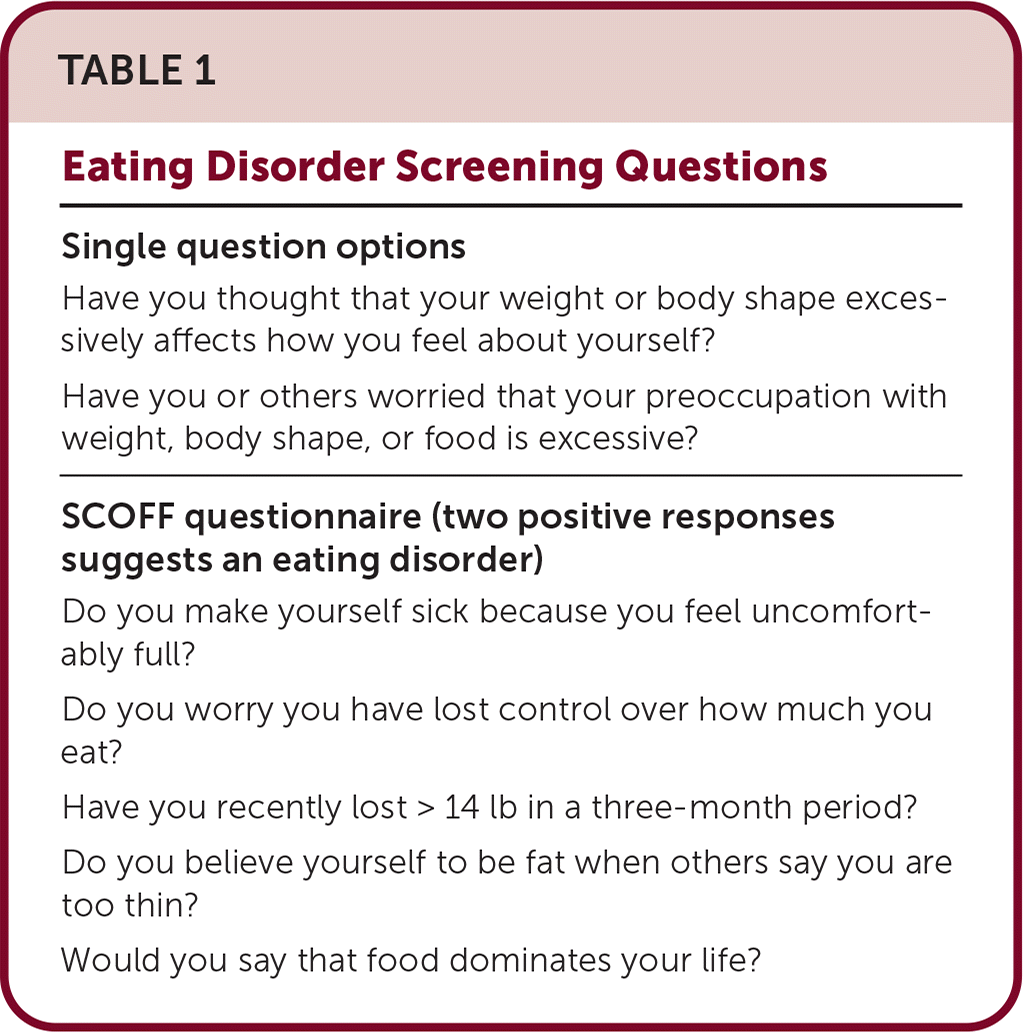
| Single question options |
| Have you thought that your weight or body shape excessively affects how you feel about yourself? |
| Have you or others worried that your preoccupation with weight, body shape, or food is excessive? |
| SCOFF questionnaire (two positive responses suggests an eating disorder) |
| Do you make yourself sick because you feel uncomfortably full? |
| Do you worry you have lost control over how much you eat? |
| Have you recently lost > 14 lb in a three-month period? |
| Do you believe yourself to be fat when others say you are too thin? |
| Would you say that food dominates your life? |
Evaluation
Physicians should ask about maladaptive eating, including food changes and behaviors, eating rituals, binge eating, and purging. Patients with eating disorders often report abdominal discomfort with eating, constipation, early satiety, bloating, nausea, and heartburn, which are often signs of starvation and disordered eating rather than gastrointestinal disease. Menstrual irregularities are common with disordered eating.
Because patients often underreport symptoms, family members may notice concerning behaviors first. The degree of weight loss should be noted, based on growth-chart curves for children, because of risks of refeeding. Patients may have bradycardia, hypotension, or hypothermia. Physical examination may show proximal or temporal muscle wasting, ankle and pedal edema, lanugo hair, hair loss, dry skin, vitamin deficiencies, parotid gland enlargement, dental erosions, callouses on the dorsum of the hand, or evidence of self-injurious behaviors.
Read the full article
Get immediate access, anytime, anywhere.
Choose a single article, issue, or full-access subscription.
Earn up to 14 CME credits per issue.
