

Prioritizing the 5Ms in Geriatric Care: A Holistic Approach to Care of the Older Adult

Namirah Jamshed, MD,
Anupama Gangavati, MD,
University of Texas Southwestern Medical Center, Dallas, Texas

American Family Physician. 2024;109(6):498-500.

Author disclosure: No relevant financial relationships.

The aging demographic presents a significant challenge and opportunity for health care systems worldwide.1 The number of people in the United States 65 years and older is projected to reach approximately 95 million by 2060.2 Current health care models often operate in silos, lacking continuity and integration.3 This is particularly problematic for the growing older population with multimorbidity.4,5

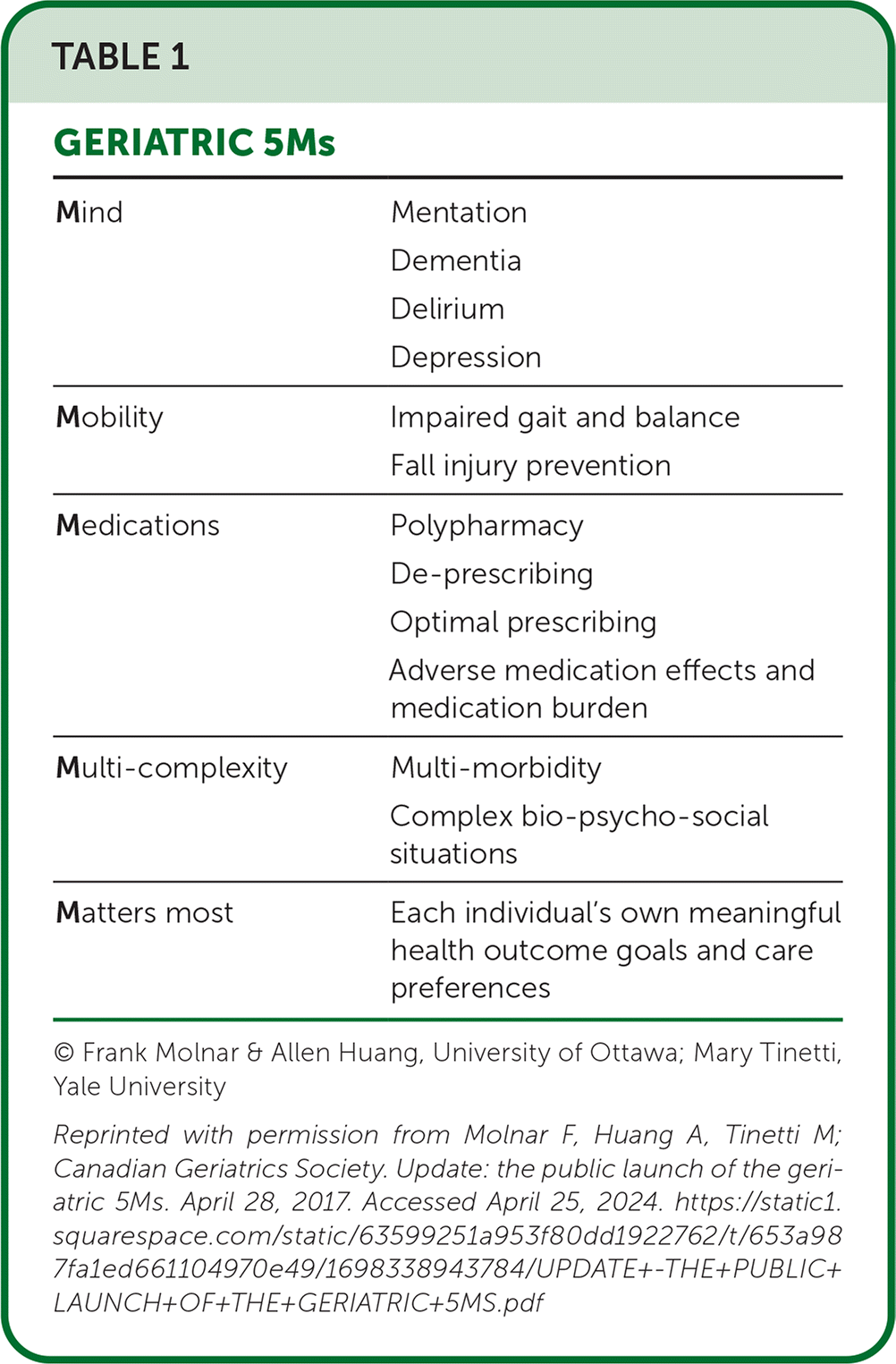
The Geriatric 5Ms framework includes five areas of focus: mind/mentation, mobility, medications, multicomplexity, and what matters most (Table 1).6 It offers a comprehensive approach to the care of older adults and emphasizes patient-centered strategies and interdisciplinary coordination.4,5 The framework has been shown to improve outcomes for older adults, reduce low-quality services, and increase the use of cost-effective services.7

TABLE 1. GERIATRIC 5Ms
MindMentation
Dementia
Delirium
Depression
MobilityImpaired gait and balance
Fall injury prevention
MedicationsPolypharmacy
De-prescribing
Optimal prescribing
Adverse medication effects and medication burden
Multi-complexityMulti-morbidity
Complex bio-psycho-social situations
Matters mostEach individual's own meaningful health outcome goals and care preferences

© Frank Molnar & Allen Huang, University of Ottawa; Mary Tinetti, Yale University

Reprinted with permission from Molnar F, Huang A, Tinetti M; Canadian Geriatrics Society. Update: the public launch of the geriatric 5Ms. April 28, 2017. Accessed April 25, 2024. https://static1.squarespace.com/static/63599251a953f80dd1922762/t/653a987fa1ed661104970e49/1698338943784/UPDATE+-THE+PUBLIC+LAUNCH+OF+THE+GERIATRIC+5MS.pdf

Case Presentation

An 80-year-old artist with hypertension, type 2 diabetes mellitus, hyperlipidemia, major depressive disorder, mild cognitive impairment, and urinary incontinence resides independently and recently experienced a fall while visiting her daughter. This incident has heightened her fear of future falls and has affected her cherished daily walks and psychological well-being. The recent loss of her husband has compounded her mental health issues. This narrative underscores the importance of an integrated approach to the care of older adults that should address the physical, emotional, and social aspects of health.

Mind: Cognitive and Emotional Well-Being

The loss of her husband, coupled with her fall, may have exacerbated the patient's depression and cognitive decline. Dementia, delirium, and depression are often interlinked8,9; therefore, the evaluation and management of these conditions are a pivotal aspect of her care. Older adults with depression are twice as likely to develop cognitive impairment.10 Various factors associated with aging, such as sensory limitations, social isolation, and losses, can contribute to depressive symptoms.11 Positive findings on an assessment may prompt a referral for counseling and/or management with pharmacologic and/or nonpharmacologic therapies.12 Modifying a patient's medications and addressing mobility issues can help treat depression and reduce the risk of developing cognitive impairment.13 Using physical activity and tailored interventions (e.g., social engagement) as nonpharmacologic therapy is an integral part of this strategy.14

Mobility: Falls

The patient's fall reflects how common falls are among older adults.11,15 Falling increases the risk of recurrent falls and hip fractures and causes significant financial burden.1618 Assessing mobility is vital across health care settings. Although the patient did not sustain injuries, the psychological aftermath of the fall has led to a fear of falling again, which may reduce her mobility and worsen her mentation. This case highlights the need for assessing the risk of falls in older adults and incorporating strategies (e.g., physical therapy) to mitigate these fears. Mobility and physical activity are linked to prevention of depression, which further demonstrates the interconnectedness of mentation and mobility.19

Medications: Managing Polypharmacy

The prevalence of polypharmacy in older adults is a growing concern.20 Polypharmacy leads to adverse drug events, drug-drug interactions, nonadherence, functional decline, geriatric syndromes, and higher costs.14,21

For this patient, a comprehensive medication review is essential to identify any drugs that might contribute to her fall risk, cognitive issues, or urinary incontinence, underscoring the critical role of medication reconciliation in the care of older patients.22

Multicomplexity: Navigating Multiple Chronic Conditions

This case exemplifies the multicomplexity in the care of older adults.4 Using multiple treatment guidelines increases the risk of polypharmacy, drug-drug interactions, a high treatment burden, and a failure to align care with the patient's priorities and values.23

The patient has several chronic conditions that necessitate a nuanced approach that balances disease management with her personal health care values.4,24 This approach should focus on modifiable aspects of care, addressing social determinants of health, and adapting patient education to her health literacy.25

What Matters Most: Person-Centered Care

Understanding and aligning care with what matters most to the patient is central to the age-friendly care model.3 This is especially essential in older adults with multiple chronic conditions who experience fragmented care and use of unnecessary health care that does not align with their goals and preferences.26 A collaborative approach that focuses on goals leads to improvements in health outcomes.27,28 Effective communication and facilitation of advance care planning and shared decision-making that is aligned with an individual's preferences ensure a person-centric approach that can significantly enhance quality of life.29 For this patient, that involves respecting her desire for independence and her passion for art while addressing her mental health needs. Strategies addressing symptom management and the trajectory of disease and goals of care can positively affect care for older adults with impaired cognition.26,30

Conclusion

This patient's case illustrates the complexities inherent in providing holistic care to older adults. The Geriatric 5Ms framework offers a comprehensive lens through which to view and address these complexities. By focusing on the mind, mobility, medications, multicomplexity, and what matters most, physicians can enhance the quality of life for older adults and ensure a more integrated and effective approach to geriatric care.

Address correspondence to Namirah Jamshed, MD, at Namirah.jamshed@utsouthwestern.edu. Reprints are not available from the authors.

Author disclosure: No relevant financial relationships.

  1. 1.World Health Organization. Ageing and health. October 1, 2022. Accessed September 25, 2023. https://www.who.int/news-room/fact-sheets/detail/ageing-and-health
  2. 2.Administration for Community Living. 2021 profile of older Americans. November 2022. Accessed May 14, 2024. https://acl.gov/sites/default/files/Profile%20of%20OA/2021%20Profile%20of%20OA/2021ProfileOlderAmericans_508.pdf
  3. 3.Tinetti ME, Esterson J, Ferris R, et al. Patient priority-directed decision making and care for older adults with multiple chronic conditions. Clin Geriatr Med. 2016;32(2):261-275.
  4. 4.Tinetti M, Huang A, Molnar F. The Geriatrics 5M's: a new way of communicating what we do. J Am Geriatr Soc. 2017;65(9):2115.
  5. 5.Institute for Healthcare Improvement. Age-friendly health systems: guide to using the 4Ms in the care of older adults in hospitals and ambulatory practices. July 2020. Accessed April 25, 2024. https://241684.fs1.hubspotusercontent-na1.net/hubfs/241684/AgeFriendlyHealthSystems_GuidetoUsing4MsCare_FINAL_July2020.pdf
  6. 6.Molnar F, Huang A, Tinetti M; Canadian Geriatrics Society. Update: the public launch of the geriatric 5Ms. April 28, 2017. Accessed April 25, 2024. https://static1.squarespace.com/static/63599251a953f80dd1922762/t/653a987fa1ed661104970e49/1698338943784/UPDATE+-THE+PUBLIC+LAUNCH+OF+THE+GERIATRIC+5MS.pdf
  7. 7.Mate KS, Berman A, Laderman M, et al. Creating age-friendly health systems – a vision for better care of older adults. Healthc (Amst). 2018;6(1):4-6.
  8. 8.Fong TG, Inouye SK. The inter-relationship between delirium and dementia: the importance of delirium prevention. Nat Rev Neurol. 2022;18(10):579-596.
  9. 9.O'Sullivan R, Inouye SK, Meagher D. Delirium and depression: interrelationship and clinical overlap in elderly people. Lancet Psychiatry. 2014;1(4):303-311.
  10. 10.Diniz BS, Butters MA, Albert SM, et al. Late-life depression and risk of vascular dementia and Alzheimer's disease: systematic review and meta-analysis of community-based cohort studies. Br J Psychiatry. 2013;202(5):329-335.
  11. 11.Bergen G, Stevens MR, Burns ER. Falls and fall injuries among adults aged ≥ 65 years – United States, 2014. MMWR Morb Mortal Wkly Rep. 2016;65(37):993-998.
  12. 12.Kok RM, Reynolds CF. Management of depression in older adults: a review. JAMA. 2017;317(20):2114-2122.
  13. 13.Maes M, Leonard B, Fernandez A, et al. (Neuro)inflammation and neuro-progression as new pathways and drug targets in depression: from antioxidants to kinase inhibitors. Prog Neuropsychopharmacol Biol Psychiatry. 2011;35(3):659-663.
  14. 14.Kivipelto M, Mangialasche F, Ngandu T. Lifestyle interventions to prevent cognitive impairment, dementia and Alzheimer disease. Nat Rev Neurol. 2018;14(11):653-666.
  15. 15.Stevens JA, Ballesteros MF, Mack KA, et al. Gender differences in seeking care for falls in the aged Medicare population. Am J Prev Med. 2012;43(1):59-62.
  16. 16.O'Loughlin JL, Robitaille Y, Boivin JF, et al. Incidence of and risk factors for falls and injurious falls among the community-dwelling elderly. Am J Epidemiol. 1993;137(3):342-354.
  17. 17.Parkkari J, Kannus P, Palvanen M, et al. Majority of hip fractures occur as a result of a fall and impact on the greater trochanter of the femur: a prospective controlled hip fracture study with 206 consecutive patients. Calcif Tissue Int. 1999;65(3):183-187.
  18. 18.Florence CS, Bergen G, Atherly A, et al. Medical costs of fatal and non-fatal falls in older adults. J Am Geriatr Soc. 2018;66(4):693-698.
  19. 19.Hajjar ER, Cafiero AC, Hanlon JT. Polypharmacy in elderly patients. Am J Geriatr Pharmacother. 2007;5(4):345-351.
  20. 20.Maher RL, Hanlon J, Hajjar ER. Clinical consequences of polypharmacy in elderly. Expert Opin Drug Saf. 2014;13(1):57-65.
  21. 21.Lau DT, Mercaldo ND, Harris AT, et al. Polypharmacy and potentially inappropriate medication use among community-dwelling elders with dementia. Alzheimer Dis Assoc Disord. 2010;24(1):56-63.
  22. 22.Motter FR, Fritzen JS, Hilmer SN, et al. Potentially inappropriate medication in the elderly: a systematic review of validated explicit criteria. Eur J Clin Pharmacol. 2018;74(6):679-700.
  23. 23.Tinetti ME, Bogardus ST, Agostini JV. Potential pitfalls of disease-specific guidelines for patients with multiple conditions. N Engl J Med. 2004;351(27):2870-2874.
  24. 24.Institute for Healthcare Improvement. Age-friendly health systems. Accessed October 8, 2023. https://www.ihi.org/Engage/Initiatives/Age-Friendly-Health-Systems/Pages/default.aspx
  25. 25.Boyd C, Smith CD, Masoudi FA, et al. Decision making for older adults with multiple chronic conditions: executive summary for the American Geriatrics Society guiding principles on the care of older adults with multimorbidity. J Am Geriatr Soc. 2019;67(4):665-673.
  26. 26.Blaum CS, Rosen J, Naik AD, et al. Feasibility of implementing patient priorities care for older adults with multiple chronic conditions. J Am Geriatr Soc. 2018;66(10):2009-2016.
  27. 27.Vermunt NPCA, Harmsen M, Westert GP, et al. Collaborative goal setting with elderly patients with chronic disease or multimorbidity: a systematic review. BMC Geriatr. 2017;17(1):167.
  28. 28.Tinetti ME, Costello DM, Naik AD, et al. Outcome goals and health care preferences of older adults with multiple chronic conditions. JAMA Netw Open. 2021;4(3):e211271.
  29. 29.Stacey D, Lewis K, Smith M, et al. Decision aids for people facing health treatment or screening decisions. Cochrane Database Syst Rev. 2024(1):CD001431.
  30. 30.Smith ER, Broughton M, Baker R, et al. Memory and communication support in dementia: research-based strategies for caregivers. Int Psychogeriatr. 2011;23(2):256-263.

Copyright © 2026 by the American Academy of Family Physicians.

This content is owned by the AAFP. A person viewing it online may make one printout of the material and may use that printout only for his or her personal, non-commercial reference. This material may not otherwise be downloaded, copied, printed, stored, transmitted or reproduced in any medium, whether now known or later invented, except as authorized in writing by the AAFP. See permissions for copyright questions and/or permission requests.