

Details for This Review
Study Population: 21 randomized controlled trials (RCTs; N = 3,723) performed in 16 countries between 1966 and 2017; women 15 to 33 years of age with primary dysmenor-rhea (at least moderate pain for at least 1 day of menses) who did not have obvious pelvic pathology on physical examination but did have regular ovulatory menstrual cycles (21- to 35-day cycles)
Efficacy End Points: Primary: difference between the groups in pain rating and the number of women experiencing pain relief at the end of treatment; secondary: difference between groups in the number of women requiring additional pain medication (analgesics) and the ratio of women reporting absences from work or school
Harm End Points: Primary: adverse events from treatment (incidence and type of adverse event); secondary: withdrawals from treatment and adverse events
THE NUMBERS
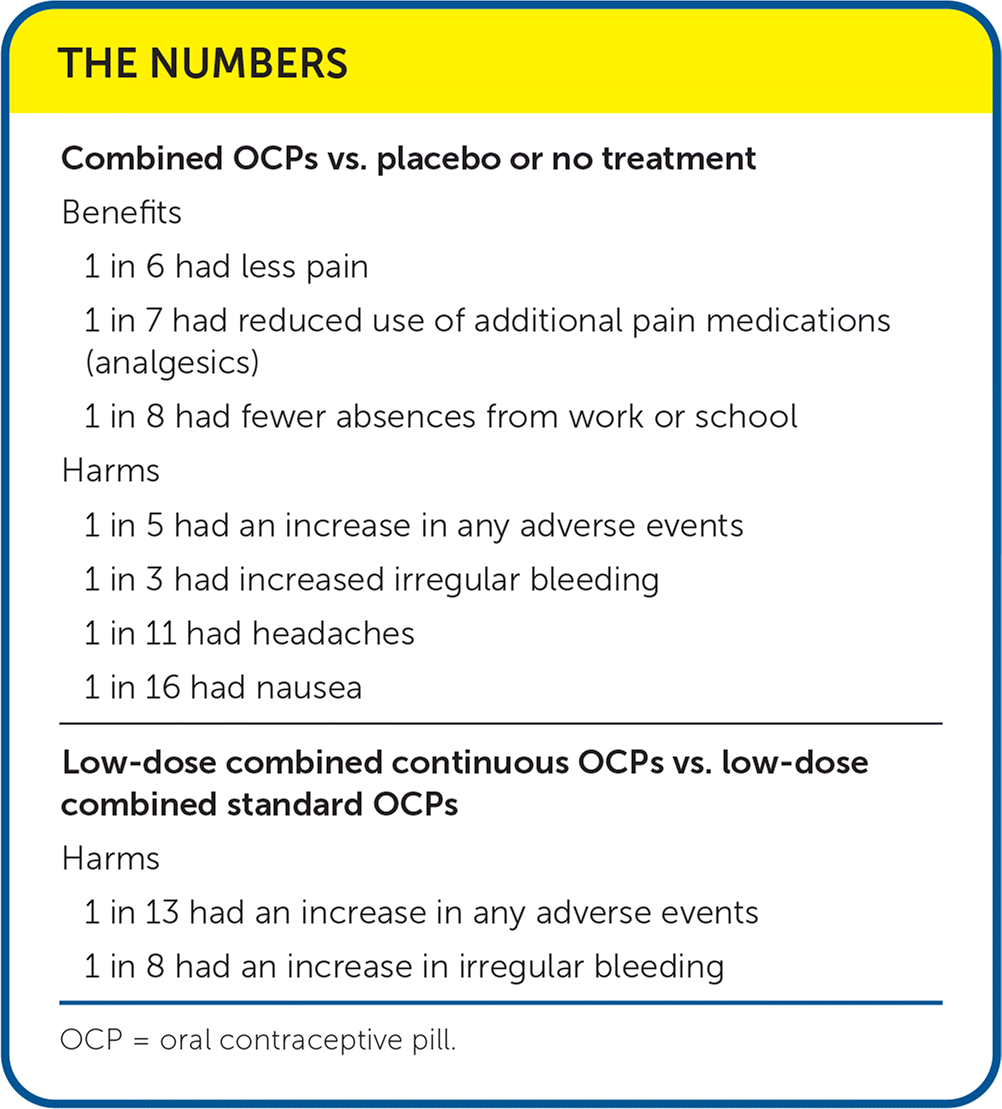
| Combined OCPs vs. placebo or no treatment |
| Benefits |
| 1 in 6 had less pain |
| 1 in 7 had reduced use of additional pain medications (analgesics) |
| 1 in 8 had fewer absences from work or school |
| Harms |
| 1 in 5 had an increase in any adverse events |
| 1 in 3 had increased irregular bleeding |
| 1 in 11 had headaches |
| 1 in 16 had nausea |
| Low-dose combined continuous OCPs vs. low-dose combined standard OCPs |
| Harms |
| 1 in 13 had an increase in any adverse events |
| 1 in 8 had an increase in irregular bleeding |
OCP = oral contraceptive pill.
Narrative: Combined oral contraceptive pills (OCPs) are widely accepted as treatment for primary dysmenorrhea, but few trials have assessed effectiveness and any associated adverse events. OCPs are thought to reduce dysmenorrhea by inhibiting ovulation and possibly decreasing menstrual fluid volumes and prostaglandin levels that contribute to painful menstruation. The Cochrane review compared combined OCPs with placebo or no treatment, combined OCPs with each other, and combined OCPs with nonsteroidal anti-inflammatory drugs for the treatment of primary dysmenorrhea.1
In the review, high-quality evidence demonstrated that patients using combined OCPs had lower pain scores than those receiving placebo or no treatment, as measured by the total dysmenorrhea scale (range = 0 to 6, with lower scores being better; standardized mean pain score = 0.58 points lower; 95% CI, 0.74 to 0.41; six RCTs; n = 588). Low-quality evidence demonstrated that compared with placebo or no treatment, combined OCPs improved pain over 1 to 4 months of follow-up (risk ratio [RR] = 1.65; 95% CI, 1.29 to 2.10; number needed to treat [NNT] = 6; six RCTs; n = 717). For secondary outcomes, low-quality evidence demonstrated that compared with placebo or no treatment, combined OCPs reduced the need for additional medications (RR = 0.63; 95% CI, 0.40 to 0.98; NNT = 8; two RCTs; n = 163) and decreased dysmenorrhea-related absences from work or school (RR = 0.63; 95% CI, 0.41 to 0.97; NNT = 8; two RCTs; n = 148).
Moderate-quality evidence demonstrated that combined OCPs probably increased the risk of any adverse events compared with placebo or no treatment (RR = 1.31; 95% CI, 1.20 to 1.43; number needed to harm [NNH] = 5; seven RCTs; n = 1,025). High-quality evidence demonstrated that compared with placebo or no treatment, combined OCPs increased the risk of irregular bleeding (RR = 2.63; 95% CI, 2.11 to 3.28; NNH = 3; seven RCTs; n = 1,025). Moderate-quality evidence also demonstrated an increase in headaches (RR = 1.51; 95% CI, 1.11 to 2.04; NNH = 11; five RCTs; n = 656) and nausea (RR = 1.64; 95% CI, 1.17 to 2.30; NNH = 16; eight RCTs; n = 948) in patients taking combined OCPs compared with placebo or no treatment. There was no difference between the groups in serious adverse events (e.g., breast cancer, cerebrovascular arterial disease, deep venous thrombosis, depression, myocardial infarction).
Read the full article
Get immediate access, anytime, anywhere.
Choose a single article, issue, or full-access subscription.
Earn up to 14 CME credits per issue.
