

Key Points for Practice
• Quetiapine is effective for all phases of bipolar disorder—acute mania, acute depression, and maintenance therapy.
• Lithium is an effective medication for most phases of bipolar disorder treatment. Lithium may add protection against suicide but lacks evidence for treatment of acute bipolar depression.
• Psychotherapy, when added to pharmacotherapy, can be beneficial for people with bipolar disorder who are not acutely manic.
From the AFP Editors
Bipolar disorder has a lifetime prevalence of 1% in adults in the United States, and its onset peaks at three different ages—19, 26, and 29 years. The onset of bipolar disorder may be associated with asthma, migraines, multiple sclerosis, traumatic brain injury, and irritable bowel syndrome. More than 90% of patients with bipolar disorder report another mental health disorder, most commonly impulse control disorders, substance use disorders, and generalized anxiety disorder. The U.S. Department of Veterans Affairs and U.S. Department of Defense (VA/DoD) published new recommendations for diagnosing and managing bipolar disorder. These guidelines recommend management options when there is strong evidence of a benefit and suggest options when the evidence is not strong.
Evaluation of Suspected Bipolar Disorder
Routine screening for bipolar disorder is not suggested because of the high rates of false-positive results with most screening tools. Use of screening tools is suggested in specialty care when bipolar disorder is suspected; however, sensitivities can be less than 50% with limited specificity. Tools such as the Mood Disorder Questionnaire (https://ibpf.org/wp-content/uploads/2016/11/MDQ.pdf) are suggested for patients taking antidepressant medications who demonstrate signs of hypomania or mania. Scores have not been studied to guide care.
Pharmacotherapy
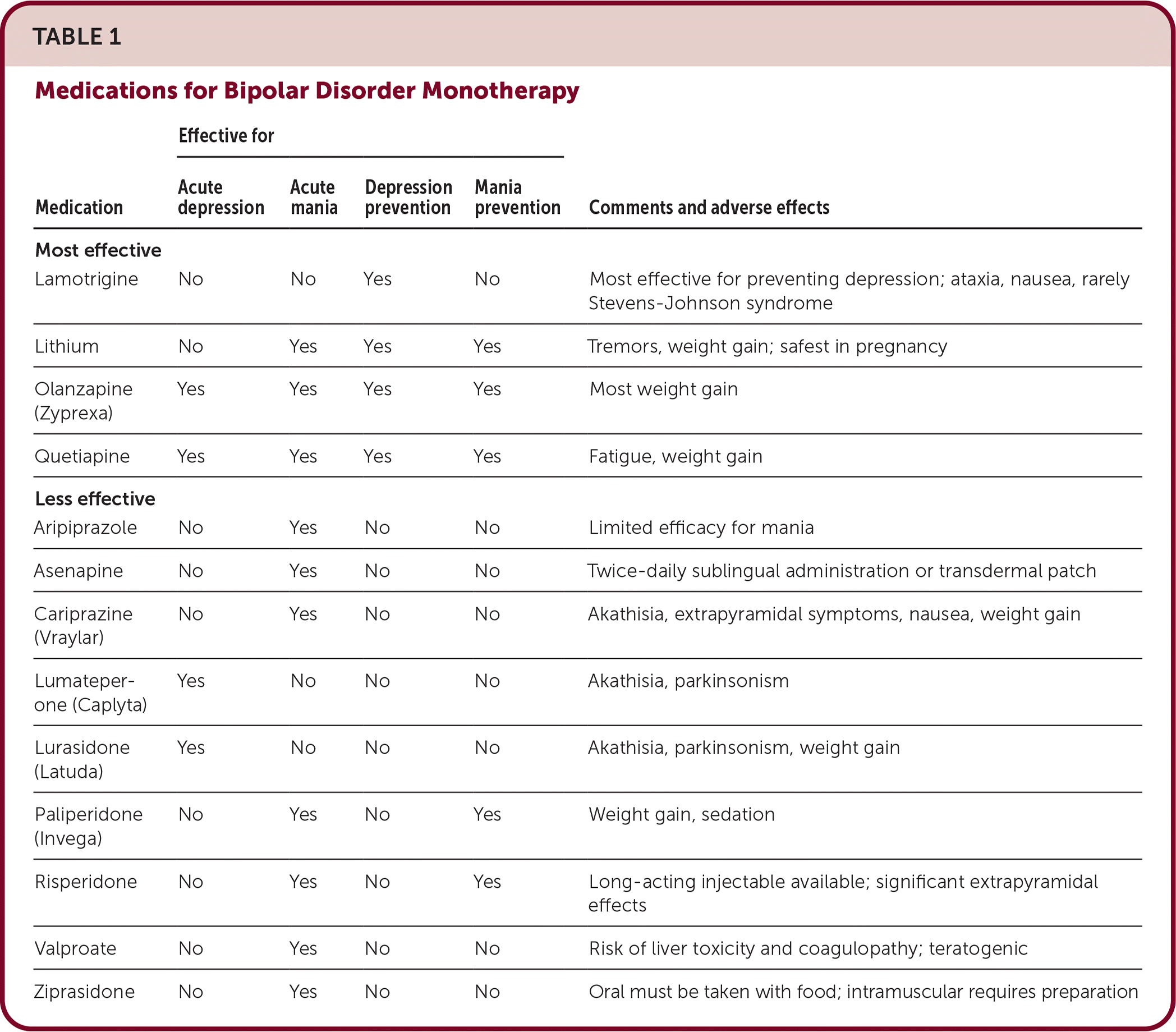
Pharmacotherapy should focus on treating patients in each phase of bipolar disorder—acute mania, acute depression, and maintenance therapy. Most medications have different effectiveness over the phases. Table 1 summarizes pharmacotherapy recommendations for each phase of bipolar disorder.
TABLE 1. Medications for Bipolar Disorder Monotherapy
| Medication | Effective for | Comments and adverse effects | |||
|---|---|---|---|---|---|
| Acute depression | Acute mania | Depression prevention | Mania prevention | ||
| Most effective | |||||
| Lamotrigine | No | No | Yes | No | Most effective for preventing depression; ataxia, nausea, rarely Stevens-Johnson syndrome |
| Lithium | No | Yes | Yes | Yes | Tremors, weight gain; safest in pregnancy |
| Olanzapine (Zyprexa) | Yes | Yes | Yes | Yes | Most weight gain |
| Quetiapine | Yes | Yes | Yes | Yes | Fatigue, weight gain |
| Less effective | |||||
| Aripiprazole | No | Yes | No | No | Limited efficacy for mania |
| Asenapine | No | Yes | No | No | Twice-daily sublingual administration or transdermal patch |
| Cariprazine (Vraylar) | No | Yes | No | No | Akathisia, extrapyramidal symptoms, nausea, weight gain |
| Lumateperone (Caplyta) | Yes | No | No | No | Akathisia, parkinsonism |
| Lurasidone (Latuda) | Yes | No | No | No | Akathisia, parkinsonism, weight gain |
| Paliperidone (Invega) | No | Yes | No | Yes | Weight gain, sedation |
| Risperidone | No | Yes | No | Yes | Long-acting injectable available; significant extrapyramidal effects |
| Valproate | No | Yes | No | No | Risk of liver toxicity and coagulopathy; teratogenic |
| Ziprasidone | No | Yes | No | No | Oral must be taken with food; intramuscular requires preparation |
Acute Mania
Monotherapy with lithium or quetiapine should be considered for acute mania because they are effective and useful for all phases of bipolar disorder. The stigma of taking lithium and the need for monitoring reduce the acceptability for some patients. Both medications can cause weight gain. Quetiapine can cause sedation, and lithium can cause tremors. Although olanzapine (Zyprexa) is similarly effective as lithium and quetiapine, the metabolic adverse effects are more severe with olanzapine. Paliperidone (Invega) and risperidone are effective for acute mania but do not prevent depression. Aripiprazole, asenapine, carbamazepine, cariprazine (Vraylar), haloperidol, valproate, and ziprasidone can be effective for acute mania with small effect sizes but do not prevent mania or depression. Brexpiprazole (Rexulti), topiramate, and lamotrigine are not suggested for the treatment of acute mania.
Lithium or valproate with quetiapine, olanzapine, or risperidone should be considered in patients with acute mania that does not respond to monotherapy or who have breakthrough symptoms despite monotherapy. Adding aripiprazole, paliperidone, or ziprasidone to lithium or valproate monotherapy should be avoided due to a lack of added benefit.
Acute Depression
Quetiapine is the recommended monotherapy for acute depression in patients with bipolar disorder. Quetiapine demonstrates a moderate effect on depressive symptoms for up to 36 weeks and may also improve anxiety symptoms.
Although olanzapine is more effective, the guidelines recommend quetiapine because of the metabolic effects of weight gain and hyperlipidemia. Cariprazine, lurasidone (Latuda), and lumateperone (Caplyta) are similarly effective as olanzapine and are recommended as second-line options due to adverse effects, including metabolic and neurologic effects. Although limited evidence suggests that some anti-depressants are effective for bipolar depression, the rate of conversion to mania is unknown. Ketamine infusions may have short-term benefits, but the long-term effects are unknown.
Adding lamotrigine to lithium or quetiapine maintenance therapy is beneficial; however, lamotrigine monotherapy does not appear to be effective for bipolar depression. Augmenting mood stabilizer treatment with antidepressants has insufficient evidence for improving depressive symptoms.
Prevention of Acute Mania Recurrence
Lithium and quetiapine are recommended as the most effective medications to prevent the recurrence of mania. Evidence reviews, including observational studies, suggest that lithium has an antisuicide effect on patients, whereas reviews limited to randomized trials do not. Quetiapine has more global benefits because lithium is not useful for treating bipolar depression. The adverse effects of lithium and quetiapine are similar.
Olanzapine is similarly effective as lithium and quetiapine in preventing mania but is associated with more severe metabolic adverse effects. Oral paliperidone and long-acting injectable risperidone are effective in preventing mania but do not prevent or treat depression. Lamotrigine effectively prevents depressive episodes but not mania.
When patients require combination therapy because monotherapy is ineffective, lithium or valproate with aripiprazole, quetiapine, olanzapine, or ziprasidone should be considered to prevent mania.
Prevention of Bipolar Depression Recurrence
Lamotrigine is recommended as the most effective monotherapy to prevent the recurrence of bipolar depression, although it does not prevent mania. Quetiapine, lithium, and olanzapine are also effective as monotherapy to prevent depression in patients with bipolar disorder.
When patients require combination therapy because monotherapy is ineffective, lithium or valproate with olanzapine, lurasidone, or quetiapine is recommended to prevent depressive episodes.
Pregnancy
Lithium is the safest bipolar medication in pregnancy despite a small increased risk of congenital malformations. Lithium should be continued at the lowest effective dose during pregnancy and discontinued 48 to 72 hours before delivery. Valproate, carbamazepine, and topiramate have higher teratogenicity risks and are not recommended in patients with childbearing potential.
Somatic Therapies
For severe acute mania, weak evidence suggests electroconvulsive therapy with pharmacotherapy can lead to rapid control of symptoms despite a risk of cognitive and memory impairment.
Short-term light therapy can be considered for bipolar depression when added to pharmacotherapy. In patients with a limited response to medication for depressive symptoms, repetitive transcranial magnetic stimulation may improve symptoms.
No nutritional supplements improve depressive or manic symptoms based on limited evidence.
Psychotherapy
In patients without acute mania, cognitive behavior therapy, family therapy, interpersonal and social therapy, and psychoeducation can be beneficial when added to pharmacotherapy. Evidence for meditation is limited. Individual placement support can provide effective vocation and education guidance. Support programs for caregivers can improve mental health outcomes for caregivers.
G-TRUST SCORECARD

| Score | Criteria |
|---|---|
| Yes | Focus on patient-oriented outcomes |
| Yes | Clear and actionable recommendations |
| Yes | Relevant patient populations and conditions |
| Yes | Based on systematic review |
| Yes | Evidence graded by quality |
| Yes | Separate evidence review or analysis in guideline team |
| Yes | Chair and majority free of conflicts of interest |
| Yes | Development group includes most relevant specialties, patients, and payers |
| Overall – useful |
Note: See related editorial, Where Clinical Practice Guidelines Go Wrong, at https://www.aafp.org/afp/gtrust.html.
G-TRUST = guideline trustworthiness, relevance, and utility scoring tool.
Copyright © 2017 Allen F. Shaughnessy, PharmD, MMedEd, and Lisa Cosgrove, PhD. Used with permission.
Editor's Note: As delays to mental health referrals increase, I found this guideline beneficial in providing a simple guide to the treatment of bipolar disorder that can allow my patient to start a medication while waiting for a referral.—Michael J. Arnold, MD, Assistant Medical Editor
The views expressed are those of the author and do not necessarily reflect the official policy or position of the Naval Undersea Medical Institute, Uniformed Services University of the Health Sciences, U.S. Navy, U.S. Department of Defense, or U.S. government.
Guideline source: U.S. Department of Veterans Affairs and U.S. Department of Defense
