

Kento Sonoda, MD
Ravi Nayak, MD

American Family Physician. 2024;110(2):167-173.

Author disclosure: No relevant financial relationships.

This clinical content conforms to AAFP criteria for CME.

Chronic cough is a cough lasting longer than 8 weeks in adults and 4 weeks in children. In the United States, more than 12.3 million individuals are estimated to have chronic cough. The most common causes of chronic cough in adults are upper airway cough syndrome, asthma, nonasthmatic eosinophilic bronchitis, gastroesophageal reflux disease, and laryngopharyngeal reflux. The initial assessment of chronic cough should include cost-effective diagnostic tests, such as chest radiography and spirometry, and empiric and targeted treatment for the most common etiologies. An assessment of medications (e.g., angiotensin-converting enzyme inhibitors), environment, occupation, and potential chemical triggers should be conducted. For chronic refractory cough, physiotherapy and speech and language therapy combined with a trial of gabapentin or amitriptyline can be considered. When initial test findings are unremarkable, further diagnostic tests, such as bronchoscopy and nasendoscopy, are often warranted through referral to a pulmonologist and otolaryngologist. Common etiologies in children include protracted bacterial bronchitis, asthma, bronchiectasis, upper airway cough syndrome, and gastroesophageal reflux disease. Because of the high likelihood of spontaneous resolution, children with a dry cough without wheezing or exertional dyspnea may be observed for 2 weeks.

Chronic cough is estimated to affect 5% of the U.S. adult population (12.3 million individuals).1 The American College of Chest Physicians (CHEST) defines chronic cough as a persistent cough lasting longer than 8 weeks in adults and 4 weeks in children.2,3 According to the Centers for Disease Control and Prevention, cough of undifferentiated duration is the second most common reason that patients present to primary care ambulatory settings.4 Chronic cough can negatively impact quality of life and daily activities, which can increase the risk of depression and anxiety.57

SORT: KEY RECOMMENDATIONS FOR PRACTICE
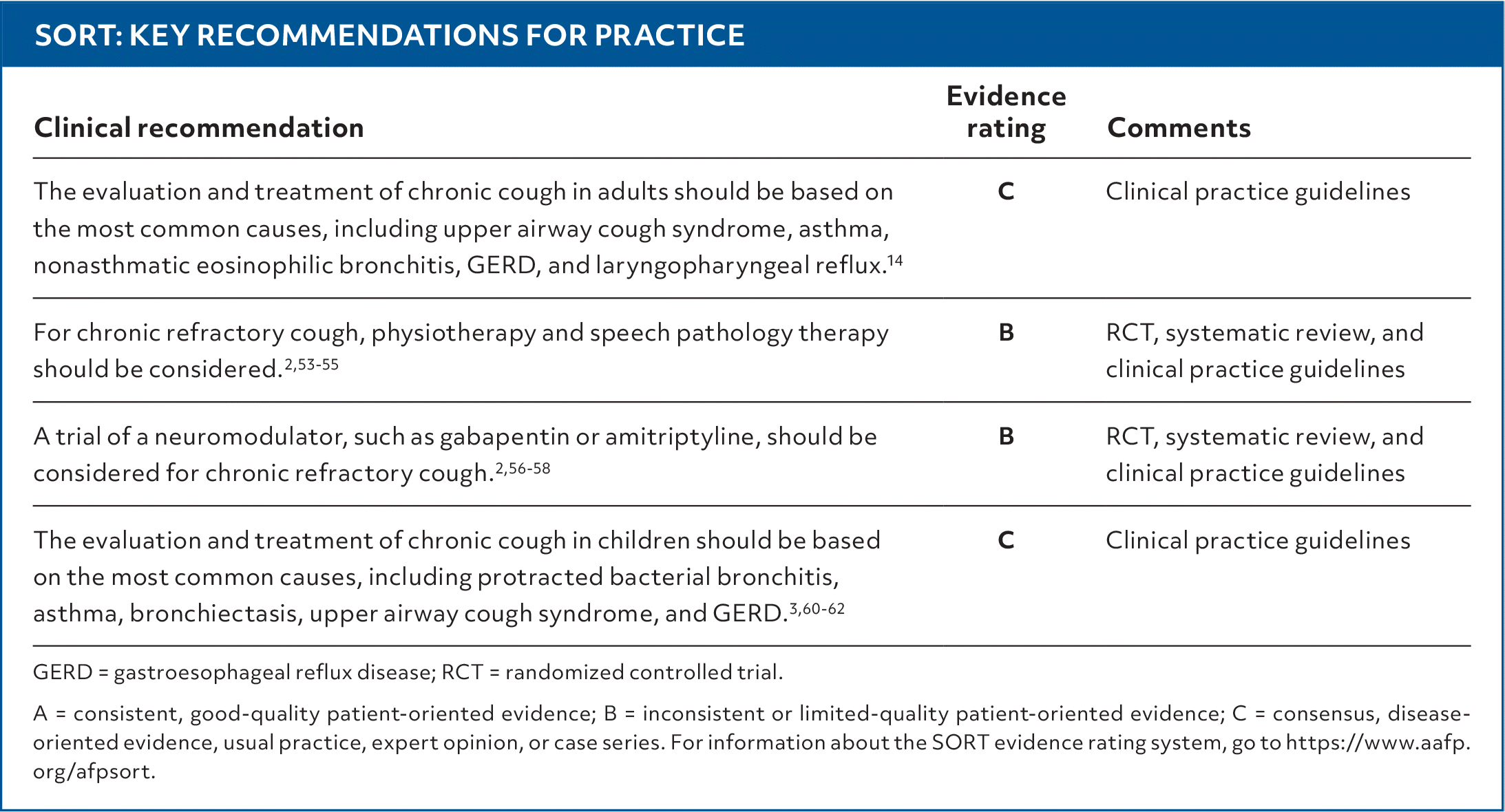
GERD = gastroesophageal reflux disease; RCT = randomized controlled trial.

A = consistent, good-quality patient-oriented evidence; B = inconsistent or limited-quality patient-oriented evidence; C = consensus, disease-oriented evidence, usual practice, expert opinion, or case series. For information about the SORT evidence rating system, go to https://www.aafp.org/afpsort.

ASSESSMENT OF CHRONIC COUGH

The initial assessment of chronic cough includes obtaining a comprehensive medical history, performing a physical examination, identifying triggers that may point to common causes (Table 12,3,813 [corrected]), and evaluating for red flags to rule out serious conditions (Table 214,15). Chest radiography and spirometry should be included in the initial workup if the history and physical examination do not identify an apparent cause. Initial treatment should be based on pertinent history and physical examination findings, and response to treatment should be assessed in 4 to 6 weeks. The evaluation and empiric treatment of chronic cough in adults should be based on the most common causes: upper airway cough syndrome, asthma, nonasthmatic eosinophilic bronchitis, gastroesophageal reflux disease (GERD), and laryngopharyngeal reflux (LPR).14

TABLE 1. Etiologies of Chronic Cough in Adults and Children

Adults Children
Most common
ACE inhibitor use
Asthma
Chronic obstructive pulmonary disease
Environmental triggers
Gastroesophageal reflux disease or laryngopharyngeal reflux
Nonasthmatic eosinophilic bronchitis
Postinfectious cough
Smoking
Upper airway cough syndrome (previously referred to as postnasal drip syndrome)
Less common
Bronchiectasis
Chronic heart failure
Medications other than ACE inhibitors (e.g., opioids, sitagliptin [Januvia], statins)
Obstructive sleep apnea
Pertussis
Least common
Cancer of the larynx, bronchus, or lung
Hypersensitivity pneumonitis
Interstitial pulmonary fibrosis
Lung abscess
Pneumothorax
Sarcoidosis
Tuberculosis
Most common
Asthma
Bronchiectasis [corrected]
Environmental triggers
Protracted bacterial bronchitis
Upper airway cough syndrome
Less common
Foreign body
Gastroesophageal reflux disease
Mycoplasma
Obstructive sleep apnea
Pertussis
Postinfectious cough
Tonsil or adenoid hypertrophy
Least common
Immunodeficiency
Interstitial lung disease
Medications (e.g., dextroamphetamine, etanercept)
Primary ciliary dyskinesia
Radiation
Somatic cough syndrome
Tic cough
Tourette syndrome
Tracheoesophageal malformation
Tuberculosis

ACE = angiotensin-converting enzyme.

Information from references 2, 3, and 813.

TABLE 2. Red Flags for Chronic Cough in Adults

Abnormal findings on respiratory examination or chest imaging
Dysphagia
Hemoptysis
Hoarseness
New or worsening cough in patients > 45 years who smoke
Prominent dyspnea, especially at rest or at night
Recurrent pneumonia
Vomiting
Weight loss

Information from references 14 and 15.

In select patients with a normal physical examination and negative chest radiography, computed tomography of the chest may be performed, but there are limited clinical benefits, even after ruling out the most common causes.14,16,17 The initial evaluation of chronic cough in immunocompromised adults is similar to those who are immunocompetent.18 A suggested approach for the assessment and treatment of adults with chronic cough is shown in Figure 1.2,8,12,14,19

FIGURE 1.

Steps for the assessment and treatment of adults with chronic cough (lasting 8 weeks or longer).

Information from references 2, 8, 12, 14, and 19.

COMMON CAUSES OF CHRONIC COUGH IN ADULTS

Upper Airway Cough Syndrome

In 2006, the ACCP started using the term upper airway cough syndrome instead of postnasal drip syndrome in patients with chronic cough related to upper airway abnormalities.20 This change reflects the understanding that upper airway cough syndrome can manifest in the absence of postnasal drip. Although the exact mechanism of upper airway cough syndrome is unknown, it is considered to be related to hypersensitivity of the upper or lower airway sensory nerves.21

Upper airway abnormalities can be categorized into three conditions: chronic nonallergic rhinitis is the most common, followed by chronic allergic rhinitis and chronic rhinosinusitis.22 Common symptoms of upper airway cough syndrome include rhinorrhea, nasal congestion, and throat clearing; these symptoms are nonspecific for the diagnosis of chronic cough.22 Because upper airway cough syndrome is the most common cause of chronic cough in the United States, it is reasonable to use empiric treatment regardless of nasal symptoms.20

Management strategies include treatment for reducing inflammation and secretions, treatment of infection, and avoiding environmental triggers. First-generation antihistamines can have a useful role in the treatment of upper airway cough syndrome because of the indirect peripheral anticholinergic effects and central nervous system–mediated cough suppression, although adverse effects such as thickening secretions, oral dryness, and drowsiness may limit their tolerability.23 Management of the underlying conditions of upper airway cough syndrome may vary among countries.17,2426 Use of nasal corticosteroids or second- or third-generation antihistamines and decongestants and avoiding allergens are recommended for allergic rhinitis. First-generation antihistamines and decongestants are recommended in patients with nonallergic rhinitis and chronic rhinosinusitis.20 Nasal corticosteroids and antibiotics can be used for chronic rhinosinusitis when appropriate.

Asthma

The prevalence of asthma in patients with chronic cough ranges from 24% to 32%.27 Patients with asthma present with wheezing, dyspnea, and cough, which may be caused by allergens, environmental triggers, or upper respiratory tract infection. Clinical history, physical examination, and pre- and postbronchodilator spirometry are important for diagnosing asthma.28 If findings are nondiagnostic, clinicians can consider performing a bronchial hyperresponsiveness test (e.g., methacholine challenge).27 A fractional exhaled nitric oxide test can be used as adjunct diagnostic testing for those who cannot undergo spirometry accurately, although it is important to note that GERD and allergic rhinitis can increase fractional exhaled nitric oxide levels, leading to a false-positive test result.29,30 Underdiagnosis and overdiagnosis of asthma is common and may lead to worsened patient outcomes and unnecessary treatment with associated costs.31 More information is available in American Family Physician articles and guidelines focusing on asthma management.3235

Nonasthmatic Eosinophilic Bronchitis

Nonasthmatic eosinophilic bronchitis is a corticosteroid-responsive chronic cough in a nonsmoking patient with eosinophilic inflammation of the respiratory tract without signs of variable airway obstruction or airway hyperresponsiveness.36 The prevalence is estimated to be approximately 17% in patients with chronic cough.37 Sputum eosinophilia is helpful in the diagnosis of nonasthmatic eosinophilic bronchitis; however, the availability of this test in primary care is limited because it requires saline nebulization or bronchoalveolar lavage.14

CHEST recommends inhaled corticosteroids (ICS) as first-line treatment in adults and adolescents with nonasthmatic eosinophilic bronchitis. At least 2 months of ICS treatment is effective in reducing relapse.27,38 If there is no response to treatment with ICS, physicians should consider alternative causes of chronic cough. If nonasthmatic eosinophilic bronchitis is still suspected, a dosage increase of ICS or a therapeutic trial of a leukotriene inhibitor, such as montelukast, can be used.27 Patients with chronic refractory cough should not be treated with ICS empirically, which underlines the importance of determining the diagnosis of asthma or nonasthmatic eosinophilic bronchitis before the initiation of ICS.

Gastroesophageal Reflux Disease and Laryngopharyngeal Reflux

The prevalence of GERD and LPR in adults with chronic cough is estimated to be 2% to 86% among different studies.39 Chronic cough related to GERD and LPR is caused by gastric reflux irritation of the larynx and activation of the afferent limb in the cough reflux. Common manifestations include voice changes, throat clearing, dysgeusia, acid reflux, and regurgitation.40 The presence of acid reflux in patients with chronic cough does not necessarily indicate that the cough is due to GERD or LPR41; therefore, evaluation of symptom resolution in response to an empiric trial of treatment is needed to identify GERD or LPR as the cause of chronic cough. Lifestyle modifications can reduce GERD-related symptoms and include smoking cessation, weight loss, elevation of the head, and avoiding food triggers and late meals.39,42,43 Although the evidence of benefit for proton pump inhibitors in patients with chronic cough secondary to GERD and LPR remains insufficient, an 8- to 12-week trial of a proton pump inhibitor 30 to 60 minutes before breakfast can be considered after ruling out other common causes of chronic cough. Routine pH monitoring and esophagogastroduodenoscopy should not be performed in patients with only extraesophageal symptoms, including chronic cough.42

ACE Inhibitor–Related Cough

Angiotensin-converting enzyme (ACE) inhibitor–related cough typically presents as a dry cough that develops hours to months after the initiation of therapy. The prevalence is reported from 5% to more than 30%.44 The exact mechanism remains unclear, but the most widely accepted theory is that ACE inhibitors prevent the degradation of bradykinin and substance P, leading to bronchoconstriction and cough.45 The diagnostic and therapeutic approach is to discontinue the medication and observe for the resolution of cough within 1 to 4 weeks. However, several studies have demonstrated that cough may spontaneously resolve in 25% to 50% of patients, even those who keep taking ACE inhibitors.46,47 If patients develop chronic cough, ACE inhibitors should be replaced with an alternative, such as an angiotensin receptor blocker. Physicians should also consider other common causes of chronic cough.

Obstructive Sleep Apnea

Approximately 15% of the U.S. adult population has sleep apnea.48 In a retrospective study, more than 40% of patients with chronic cough were found to have obstructive sleep apnea (OSA).49 A prospective cohort study demonstrated that patients with OSA had a higher burden of chronic cough and LPR symptoms compared with people without OSA.50 Continuous positive airway pressure therapy can improve cough-related quality of life in patients with chronic cough and OSA compared with sham therapy.51 Evaluation of OSA, such as administering the STOP-BANG (snoring, tiredness, observed apnea, blood pressure, body mass index, age, neck circumference, gender) questionnaire and a sleep study if indicated, should be considered early during management of chronic cough in an ambulatory setting.52

CHRONIC REFRACTORY COUGH

Up to 10% of patients with chronic cough can be categorized as having chronic refractory cough.19 It is defined as a clinically significant chronic cough that persists despite appropriate intervention and treatment.2 Physicians should complete a comprehensive evaluation for common etiologies and confirm adherence to optimal therapy before referral to a specialist.2

Physicians should avoid using ICS as empiric treatment for chronic refractory cough. It is critical to perform a comprehensive assessment for asthma and nonasthmatic eosinophilic bronchitis before initiation of ICS. Multimodality speech pathology therapy, including education about chronic cough, psychoeducational counseling, and techniques for cough control, can improve cough frequency and severity and cough-related quality of life.2,5355

Neuromodulators can be effective for the treatment of chronic refractory cough by acting directly on cough hyper-sensitivity. After discussing the potential benefits and risks, a trial of gabapentin (initial dosage: 300 mg twice per day; maximum dosage: 1,800 mg per day) or amitriptyline (initial dosage: 10 mg at bedtime; maximum dosage: 100 mg) can be considered in addition to physiotherapy and speech and language therapy to improve cough-related quality of life.2,17,5658 Reassessment of the risk-benefit profile is recommended 6 months after initiating gabapentin or amitriptyline. When initial test findings are unremarkable, further diagnostic tests, such as bronchoscopy and nasendoscopy, are often warranted through referral to a pulmonologist and otolaryngologist.

CHRONIC COUGH IN CHILDREN

Chronic cough in children can lead to impaired quality of life, multiple medical visits, and a substantial burden on caregivers.59,60 The most common etiologies include protracted bacterial bronchitis, asthma, bronchiectasis, upper airway cough syndrome, and GERD.3,6062 Other common etiologies of chronic cough in children include foreign body inhalation, ear conditions, and medications.63 Approximately 20% of children with chronic cough were found to have serious underlying conditions such as bronchiectasis, aspiration lung disease, and cystic fibrosis.60 Early identification and optimal treatment are critically important to prevent further lung injury.

Physicians should also evaluate tobacco smoke exposure and caregivers’ expectations and concerns.63 Because of the high likelihood of spontaneous resolution, a 2-week watchful waiting approach can be used for children with dry cough without any other signs, including wheezing, exertional dyspnea, chest pain, and digital clubbing.64 For wet cough, a 2-week course of antibiotics (amoxicillin/clavulanate or erythromycin) is reasonable because of the prevalence of protracted bacterial bronchitis and the effectiveness for clinical recovery from chronic cough.65,66 The suggested primary care approach for the assessment and treatment of children with chronic cough is shown in Figure 2.61,63,64

FIGURE 2.

Algorithm for the assessment and treatment of children with chronic cough (lasting 4 weeks or longer).

Information from references 61, 63, and 64.

This article updates previous articles on this topic by Michaudet and Malaty67; Benich and Carek68; Holmes and Fadden69; and Lawler.70

Data Sources: A PubMed search was completed in Clinical Queries using the key term chronic cough. The search included meta-analyses, randomized controlled trials, guidelines, and reviews. The Agency for Healthcare Research and Quality Effective Healthcare Reports, the Cochrane database, DynaMed, and Essential Evidence Plus were also searched. We critically reviewed studies that used patient categories such as race and/or gender but did not define how these categories were assigned, stating their limitations in the text. Search date: October 6, 2023, and June 8, 2024.

KENTO SONODA, MD, FAAFP, FASAM, AAHIVS, is an assistant professor in the Department of Family and Community Medicine at Saint Louis (Mo.) University.

RAVI NAYAK, MD, FCCP, FRCP, is a professor in and director of the Division of Pulmonary, Critical Care, and Sleep Medicine in the Department of Internal Medicine at Saint Louis University.

Address correspondence to Kento Sonoda, MD, at kento.sonoda@health.slu.edu.

Author disclosure: No relevant financial relationships.

  1. 1.Meltzer EO, Zeiger RS, Dicpinigaitis P, et al. Prevalence and burden of chronic cough in the United States. J Allergy Clin Immunol Pract. 2021;9(11):4037-4044.e2.
  2. 2.Gibson P, Wang G, McGarvey L, et al.; CHEST Expert Cough Panel. Treatment of unexplained chronic cough: CHEST guideline and expert panel report. Chest. 2016;149(1):27-44.
  3. 3.Chang AB, Oppenheimer JJ, Weinberger M, et al.; CHEST Expert Cough Panel. Etiologies of chronic cough in pediatric cohorts: CHEST guideline and expert panel report. Chest. 2017;152(3):607-617.
  4. 4.Santo L, Kang K. National ambulatory medical care survey: 2019 national summary tables. Accessed June 8, 2024. https://www.cdc.gov/nchs/data/ahcd/namcs_summary/2019-namcs-web-tables-508.pdf
  5. 5.Kubo T, Tobe K, Okuyama K, et al. Disease burden and quality of life of patients with chronic cough in Japan: a population-based cross-sectional survey. BMJ Open Respir Res. 2021;8(1):e000764.
  6. 6.Hulme K, Deary V, Dogan S, et al. Psychological profile of individuals presenting with chronic cough. ERJ Open Res. 2017;3(1):00099-2016.
  7. 7.Newcombe PA, Sheffield JK, Petsky HL, et al. A child chronic cough-specific quality of life measure: development and validation. Thorax. 2016;71(8):695-700.
  8. 8.Ding H, Shi C, Xu X, et al. Drug-induced chronic cough and the possible mechanism of action. Ann Palliat Med. 2020;9(5):3562-3570.
  9. 9.Chang AB, Oppenheimer JJ, Irwin RS; CHEST Expert Cough Panel. Managing chronic cough as a symptom in children and management algorithms: CHEST guideline and expert panel report. Chest. 2020;158(1):303-329.
  10. 10.Behnood SA, Shafran R, Bennett SD, et al. Persistent symptoms following SARS-CoV-2 infection amongst children and young people: a meta-analysis of controlled and uncontrolled studies. J Infect. 2022;84(2):158-170.
  11. 11.Morice AH, McGarvey L, Pavord I; British Thoracic Society Cough Guideline Group. Recommendations for the management of cough in adults. Thorax. 2006;61(suppl 1):i1-i24.
  12. 12.Baraniuk JN, Jamieson MJ. Rhinorrhea, cough and fatigue in patients taking sitagliptin. Allergy Asthma Clin Immunol. 2010;6(1):8.
  13. 13.Vertigan AE, Murad MH, Pringsheim T, et al.; CHEST Expert Cough Panel. Somatic cough syndrome (previously referred to as psychogenic cough) and tic cough (previously referred to as habit cough) in adults and children: CHEST guideline and expert panel report. Chest. 2015;148(1):24-31.
  14. 14.Irwin RS, French CL, Chang AB, et al.; CHEST Expert Cough Panel. Classification of cough as a symptom in adults and management algorithms: CHEST guideline and expert panel report. Chest. 2018;153(1):196-209.
  15. 15.Iyen-Omofoman B, Tata LJ, Baldwin DR, et al. Using socio-demographic and early clinical features in general practice to identify people with lung cancer earlier. Thorax. 2013;68(5):451-459.
  16. 16.Descazeaux M, Brouquières D, Didier A, et al. Impact of chest computed tomography scan on the management of patients with chronic cough. ERJ Open Res. 2021;7(3):00222-2021.
  17. 17.Morice AH, Millqvist E, Bieksiene K, et al. ERS guidelines on the diagnosis and treatment of chronic cough in adults and children [published correction appears in Eur Respir J. 2020;56(5):1951136]. Eur Respir J. 2020;55(1):1901136.
  18. 18.Rosen MJ, Ireland B, Narasimhan M, et al.; CHEST Expert Cough Panel. Cough in ambulatory immunocompromised adults: CHEST expert panel report. Chest. 2017;152(5):1038-1042.
  19. 19.Irwin RS, Baumann MH, Bolser DC, et al. Diagnosis and management of cough executive summary: ACCP evidence-based clinical practice guidelines. Chest. 2006;129(1 suppl):1S-23S.
  20. 20.Pratter MR. Chronic upper airway cough syndrome secondary to rhinosinus diseases (previously referred to as postnasal drip syndrome): ACCP evidence-based clinical practice guidelines. Chest. 2006;129(1 suppl):63S-71S.
  21. 21.Lucanska M, Hajtman A, Calkovsky V, et al. Upper airway cough syndrome in pathogenesis of chronic cough. Physiol Res. 2020;69(suppl 1):S35-S42.
  22. 22.Dąbrowska M, Arcimowicz M, Grabczak EM, et al. Chronic cough related to the upper airway cough syndrome: one entity but not always the same. Eur Arch Otorhinolaryngol. 2020;277(10):2753-2759.
  23. 23.Bolser DC. Older-generation antihistamines and cough due to upper airway cough syndrome (UACS): efficacy and mechanism. Lung. 2008;186(suppl 1):S74-S77.
  24. 24.Yu L, Xu X, Lv H, et al. Advances in upper airway cough syndrome. Kaohsiung J Med Sci. 2015;31(5):223-228.
  25. 25.Gibson PG, Chang AB, Glasgow NJ, et al. CICADA: cough in children and adults: diagnosis and assessment. Australian cough guidelines summary statement. Med J Aust. 2010;192(5):265-271.
  26. 26.Lai K. Chinese national guidelines on diagnosis and management of cough: consensus and controversy. J Thorac Dis. 2014;6(suppl 7):S683-S688.
  27. 27.Côté A, Russell RJ, Boulet LP, et al.; CHEST Expert Cough Panel. Managing chronic cough due to asthma and NAEB in adults and adolescents: CHEST guideline and expert panel report. Chest. 2020;158(1):68-96.
  28. 28.Langan RC, Goodbred AJ. Office spirometry: indications and interpretation. Am Fam Physician. 2020;101(6):362-368.
  29. 29.Cloutier MM, Baptist AP, Blake KV, et al.; Expert Panel Working Group of the National Heart, Lung, and Blood Institute (NHLBI) administered and coordinated National Asthma Education and Prevention Program Coordinating Committee (NAEPPCC). 2020 focused updates to the asthma management guidelines: a report from the National Asthma Education and Prevention Program Coordinating Committee expert panel working group [published correction appears in J Allergy Clin Immunol. 2021;147(4):1528–1530]. J Allergy Clin Immunol. 2020;146(6):1217-1270.
  30. 30.Karrasch S, Linde K, Rücker G, et al. Accuracy of FENO for diagnosing asthma: a systematic review. Thorax. 2017;72(2):109-116.
  31. 31.Aaron SD, Boulet LP, Reddel HK, et al. Underdiagnosis and overdiagnosis of asthma. Am J Respir Crit Care Med. 2018;198(8):1012-1020.
  32. 32.Raymond TJ, Peterson TA, Coulter J. Chronic asthma treatment: common questions and answers. Am Fam Physician. 2023;107(4):358-368.
  33. 33.Narasimhan K. Difficult to treat and severe asthma: management strategies. Am Fam Physician. 2021;103(5):286-290.
  34. 34.Global Initiative for Asthma. Global strategy for asthma management and prevention. Updated 2023. Accessed June 8, 2024. https://ginasthma.org/wp-content/uploads/2023/07/GINA-2023-Full-report-23_07_06-WMS.pdf
  35. 35.Brown SR. Recent changes in international asthma guidelines may be influenced by pharmaceutical industry conflicts of interest. Am Fam Physician. 2023;107(4):342-343.
  36. 36.Gibson PG, Dolovich J, Denburg J, et al. Chronic cough: eosinophilic bronchitis without asthma. Lancet. 1989;1(8651):1346-1348.
  37. 37.Lai K, Chen R, Lin J, et al. A prospective, multicenter survey on causes of chronic cough in China. Chest. 2013;143(3):613-620.
  38. 38.Zhan W, Tang J, Chen X, et al. Duration of treatment with inhaled corticosteroids in nonasthmatic eosinophilic bronchitis: a randomized open label trial. Ther Adv Respir Dis. 2019;13:1753466619891520.
  39. 39.Kahrilas PJ, Altman KW, Chang AB, et al.; CHEST Expert Cough Panel. Chronic cough due to gastroesophageal reflux in adults: CHEST guideline and expert panel report. Chest. 2016;150(6):1341-1360.
  40. 40.Everett CF, Morice AH. Clinical history in gastroesophageal cough. Respir Med. 2007;101(2):345-348.
  41. 41.Sidhwa F, Moore A, Alligood E, et al. Diagnosis and treatment of the extraesophageal manifestations of gastroesophageal reflux disease. Ann Surg. 2017;265(1):63-67.
  42. 42.Katz PO, Dunbar KB, Schnoll-Sussman FH, et al. ACG clinical guideline for the diagnosis and management of gastroesophageal reflux disease. Am J Gastroenterol. 2022;117(1):27-56.
  43. 43.Ness-Jensen E, Lagergren J. Tobacco smoking, alcohol consumption and gastro-oesophageal reflux disease. Best Pract Res Clin Gastroenterol. 2017;31(5):501-508.
  44. 44.Dicpinigaitis PV. Angiotensin-converting enzyme inhibitor-induced cough: ACCP evidence-based clinical practice guidelines. Chest. 2006;129(1 suppl):169S-173S.
  45. 45.Borghi C, Cicero AF, Agnoletti D, et al. Pathophysiology of cough with angiotensin-converting enzyme inhibitors: How to explain within-class differences?. Eur J Intern Med. 2023;110:10-15.
  46. 46.Reisin L, Schneeweiss A. Complete spontaneous remission of cough induced by ACE inhibitors during chronic therapy in hypertensive patients. J Hum Hypertens. 1992;6(4):333-335.
  47. 47.Sato A, Fukuda S. A prospective study of frequency and characteristics of cough during ACE inhibitor treatment. Clin Exp Hypertens. 2015;37(7):563-568.
  48. 48.Kapur VK, Auckley DH, Chowdhuri S, et al. Clinical practice guideline for diagnostic testing for adult obstructive sleep apnea: an American Academy of Sleep Medicine clinical practice guideline. J Clin Sleep Med. 2017;13(3):479-504.
  49. 49.Sundar KM, Daly SE, Pearce MJ, et al. Chronic cough and obstructive sleep apnea in a community-based pulmonary practice. Cough. 2010;6(1):2.
  50. 50.Gouveia CJ, Yalamanchili A, Ghadersohi S, et al. Are chronic cough and laryngopharyngeal reflux more common in obstructive sleep apnea patients?. Laryngoscope. 2019;129(5):1244-1249.
  51. 51.Sundar KM, Willis AM, Smith S, et al. A randomized, controlled, pilot study of CPAP for patients with chronic cough and obstructive sleep apnea. Lung. 2020;198(3):449-457.
  52. 52.Semelka M, Wilson J, Floyd R. Diagnosis and treatment of obstructive sleep apnea in adults. Am Fam Physician. 2016;94(5):355-360.
  53. 53.Chamberlain S, Birring SS, Garrod R. Nonpharmacological interventions for refractory chronic cough patients: systematic review. Lung. 2014;192(1):75-85.
  54. 54.Vertigan AE, Theodoros DG, Gibson PG, et al. Efficacy of speech pathology management for chronic cough: a randomised placebo controlled trial of treatment efficacy. Thorax. 2006;61(12):1065-1069.
  55. 55.Chamberlain Mitchell SAF, Garrod R, Clark L, et al. Physiotherapy, and speech and language therapy intervention for patients with refractory chronic cough: a multicentre randomised control trial. Thorax. 2017;72(2):129-136.
  56. 56.Xie S, Xie M, Shen Y, et al. Gabapentin for chronic refractory cough: a system review and meta-analysis. Heliyon. 2023;9(5):e15579.
  57. 57.Ryan NM, Birring SS, Gibson PG. Gabapentin for refractory chronic cough: a randomised, double-blind, placebo-controlled trial. Lancet. 2012;380(9853):1583-1589.
  58. 58.Ryan MA, Cohen SM. Long-term follow-up of amitriptyline treatment for idiopathic cough. Laryngoscope. 2016;126(12):2758-2763.
  59. 59.Marchant JM, Newcombe PA, Juniper EF, et al. What is the burden of chronic cough for families?. Chest. 2008;134(2):303-309.
  60. 60.Chang AB, Robertson CF, Van Asperen PP, et al. A multicenter study on chronic cough in children: burden and etiologies based on a standardized management pathway. Chest. 2012;142(4):943-950.
  61. 61.Cash H, Trosman S, Abelson T, et al. Chronic cough in children. JAMA Otolaryngol Head Neck Surg. 2015;141(5):417-423.
  62. 62.Usta Guc B, Asilsoy S, Durmaz C. The assessment and management of chronic cough in children according to the British Thoracic Society guidelines: descriptive, prospective, clinical trial. Clin Respir J. 2014;8(3):330-337.
  63. 63.Chang AB, Glomb WB. Guidelines for evaluating chronic cough in pediatrics: ACCP evidence-based clinical practice guidelines. Chest. 2006;129(1 suppl):260S-283S.
  64. 64.Chang AB, Van Asperen PP, Glasgow N, et al. Children with chronic cough: when is watchful waiting appropriate? Development of likelihood ratios for assessing children with chronic cough. Chest. 2015;147(3):745-753.
  65. 65.Marchant JM, Petsky HL, Morris PS, et al. Antibiotics for prolonged wet cough in children. Cochrane Database Syst Rev. 2018(7):CD004822.
  66. 66.Di Filippo P, Scaparrotta A, Petrosino MI, et al. An underestimated cause of chronic cough: the protracted bacterial bronchitis. Ann Thorac Med. 2018;13(1):7-13.
  67. 67.Michaudet C, Malaty J. Chronic cough: evaluation and management. Am Fam Physician. 2017;96(9):575-580.
  68. 68.Benich JJ III, Carek PJ. Evaluation of the patient with chronic cough. Am Fam Physician. 2011;84(8):887-892.
  69. 69.Holmes RL, Fadden CT. Evaluation of the patient with chronic cough. Am Fam Physician. 2004;69(9):2159-2166.
  70. 70.Lawler WR. An office approach to the diagnosis of chronic cough. Am Fam Physician. 1998;58(9):2015-2022.

Copyright © 2026 by the American Academy of Family Physicians.

This content is owned by the AAFP. A person viewing it online may make one printout of the material and may use that printout only for his or her personal, non-commercial reference. This material may not otherwise be downloaded, copied, printed, stored, transmitted or reproduced in any medium, whether now known or later invented, except as authorized in writing by the AAFP. See permissions for copyright questions and/or permission requests.
