Attention-Deficit/Hyperactivity Disorder in Adults

Amanda E. Olagunju, DO
Faraz Ghoddusi, MD

American Family Physician. 2024;110(2):157-166.

Author disclosure: No relevant financial relationships.

This clinical content conforms to AAFP criteria for CME.

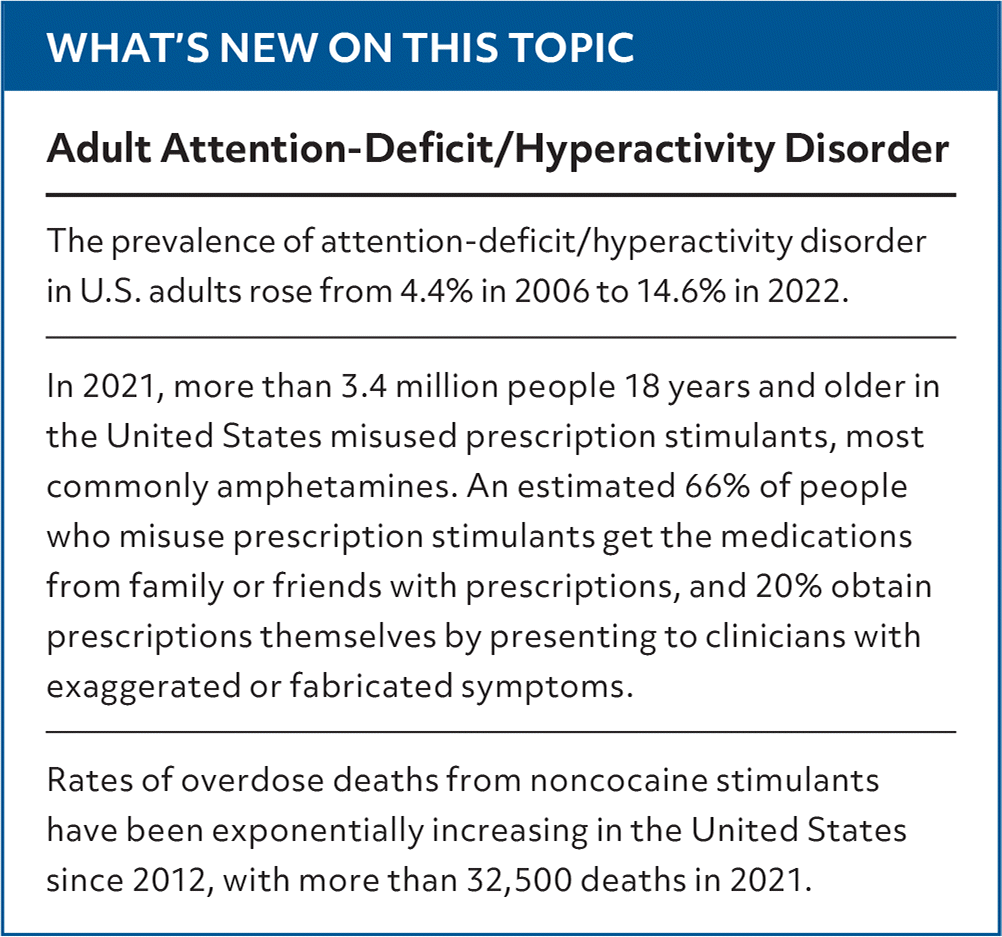
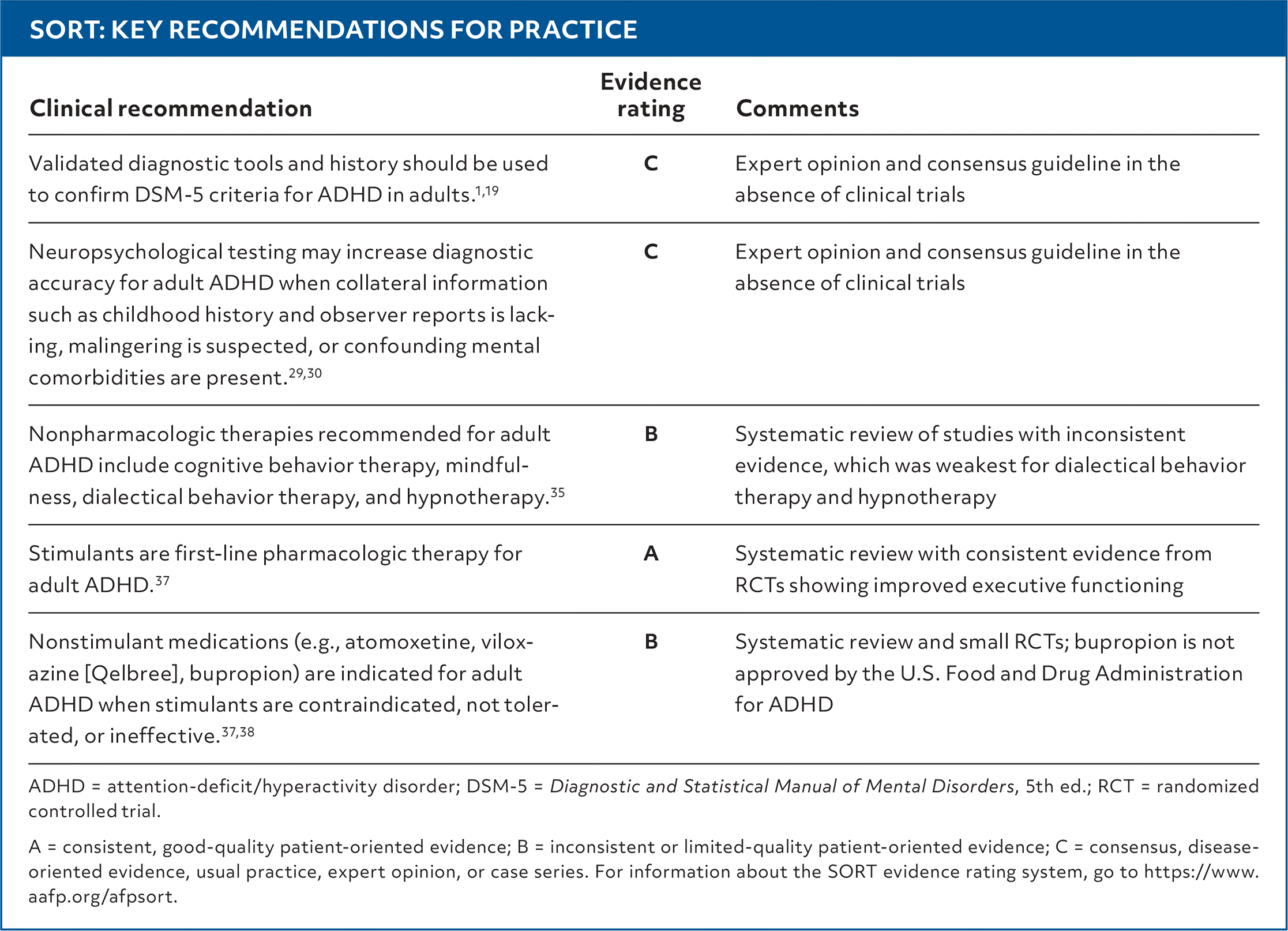
Attention-deficit/hyperactivity disorder (ADHD) is a neurodevelopmental disorder involving functionally disruptive inattentive and/or hyperactive/impulsive behaviors, such as being easily distracted, regularly failing to follow through on tasks, being restless, or often interrupting others. ADHD diagnosed in childhood often persists into adulthood, with 14.6% of U.S. adults meeting the Diagnostic and Statistical Manual of Mental Disorders, 5th ed., criteria for ADHD. When evaluating for adult ADHD, other mental disorders should be included in the differential diagnosis due to the substantial overlap of symptoms and ADHD concurrence with anxiety/stress, mood, personality, impulse control, and substance use disorders. An ADHD diagnosis requires a comprehensive clinical history and evaluation, patient symptom and function assessment (e.g., Adult ADHD Self-Report Scale, Conners Adult ADHD Rating Scales), and gathering of collateral information. Clinical guidelines recommend a subset of amphetamine and methylphenidate stimulants as first-line pharmacotherapy, which may be more effective when combined with psychotherapy. For adults unable to take stimulants or with concurrent anxiety/depression, options include atomoxetine, viloxazine, and bupropion. To monitor for patient misuse or diversion of stimulants, physicians should consider employing controlled substance agreements and prescription drug monitoring programs.

AMANDA E. OLAGUNJU, DO, is a primary care physician at JenCare Senior Medical Center, Newport News, Va., and a physician and major in the 113th Air National Guard, Andrews Air Force Base, Md.

FARAZ GHODDUSI, MD, is associate chief health information officer and an assistant professor in the Department of Family Medicine and Department of Medical Informatics and Clinical Epidemiology at Oregon Health & Science University, Portland.

Address correspondence to Amanda E. Olagunju, DO, at aeolagunju90@gmail.com.

Author disclosure: No relevant financial relationships.

  1. 1.Diagnostic and Statistical Manual of Mental Disorders, 5th ed., text revision. American Psychiatric Association; 2022.
  2. 2.Barbaresi WJ, Colligan RC, Weaver AL, et al. Mortality, ADHD, and psychosocial adversity in adults with childhood ADHD: a prospective study. Pediatrics. 2013;131(4):637-644.
  3. 3.Biederman J, Petty CR, Monuteaux MC, et al. Adult psychiatric outcomes of girls with attention deficit hyperactivity disorder: 11-year follow-up in a longitudinal case-control study. Am J Psychiatry. 2010;167(4):409-417.
  4. 4.Biederman J, Petty CR, Evans M, et al. How persistent is ADHD? A controlled 10-year follow-up study of boys with ADHD. Psychiatry Res. 2010;177(3):299-304.
  5. 5.Agnew-Blais JC, Polanczyk GV, Danese A, et al. Evaluation of the persistence, remission, and emergence of attention-deficit/hyperactivity disorder in young adulthood. JAMA Psychiatry. 2016;73(7):713-720.
  6. 6.Caye A, Rocha TB, Anselmi L, et al. Attention-deficit/hyperactivity disorder trajectories from childhood to young adulthood: evidence from a birth cohort supporting a late-onset syndrome. JAMA Psychiatry. 2016;73(7):705-12.
  7. 7.Dalsgaard S, Østergaard SD, Leckman JF, et al. Mortality in children, adolescents, and adults with attention deficit hyperactivity disorder: a nationwide cohort study. Lancet. 2015;385(9983):2190-2196.
  8. 8.Doyle B. Understanding and treating adults with attention deficit hyperactivity disorder. American Psychiatric Publishing; 2006.
  9. 9.Faraone SV, Larsson H. Genetics of attention deficit hyperactivity disorder. Mol Psychiatry. 2019;24(4):562-575.
  10. 10.Demontis D, Walters GB, Athanasiadis G, et al. Genome-wide analyses of ADHD identify 27 risk loci, refine the genetic architecture and implicate several cognitive domains [published correction appears in Nat Genet. 2023; 55(4): 730]. Nat Genet. 2023;55(2):198-208.
  11. 11.Green A, Baroud E, DiSalvo M, et al. Examining the impact of ADHD polygenic risk scores on ADHD and associated outcomes: a systematic review and meta-analysis. J Psychiatr Res. 2022;155:49-67.
  12. 12.Kessler RC, Adler L, Barkley R, et al. The prevalence and correlates of adult ADHD in the United States: results from the National Comorbidity Survey Replication. Am J Psychiatry. 2006;163(4):716-723.
  13. 13.Adamis D, Flynn C, Wrigley M, et al. ADHD in adults: a systematic review and meta-analysis of prevalence studies in outpatient psychiatric clinics. J Atten Disord. 2022;26(12):1523-1534.
  14. 14.Royal College of Psychiatrists in Scotland. ADHD in adults: good practice guidelines. CR235. January 2023. Accessed June 1, 2023. https://www.rcpsych.ac.uk/improving-care/campaigning-for-better-mental-health-policy/college-reports/2023-college-reports/cr235
  15. 15.Conners CK. Conners. 4th ed. Multi-Health Systems, Inc; 2022.
  16. 16.Kessler R, Adler L, Ames M, et al. The World Health Organization adult ADHD self-report scale (ASRS): a short screening scale for use in the general population. Psych Med. 2005;35(2):245-56.
  17. 17.Ustun B, Adler LA, Rudin C, et al. The World Health Organization adult attention-deficit/hyperactivity disorder self-report screening scale for DSM-5 [published corrections appear in JAMA Psychiatry. 2017; 74(12): 1279 and JAMA Psychiatry. 2019; 76(11): 1213]. JAMA Psychiatry. 2017;74(5):520-527.
  18. 18.Barkley RA, Brown TE. Unrecognized attention-deficit/hyperactivity disorder in adults presenting with other psychiatric disorders. CNS Spectr. 2008;13(11):977-984.
  19. 19.American Academy of Family Physicians. Adult ADHD Assessment and Diagnosis. Accessed June 7, 2023. https://www.aafp.org/family-physician/patient-care/prevention-wellness/emotional-wellbeing/adhd-toolkit/assessment-and-diagnosis.html
  20. 20.Children and Adults with Attention-Deficit/Hyperactivity Disorder National Resource Center. Clinical practice tools. June 7, 2023. https://chadd.org/for-professionals/clinical-practice-tools
  21. 21.Dunlop BW, Wu R, Helms K. Performance of the adult ADHD Self-Report Scale-v1.1 in adults with major depressive disorder. Behav Sci (Basel). 2018;8(4):37.
  22. 22.Edmundson M, Berry DTR, Combs HL, et al. The effects of symptom information coaching on the feigning of adult ADHD. Psychol Assess. 2017;29(12):1429-1436.
  23. 23.Harrison AG, Nay S, Armstrong IT. Diagnostic accuracy of the Conners’ Adult ADHD Rating Scale in a postsecondary population. J Atten Disord. 2019;23(14):1829-1837.
  24. 24.Pettersson R, Söderström S, Nilsson KW. Diagnosing ADHD in adults: an examination of the discriminative validity of neuropsychological tests and diagnostic assessment instruments. J Atten Disord. 2018;22(11):1019-1031.
  25. 25.Söderström S, Pettersson R, Nilsson KW. Quantitative and subjective behavioural aspects in the assessment of attention-deficit hyperactivity disorder (ADHD) in adults. Nord J Psychiatry. 2014;68(1):30-37.
  26. 26.Solanto MV, Etefia K, Marks DJ. The utility of self-report measures and the continuous performance test in the diagnosis of ADHD in adults. CNS Spectr. 2004;9(9):649-659.
  27. 27.Taylor A, Deb S, Unwin G. Scales for the identification of adults with attention deficit hyperactivity disorder (ADHD): a systematic review. Res Dev Disabil. 2011;32(3):924-938.
  28. 28.Marshall P, Schroeder R, O’Brien J, et al. Effectiveness of symptom validity measures in identifying cognitive and behavioral symptom exaggeration in adult attention deficit hyperactivity disorder. Clin Neuropsychol. 2010;24(7):1204-1237.
  29. 29.Nikolas MA, Marshall P, Hoelzle JB. The role of neurocognitive tests in the assessment of adult attention-deficit/hyperactivity disorder. Psychol Assess. 2019;31(5):685-698.
  30. 30.Sherman EMS, Slick DJ, Iverson GL. Multidimensional malingering criteria for neuropsychological assessment: a 20-year update of the malingered neuropsychological dysfunction criteria. Arch Clin Neuropsychol. 2020;35(6):735-764.
  31. 31.Sollman MJ, Ranseen JD, Berry DTR. Detection of feigned ADHD in college students. Psychol Assess. 2010;22(2):325-335.
  32. 32.Wallace ER, Garcia-Willingham NE, Walls BD, et al. A meta-analysis of malingering detection measures for attention-deficit/hyperactivity disorder. Psychol Assess. 2019;31(2):265-270.
  33. 33.Centers for Medicare & Medicaid Services. Search the physician fee schedule. Accessed January 6, 2024. https://www.cms.gov/medicare/physician-fee-schedule/search
  34. 34.Schroeder RW, Martin PK, Walling A. Neuropsychological evaluations in adults. Am Fam Physician. 2019;99(2):101-108.
  35. 35.Nimmo-Smith V, Merwood A, Hank D, et al. Non-pharmacological interventions for adult ADHD: a systematic review. Psychol Med. 2020;50(4):529-541.
  36. 36.Sprich SE, Knouse LE, Cooper-Vince C, et al. Description and demonstration of CBT for ADHD in adults. Cogn Behav Pract. 2012;17(1).
  37. 37.Cortese S, Adamo N, Del Giovane C, et al. Comparative efficacy and tolerability of medications for attention-deficit hyperactivity disorder in children, adolescents, and adults: a systematic review and network meta-analysis. Lancet Psychiatry. 2018;5(9):727-738.
  38. 38.Moriyama TS, Polanczyk GV, Terzi FS, et al. Psychopharmacology and psychotherapy for the treatment of adults with ADHD—a systematic review of available meta-analyses. CNS Spectr. 2013;18(6):296-306.
  39. 39.Greenhill LL. Clinical effects of stimulant medication in ADHD. In: Solanto MV, Arnsten AFT, Castellanos FX, eds. Stimulant Drugs and ADHD: Basic and Clinical Neuroscience. Oxford University Press; 2001:31–57.
  40. 40.Wilens TE, Morrison NR, Prince J. An update on the pharmacotherapy of attention-deficit/hyperactivity disorder in adults. Expert Rev Neurother. 2011;11(10):1443-1465.
  41. 41.Novak SP, Kroutil LA, Williams RL, et al. The nonmedical use of prescription ADHD medications: results from a national internet panel. Subst Abuse Treat Prev Policy. 2007;2:32.
  42. 42.Substance Abuse and Mental Health Services Administration. 2021 National Survey of Drug Use and Health (NSDUH) Releases. Accessed June 1, 2023. https://www.samhsa.gov/data/release/2021-national-survey-drug-use-and-health-nsduh-releases
  43. 43.Smith ME, Farah MJ. Are prescription stimulants “smart pills”? The epidemiology and cognitive neuroscience of prescription stimulant use by normal healthy individuals. Psychol Bull. 2011;137(5):717-741.
  44. 44.Teter CJ, McCabe SE, LaGrange K, et al. Illicit use of specific prescription stimulants among college students: prevalence, motives, and routes of administration. Pharmacotherapy. 2006;26(10):1501-1510.
  45. 45.Spencer MR, Miniño AM, Warner M. Drug overdose deaths in the United States, 2001–2021. NCHS Data Brief No. 457. December 2022. Accessed June 1, 2023. https://www.cdc.gov/nchs/products/databriefs/db457.htm
  46. 46.American Academy of Family Physicians. AAFP chronic pain management toolkit. Accessed June 9, 2023. https://www.aafp.org/family-physician/patient-care/care-resources/pain-management/aafp-chronic-pain-management-toolkit.html
  47. 47.Jasinski DR, Faries DE, Moore RJ, et al. Abuse liability assessment of atomoxetine in a drug-abusing population. Drug Alcohol Depend. 2008;95(1–2):140-146.
  48. 48.Adler LA, Liebowitz M, Kronenberger W, et al. Atomoxetine treatment in adults with attention-deficit/hyperactivity disorder and comorbid social anxiety disorder. Depress Anxiety. 2009;26(3):212-221.
  49. 49.Cruz MP. Guanfacine extended-release tablets (Intuniv), a nonstimulant selective alpha(2A)-adrenergic receptor agonist for attention-deficit/hyperactivity disorder. PT. 2010;35(8):448-451.
  50. 50.Post RE, Kurlansik SL. Diagnosis and management of adult attention-deficit/hyperactivity disorder. Am Fam Physician. 2012;85(9):890-896.
  51. 51.Srisurapanont M, Jarusuraisin N, Jittiwutikan J. Amphetamine withdrawal: I. Reliability, validity and factor structure of a measure. Aust N Z J Psychiatry. 1999;33(1):89-93.
  52. 52.Searight HR, Burke JM, Rottnek F. Adult ADHD: evaluation and treatment in family medicine. Am Fam Physician. 2000;62(9):2077-2086.

Copyright © 2026 by the American Academy of Family Physicians.

This content is owned by the AAFP. A person viewing it online may make one printout of the material and may use that printout only for his or her personal, non-commercial reference. This material may not otherwise be downloaded, copied, printed, stored, transmitted or reproduced in any medium, whether now known or later invented, except as authorized in writing by the AAFP. See permissions for copyright questions and/or permission requests.