Management of Obesity: Office-Based Strategies

Michelle K. Keating, DO, MEd
Rachel K. Woodruff, MD, MPH
Erin M. Saner, MD

American Family Physician. 2024;110(2):145-156.

Author disclosure: No relevant financial relationships.

This clinical content conforms to AAFP criteria for CME.

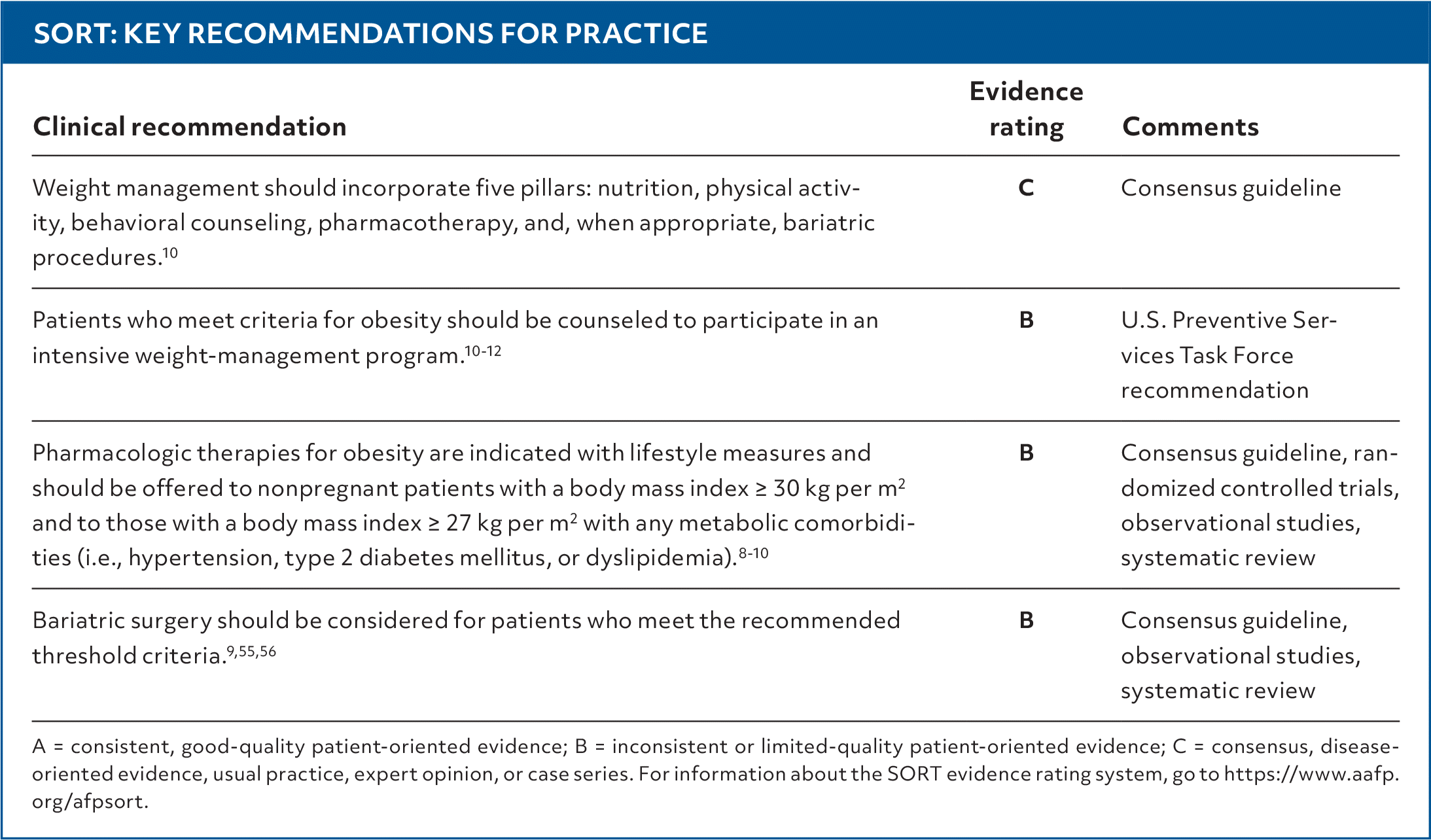
Obesity in the United States is increasing, with the most recent national data indicating a prevalence of 41.9%. Obesity is generally considered a body mass index (BMI) of 30 kg per m2 or greater; however, increased waist circumference (female: 35 inches or greater; male: 40 inches or greater) may be a more accurate indicator of obesity, particularly in older adults. For patients who are overweight or obese, the history should include whether patients are taking medications that can increase weight and identifying comorbid conditions contributing to or resulting from obesity. Clinicians should also ask about previous weight-management strategies and whether they were effective. Initial laboratory testing includes a complete blood count, metabolic profile, lipids, thyroid-stimulating hormone and A1C levels, and additional testing as needed. The Obesity Medicine Association recommends that weight management incorporate five pillars: behavioral counseling, nutrition, physical activity, pharmacotherapy, and, when appropriate, bariatric procedures. Pharmacotherapy with anti-obesity medications such as glucagon-like peptide-1 receptor agonists, sympathomimetics, and others should be considered for any patient with a BMI of 30 kg per m2 or greater and for any patients who are overweight (i.e., BMI of 27 kg per m2 or greater) with metabolic comorbidities. Referral for bariatric surgery should be considered for patients who meet the criteria. Successful management requires individualized support systems with periodic follow-ups through each phase of treatment.

MICHELLE K. KEATING, DO, MEd, FAAFP, is an assistant professor and associate program director of the family medicine residency in the Department of Family and Community Medicine at Wake Forest University School of Medicine, Atrium Health Wake Forest Baptist, Winston-Salem, N.C.

RACHEL K. WOODRUFF, MD, MPH, is an assistant professor in the Department of Family and Community Medicine at Wake Forest University School of Medicine, Atrium Health Wake Forest Baptist.

ERIN M. SANER, MD, DABOM, is an assistant professor in the Department of Family and Community Medicine at Wake Forest University School of Medicine, Atrium Health Wake Forest Baptist.

Address correspondence to Michelle K. Keating, DO, MEd, FAAFP, at mkeating@wakehealth.edu.

Author disclosure: No relevant financial relationships.

  1. 1.Centers for Disease Control and Prevention. Adult obesity facts. May 17, 2022. Accessed July 25, 2023. https://www.cdc.gov/obesity/data/adult.html
  2. 2.American Medical Association PolicyFinder. Recognition of obesity as a disease H-440.842. 2023. Accessed July 13, 2023. https://policysearch.ama-assn.org/policyfinder/detail/H-440.842?uri=%2FAMADoc%2FHOD.xml-0-3858.xml
  3. 3.National Heart, Lung, and Blood Institute. NHLBI obesity education initiative expert panel on the identification, evaluation, and treatment of obesity in adults (US). Clinical guidelines on the identification, evaluation, and treatment of overweight and obesity in adults: the evidence report. September 1998. Accessed July 13, 2023. https://www.ncbi.nlm.nih.gov/books/NBK2003
  4. 4.Tucker S, Bramante C, Conroy M, et al. The most undertreated chronic disease: addressing obesity in primary care settings. Curr Obes Rep. 2021;10(3):396-408.
  5. 5.Greaney ML, Cohen SA, Xu F, et al. Healthcare provider counselling for weight management behaviours among adults with overweight or obesity: a cross-sectional analysis of National Health and Nutrition Examination Survey, 2011–2018. BMJ Open. 2020;10(11):e039295.
  6. 6.Granara B, Laurent J. Provider attitudes and practice patterns of obesity management with pharmacotherapy. J Am Assoc Nurse Pract. 2017;29(9):543-550.
  7. 7.Lopez EKH, Helm MC, Gould JC, et al. Primary care providers’ attitudes and knowledge of bariatric surgery. Surg Endosc. 2020;34(5):2273-2278.
  8. 8.Garvey WT, Mechanick J, Brett EM, et al.; Reviewers of the AACE/ACE Obesity Clinical Practice Guidelines. American Association of Clinical Endocrinologists and American College of Endocrinology comprehensive clinical practice guidelines for medical care of patients with obesity. Endocr Pract. 2016;22(suppl3):1-203.
  9. 9.Jensen MD, Ryan DH, Apovian CM, et al.; American College of Cardiology/American Heart Association Task Force on Practice Guidelines; Obesity Society. 2013 AHA/ACC/TOS guideline for the management of overweight and obesity in adults: a report of the American College of Cardiology/American Heart Association Task Force on Practice Guidelines and the Obesity Society [published correction appears in Circulation. 2014; 129(25 suppl 2): S139–S140]. Circulation. 2014;129(25 suppl 2):S102-S138.
  10. 10.Tondt J, Freshwater M, Christensen S, et al. Obesity algorithm. Obesity Medicine Association. Accessed February 2, 2024. https://obesitymedicine.org/obesity-algorithm
  11. 11.U.S. Preventive Services Task Force. Weight loss to prevent obesity-related morbidity and mortality in adults: behavioral interventions. September 18, 2018. Accessed June 12, 2023. https://www.uspreventiveservicestaskforce.org/uspstf/recommendation/obesityin-adults-interventions
  12. 12.LeBlanc ES, Patnode CD, Webber EM, et al. Behavioral and pharmacotherapy weight loss interventions to prevent obesity-related morbidity and mortality in adults: updated evidence report and systematic review for the US Preventive Services Task Force. JAMA. 2018;320(11):1172-1191.
  13. 13.Tsai AG, Bessesen DH. Obesity. Ann Intern Med. 2019;170(5):ITC33-ITC48.
  14. 14.Kennedy AB, Taylor SS, Lavie CJ, et al. Ending the stigma: improving care for patients who are overweight or obese. Fam Pract Manag. 2022;29(2):21-25.
  15. 15.Alberga AS, Edache IY, Forhan M, et al. Weight bias and health care utilization: a scoping review. Prim Health Care Res Dev. 2019;20:e116.
  16. 16.Erlandson M, Ivey LC, Seikel K. Update on office-based strategies for the management of obesity. Am Fam Physician. 2016;94(5):361-368.
  17. 17.Centers for Disease Control and Prevention. Assessing your weight. June 3, 2022. Accessed January 30, 2024. https://www.cdc.gov/healthyweight/assessing/index.html
  18. 18.Jehan S, Zizi F, Pandi-Perumal SR, et al. Obstructive sleep apnea and obesity: implications for public health. Sleep Med Disord. 2017;1(4):00019.
  19. 19.Chung F, Abdullah HR, Liao P. STOP-BANG questionnaire: a practical approach to screen for obstructive sleep apnea. Chest. 2016;149(3):631-638.
  20. 20.Stutz EW, Rondeau B. Mallampati score. Updated August 5, 2023. Accessed January 31, 2024. https://www.ncbi.nlm.nih.gov/books/NBK585119
  21. 21.American Academy of Family Physicians. Obesity and overweight policy. September 2022. Accessed January 28, 2024. https://www.aafp.org/about/policies/all/obesity.html
  22. 22.Hynes M. 10 proven strategies to help patients maintain weight loss. J Fam Pract. 2020;69(1):20-25.
  23. 23.Paixão C, Dias CM, Jorge R, et al. Successful weight loss maintenance: a systematic review of weight control registries. Obes Rev. 2020;21(5):e13003.
  24. 24.Walbolt J, Koh Y. Non-nutritive sweeteners and their associations with obesity and type 2 diabetes. J Obes Metab Syndr. 2020;29(2):114-123.
  25. 25.Steffen BT, Jacobs DR, Yi SY, et al. Long-term aspartame and saccharin intakes are related to greater volumes of visceral, intermuscular, and subcutaneous adipose tissue: the CARDIA study. Int J Obes (Lond). 2023;47(10):939-947.
  26. 26.Gudzune KA, Doshi RS, Mehta AK, et al. Efficacy of commercial weight-loss programs: an updated systematic review [published correction appears in Ann Intern Med. 2015; 162(10): 739–740]. Ann Intern Med. 2015;162(7):501-512.
  27. 27.U.S. Department of Health and Human Services. 2018 Physical activity guidelines advisory committee scientific report. February 2018. Accessed April 10, 2024. https://health.gov/sites/default/files/2019-09/PAG_Advisory_Committee_Report.pdf
  28. 28.Lee PG, Jackson EA, Richardson CR. Exercise prescriptions in older adults. Am Fam Physician. 2017;95(7):425-432.
  29. 29.Piercy KL, Troiano RP, Ballard RM, et al. The physical activity guidelines for Americans. JAMA. 2018;320(19):2020-2028.
  30. 30.U.S. Food and Drug Administration. Saxenda (liraglutide) injection, for subcutaneous use. Highlights of prescribing information. Updated April 2023. Accessed July 24, 2023. https://www.accessdata.fda.gov/drugsatfda_docs/label/2023/206321s016lbl.pdf
  31. 31.U.S. Food and Drug Administration. Contrave (naltrexone hydrochloride and bupropion hydrochloride) extended-release tablets, for oral use. Highlights of prescribing information. Updated November 2023. Accessed June 17, 2024. https://www.accessdatafda.gov/drugsatfda_docs/label/2023/200063s021lbl.pdf
  32. 32.Plenity. 2024. Accessed January 25, 2024. https://www.myplenity.com
  33. 33.U.S. Food and Drug Administration. Orlistat (marketed as Alli and Xenical) information. July 8, 2015. Accessed July 24, 2023. https://www.fda.gov/drugs/postmarket-drug-safety-information-patients-and-providers/orlistat-marketed-alli-and-xenical-information
  34. 34.U.S. Food and Drug Administration. Adipex-P (phentermine hydrochloride USP) CIV for oral use. Highlights of prescribing information. Updated January 2012. Accessed July 24, 2023. https://www.accessdata.fda.gov/drugsatfda_docs/label/2012/085128s065lbl.pdf
  35. 35.U.S. Food and Drug Administration. Qsymia (phentermine and topiramate extended-release capsules), for oral use, CIV. Highlights of prescribing information. Updated June 2023. Accessed July 24, 2023. https://www.accessdata.fda.gov/drugsatfda_docs/label/2023/022580s023lbl.pdf
  36. 36.U.S. Food and Drug Administration. Wegovy (semaglutide) injection, for subcutaneous use. Highlights of prescribing information. Updated July 2023. Accessed July 24, 2023. https://www.accessdata.fda.gov/drugsatfda_docs/label/2023/215256s007lbl.pdf
  37. 37.U.S. Food and Drug Administration. Zepbound (tirzepatide) injection, for subcutaneous use. Highlights of prescribing information. Updated November 2023. Accessed January 30, 2024. https://www.accessdata.fda.gov/drugsatfda_docs/label/2023/217806s000lbl.pdf
  38. 38.Astrup A, Rössner S, Van Gaal L, et al.; NN8022-1807 Study Group. Effects of liraglutide in the treatment of obesity: a randomised, double-blind, placebo-controlled study [published correction appears in Lancet. 2010; 375(9719): 984]. Lancet. 2009;374(9701):1606-1616.
  39. 39.Pi-Sunyer X, Astrup A, Fujioka K, et al.; SCALE Obesity and Prediabetes NN8022-1839 Study Group. A randomized, controlled trial of 3.0 mg of liraglutide in weight management. N Engl J Med. 2015;373(1):11-22.
  40. 40.Garvey WT, Ryan DH, Look M, et al. Two-year sustained weight loss and metabolic benefits with controlled-release phentermine/topiramate in obese and overweight adults (SEQUEL): a randomized, placebo-controlled, phase 3 extension study. Am J Clin Nutr. 2012;95(2):297-308.
  41. 41.Greenway FL, Fujioka K, Plodkowski RA, et al.; COR-I Study Group. Effect of naltrexone plus bupropion on weight loss in overweight and obese adults (COR-I): a multicentre, randomised, double-blind, placebo-controlled, phase 3 trial [published corrections appear in Lancet. 2010; 376(9741): 594, and Lancet. 2010; 376(9750): 1392]. Lancet. 2010;376(9741):595-605.
  42. 42.Jastreboff AM, Aronne LJ, Ahmad NN, et al.; SURMOUNT-1 Investigators. Tirzepatide once weekly for the treatment of obesity. N Engl J Med. 2022;387(3):205-216.
  43. 43.Giruzzi N. Plenity (oral superabsorbent hydrogel). Clin Diabetes. 2020;38(3):313-314.
  44. 44.Levi J, Wang J, Venter F, et al. Estimated minimum prices and lowest available national prices for antiobesity medications: improving affordability and access to treatment. Obesity (Silver Spring). 2023;31(5):1270-1279.
  45. 45.Rubino DM, Greenway FL, Khalid U, et al.; STEP 8 Investigators. Effect of weekly subcutaneous semaglutide vs daily liraglutide on body weight in adults with overweight or obesity without diabetes: the STEP 8 randomized clinical trial. JAMA. 2022;327(2):138-150.
  46. 46.Lincoff AM, Brown-Frandsen K, Colhoun HM, et al. Semaglutide and cardiovascular outcomes in obesity without diabetes. N Engl J Med. 2023;389(24):2221-2232.
  47. 47.Wilding JPH, Batterham RL, Davies M, et al.; STEP 1 Study Group. Weight regain and cardiometabolic effects after withdrawal of semaglutide: the STEP 1 trial extension. Diabetes Obes Metab. 2022;24(8):1553-1564.
  48. 48.Ryan DH, Lingvay I, Deanfield J, et al. Long-term weight loss effects of semaglutide in obesity without diabetes in the SELECT trial. Nat Med. May 13, 2024. Accessed May 21, 2024. https://www.nature.com/articles/s41591-024-02996-7#citeas
  49. 49.Sodhi M, Rezaeianzadeh R, Kezouh A, et al. Risk of gastrointestinal adverse events associated with glucagon-like peptide-1 receptor agonists for weight loss. JAMA. 2023;330(18):1795-1797.
  50. 50.Jeon E, Lee KY, Kim KK. Approved anti-obesity medications in 2022 KSSO guidelines and the promise of phase 3 clinical trials: anti-obesity drugs in the sky and on the horizon. J Obes Metab Syndr. 2023;32(2):106-120.
  51. 51.Batsis JA, Apolzan JW, Bagley PJ, et al. A systematic review of dietary supplements and alternative therapies for weight loss. Obesity (Silver Spring). 2021;29(7):1102-1113.
  52. 52.U.S. Food and Drug Administration. FDA, FTC act to remove “homeopathic” HCG weight loss products from the market. December 6, 2011. Accessed July 24, 2023. https://www.ftc.gov/system/files/attachments/press-releases/ftc-charges-hcg-marketer-deceptive-advertising/fda_hcg_products_press_release_12-6-11.pdf
  53. 53.American Medical Association PolicyFinder. Weight loss programs H-150.989. 2016. Accessed July 24, 2023. https://policysearch.amaassn.org/policyfinder/detail/*?uri=%2FAMADoc%2FHOD.xml-0-663.xml
  54. 54.Banerjee ES, Schroeder R, Harrison TD. Metabolic surgery for adult obesity: common questions and answers. Am Fam Physician. 2022;105(6):593-601.
  55. 55.Eisenberg D, Shikora SA, Aarts E, et al. 2022 American Society for Metabolic and Bariatric Surgery and International Federation for the Surgery of Obesity and Metabolic Disorders: indications for metabolic and bariatric surgery. Surg Obes Relat Dis. 2022;18(12):1345-1356.
  56. 56.Mechanick JI, Apovian C, Brethauer S, et al. Clinical practice guidelines for the perioperative nutrition, metabolic, and nonsurgical support of patients undergoing bariatric procedures—2019 update. Endocr Pract. 2019;25(12):1346-1359.
  57. 57.Wiggins T, Guidozzi N, Welbourn R, et al. Association of bariatric surgery with all-cause mortality and incidence of obesity-related disease at a population level: a systematic review and meta-analysis. PLoS Med. 2020;17(7):e1003206.
  58. 58.Schauer PR, Bhatt DL, Kirwan JP, et al.; STAMPEDE Investigators. Bariatric surgery versus intensive medical therapy for diabetes: 5-year outcomes. N Engl J Med. 2017;376(7):641-651.
  59. 59.Nedeltcheva AV, Kilkus JM, Imperial J, et al. Insufficient sleep undermines dietary efforts to reduce adiposity. Ann Intern Med. 2010;153(7):435-441.
  60. 60.Rao G. Office-based strategies for the management of obesity. Am Fam Physician. 2010;81(12):1449-1456.
  61. 61.Berke EM, Morden NE. Medical management of obesity [published correction appears in Am Fam Physician. 2001; 64(4): 570]. Am Fam Physician. 2000;62(2):419-426.

Copyright © 2026 by the American Academy of Family Physicians.

This content is owned by the AAFP. A person viewing it online may make one printout of the material and may use that printout only for his or her personal, non-commercial reference. This material may not otherwise be downloaded, copied, printed, stored, transmitted or reproduced in any medium, whether now known or later invented, except as authorized in writing by the AAFP. See permissions for copyright questions and/or permission requests.