Conjunctivitis: Diagnosis and Management

Stella Winters, MD
Winfred Frazier, MD, MPH
Jacob Winters, MD

American Family Physician. 2024;110(2):134-144.

Author disclosure: No relevant financial relationships.

This clinical content conforms to AAFP criteria for CME.

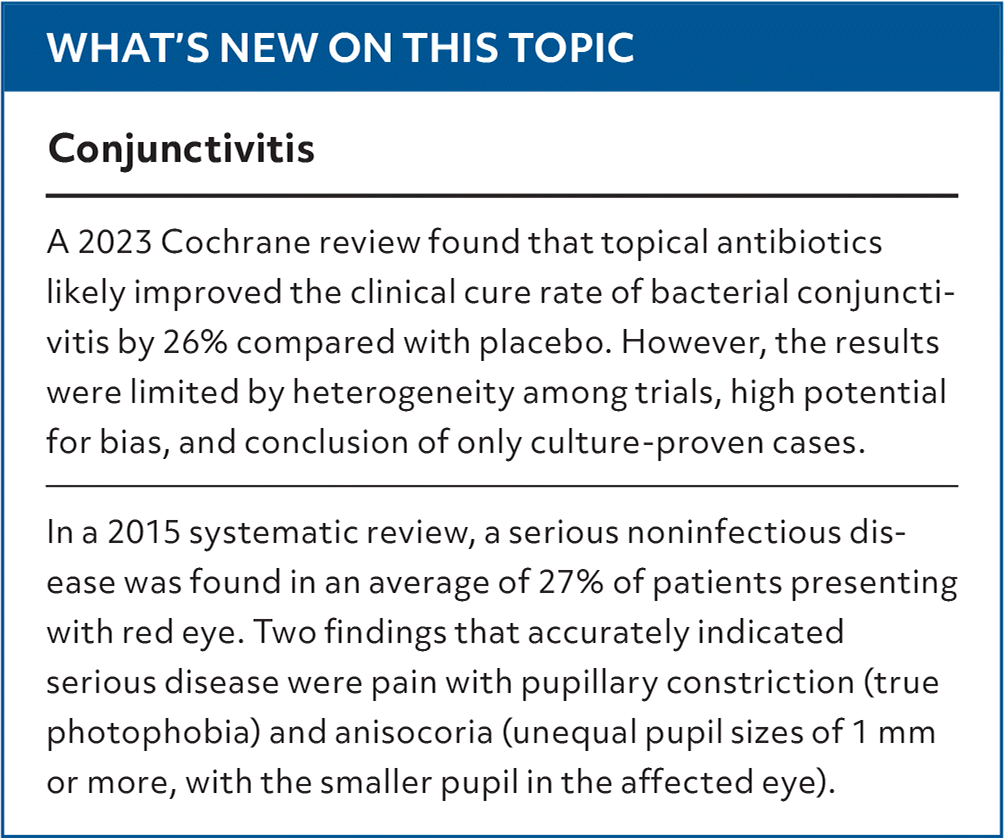
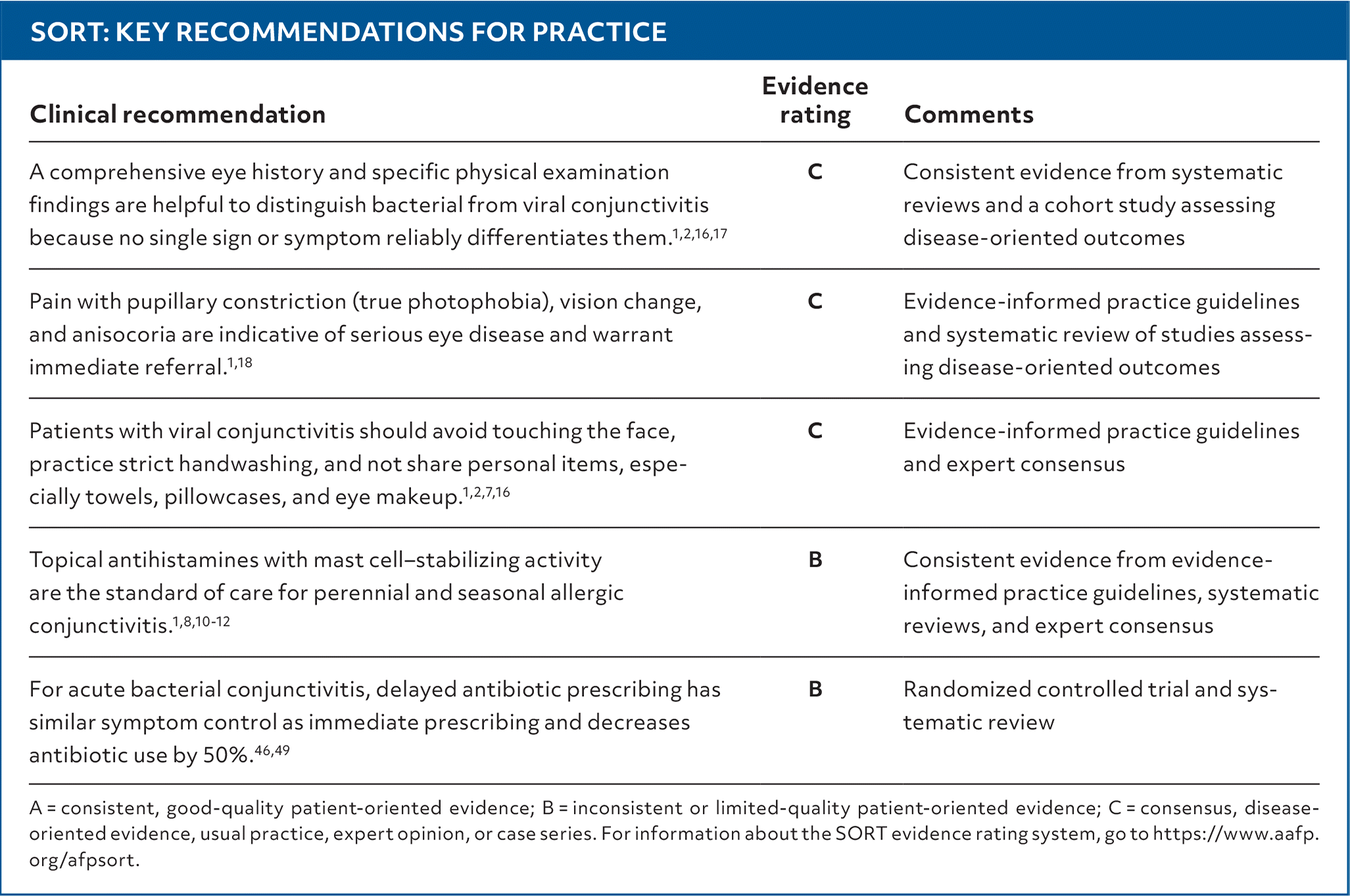
Conjunctivitis caused by viruses, bacteria, or allergies is one of the most common eye conditions in primary care. There is no single sign or symptom that accurately differentiates viral from bacterial conjunctivitis. A comprehensive history and physical examination can guide diagnosis. Viral and allergic conjunctivitis are more common in adults and typically present with watery discharge. Supportive care options for viral conjunctivitis include artificial tears, cold compresses, and antihistamine eye drops. Strict personal hygiene, including frequent handwashing, is essential to decrease the risk of transmission. Topical antihistamines with mast cell–stabilizing activity are the treatment of choice for allergic conjunctivitis. Bacterial conjunctivitis is more common in children and typically presents as mucopurulent discharge with the eyelids matted shut. Delayed antibiotic prescribing has been found to have similar symptom control as immediate prescribing. Ophthalmology referral is indicated for conjunctivitis in a neonate or patients with severe pain, decreased vision, recent ocular surgery, vesicular rash on the eyelids or nose, history of rheumatologic disease, or immunocompromised state.

STELLA WINTERS, MD, FAAFP, is a clinical assistant professor at the University of Pittsburgh (Penn.) Medical Center St. Margaret Family Medicine Residency Program.

WINFRED FRAZIER, MD, MPH, FAAFP, is associate program director of the University of Pittsburgh Medical Center St. Margaret Family Medicine Residency Program.

JACOB WINTERS, MD, is a resident in the Department of Ophthalmology at the University of Pittsburgh Medical Center.

Address correspondence to Stella Winters, MD, FAAFP, at stellawintersmd@gmail.com.

Author disclosure: No relevant financial relationships.

  1. 1.Varu DM, Rhee MK, Akpek EK, et al.; American Academy of Ophthalmology Preferred Practice Pattern Cornea and External Disease Panel. Conjunctivitis Preferred Practice Pattern®. Ophthalmology. 2019;126(1):P94-P169.
  2. 2.Azari AA, Barney NP. Conjunctivitis: a systematic review of diagnosis and treatment [published correction appears in JAMA. 2014;311(1):95]. JAMA. 2013;310(16):1721-1729.
  3. 3.Channa R, Zafar SN, Canner JK, et al. Epidemiology of eye-related emergency department visits. JAMA Opthalmol. 2016;134(3):312-319.
  4. 4.Pepose JS, Sarda SP, Cheng WY, et al. Direct and indirect costs of infectious conjunctivitis in a commercially insured population in the United States. Clin Ophthalmol. 2020;14:377-387.
  5. 5.Smith AF, Waycaster C. Estimate of the direct and indirect annual cost of bacterial conjunctivitis in the United States. BMC Ophthalmol. 2009;9:13.
  6. 6.Schneider JE, Scheibling CM, Segall D, et al. Epidemiology and economic burden of conjunctivitis: a managed care perspective. J Manag Care Med. 2014;17(1):78-83.
  7. 7.Mahoney MJ, Bekibele R, Notermann SL, et al. Pediatric conjunctivitis: a review of clinical manifestations, diagnosis, and management. Children (Basel). 2023;10(5):808.
  8. 8.Bielory L, Delgado L, Katelaris CH, et al. ICON: diagnosis and management of allergic conjunctivitis. Ann Allergy Asthma Immunol. 2020;124(2):118-134.
  9. 9.Patel DS, Arunakirinathan M, Stuart A, et al. Allergic eye disease. BMJ. 2017;359:j4706.
  10. 10.Dupuis P, Prokopich CL, Hynes A, et al. A contemporary look at allergic conjunctivitis. Allergy Asthma Clin Immunol. 2020;16:5.
  11. 11.Leonardi A, Silva D, Formigo DP, et al. Management of ocular allergy. Allergy. 2019;74(9):1611-1630.
  12. 12.Labib BA, Chigbu DI. Therapeutic targets in allergic conjunctivitis. Pharmaceuticals (Basel). 2022;15(5):547.
  13. 13.Bielory L, Wagle P. Ocular surface lubricants. Curr Opin Allergy Clin Immunol. 2017;17(5):382-389.
  14. 14.Drugs for allergic rhinitis and allergic conjunctivitis. Med Lett Drugs Ther. 2021;63(1622):57-64.
  15. 15.Pflipsen M, Massaquoi M, Wolf S. Evaluation of the painful eye. Am Fam Physician. 2016;93(12):991-998.
  16. 16.O’Brien TP, Jeng BH, McDonald M, et al. Acute conjunctivitis: truth and misconceptions. Curr Med Res Opin. 2009;25(8):1953-1961.
  17. 17.Johnson D, Liu D, Simel D. Does this patient with acute infectious conjunctivitis have a bacterial infection?: the rational clinical examination systematic review. JAMA. 2022;327(22):2231-2237.
  18. 18.Narayana S, McGee S. Bedside diagnosis of the ‘red eye’: a systematic review. Am J Med. 2015;128(11):1220-1224.e1.
  19. 19.Rietveld RP, ter Riet G, Bindels PJE, et al. Predicting bacterial cause in infectious conjunctivitis: cohort study on informativeness of combinations of signs and symptoms. BMJ. 2004;329(7459):206-210.
  20. 20.Singh K, Axelrod S, Bielory L. The epidemiology of ocular and nasal allergy in the United States, 1988–1994. J Allergy Clin Immunol. 2010;126(4):778-783.e6.
  21. 21.Patel S, Kaplan C, Galor A, et al. The role of temperature change, ambient temperature, and relative humidity in allergic conjunctivitis in a US veteran population. Am J Ophthalmol. 2021;230:243-255.
  22. 22.Verhelst D, Koppen C, Van Looveren J, et al.; Belgian Keratitis Study Group. Clinical, epidemiological and cost aspects of contact lens related infectious keratitis in Belgium: results of a seven-year retrospective study. Bull Soc Belge Ophtalmol. 2005(297):7-15.
  23. 23.Tsui E, Sella R, Tham V, et al.; SCORPIO Study Group. Pathogen surveillance for acute infectious conjunctivitis. JAMA Ophthalmol. 2023;141(12):1140-1144.
  24. 24.Patel PB, Diaz MCG, Bennett JE, et al. Clinical features of bacterial conjunctivitis in children. Acad Emerg Med. 2007;14(1):1-5.
  25. 25.Muto T, Imaizumi S, Kamoi K. Viral conjunctivitis. Viruses. 2023;15(3):676.
  26. 26.Marangon FB, Miller D, Alfonso E. Laboratory results in ocular viral diseases: implications in clinical-laboratory correlation. Arq Bras Oftalmol. 2007;70(2):189-194.
  27. 27.Aoki K, Tagawa Y. A twenty-one year surveillance of adenoviral conjunctivitis in Sapporo, Japan. Int Ophthalmol Clin. 2002;42(1):49-54.
  28. 28.Zhang L, Zhao N, Sha J, et al. Virology and epidemiology analyses of global adenovirus-associated conjunctivitis outbreaks, 1953–2013. Epidemiol Infect. 2016;144(8):1661-1672.
  29. 29.Gordon YJ, Gordon RY, Romanowski E, et al. Prolonged recovery of desiccated adenoviral serotypes 5, 8, and 19 from plastic and metal surfaces in vitro. Ophthalmology. 1993;100(12):1835-1839.
  30. 30.Domínguez-Berjón MF, Hernando-Briongos P, Miguel-Arroyo PJ, et al. Adenovirus transmission in a nursing home: analysis of an epidemic outbreak of keratoconjunctivitis. Gerontology. 2007;53(5):250-254.
  31. 31.Johnson SD, Harthan JS, Than T, et al. Predictive accuracy and densitometric analysis of point-of-care immunoassay for adenoviral conjunctivitis. Transl Vis Sci Technol. 2021;10(9):30.
  32. 32.Kam KY, Ong HS, Bunce C, et al. Sensitivity and specificity of the AdenoPlus point-of-care system in detecting adenovirus in conjunctivitis patients at an ophthalmic emergency department: a diagnostic accuracy study. Br J Ophthalmol. 2015;99(9):1186-1189.
  33. 33.Choosing Wisely: five things ophthalmologists and patients should question. American Academy of Ophthalmology. Accessed October 13, 2023. https://www.aao.org/education/choosing-wisely
  34. 34.Holland EJ, Fingeret M, Mah FS. Use of topical steroids in conjunctivitis: a review of the evidence. Cornea. 2019;38(8):1062-1067.
  35. 35.Roba LA, Kowalski RP, Gordon AT, et al. Adenoviral ocular isolates demonstrate serotype-dependent differences in in vitro infectivity titers and clinical course. Cornea. 1995;14(4):388-393.
  36. 36.Lee T, Kuo IC. Survey of state conjunctivitis policies for school-age students. J AAPOS. 2022;26(3):115.e1-115.e5.
  37. 37.Centers for Disease Control and Prevention. Clinical overview of pink eye (conjunctivitis). April 15, 2024. Accessed June 1, 2024. https://www.cdc.gov/conjunctivitis/hcp/clinical-overview/index.html
  38. 38.Leonardi A, Modugno RL, Salami E. Allergy and dry eye disease. Ocul Immunol Inflamm. 2021;29(6):1168-1176.
  39. 39.Liu X, Wang G, He J, et al. Novel application of immunochromatographic assay for measurement of total tear immunoglobulin E. Cornea. 2024;43(1):13-17.
  40. 40.Bao J, Tian L, Meng Y, et al. Total IgE in tears accurately reflects the severity and predicts the prognosis of seasonal allergic conjunctivitis. Clin Transl Allergy. 2022;12(3):e12139.
  41. 41.Goldstein MH, Silva FQ, Blender N, et al. Ocular benzalkonium chloride exposure: problems and solutions. Eye (Lond). 2022;36(2):361-368.
  42. 42.Yáñez A, Rodrigo GJ. Intranasal corticosteroids versus topical H1 receptor antagonists for the treatment of allergic rhinitis: a systematic review with meta-analysis. Ann Allergy Asthma Immunol. 2002;89(5):479-484.
  43. 43.Ilyas H, Slonim CB, Braswell GR, et al. Long-term safety of loteprednol etabonate 0.2% in the treatment of seasonal and perennial allergic conjunctivitis. Eye Contact Lens. 2004;30(1):10-13.
  44. 44.Buznach N, Dagan R, Greenberg D. Clinical and bacterial characteristics of acute bacterial conjunctivitis in children in the antibiotic resistance era. Pediatr Infect Dis J. 2005;24(9):823-828.
  45. 45.Jefferis J, Perera R, Everitt H, et al. Acute infective conjunctivitis in primary care: who needs antibiotics? An individual patient data meta-analysis. Br J Gen Pract. 2011;61(590):e542-e548.
  46. 46.Rose P. Management strategies for acute infective conjunctivitis in primary care. Expert Opin Pharmacother. 2007;8(12):1903-1921.
  47. 47.Chen YY, Liu SH, Nurmatov U, et al. Antibiotics versus placebo for acute bacterial conjunctivitis. Cochrane Database Syst Rev. 2023(3):CD001211.
  48. 48.Sonoda K, Takeuchi Y. Antibiotics for acute bacterial conjunctivitis. Am Fam Physician. 2023;107(6) ): Online. Accessed May 27, 2024. https://www.aafp.org/pubs/afp/issues/2023/0600/mbtn-acute-bacterial-conjunctivitis.html
  49. 49.Everitt HA, Little PS, Smith PWF. A randomised controlled trial of management strategies for acute infective conjunctivitis in general practice [published correction appears in BMJ. 2006; 333(7566): 468]. BMJ. 2006;333(7563):321.
  50. 50.Workowski KA, Bachmann LH, Chan PA, et al. Sexually transmitted infections treatment guidelines, 2021. MMWR Recomm Rep. 2021;70(4):1-187.
  51. 51.Morrow GL, Abbott RL. Conjunctivitis. Am Fam Physician. 1998;57(4):735-746.

Copyright © 2026 by the American Academy of Family Physicians.

This content is owned by the AAFP. A person viewing it online may make one printout of the material and may use that printout only for his or her personal, non-commercial reference. This material may not otherwise be downloaded, copied, printed, stored, transmitted or reproduced in any medium, whether now known or later invented, except as authorized in writing by the AAFP. See permissions for copyright questions and/or permission requests.