Erin F. Morcomb, MD
Carmen M. Dargel, MD
Sydney A. Anderson, DO

American Family Physician. 2024;110(2):174-182.

Author disclosure: No relevant financial relationships.

This clinical content conforms to AAFP criteria for CME.

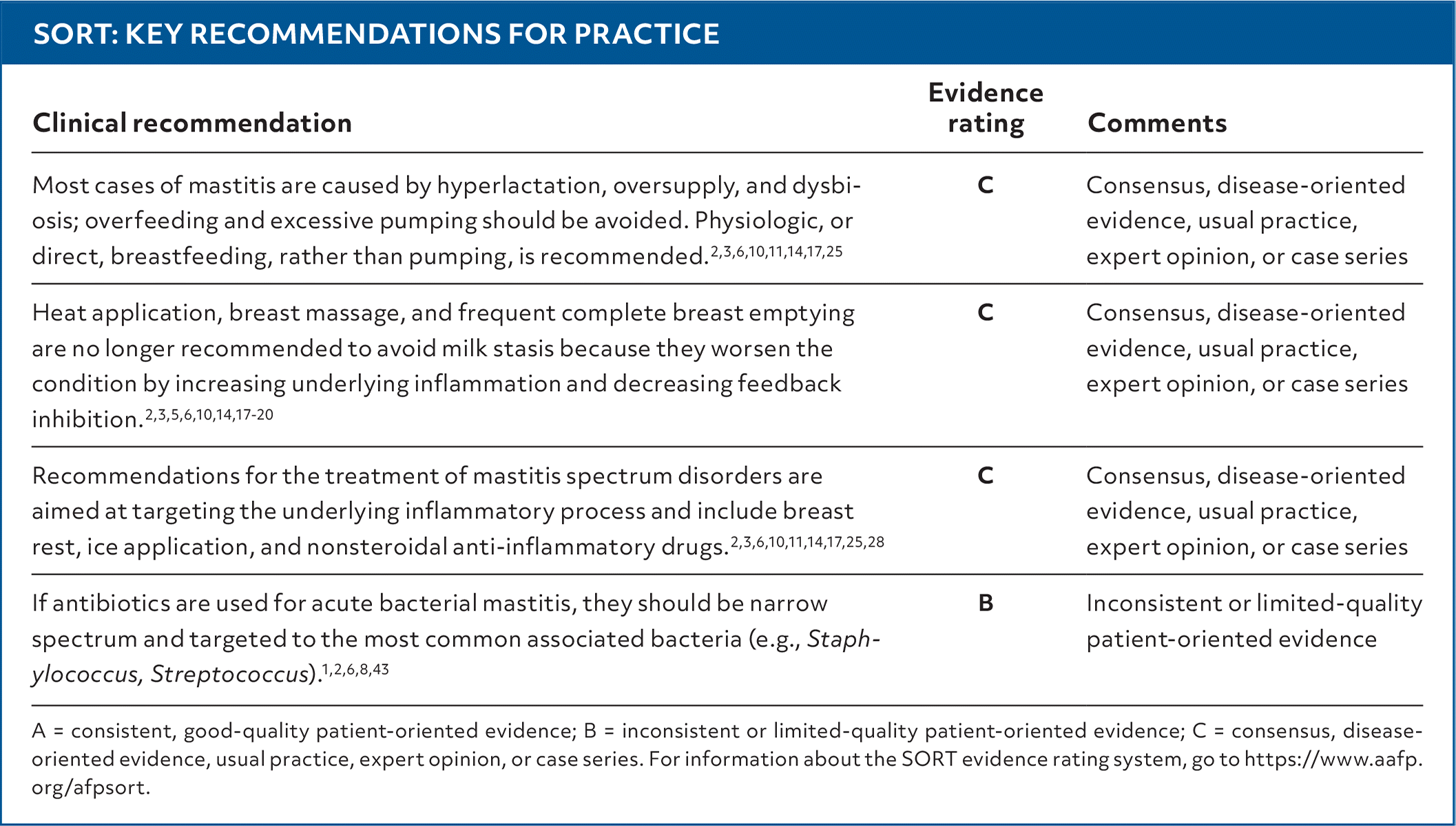
Mastitis represents a spectrum of inflammatory conditions. Lactational mastitis is the most common, with an approximate incidence of 10% in the United States, and it usually occurs in the first 3 months postpartum. Diagnosis is made clinically based on the presence of symptoms such as fever, malaise, focal breast tenderness, and overlying skin erythema or hyperpigmentation without the need for laboratory tests or imaging. However, obtaining milk cultures should be considered to guide antibiotic therapy, and ultrasonography should be performed to identify abscesses in immuno-compromised patients or those with worsening or recurrent symptoms. Because most cases of mastitis are caused by inflammation and not a true infection, a 1- to 2-day trial of conservative measures (i.e., nonsteroidal anti-inflammatory drugs, ice application, feeding the infant directly from the breast, and minimizing pumping) is often sufficient for treatment. If there is no improvement in symptoms, narrow-spectrum antibiotics may be prescribed to cover common skin flora (e.g., Staphylococcus, Streptococcus). Most patients can be treated as outpatients with oral antibiotics; however, if the condition worsens or there is a concern for sepsis, intravenous antibiotics and hospital admission may be required. Use of probiotics for treatment or prevention is not supported by good evidence. Factors that increase the risk of mastitis include overstimulation of milk production and tissue trauma from aggressive breast massage; therefore, frequent overfeeding, excessive pumping to empty the breast, heat application, and breast massage are no longer recommended because they may worsen the condition. The best prevention is a proper lactation technique, including a good infant latch, and encouraging physiologic breastfeeding rather than pumping, if possible.

ERIN F. MORCOMB, MD, is an assistant professor of family medicine at Mayo Clinic College of Medicine and Science, La Crosse, Wis.

CARMEN M. DARGEL, MD, is an instructor of family medicine at Mayo Clinic College of Medicine and Science.

SYDNEY A. ANDERSON, DO, is a family medicine resident in the La Crosse-Mayo Family Medicine Residency Program at Mayo Clinic College of Medicine and Science.

Address correspondence to Erin F. Morcomb, MD, at morcomb.erin@mayo.edu.

Author disclosure: No relevant financial relationships.

  1. 1.Blackmon MM, et al. Acute mastitis. StatPearls. Updated July 21, 2023. Accessed December 1, 2023. https://www.ncbi.nlm.nih.gov/books/NBK557782/
  2. 2.Mitchell KB, et al. Academy of Breastfeeding Medicine clinical protocol #36: the mastitis spectrum, revised 2022 [published correction appears in Breastfeed Med. 2022; 17(11): 977–978]. Breastfeed Med. 2022;17(5):360-376.
  3. 3.Spencer JP. Management of mastitis in breastfeeding women. Am Fam Physician. 2008;78(6):727-731.
  4. 4.Koziol KJ, et al. Predictive risk factors for childbirth-associated breast infections in the United States: a 10-year perspective. Int J Environ Res Public Health. 2023;20(14):6333.
  5. 5.Lin CH, et al. Descriptive study of mastitis in postpartum women in Taiwan: incidence and related factors. J Womens Health (Larchmt). 2023;32(5):616-622.
  6. 6.Louis-Jacques AF, et al. Risk factors, symptoms, and treatment of lactational mastitis. JAMA. 2023;329(7):588-589.
  7. 7.Mitoulas LR, et al. Breast pumps and mastitis in breastfeeding women: clarifying the relationship. Front Pediatr. 2022;10:856353.
  8. 8.Grzeskowiak LE, et al. Incidence, antibiotic treatment and outcomes of lactational mastitis: findings from the Norwegian Mother, Father and Child Cohort Study (MoBa). Paediatr Perinat Epidemiol. 2022;36(2):254-263.
  9. 9.Wilson E, et al. Incidence of and risk factors for lactational mastitis. J Hum Lact. 2020;36(4):673-686.
  10. 10.Lai BY, et al. Risk factors for lactation mastitis in China. PLoS One. 2021;16(5):e0251182.
  11. 11.Westerfield KL, et al. Breastfeeding: common questions and answers. Am Fam Physician. 2018;98(6):368-373.
  12. 12.Couvillion SP, et al. Interrogating the role of the milk microbiome in mastitis in the multi-omics era. Front Microbiol. 2023;14:1105675.
  13. 13.Castro I, et al. Interactions between human milk oligosaccharides, microbiota and immune factors in milk of women with and without mastitis. Sci Rep. 2022;12(1):1367.
  14. 14.Deng Y, et al. Maternal risk factors for lactation mastitis. West J Nurs Res. 2021;43(7):698-708.
  15. 15.Johnson HM, et al. Academy of Breastfeeding Medicine clinical protocol #32: management of hyperlactation. Breastfeed Med. 2020;15(3):129-134.
  16. 16.Oikonomou G, et al. Milk microbiota: what are we exactly talking about?. Front Microbiol. 2020;11:60.
  17. 17.Mastitis: what you should know. Am Fam Physician. 2008;78(6):732.
  18. 18.Afeiche MC, et al. The Dietary Inflammatory Index is associated with subclinical mastitis in lactating European women. Nutrients. 2022;14(22):4719.
  19. 19.Li D, et al. Risk factors and prognosis of acute lactation mastitis developing into a breast abscess. PLoS One. 2022;17(9):e0273967.
  20. 20.Douglas P. Re-thinking benign inflammation of the lactating breast: classification, prevention, and management [published correction appears in Womens Health (Lond). 2023; 19: 17455057231157916]. Womens Health (Lond). 2022;18:17455057221091349.
  21. 21.Anderson L, et al. Effectiveness of breast massage for the treatment of women with breastfeeding problems. JBI Database System Rev Implement Rep. 2019;17(8):1668-1694.
  22. 22.Witt AM, et al. Therapeutic breast massage in lactation for the management of engorgement, plugged ducts, and mastitis. J Hum Lact. 2016;32(1):123-131.
  23. 23.Mitchell KB, et al. Management of common complications of lactation: the breast surgeon's role in examining the science and debunking old myths. Surg Clin North Am. 2022;102(6):973-987.
  24. 24.Betts RC, et al. It's not yeast: retrospective cohort study of lactating women with persistent nipple and breast pain. Breastfeed Med. 2021;16(4):318-324.
  25. 25.Amir LH, et al. Identifying the cause of breast and nipple pain during lactation. BMJ. 2021;374:n1628.
  26. 26.Pandey TS, et al. Idiopathic granulomatous mastitis—a prospective study of 49 women and treatment outcomes with steroid therapy. Breast J. 2014;20(3):258-266.
  27. 27.Chang CM, et al. Risk of breast cancer in women with non-lactational mastitis. Sci Rep. 2019;9(1):15587.
  28. 28.Schwarz J, et al. Case report of recurrent bilateral mastitis in a woman who is exclusively pumping breast milk for an infant in the NICU. J Obstet Gynecol Neonatal Nurs. 2021;50(6):765-773.
  29. 29.Crepinsek MA, et al. Interventions for preventing mastitis after childbirth. Cochrane Database Syst Rev. 2020(9):CD007239.
  30. 30.Dagla M, et al. Do maternal stress and depressive symptoms in perinatal period predict the lactation mastitis occurrence? A retrospective longitudinal study in Greek women. Diagnostics (Basel). 2021;11(9):1524.
  31. 31.Yu Q, et al. The preventive and therapeutic effects of probiotics on mastitis. PLoS One. 2022;17(9):e0274467.
  32. 32.Zhang Y, et al. Oral Lactobacillus fermentum CECT5716 in the patients with lactational abscess treated by needle aspiration. Medicine (Baltimore). 2022;101(26):e29761.
  33. 33.Barker M, et al. Probiotics and human lactational mastitis. Women Birth. 2020;33(6):e483-e491.
  34. 34.Zhang Y, et al. Breast microecology improvement using probiotics following needle aspiration in patients with lactational breast abscess. Sci Rep. 2022;12(1):16692.
  35. 35.Amir LH, et al. Probiotics and mastitis: evidence-based marketing?. Int Breastfeed J. 2016;11:19.
  36. 36.Arroyo R, et al. Treatment of infectious mastitis during lactation: antibiotics versus oral administration of Lactobacilli isolated from breast milk. Clin Infect Dis. 2010;50(12):1551-1558.
  37. 37.Lai ECH, et al. The role of conservative treatment in idiopathic granulomatous mastitis. Breast J. 2005;11(6):454-456.
  38. 38.Konishi T, et al. Impact of the National Action Plan for Antimicrobial Resistance on antibiotic use for mastitis using a Japanese nationwide database. Breast Care (Basel). 2023;18(2):122-129.
  39. 39.Mitchell KB, et al. Challenges in the management of breast conditions during lactation. Obstet Gynecol Clin North Am. 2022;49(1):35-55.
  40. 40.Abdelhadi MSA, et al. Breast infections in non-lactating women. J Family Community Med. 2005;12(3):133-137.
  41. 41.Martinez-Ramos D, et al. Idiopathic granulomatous mastitis. Breast J. 2019;25(6):1245-1250.
  42. 42.Hovanessian Larsen LJ, et al. Granulomatous lobular mastitis: imaging, diagnosis, and treatment. AJR Am J Roentgenol. 2009;193(2):574-581.
  43. 43.Jahanfar S, et al. Antibiotics for mastitis in breastfeeding women. Cochrane Database Syst Rev. 2013(2):CD005458.
  44. 44.Long T, et al. Maintaining breastfeeding during the treatment of breast abscesses is not contraindicated. Breastfeed Med. 2022;17(9):753-757.
  45. 45.Johnson HM, et al. Low incidence of milk fistula with continued breastfeeding following radiologic and surgical interventions on the lactating breast. Breast Dis. 2021;40(3):183-189.
  46. 46.Zakarija-Grkovic I, et al. Treatments for breast engorgement during lactation. Cochrane Database Syst Rev. 2020(9):CD006946.

Copyright © 2026 by the American Academy of Family Physicians.

This content is owned by the AAFP. A person viewing it online may make one printout of the material and may use that printout only for his or her personal, non-commercial reference. This material may not otherwise be downloaded, copied, printed, stored, transmitted or reproduced in any medium, whether now known or later invented, except as authorized in writing by the AAFP. See permissions for copyright questions and/or permission requests.