

Family physicians are well-positioned to provide injections for patients who have pain due to hand and finger conditions, especially when initial treatments such as splinting and nonsteroidal anti-inflammatory drugs are ineffective. Corticosteroid injections can offer pain relief; however, potential risks such as infection, cartilage damage, and skin depigmentation should be discussed. Techniques and procedures for injections vary. Corticosteroid injections for ste-nosing flexor tenosynovitis (trigger finger) can be performed with or without ultrasound guidance. To maximize benefits of corticosteroid injection for carpometacarpal joint osteoarthritis, topical nonsteroidal anti-inflammatory drugs and other conservative treatment modalities should be used concurrently. Because of the risks of disease recurrence and adverse effects, corticosteroid injections for palmar fibromatosis should be approached with caution in the context of shared decision-making.
The hand and wrist complex comprises 27 bones and multiple tendons, muscles, ligaments, and nerves. This complex is integral for performing daily tasks. Hand and wrist injuries represent 25% of all sports-related injuries and can have a major effect on functional activities of daily living.1 The incidence of these injuries is on the rise as the number of people engaging in sports and active recreational activities is increasing. This article, part I of a two-part series on injections of the hand and wrist, addresses injections for trigger finger, first carpometacarpal joint osteoarthritis, and palmar fibromatosis. Part II addresses injections for carpal tunnel syndrome, ganglion cyst, intersection syndrome, triangular fibrocartilage complex injury, and de Quervain tenosynovitis.2
SORT: KEY RECOMMENDATIONS FOR PRACTICE
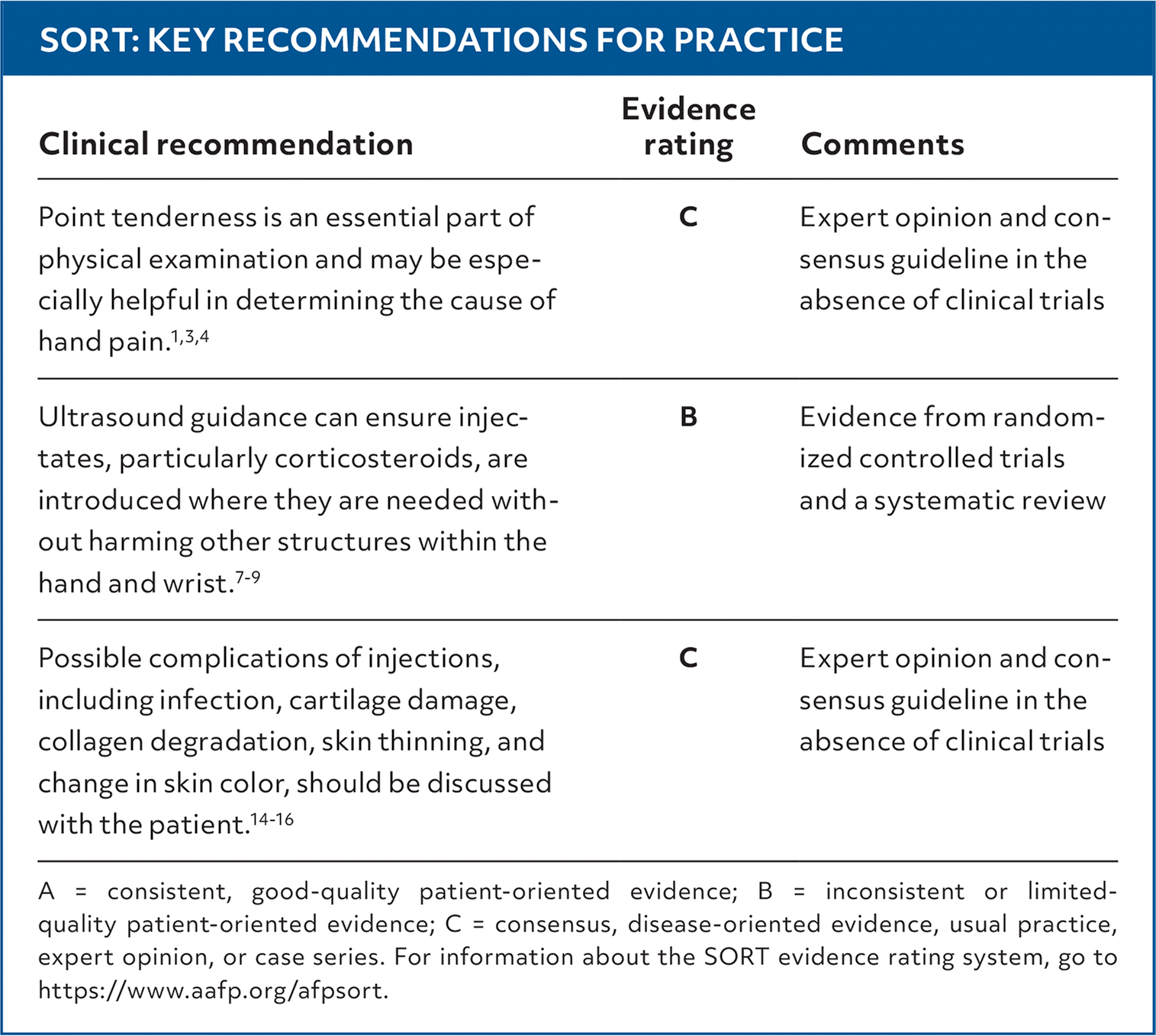
| Clinical recommendation | Evidence rating | Comments |
|---|---|---|
| Point tenderness is an essential part of physical examination and may be especially helpful in determining the cause of hand pain.1,3,4 | C | Expert opinion and consensus guideline in the absence of clinical trials |
| Ultrasound guidance can ensure injectates, particularly corticosteroids, are introduced where they are needed without harming other structures within the hand and wrist.7–9 | B | Evidence from randomized controlled trials and a systematic review |
| Possible complications of injections, including infection, cartilage damage, collagen degradation, skin thinning, and change in skin color, should be discussed with the patient.14–16 | C | Expert opinion and consensus guideline in the absence of clinical trials |
A = consistent, good-quality patient-oriented evidence; B = inconsistent or limited-quality patient-oriented evidence; C = consensus, disease-oriented evidence, usual practice, expert opinion, or case series. For information about the SORT evidence rating system, go to https://www.aafp.org/afpsort.
INITIAL EVALUATION
Point tenderness plays a crucial role in the physical examination when identifying the source of hand pain.1,3,4 It is critical to assess passive, active, and resisted movements of the hand, followed by evaluating sensation.3
IMAGING
Radiography is the first-line imaging test to assess for fractures and osseous alignment following hand or finger trauma.1 Radiography can additionally be used to monitor healing of conservatively treated fractures of the hand.1 Magnetic resonance imaging (MRI) can be used to assess injuries of the ligamentous structures. Further, MRI and computed tomography can be used to identify occult fractures of the carpal, including metacarpal, bones.5,6 Ultrasonography plays a valuable role in providing point-of-care and dynamic evaluation of tendons, nerves, and muscle and can be used to guide injection and aspiration to treat hand conditions. Although not mandatory, ultrasound guidance helps to ensure injectates, particularly corticosteroids, are introduced safely and accurately.7–9
Read the full article
Get immediate access, anytime, anywhere.
Choose a single article, issue, or full-access subscription.
Earn up to 14 CME credits per issue.
