

KEY POINTS FOR PRACTICE
• Treatment of atopic dermatitis with a midpotency topical corticosteroid once daily or a topical calcineurin inhibitor two to three times per week is safer and more effective for maintenance of remission than episodic treatment of flare-ups.
• Dilute bleach baths are beneficial for moderate to severe cases of atopic dermatitis.
• Systemic corticosteroids, elimination diets, and topical antimicrobial agents should be avoided in patients with atopic dermatitis .
From the AFP Editors
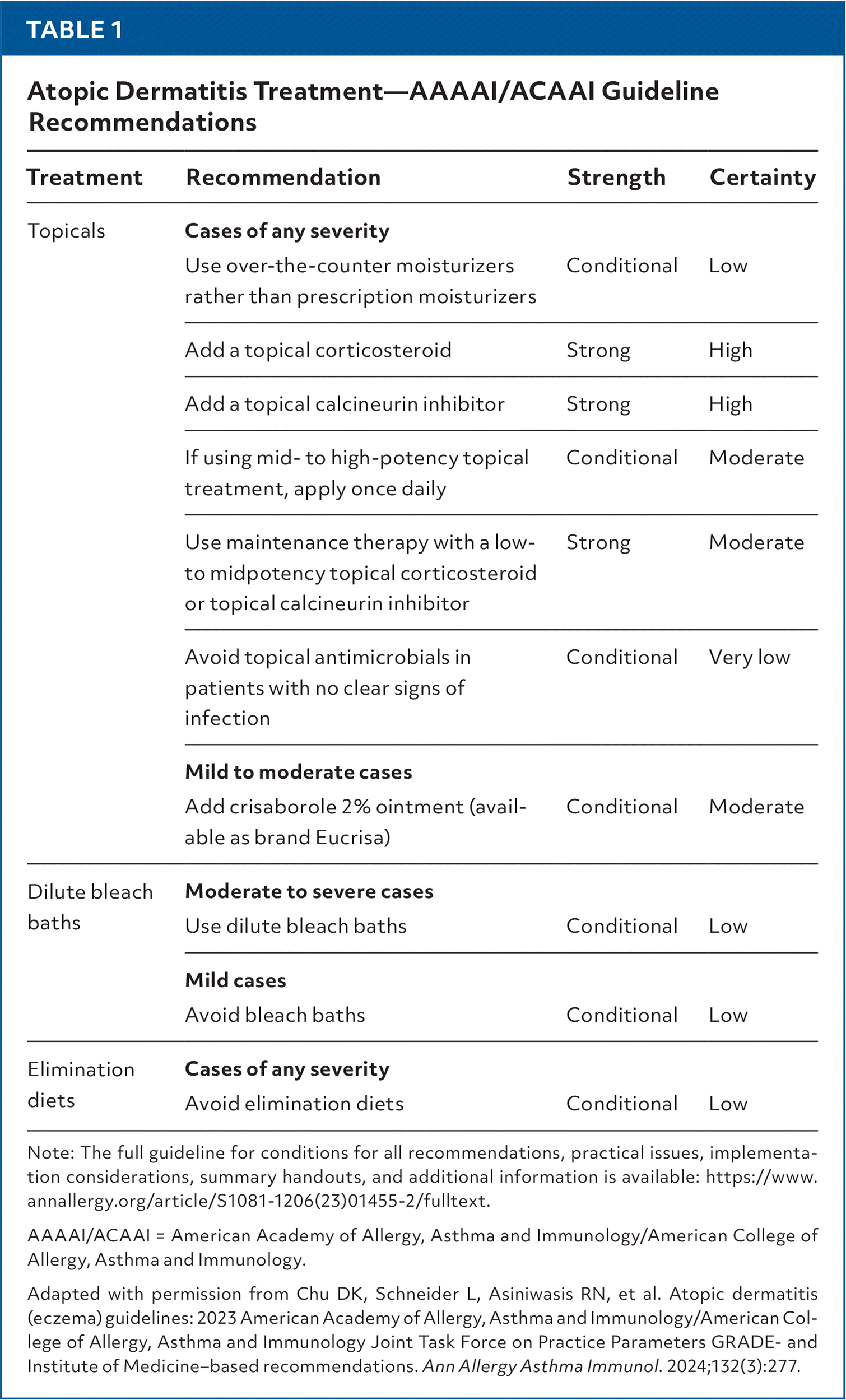
The American Academy of Allergy, Asthma and Immunology (AAAAI)/American College of Allergy, Asthma and Immunology (ACAAI) Joint Task Force on Practice Parameters updated guidelines for managing atopic dermatitis (eczema). Table 1 summarizes recommendations relevant to family physicians.
TABLE 1. Atopic Dermatitis Treatment—AAAAI/ACAAI Guideline Recommendations
| Treatment | Recommendation | Strength | Certainty |
|---|---|---|---|
| Topicals | Cases of any severity | ||
| Use over-the-counter moisturizers rather than prescription moisturizers | Conditional | Low | |
| Add a topical corticosteroid | Strong | High | |
| Add a topical calcineurin inhibitor | Strong | High | |
| If using mid- to high-potency topical treatment, apply once daily | Conditional | Moderate | |
| Use maintenance therapy with a low- to midpotency topical corticosteroid or topical calcineurin inhibitor | Strong | Moderate | |
| Avoid topical antimicrobials in patients with no clear signs of infection | Conditional | Very low | |
| Mild to moderate cases | |||
| Add crisaborole 2% ointment (available as brand Eucrisa) | Conditional | Moderate | |
| Dilute bleach baths | Moderate to severe cases | ||
| Use dilute bleach baths | Conditional | Low | |
| Mild cases | |||
| Avoid bleach baths | Conditional | Low | |
| Elimination diets | Cases of any severity | ||
| Avoid elimination diets | Conditional | Low |
Note: The full guideline for conditions for all recommendations, practical issues, implementation considerations, summary handouts, and additional information is available: https://www.annallergy.org/article/S1081-1206(23)01455-2/fulltext.
AAAAI/ACAAI = American Academy of Allergy, Asthma and Immunology/American College of Allergy, Asthma and Immunology.
Adapted with permission from Chu DK, Schneider L, Asiniwasis RN, et al. Atopic dermatitis (eczema) guidelines: 2023 American Academy of Allergy, Asthma and Immunology/American College of Allergy, Asthma and Immunology Joint Task Force on Practice Parameters GRADE- and Institute of Medicine–based recommendations. Ann Allergy Asthma Immunol. 2024 ;132(3):277.
Read the full article
Get immediate access, anytime, anywhere.
Choose a single article, issue, or full-access subscription.
Earn up to 14 CME credits per issue.
