

Rheumatoid arthritis (RA) is a chronic inflammatory autoimmune disease that causes joint inflammation, erosion, and deformity. The prevalence of RA in North America is 0.5% to 1%. RA is associated with significant morbidity and disability and an increased mortality rate. The disease should be suspected in patients who present with joint inflammation, especially those who have polyarthritis. Additional characteristic features include symmetrical small joint polyarthritis, morning stiffness, and constitutional symptoms. Extra-articular manifestations are common and may affect multiple body systems. Application of a decision tool, such as the Leiden clinical prediction rule for undifferentiated arthritis, may facilitate early diagnosis of RA. Useful diagnostic tests include inflammatory markers such as C-reactive protein, rheumatoid factor, and anti-cyclic citrullinated peptide antibody. Initial therapy routinely includes oral methotrexate. The American College of Rheumatology and European Alliance of Associations for Rheumatology recommend a treat-to-target approach, including rapid interventions to reduce disease activity and achieve remission. Although RA remains incurable, patient quality of life has improved dramatically with biologic disease-modifying antirheumatic drugs (DMARDs) and targeted synthetic DMARDs. All DMARDs increase the risk of infection; therefore, routine vaccinations should be up to date in patients taking these drugs. Because patients with RA have increased risk of cardiovascular disease, addressing other cardiovascular risk factors may reduce morbidity and mortality.
Rheumatoid arthritis (RA) is a chronic inflammatory autoimmune disease characterized by polyarthritis and a range of extra-articular manifestations. Effective treatments may reduce the significant morbidity and mortality associated with RA.1 Because outcomes improve with early identification and treatment, primarily through prevention of joint destruction, RA should be considered in all patients who have clinical synovitis.2 Although rheumatologists provide advanced treatment, family physicians play an important role in high-quality care for patients with this complex disease.
WHAT'S NEW ON THIS TOPIC
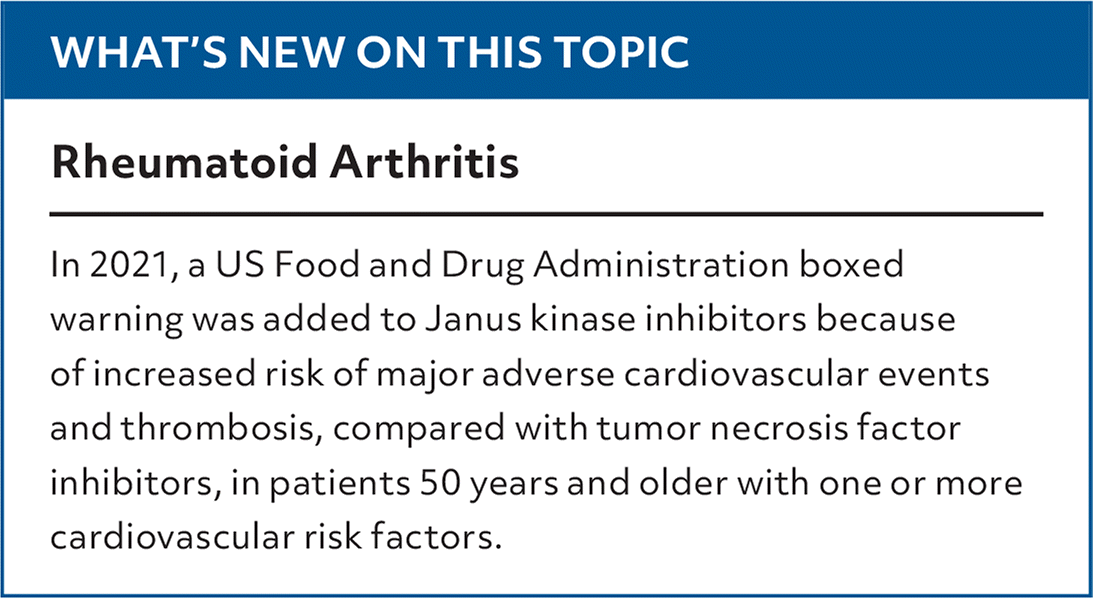
| In 2021, a US Food and Drug Administration boxed warning was added to Janus kinase inhibitors because of increased risk of major adverse cardiovascular events and thrombosis, compared with tumor necrosis factor inhibitors, in patients 50 years and older with one or more cardiovascular risk factors. |
SORT: KEY RECOMMENDATIONS FOR PRACTICE
| Clinical recommendation | Evidence rating | Comments |
|---|---|---|
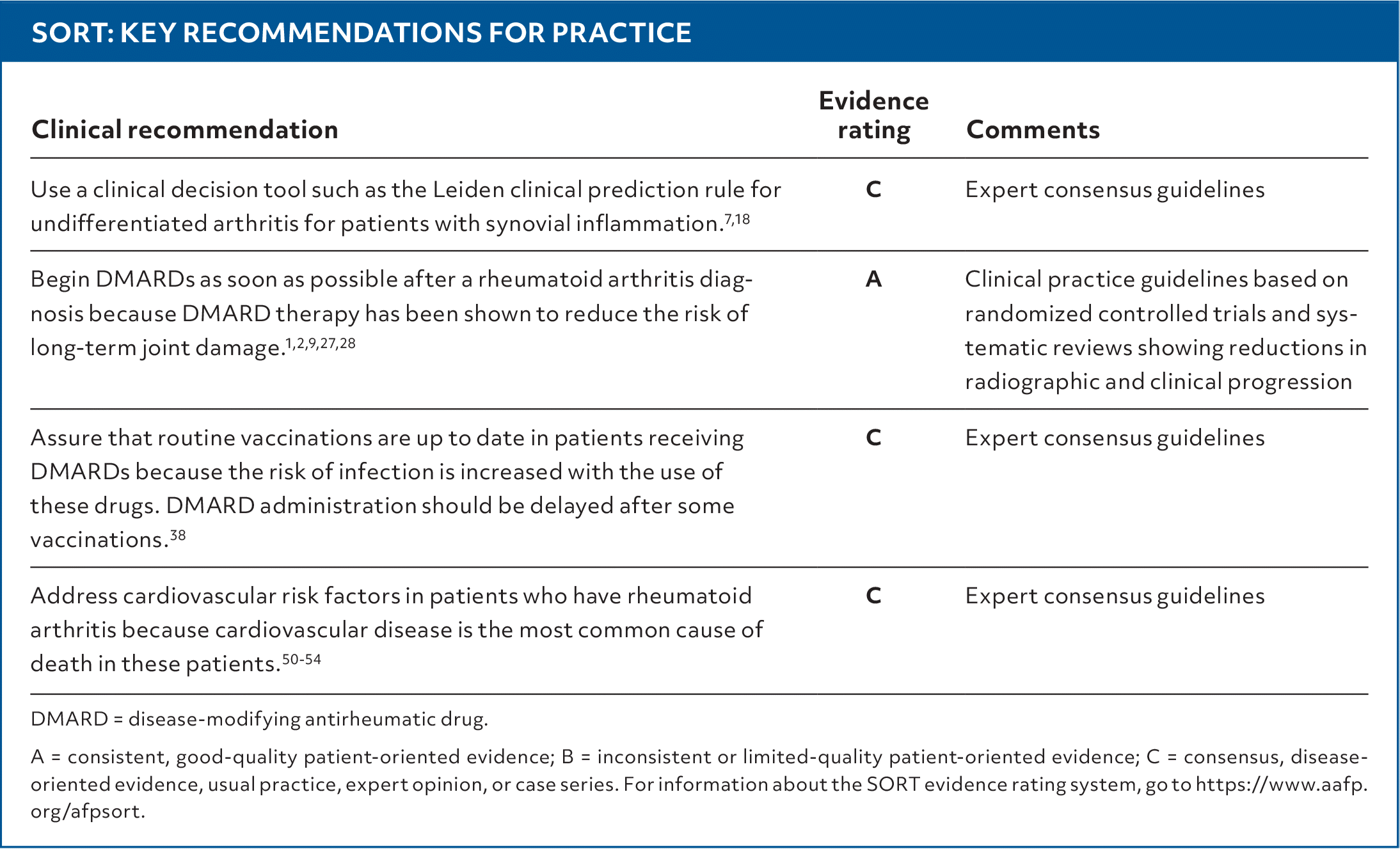
| Use a clinical decision tool such as the Leiden clinical prediction rule for undifferentiated arthritis for patients with synovial inflammation.7,18 | C | Expert consensus guidelines |
| Begin DMARDs as soon as possible after a rheumatoid arthritis diagnosis because DMARD therapy has been shown to reduce the risk of long-term joint damage.1,2,9,27,28 | A | Clinical practice guidelines based on randomized controlled trials and systematic reviews showing reductions in radiographic and clinical progression |
| Assure that routine vaccinations are up to date in patients receiving DMARDs because the risk of infection is increased with the use of these drugs. DMARD administration should be delayed after some vaccinations.38 | C | Expert consensus guidelines |
| Address cardiovascular risk factors in patients who have rheumatoid arthritis because cardiovascular disease is the most common cause of death in these patients.50–54 | C | Expert consensus guidelines |
DMARD = disease-modifying antirheumatic drug.
A = consistent, good-quality patient-oriented evidence; B = inconsistent or limited-quality patient-oriented evidence; C = consensus, disease-oriented evidence, usual practice, expert opinion, or case series. For information about the SORT evidence rating system, go to https://www.aafp.org/afpsort.
Read the full article
Get immediate access, anytime, anywhere.
Choose a single article, issue, or full-access subscription.
Earn up to 14 CME credits per issue.
