

Brexpiprazole (Rexulti) is an atypical antipsychotic medication labeled for the treatment of agitation associated with Alzheimer disease. It acts as a partial agonist on the 5-HT1A serotonin and D2 dopamine receptors and as an antagonist on the 5-HT2A serotonin receptor.1 Brexpiprazole is also labeled for use in treating schizophrenia and as an adjunctive therapy for major depressive disorder.1
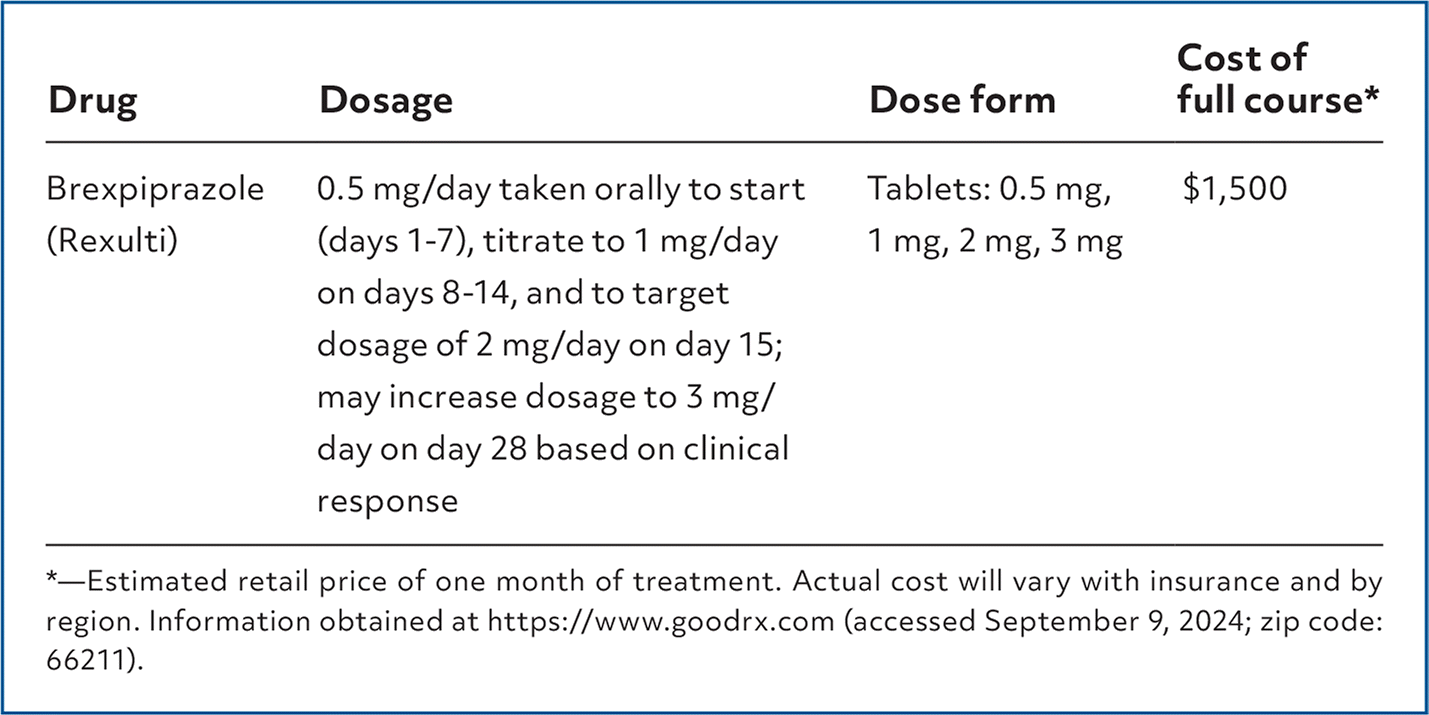
| Drug | Dosage | Dose form | Cost of full course* |
|---|---|---|---|
| Brexpiprazole (Rexulti) | 0.5 mg/day taken orally to start (days 1–7), titrate to 1 mg/day on days 8–14, and to target dosage of 2 mg/day on day 15; may increase dosage to 3 mg/day on day 28 based on clinical response | Tablets: 0.5 mg, 1 mg, 2 mg, 3 mg | $1,500 |
*—Estimated retail price of one month of treatment. Actual cost will vary with insurance and by region. Information obtained at https://www.goodrx.com (accessed September 9, 2024; zip code: 66211).
SAFETY
Approximately 1 in 8 patients (13%) will discontinue brexpiprazole due to an adverse event.1 Package labeling for brexpiprazole includes a warning of increased overall mortality in older patients with dementia-related psychosis. This risk is not significantly higher compared with placebo (incidence rate ratio = 4.8; 95% CI, 0.59 to 38); however, brexpiprazole should be used with caution because the risk is similar to that of other antipsychotic medications.1 Patients living alone, who have a history of cerebrovascular conditions or delirium, or who are at increased suicide risk should not take brexpiprazole because these patients may be at a greater risk of stroke and falls, and are more prone to suicidal thoughts while taking the medication.1 As with other antipsychotic medications, brexpiprazole may cause metabolic changes, including hyperglycemia (9% to 20%) and increased triglycerides (5% to 18%).1 Monitoring for metabolic changes, such as fasting blood glucose and lipids, may be warranted for patients at risk for cardiovascular disease or diabetes. Patients taking brexpiprazole may also experience extrapyramidal symptoms such as akathisia (1% to 14%).
Brexpiprazole is metabolized mainly by the cytochrome P450 enzyme system in the liver. Patients concomitantly taking medications affecting the hepatic metabolism of brexpiprazole (CYP2D6 and CYP3A4 inducers/inhibitors) or those with moderate to severe hepatic impairment should not exceed a dosage of 2 mg/day.1 Patients concomitantly taking strong or moderate CYP2D6 or CYP3A4 inhibitors (eg, fluoxetine, verapamil) or those concomitantly taking both inhibitors should have their dosage reduced to 1 mg or 0.5 mg, respectively.1 Patients known to be poor CYP2D6 metabolizers who are also taking strong or moderate CYP3A4 inhibitors (eg, ketoconazole) should have their dosage reduced to 0.5 mg.1 Patients concomitantly taking strong CYP3A4 inducers (eg, carbamazepine) should receive double their daily dosage to be further adjusted based on clinical response.1 Patients with moderate kidney disease (creatinine clearance less than 60 mL/min/1.73 m2 [1.00 mL/s/m2) should not take more than 2 mg/day of brexpiprazole.1
TOLERABILITY
The most common adverse effect of brexpiprazole is weight gain. Up to 20% of patients may gain an average of 1.3 to 1.6 kg (2.9 to 3.5 lb). Less common adverse effects are not dose-related and include nasopharyngitis, urinary tract infection, dizziness, somnolence, and insomnia.1–3 Clinically relevant nasopharyngitis occurs in about 4% of patients taking brexpiprazole compared with 2% taking placebo (number needed to harm [NNH] = 50).1 Urinary tract infections occur in up to 3% of treated patients compared with 1% taking placebo (NNH = 50).1 Dizziness (3%, NNH = 50), somnolence (5%, NNH = 22), and insomnia (up to 3%, NNH = 33) may also occur.1
Read the full article
Get immediate access, anytime, anywhere.
Choose a single article, issue, or full-access subscription.
Earn up to 14 CME credits per issue.
