

A 3-month-old boy presented with a circular rash that appeared after routine immunizations at 2 months of age. He was born by cesarean delivery to a 40-year-old mother (gravida 10, para 5) after an uneventful prenatal course. The rash had gradually expanded from the injection site. The patient had no fevers or problems with feeding and had not recently traveled. His weight gain and development were appropriate. There was no family history of autoimmune disorders, and there were no similar rashes among household members.
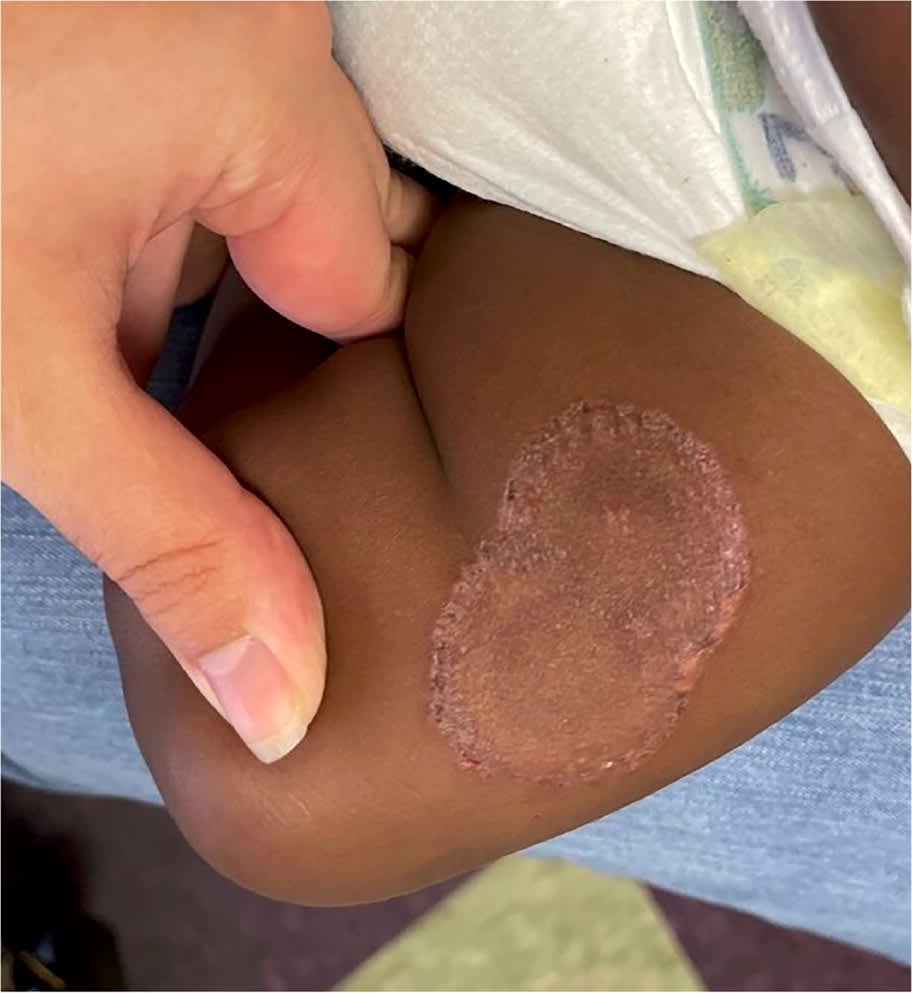
The physical examination revealed two confluent 20 cm × 10 cm, circular, pink plaques on the anterior side of the left leg and one 10 cm × 10 cm, circular, pink plaque on the lateral side of the right leg (Figure 1). The lesions were not tender or warm and showed no signs of excoriation. The physical examination was otherwise unremarkable, and his vital signs were normal.
FIGURE 1
QUESTION
Based on the patient's history and physical examination, which one of the following is the most likely diagnosis?
- A. Contact dermatitis.
- B. Eczema (atopic dermatitis).
- C. Hyperimmunoglobulinemia E syndrome.
- D. Ringworm (tinea corporis).
- E. Vaccine reaction with dermatitis.
DISCUSSION
The answer is C: hyperimmunoglobulinemia E syndrome, also known as Job syndrome. This is a primary immunodeficiency characterized by elevated immunoglobulin E (IgE) levels, dermatologic manifestations (eg, eczema), and recurrent infections and abscesses. Laboratory features also include eosinophilia. Infections and abscesses are described as “cold” because they lack the usual features of redness, warmth, swelling, and pain. Newborn rash or eczema may be a patient's first manifestation of hyperimmunoglobulinemia E syndrome.1–3
Diagnosis is confirmed by an elevated serum IgE level and analysis of the STAT3 and DOCK8 genes. Treatment of hyper-immunoglobulinemia E syndrome is largely supportive. The condition is more common in patients with immunodeficiency, such as those with HIV infection, alcoholism, cystic fibrosis, prolonged corticosteroid use, and diabetes. Treatments include trimethoprim-sulfamethoxazole, oral clindamycin, cephalexin, doxycycline, and erythromycin.2,3
Contact dermatitis is skin inflammation from contact with an irritant or allergen such as clothing, soap, or topical medications. The condition usually resolves spontaneously after removal of the offending agent. Treatment with midpotency topical steroids is generally successful.4
Eczema (atopic dermatitis) is a chronic and relapsing inflammatory disease of the skin. It may present with circular plaques, and its onset can be triggered by various factors, including environmental allergens or irritants.5
Ringworm (tinea corporis) presents as circular, erythematous plaques with central clearing resulting from a fungal infection. The condition occurs after exposure to infected individuals or pets.6
Vaccine reaction is characterized by a localized reaction to the vaccine components or as a more generalized dermatitis. Reactions are typically minor, and symptoms can include sore arm and fever. It may be accompanied by self-limiting local dermatitis.7
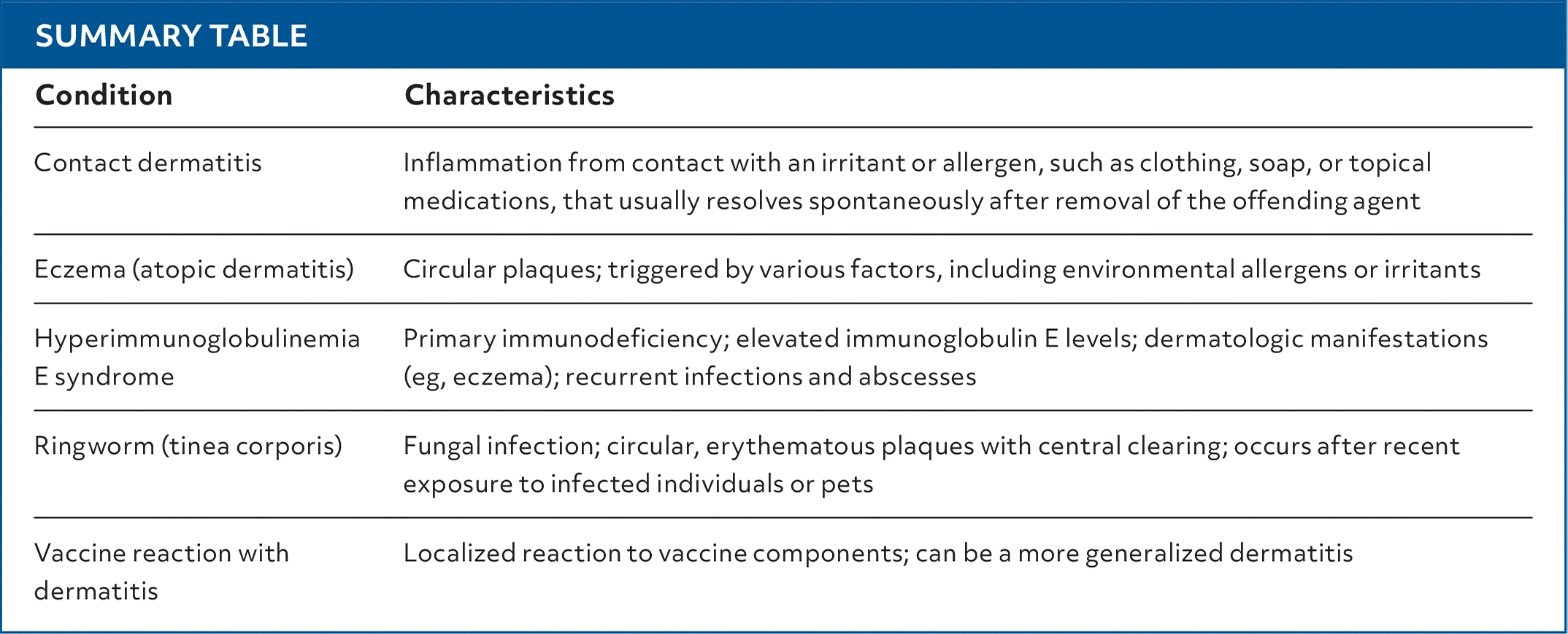
SUMMARY TABLE
| Condition | Characteristics |
|---|---|
| Contact dermatitis | Inflammation from contact with an irritant or allergen, such as clothing, soap, or topical medications, that usually resolves spontaneously after removal of the offending agent |
| Eczema (atopic dermatitis) | Circular plaques; triggered by various factors, including environmental allergens or irritants |
| Hyperimmunoglobulinemia E syndrome | Primary immunodeficiency; elevated immunoglobulin E levels; dermatologic manifestations (eg, eczema); recurrent infections and abscesses |
| Ringworm (tinea corporis) | Fungal infection; circular, erythematous plaques with central clearing; occurs after recent exposure to infected individuals or pets |
| Vaccine reaction with dermatitis | Localized reaction to vaccine components; can be a more generalized dermatitis |
Read the full article
Get immediate access, anytime, anywhere.
Choose a single article, issue, or full-access subscription.
Earn up to 14 CME credits per issue.
