

Although intrauterine device (IUD) placement is known to be painful, guidelines historically have not recommended routine analgesia.1,2 As patients turn to social media to share their painful experiences, public scrutiny of inadequate pain management during IUD placement has increased.3,4 The 2024 US Selected Practice Recommendations for Contraceptive Use is the first guideline to recommend that all patients be counseled and provided with a person-centered plan for pain management based on their preferences.5
The US Selected Practice Recommendations summarize the evidence for medications used with IUD placement, concluding that both preprocedural lidocaine paracervical block and topical lidocaine may reduce pain. This is based on a meta-analysis of six randomized controlled trials (RCTs) of lidocaine paracervical block and 13 RCTs of topical lidocaine gel, cream, or spray.6 No positive effect occurred with a variety of nonsteroidal anti-inflammatory drug formulations in 12 trials, smooth muscle relaxants in six trials, or misoprostol in 14 RCTs. There was not enough evidence to recommend tramadol based on two trials. A 2020 American Family Physician article concluded that tramadol and naproxen are effective in the immediate postinsertion period.7
Although the US Selected Practice Recommendations are limited to medications, evidence-informed nonpharmacologic techniques include ultrasound-guided placement; use of a heating pad, relaxing music, aromatherapy, breathing techniques, calming language, acupuncture, or acupressure; and support from a doula or another person.8,9
Moderate sedation with intravenous midazolam and fentanyl, which are effective analgesics for first trimester manual vacuum aspiration, may be helpful for IUD insertion pain.10 This is particularly relevant for adolescents or young adults who may have significant fear and anxiety about IUD insertion.11 Moderate sedation carries a very low risk of bradycardia or respiratory depression but has practical barriers, including the requirement for a trained sedation nurse or physician, additional cost, monitoring, and recovery time.12
Although experiences vary, younger age, lower education level, dysmenorrhea, no prior vaginal delivery, and higher preprocedural anxiety, fear, and anticipated pain increase the likelihood of pain during IUD insertion.13–15 A 2024 retrospective study of patients who were not offered analgesia for IUD insertion found that 41% reported experiencing unacceptable pain during the procedure. Of those with unacceptable pain, 83% would have selected numbing medication such as topical lidocaine or paracervical block.15 Many of the studies used for the US Selected Practice Recommendations included parous patients, a group less likely to experience severe pain with IUD insertion. The recommendations acknowledge that this evidence may not be generalizable to nulliparous patients, adolescents, and people with a history of trauma, a group underrepresented in clinical studies.
The paucity of high-quality, consistent evidence may make it difficult to decide which management options to offer and how to counsel patients about IUD insertion pain. Barriers in primary care practices include time, office stock of pain medications, and procedural training in paracervical block. Many family physicians may find it easier to offer patients preprocedural naproxen and topical lidocaine-prilocaine cream rather than other similarly effective options (Table 110,16–18).
TABLE 1. Selected Pain Medications for Intrauterine Device Insertion
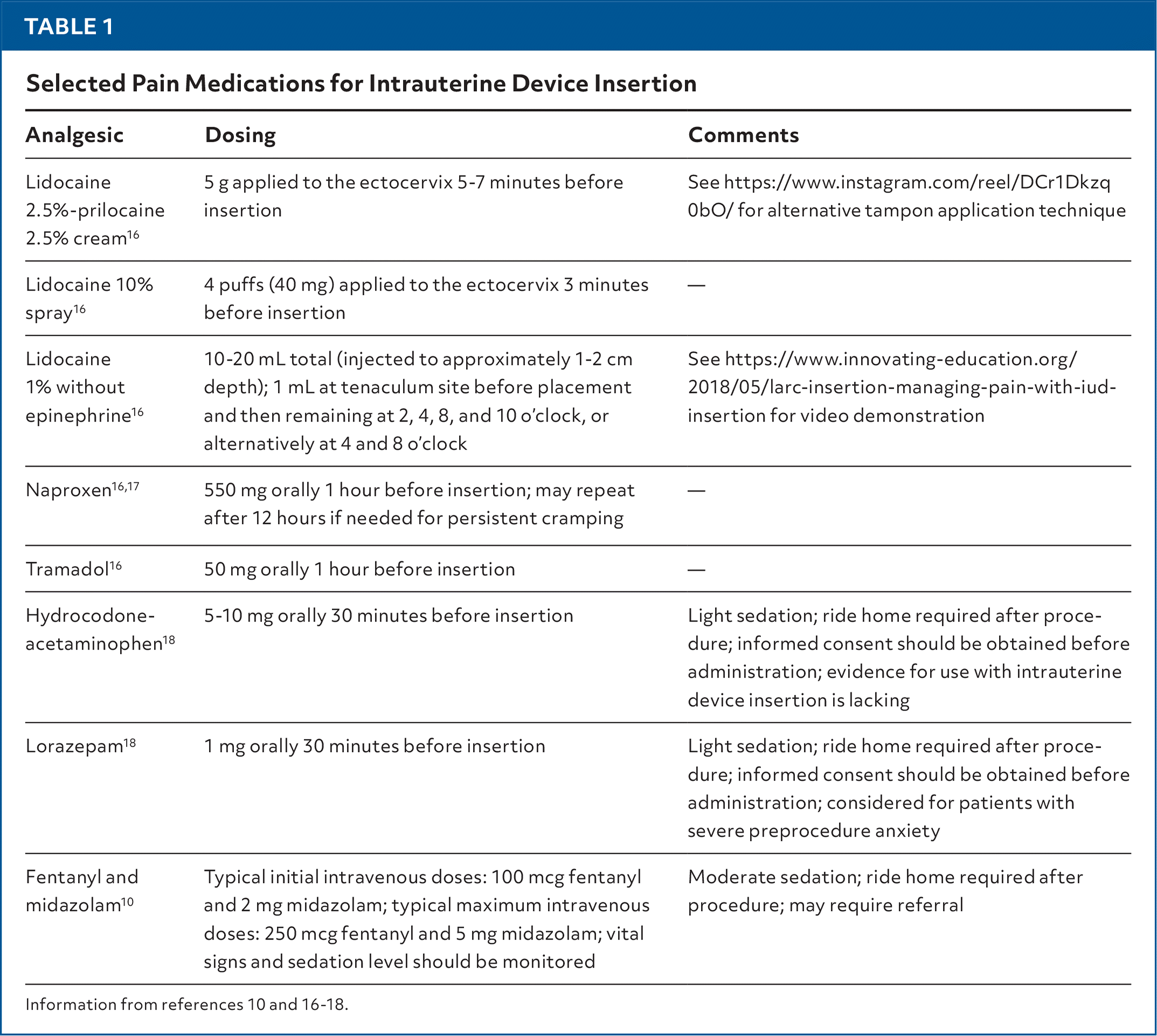
| Analgesic | Dosing | Comments |
|---|---|---|
| Lidocaine 2.5%-prilocaine 2.5% cream16 | 5 g applied to the ectocervix 5–7 minutes before insertion | See https://www.instagram.com/reel/DCr1Dkzq0bO/ for alternative tampon application technique |
| Lidocaine 10% spray16 | 4 puffs (40 mg) applied to the ectocervix 3 minutes before insertion | — |
| Lidocaine 1% without epinephrine16 | 10–20 mL total (injected to approximately 1–2 cm depth); 1 mL at tenaculum site before placement and then remaining at 2, 4, 8, and 10 o’clock, or alternatively at 4 and 8 o’clock | See https://www.innovating-education.org/2018/05/larc-insertion-managing-pain-with-iud-insertion for video demonstration |
| Naproxen16,17 | 550 mg orally 1 hour before insertion; may repeat after 12 hours if needed for persistent cramping | — |
| Tramadol16 | 50 mg orally 1 hour before insertion | — |
| Hydrocodone-acetaminophen18 | 5–10 mg orally 30 minutes before insertion | Light sedation; ride home required after procedure; informed consent should be obtained before administration; evidence for use with intrauterine device insertion is lacking |
| Lorazepam18 | 1 mg orally 30 minutes before insertion | Light sedation; ride home required after procedure; informed consent should be obtained before administration; considered for patients with severe preprocedure anxiety |
| Fentanyl and midazolam10 | Typical initial intravenous doses: 100 mcg fentanyl and 2 mg midazolam; typical maximum intravenous doses: 250 mcg fentanyl and 5 mg midazolam; vital signs and sedation level should be monitored | Moderate sedation; ride home required after procedure; may require referral |
Family physicians can seek additional training in paracervical block techniques, ensure their office is stocked with appropriate supplies, and refer patients for procedures under moderate sedation when appropriate. Additional steps that family physicians can take now include implementing universal screening for trauma using a brief verbal screen or the Primary Care PTSD Screen for DSM-5 instrument and practicing trauma-informed care.19–21
Why has it taken so long for guidelines to recommend a person-centered pain management plan for IUD insertion? The American College of Obstetricians and Gynecologists Committee Opinion on the challenges of long-acting reversible contraceptives does not explicitly recommend offering pain management options to every patient, stating that more research is needed to identify effective options.1,2 In contrast, the American College of Obstetricians and Gynecologists Committee Opinion on trauma recommends universal implementation of trauma-informed approaches.22
Importantly, the Committee Opinion on trauma acknowledges that certain populations have experienced more subtle manifestations of trauma due to their race, substance use, or other characteristics that may result in the dismissal of their experiences of pain. The act of health care professionals minimizing patients’ pain, known as medical gaslighting, further adds to trauma, sows distrust, and causes harm. It is rooted in oppressive systems of sexism and racism that continue to function in our health care system. In addition to addressing pain, family physicians can validate patients’ prior and current experiences with sensitive examinations and procedures; fully educate patients on risks, benefits, and alternatives for all contraceptive options; and prioritize autonomy during sensitive procedures.21
Outside the examination room, clinicians can advocate for policies that reduce cost and improve insurance coverage for pain management options and that address social barriers to accessing reproductive health care in the first place. These barriers, such as inadequate transportation, childcare, and time off from work, disproportionately affect patients marginalized by their race or socioeconomic status.
We hope family physicians feel empowered by the US Selected Practice Recommendations to offer their patients the full spectrum of available pain management options. Although IUD insertion may be tolerable for some, experiences shared on social media and public interest in the topic provide us with an opportunity to cocreate individualized pain management plans to meet the needs of all our patients.
