

There are unique considerations for preventive care in postmenopausal women. Cardiovascular disease is the leading cause of death for women in the United States, and postmenopausal women should be routinely screened for risk factors such as diabetes, hypertension, and dyslipidemia. Atherosclerotic cardiovascular disease 10-year risk scores should be calculated to guide management of risk factors, including lifestyle changes and medications, particularly statins. Average-risk women should be screened for breast cancer with mammography every 1 to 2 years starting at age 40 years. Lung cancer screening with low-dose computed tomography should be offered annually to current and former smokers aged 50 to 80 years with at least a 20-pack-year history. Colorectal cancer screening is recommended in average-risk women aged 45 to 75 years. Cervical cancer screening should be performed every 3 to 5 years, and it should be discontinued in women older than 65 years with negative results on adequate prior screening. Average-risk women 65 years and older should be screened for osteoporosis with dual-energy x-ray absorptiometry. The diagnosis of osteoporosis is based on a T-score of −2.5 or less, and those with a Fracture Risk Assessment Tool score of 3% or greater for hip fracture or 20% or greater for any major osteoporotic fracture should be treated. Postmenopausal women should be routinely screened for high-risk sexual behavior, HIV, hepatitis, depression, anxiety, and substance use disorders.
Menopause occurs due to the loss of ovarian function, which leads to a decline in estrogen levels. In the United States, the average age of menopause is 52 years.1 Women will spend approximately one-third of their lives postmenopause; therefore, physicians should be familiar with primary preventive care recommendations in this population. Cardiovascular disease (CVD) prevention, cancer screenings, osteoporosis screenings and fall prevention, psychosocial well-being, and vaccine status should be prioritized to decrease morbidity and mortality.
SORT: KEY RECOMMENDATIONS FOR PRACTICE
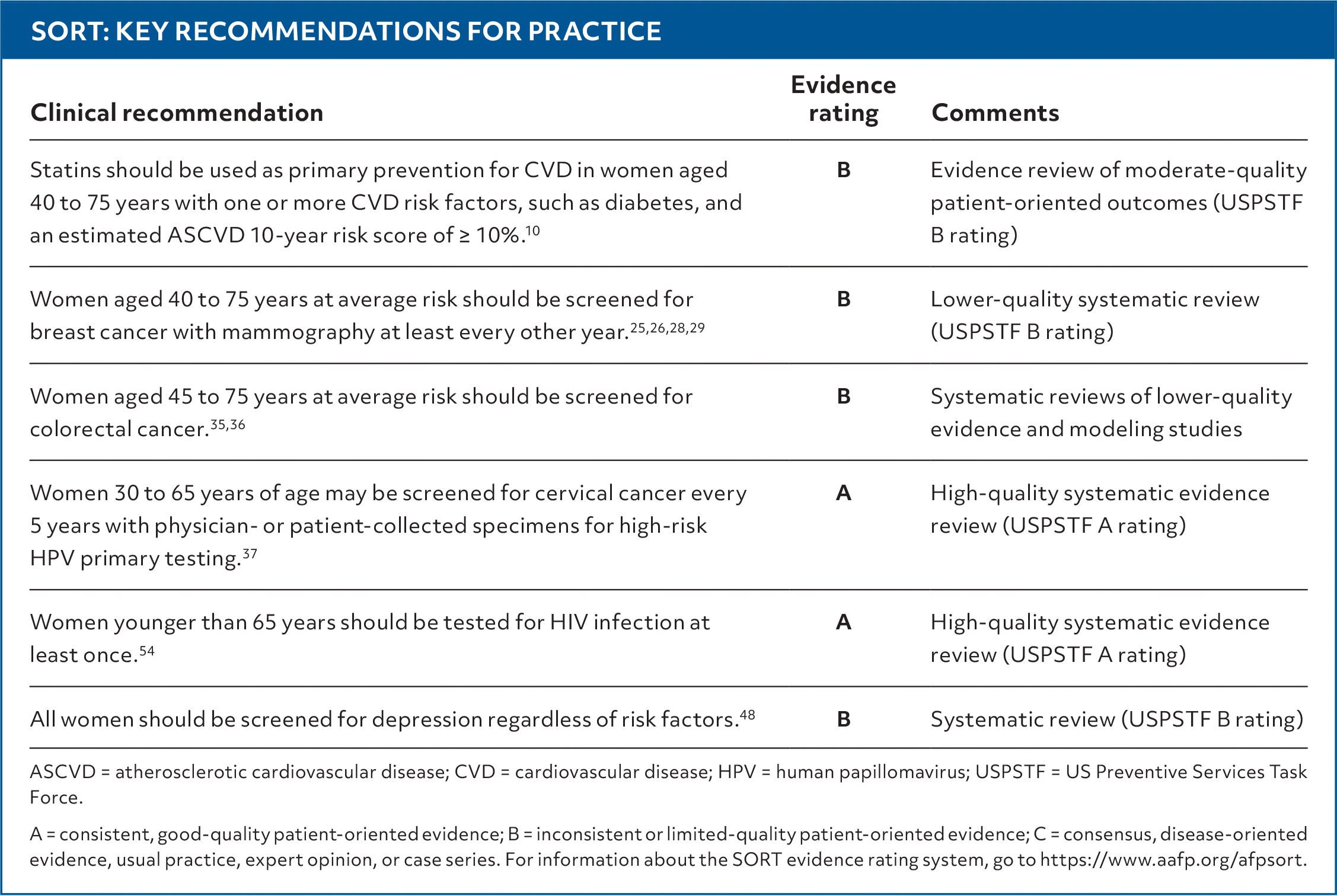
| Clinical recommendation | Evidence rating | Comments |
|---|---|---|
| Statins should be used as primary prevention for CVD in women aged 40 to 75 years with one or more CVD risk factors, such as diabetes, and an estimated ASCVD 10-year risk score of ≥ 10%.10 | B | Evidence review of moderate-quality patient-oriented outcomes (USPSTF B rating) |
| Women aged 40 to 75 years at average risk should be screened for breast cancer with mammography at least every other year.25,26,28,29 | B | Lower-quality systematic review (USPSTF B rating) |
| Women aged 45 to 75 years at average risk should be screened for colorectal cancer.35,36 | B | Systematic reviews of lower-quality evidence and modeling studies |
| Women 30 to 65 years of age may be screened for cervical cancer every 5 years with physician- or patient-collected specimens for high-risk HPV primary testing.37 | A | High-quality systematic evidence review (USPSTF A rating) |
| Women younger than 65 years should be tested for HIV infection at least once.54 | A | High-quality systematic evidence review (USPSTF A rating) |
| All women should be screened for depression regardless of risk factors.48 | B | Systematic review (USPSTF B rating) |
ASCVD = atherosclerotic cardiovascular disease; CVD = cardiovascular disease; HPV = human papillomavirus; USPSTF = US Preventive Services Task Force.
A = consistent, good-quality patient-oriented evidence; B = inconsistent or limited-quality patient-oriented evidence; C = consensus, disease-oriented evidence, usual practice, expert opinion, or case series. For information about the SORT evidence rating system, go to https://www.aafp.org/afpsort.
Read the full article
Get immediate access, anytime, anywhere.
Choose a single article, issue, or full-access subscription.
Earn up to 14 CME credits per issue.
