

Childhood and adolescent immunizations compose a valuable public health tool to prevent infection, morbidity, and mortality. The American Academy of Family Physicians recommends that patients receive all recommended immunizations from their usual source of primary care and does not support nonmedical immunization exemptions. Maintaining high vaccination coverage is crucial for preventing outbreaks of vaccine-preventable diseases. Less than 70% of US children have received the full series of recommended vaccinations at 24 months of age. Using electronic health record reminders and creating standing orders to vaccinate according to protocol at every visit can address practice barriers to vaccination. Whereas most routine childhood immunizations have remained the same for the past 10 years, several considerable changes have occurred. With few exceptions, COVID-19 immunizations are recommended annually for all children to prevent disease and hospitalization and to decrease the risk of post–COVID-19 condition. New pneumococcal vaccine formulations that protect against more serotypes are recommended. Pneumococcal vaccination decreases the risk of meningitis, pneumonia, and possibly acute otitis media in children. Either respiratory syncytial virus immunization for the mother between 32 and 36 weeks of gestation from September to January or the monoclonal antibody nirsevimab for the infant from October to March are now recommended for all mother-infant dyads to prevent severe illness.
A 2017 study examining the effect of routine immunizations for children born in the United States found that up to 17 million infections and 31,000 deaths were likely averted by vaccines.1 However, only 67% of children in the United States are up to date on all routine childhood vaccines at age 24 months.2 In addition, the percentage of children entering school fully vaccinated decreased from 95% in 2019 to 93% in 2022.3 Decreasing numbers of children have vaccine-induced immunity, and the risk of disease outbreaks increases, highlighting the influential role of family physicians recommending immunizations for children. American Family Physician provides a curated collection of articles on practice interventions and best practices, patient handouts, and updated scientific information on specific immunizations. The American Academy of Family Physicians recommends that patients receive all recommended immunizations from their usual source of primary care and does not support nonmedical immunization exemptions.4,5
SORT: KEY RECOMMENDATIONS FOR PRACTICE
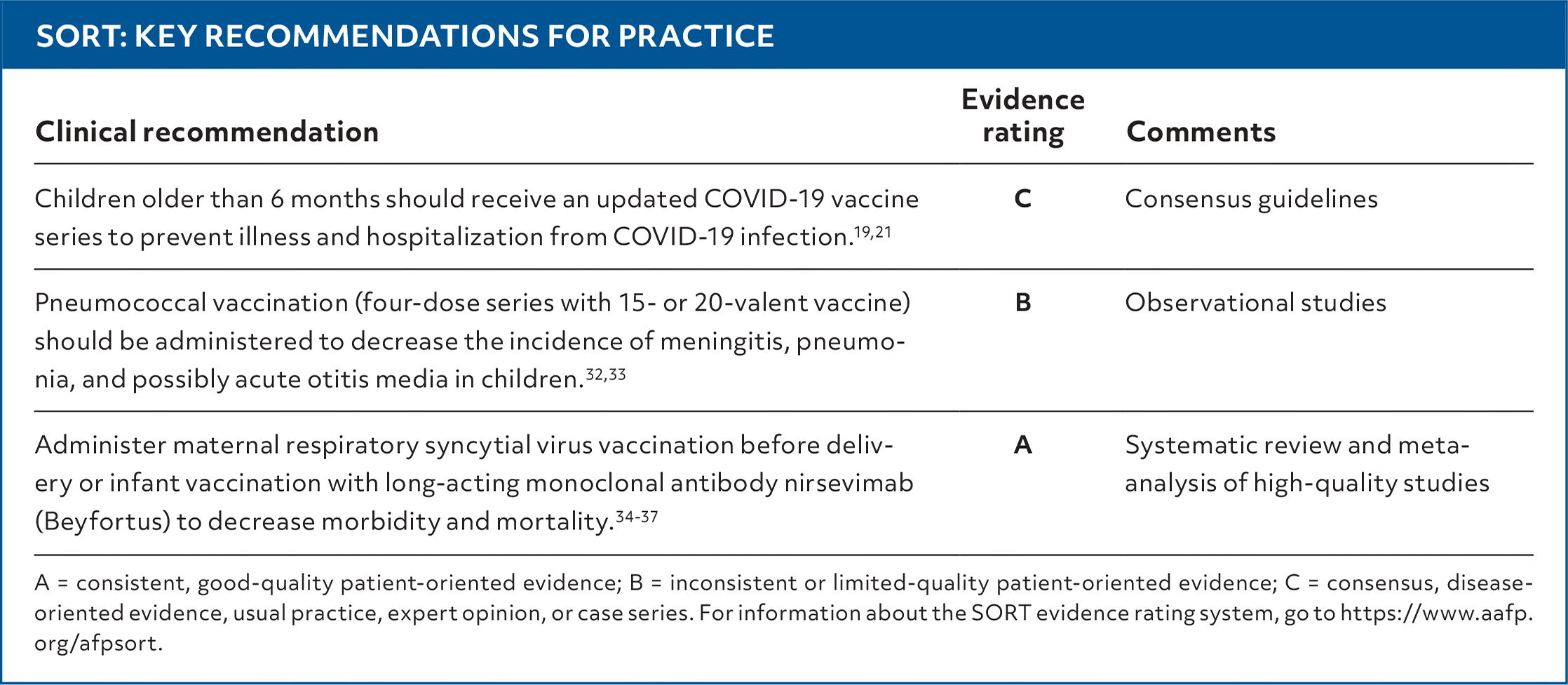
| Clinical recommendation | Evidence rating | Comments |
|---|---|---|
| Children older than 6 months should receive an updated COVID-19 vaccine series to prevent illness and hospitalization from COVID-19 infection.19,21 | C | Consensus guidelines |
| Pneumococcal vaccination (four-dose series with 15- or 20-valent vaccine) should be administered to decrease the incidence of meningitis, pneumonia, and possibly acute otitis media in children.32,33 | B | Observational studies |
| Administer maternal respiratory syncytial virus vaccination before delivery or infant vaccination with long-acting monoclonal antibody nirsevimab (Beyfortus) to decrease morbidity and mortality.34–37 | A | Systematic review and meta-analysis of high-quality studies |
A = consistent, good-quality patient-oriented evidence; B = inconsistent or limited-quality patient-oriented evidence; C = consensus, disease-oriented evidence, usual practice, expert opinion, or case series. For information about the SORT evidence rating system, go to https://www.aafp.org/afpsort.
Read the full article
Get immediate access, anytime, anywhere.
Choose a single article, issue, or full-access subscription.
Earn up to 14 CME credits per issue.
