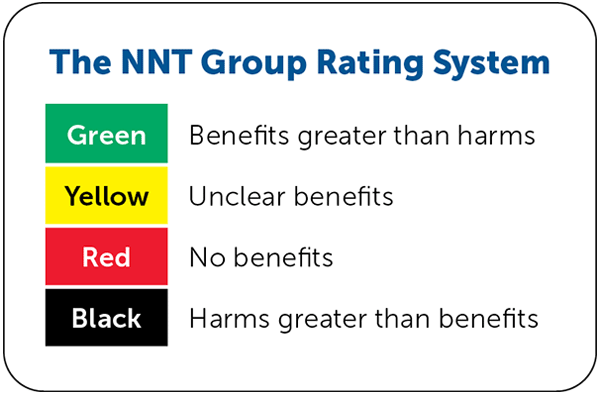
DETAILS FOR THIS REVIEW
Study Population: 575 children and young adults with active juvenile idiopathic arthritis (JIA)
Efficacy End Points: Treatment response, sustained clinically inactive disease, function, pain, and participant global assessment of well-being
Harm End Points: Serious adverse events and withdrawals due to adverse events
THE NUMBERS
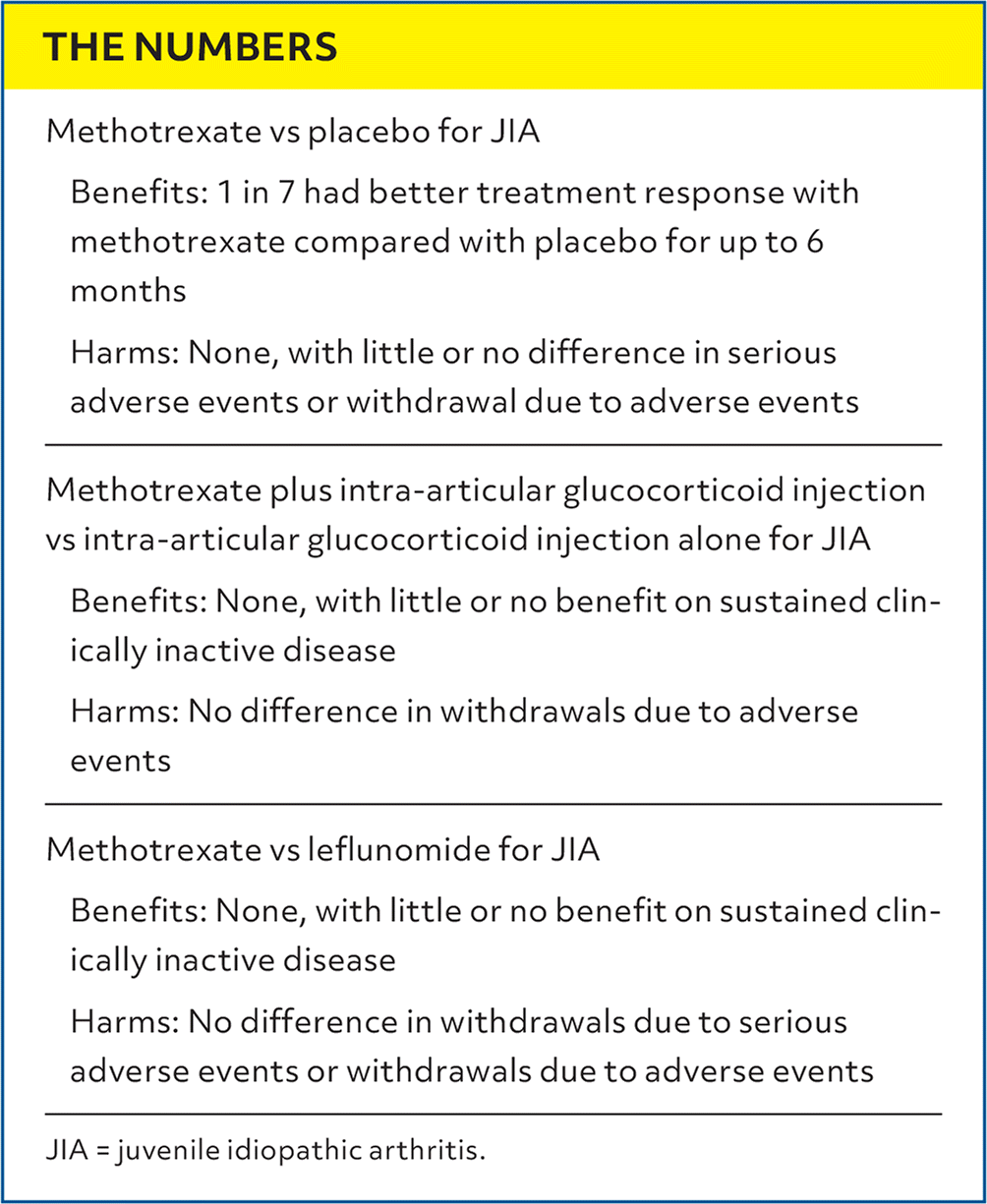
| Methotrexate vs placebo for JIA Benefits: 1 in 7 had better treatment response with methotrexate compared with placebo for up to 6 months Harms: None, with little or no difference in serious adverse events or withdrawal due to adverse events |
| Methotrexate plus intra-articular glucocorticoid injection vs intra-articular glucocorticoid injection alone for JIA Benefits: None, with little or no benefit on sustained clinically inactive disease Harms: No difference in withdrawals due to adverse events |
| Methotrexate vs leflunomide for JIA Benefits: None, with little or no benefit on sustained clinically inactive disease Harms: No difference in withdrawals due to serious adverse events or withdrawals due to adverse events |
JIA = juvenile idiopathic arthritis.
Narrative: JIA is arthritis of unknown etiology with onset before 16 years of age and symptoms lasting 6 weeks or longer. JIA is the most common childhood rheumatologic disease; its incidence rate per 100,000 person-years is 16.5 in girls and 7.7 in boys.1 JIA can diminish health-related quality of life and impose a significant economic burden on patients and their families.2 The 2021 American College of Rheumatology clinical practice guideline recommends methotrexate as a preferred agent for JIA vs other conventional synthetic disease-modifying antirheumatic drugs (DMARDs), such as leflunomide and hydroxychloroquine, because of its well-established evidence and safety profile.3
A 2024 Cochrane review evaluated weekly oral methotrexate for patients with active JIA in an outpatient setting.4 This review included five randomized controlled trials (three placebo-controlled trials), with 575 children or young adults (mean age 4–10 years) from 16 different countries. All interventions used varying regimens of weekly oral methotrexate. Four of the five trials permitted participants to take nonsteroidal anti-inflammatory drugs (NSAIDs), oral glucocorticoids, or both agents during treatment, whereas one trial required participants to have ceased NSAIDs before study enrollment. Comparators across the five studies included placebo, no treatment, methotrexate plus a cointervention (eg, NSAIDs, intra-articular glucocorticoids) compared with the cointervention alone and alternative DMARDs (eg, leflunomide).
JIA treatment response was measured using the validated American College of Rheumatology Pediatric 70, 50, or 30 improvement criteria (numbers refer to percentage of improvement in core JIA symptoms) or other defined criteria from previous JIA studies that included at least 50% or 25% improvement in symptoms. Low-certainty evidence showed that compared with placebo, oral methotrexate (5–15 mg/m2 per week) may improve treatment response for up to 6 months (risk ratio = 1.67; 95% CI, 1.21–2.31; absolute risk difference = 16.3%; number needed to treat = 7; three trials, 328 participants). Low-certainty evidence also demonstrated little or no difference between methotrexate and placebo in participant global assessment of well-being, pain, serious adverse events, or withdrawal due to adverse events. Function was not assessed in any studies comparing methotrexate and placebo.
Read the full article
Get immediate access, anytime, anywhere.
Choose a single article, issue, or full-access subscription.
Earn up to 14 CME credits per issue.