

Foreign bodies in the ear, nose, and throat are common in young children and can also occur in other populations. Patients with foreign bodies in the ear (ie, external auditory canal) are usually asymptomatic but can present with otalgia, sensation of fullness, hypoacusis, pruritus, and otorrhea (usually bleeding). Removal in the office may be attempted in cooperative or appropriately restrained patients with irrigation or instrumentation, depending on the type of object and degree of impaction. Similarly, nasal foreign bodies can often be removed safely in the office with positive pressure techniques followed by instrumentation when the object is visible. A wide range of tools and methods have been described, yet evidence is lacking to recommend specific instruments or techniques. Referral is indicated for patients with external auditory canal or nasal foreign bodies that are more difficult or dangerous to remove, such as when the patient cannot be safely immobilized, the object is penetrating or a button battery, or removal attempts have failed. Foreign bodies of the throat pose significant and immediate risks to the airway and require urgent emergency management. All patients with airway foreign bodies should be referred to the emergency department for sedation, direct visualization of the object via flexible or rigid endoscope, and removal.
Foreign bodies in the ear, nose, and throat are common in young children and can also occur in older children and adults with developmental delay or cognitive impairment.1 Although a significant number of these patients present to emergency care, many who have foreign bodies in the ear or nose present to primary care offices.
SORT: KEY RECOMMENDATIONS FOR PRACTICE
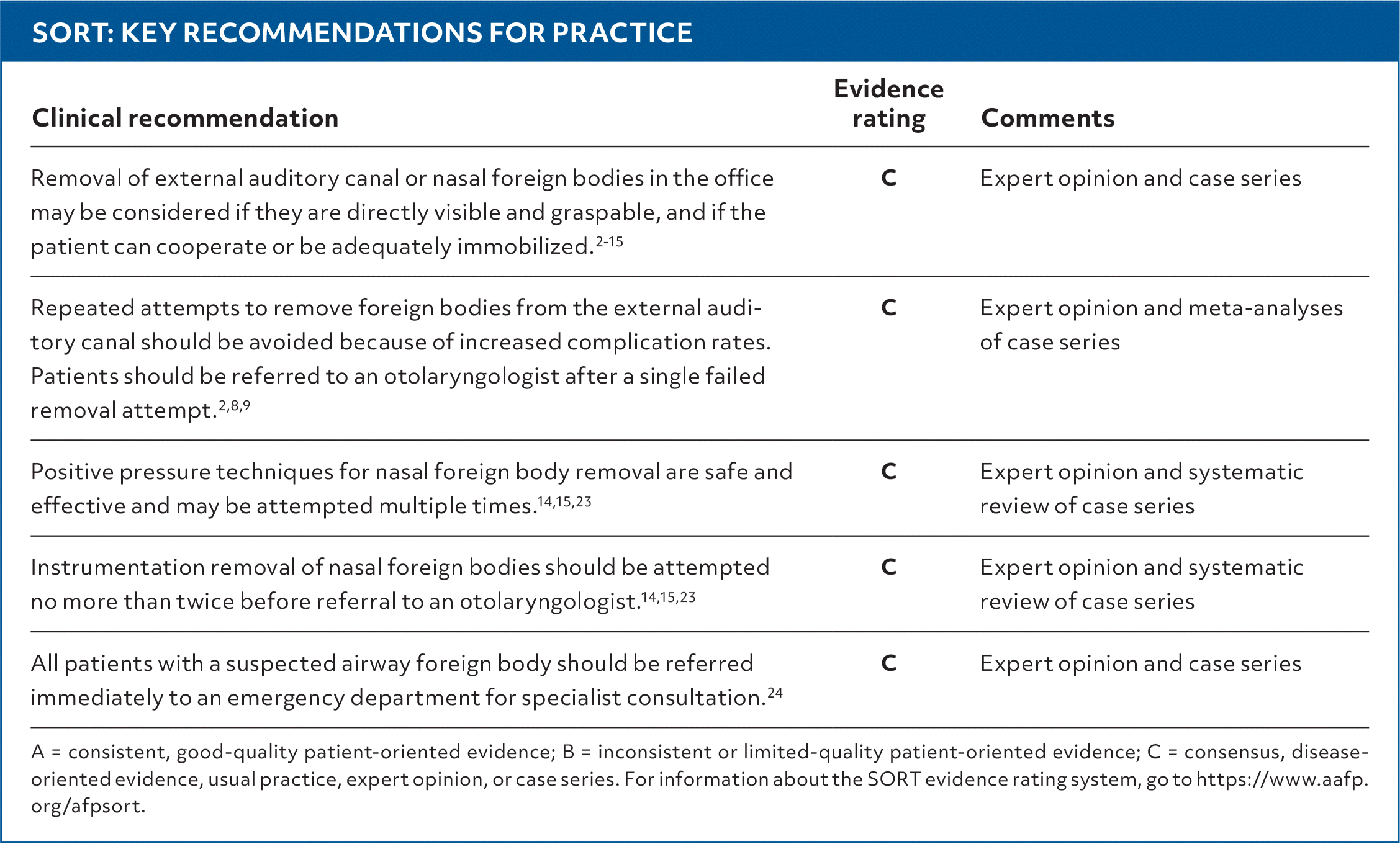
| Clinical recommendation | Evidence rating | Comments |
|---|---|---|
| Removal of external auditory canal or nasal foreign bodies in the office may be considered if they are directly visible and graspable, and if the patient can cooperate or be adequately immobilized.2–15 | C | Expert opinion and case series |
| Repeated attempts to remove foreign bodies from the external auditory canal should be avoided because of increased complication rates. Patients should be referred to an otolaryngologist after a single failed removal attempt.2,8,9 | C | Expert opinion and meta-analyses of case series |
| Positive pressure techniques for nasal foreign body removal are safe and effective and may be attempted multiple times.14,15,23 | C | Expert opinion and systematic review of case series |
| Instrumentation removal of nasal foreign bodies should be attempted no more than twice before referral to an otolaryngologist.14,15,23 | C | Expert opinion and systematic review of case series |
| All patients with a suspected airway foreign body should be referred immediately to an emergency department for specialist consultation.24 | C | Expert opinion and case series |
A = consistent, good-quality patient-oriented evidence; B = inconsistent or limited-quality patient-oriented evidence; C = consensus, disease-oriented evidence, usual practice, expert opinion, or case series. For information about the SORT evidence rating system, go to https://www.aafp.org/afpsort.
Read the full article
Get immediate access, anytime, anywhere.
Choose a single article, issue, or full-access subscription.
Earn up to 14 CME credits per issue.
