

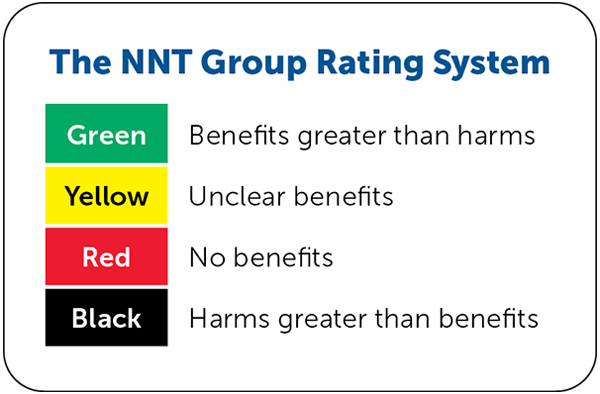
DETAILS FOR THIS REVIEW
Study Population: 39,991 patients with acute lower gastrointestinal (GI) bleeding from four independent cohorts
Efficacy End Points: Safe for hospital discharge, major bleeding, need for blood transfusion, need for hemostasis
Harm End Points: Not applicable
THE NUMBERS
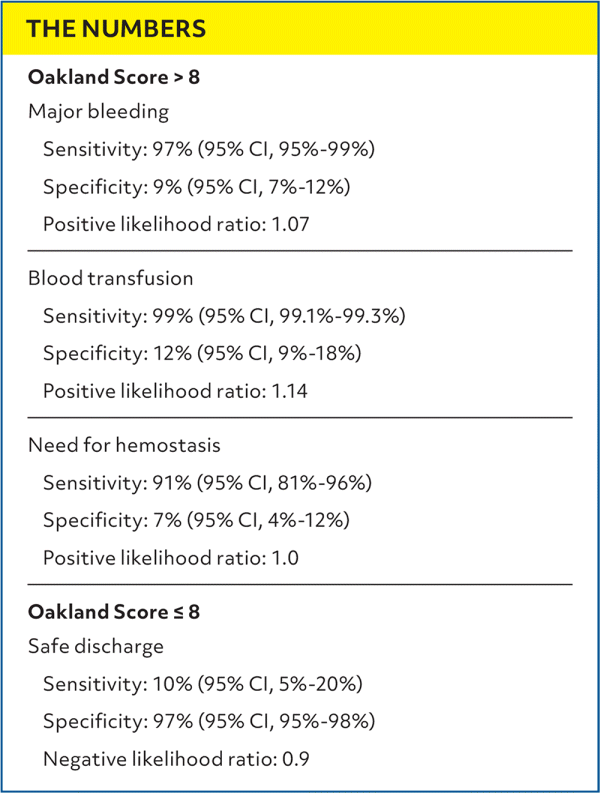
| Oakland Score > 8 |
| Major bleeding |
| Sensitivity: 97% (95% CI, 95%–99%) |
| Specificity: 9% (95% CI, 7%–12%) |
| Positive likelihood ratio: 1.07 |
| Blood transfusion |
| Sensitivity: 99% (95% CI, 99.1%–99.3%) |
| Specificity: 12% (95% CI, 9%–18%) |
| Positive likelihood ratio: 1.14 |
| Need for hemostasis |
| Sensitivity: 91% (95% CI, 81%–96%) |
| Specificity: 7% (95% CI, 4%–12%) |
| Positive likelihood ratio: 1.0 |
| Oakland Score ≤ 8 |
| Safe discharge |
| Sensitivity: 10% (95% CI, 5%–20%) |
| Specificity: 97% (95% CI, 95%–98%) |
| Negative likelihood ratio: 0.9 |
Narrative: Lower GI bleeding is a common reason for emergency department visits, with an annual incidence of 84 per 100,000 adults. It is most common in patients older than 60 years.1 A critical aspect of emergency department management of lower GI bleeding is risk stratification: identifying patients who require admission or emergent intervention vs patients who can be safely treated as outpatients.
The systematic review and meta-analysis discussed here explores the performance of multiple risk stratification scores in patients with lower GI bleeding.2 The systematic review included nine trials encompassing 12 independent cohorts to assess four lower GI bleeding risk scores (Oakland, Strate, NOBLADS [nonsteroidal anti-inflammatory drug use, no diarrhea, no abdominal tenderness, blood pressure ≤ 100 mm Hg, antiplatelet drug use (nonaspirin), albumin < 3.0 g/dL (30.0 g/L), disease score ≥ 2 (according to the Charlson Comorbidity Index), and syncope], BLEED [ongoing bleeding, low systolic blood pressure, elevated prothrombin time, erratic mental status, and unstable comorbid disease]). This analysis reports on the performance of the Oakland score.
In the systematic review, the Oakland score was used to evaluate four outcomes in three studies, enrolling 39,991 patients in four independent cohorts (three retrospective, one prospective).2 The outcomes include (1) safe discharge (defined as the absence of major bleeding, need for blood transfusion, need for hemostasis, readmission for lower GI bleeding within 28 days, and death); (2) major bleeding (defined as recurrent bleeding or severe bleeding); (3) need for blood transfusion (defined as receiving at least 1 unit of red blood cells); and (4) need for hemostasis.
When evaluating safe discharge using an Oakland score cutoff value of 8 or lower, the score demonstrated a specificity of 97% (95% CI, 95%–98%), sensitivity of 10% (95% CI, 5%–20%), and negative likelihood ratio of 0.9. For predicting major bleeding with an Oakland score greater than 8, the sensitivity was 97% (95% CI, 95%–99%), specificity was 9% (95% CI, 7%–12%), and positive likelihood ratio was 1.07. Regarding the need for blood transfusion, an Oakland score of greater than 8 had a sensitivity of 99% (95% CI, 99.1%–99.3%), specificity of 12% (95% CI, 9%–18%), and positive likelihood ratio of 1.14. An Oakland score of greater than 8 could also predict the need for hemostasis with a sensitivity of 91% (95% CI, 81%–96%), specificity of 7% (95% CI, 4%–12%), and positive likelihood ratio of 1.0.
Read the full article
Get immediate access, anytime, anywhere.
Choose a single article, issue, or full-access subscription.
Earn up to 14 CME credits per issue.
