Evaluation of Suspected Dementia

E. Seth Kramer, DO, MPH
Melissa N. Johnson, MD
Bradford Winslow, MD

American Family Physician. 2025;112(6):657-667.

Author disclosure: No relevant financial relationships.

This clinical content conforms to AAFP criteria for CME.

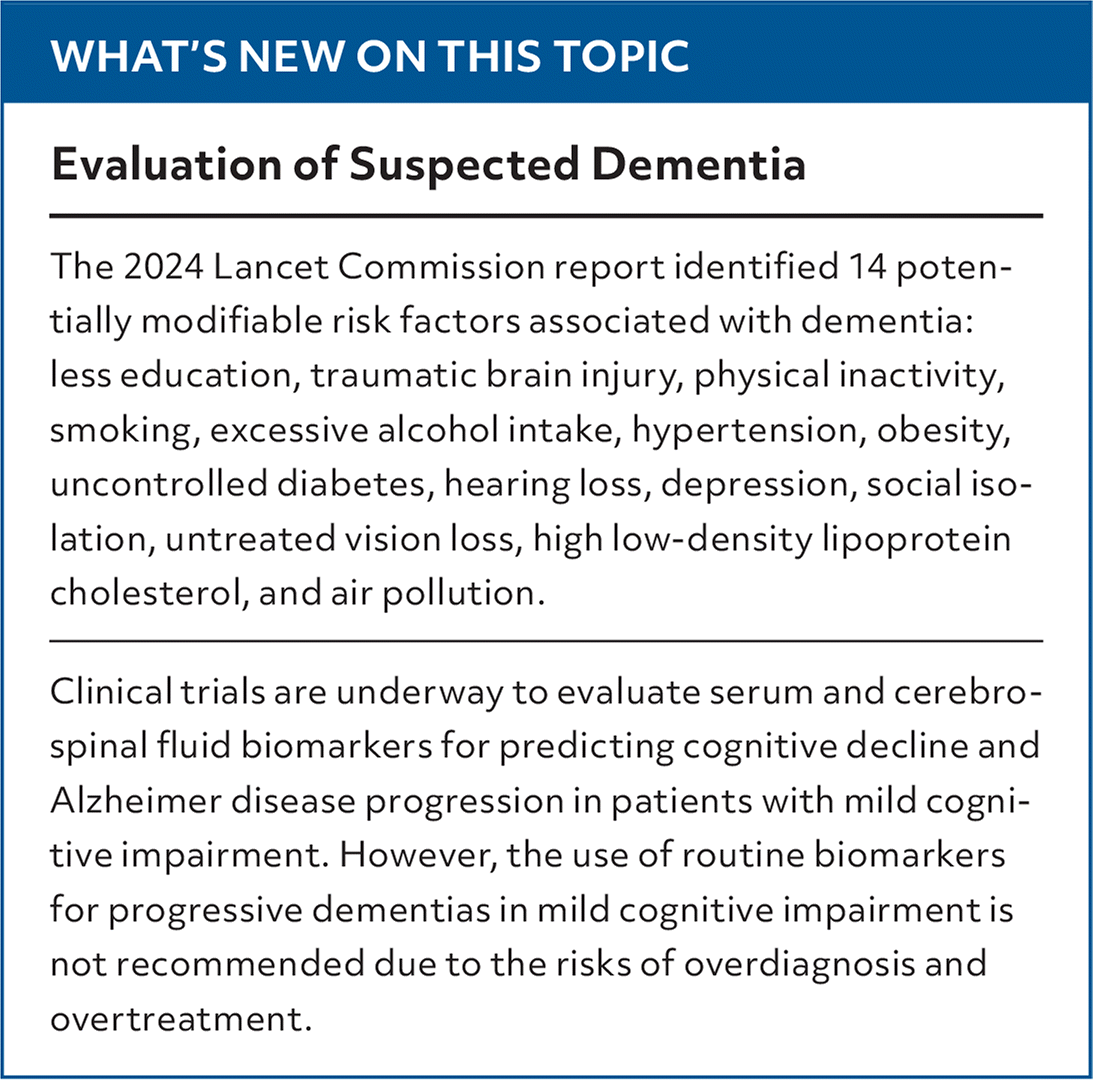
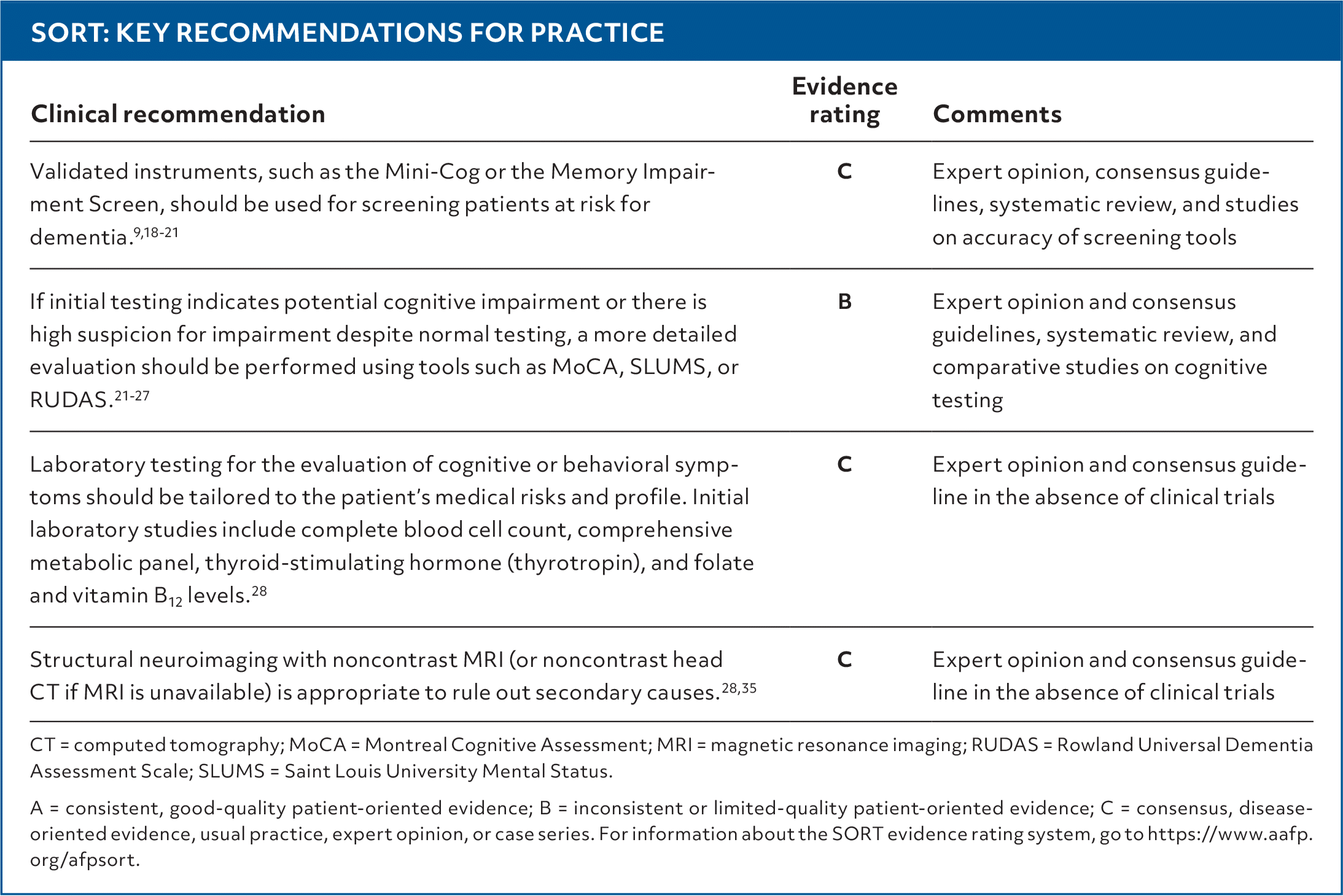
Dementia is a major neurocognitive disorder involving deficits that interfere with daily function. Age is the greatest risk factor for developing the disease. Other risk factors include family history, cardiovascular disease, uncontrolled diabetes, and lower education levels. The initial evaluation for dementia involves recognizing subtle signs that are often missed or mistaken for normal aging. Screening tools include the Mini-Cog, Memory Impairment Screen (MIS), and questionnaires that are completed by caregivers or friends. If cognitive impairment is suspected, a more detailed evaluation should be performed using tools such as the Montreal Cognitive Assessment (MoCA), Saint Louis University Mental Status (SLUMS), or Rowland Universal Dementia Assessment Scale (RUDAS). A thorough history should be taken and a medication review and physical examination should be performed for the assessment of vision; hearing; cardiovascular, nutritional, and functional status; neurologic function; and psychiatric status. Laboratory testing, such as vitamin B12 and folate levels, thyroid function, complete blood cell count, and comprehensive metabolic panel, may be necessary to rule out underlying conditions. Brain imaging with noncontrast magnetic resonance imaging (or non-contrast computed tomography of the head if magnetic resonance imaging is unavailable or contraindicated) can rule out secondary causes. Differentiating dementia from potentially reversible conditions such as depression and delirium is essential. Referral to a neurologist is recommended for early-onset symptoms (before 60 years of age), for severe behavioral disturbances, or if the diagnosis is unclear.

E. SETH KRAMER, DO, MPH, is an assistant professor and family medicine faculty member at the University of Colorado Anschutz School of Medicine, Aurora.

MELISSA N. JOHNSON, MD, is an assistant professor and family medicine faculty member at the University of Colorado Anschutz School of Medicine.

BRADFORD WINSLOW, MD, FAAFP, is an associate professor and family medicine faculty member at the University of Colorado Anschutz School of Medicine.

Address correspondence to E. Seth Kramer, DO, MPH, at erik.kramer@cuanschutz.edu.

Author disclosure: No relevant financial relationships.

  1. 1.Diagnostic and Statistical Manual of Mental Disorders. 5th ed. American Psychiatric Association; 2013.
  2. 2.2024 Alzheimer’s disease facts and figures. Alzheimers Dement. 2024;20(5):3708-3821.
  3. 3.Rajan KB, Weuve J, Barnes LL, et al. Population estimate of people with clinical Alzheimer’s disease and mild cognitive impairment in the United States (2020–2060). Alzheimers Dement. 2021;17(12):1966-1975.
  4. 4.Stessman J, Jacobs JM. Dementia and mild cognitive impairment: prevalence, conversion rates, and longevity between ages 70 and 95. Innov Aging. 2023;7(suppl 1):743.
  5. 5.Livingston G, Huntley J, Liu KY, et al. Dementia prevention, intervention, and care: 2024 report of the Lancet Commission. Lancet. 2024;404(10452):572-628.
  6. 6.US Department of Health and Human Services. Medicare wellness visits. November 2024. Accessed January 5, 2025. https://www.cms.gov/Outreach-and-Education/Medicare-Learning-Network-MLN/MLNProducts/preventive-services/medicare-wellness-visits.html#AWV
  7. 7.Owens DK, Davidson KW, Krist AH, et al.; US Preventive Services Task Force. Screening for cognitive impairment in older adults: US Preventive Services Task Force recommendation statement. JAMA. 2020;323(8):757-763.
  8. 8.Patnode CD, Perdue LA, Rossom RC, et al. Screening for Cognitive Impairment in Older Adults:An Evidence Update for the U.S. Preventive Services Task Force. Agency for Healthcare Research and Quality (US); 2020. Accessed January 5, 2025. https://www.ncbi.nlm.nih.gov/books/NBK554654/
  9. 9.Petersen RC, Lopez O, Armstrong MJ, et al. Practice guideline update summary: mild cognitive impairment: report of the Guideline Development, Dissemination, and Implementation Subcommittee of the American Academy of Neurology. Neurology. 2018;90(3):126-135.
  10. 10.Atri A, Dickerson BC, Clevenger C, et al. Alzheimer’s Association clinical practice guideline for the Diagnostic Evaluation, Testing, Counseling, and Disclosure of Suspected Alzheimer’s Disease and Related Disorders (DETeCD-ADRD): executive summary of recommendations for primary care. Alzheimers Dement. 2025;21(6):e14333.
  11. 11.Falk N, Cole A, Meredith TJ. Evaluation of suspected dementia. Am Fam Physician. 2018;97(6):398-405.
  12. 12.McCabe D. Katz index of independence in activities of daily living (ADL). Accessed January 5, 2025. https://hign.org/consultgeri/try-this-series/katz-index-independence-activities-daily-living-adl
  13. 13.Coyne R. The Lawton Instrumental Activities of Daily Living (IADL) scale. Accessed January 5, 2025. https://hign.org/consultgeri/try-this-series/lawton-instrumental-activities-daily-living-iadl-scale
  14. 14.Alzheimer’s Association. 10 early signs and symptoms of Alzheimer’s and dementia. Accessed January 8, 2025. https://www.alz.org/alzheimers-dementia/10_signs
  15. 15.Simel DL, Holsinger T, Deveau J, et al. Dementia. In: Simel DL, Rennie D, Keitz SA, eds. The Rational Clinical Examination: Evidence-Based Clinical Diagnosis. McGraw-Hill Medical; 2009.
  16. 16.Hugo J, Ganguli M. Dementia and cognitive impairment: epidemiology, diagnosis, and treatment. Clin Geriatr Med. 2014;30(3):421-442.
  17. 17.Knopman DS, Petersen RC. Mild cognitive impairment and mild dementia: a clinical perspective. Mayo Clin Proc. 2014;89(10):1452-1459.
  18. 18.Abayomi SN, Sritharan P, Yan E, et al. The diagnostic accuracy of the Mini-Cog screening tool for the detection of cognitive impairment— a systematic review and meta-analysis. PLoS One. 2024;19(3):e0298686.
  19. 19.Modrego PJ, Gazulla J. The predictive value of the memory impairment screen in patients with subjective memory complaints: a prospective study. Prim Care Companion CNS Disord. 2013;15(1) ): PCC.12m01435.
  20. 20.Kuslansky G, Buschke H, Katz M, et al. Screening for Alzheimer’s disease: the memory impairment screen versus the conventional three-word memory test. J Am Geriatr Soc. 2002;50(6):1086-1091.
  21. 21.Tsoi KKF, Chan JYC, Hirai HW, et al. Cognitive tests to detect dementia: a systematic review and meta-analysis. JAMA Intern Med. 2015;175(9):1450-1458.
  22. 22.Stewart C, Stewart J, Stubbs S, et al. Mini-Cog IQCODE, MoCA, and MMSE for the prediction of dementia in primary care. Am Fam Physician. 2022;105(6):590-591.
  23. 23.Cummings-Vaughn LA, Chavakula NN, Malmstrom TK, et al. Veterans Affairs Saint Louis University Mental Status examination compared with the Montreal Cognitive Assessment and the Short Test of Mental Status. J Am Geriatr Soc. 2014;62(7):1341-1346.
  24. 24.Davis DH, Creavin ST, Yip JL, et al. Montreal Cognitive Assessment for the detection of dementia. Cochrane Database Syst Rev. 2021(7):CD010775.
  25. 25.Tariq SH, Tumosa N, Chibnall JT, et al. Comparison of the Saint Louis University Mental Status examination and the Mini-Mental State Examination for detecting dementia and mild neurocognitive disorder—a pilot study. Am J Geriatr Psychiatry. 2006;14(11):900-910.
  26. 26.Naqvi RM, Haider S, Tomlinson G, et al. Cognitive assessments in multicultural populations using the Rowland Universal Dementia Assessment Scale: a systematic review and meta-analysis. CMAJ. 2015;187(5):e169-e175.
  27. 27.Iype T, Ajitha BK, Antony P, et al. Usefulness of the Rowland Universal Dementia Assessment scale in South India. J Neurol Neurosurg Psychiatry. 2006;77(4):513-514.
  28. 28.Sorbi S, Hort J, Erkinjuntti T, et al.; EFNS Scientist Panel on Dementia and Cognitive Neurology. EFNS-ENS guidelines on the diagnosis and management of disorders associated with dementia. Eur J Neurol. 2012;19(9):1159-1179.
  29. 29.Islam N, Hashem R, Gad M, et al. Accuracy of the Montreal Cognitive Assessment tool for detecting mild cognitive impairment: a systematic review and meta-analysis. Alzheimers Dement. 2023;19(7):3235-3243.
  30. 30.Wright AEH, Harrell HE. Physical examination in the evaluation of dementia. Med Clin North Am. 2022;106(3):471-482.
  31. 31.Simmons BB, Hartmann B, Dejoseph D. Evaluation of suspected dementia. Am Fam Physician. 2011;84(8):895-902.
  32. 32.Fazio S, Pace D, Maslow K, et al. Alzheimer’s Association dementia care practice recommendations. Gerontologist. 2018;58(suppl 1):S1-S9.
  33. 33.Wei H, Masurkar AV, Razavian N. On gaps of clinical diagnosis of dementia subtypes: a study of Alzheimer’s disease and Lewy body disease. Front Aging Neurosci. 2023;15:1149036.
  34. 34.Goodman RA, Lochner KA, Thambisetty M, et al. Prevalence of dementia subtypes in United States Medicare fee-for-service beneficiaries, 2011–2013. Alzheimers Dement. 2017;13(1):28-37.
  35. 35.American College of Radiology. ACR Appropriateness Criteria Dementia. 2024. Accessed January 5, 2025. https://acsearch.acr.org/docs/3111292/Narrative
  36. 36.Ebell MH, Barry HC, Baduni K, et al. Clinically important benefits of harms of monoclonal antibodies targeting amyloid for the treatment of Alzheimer disease: a systematic review and meta-analysis. Ann Fam Med. 2024;22(1):50-62.
  37. 37.Yamada M, Komatsu J, Nakamura K, et al. Diagnostic criteria for dementia with Lewy bodies: updates and future directions. J Mov Disord. 2020;13(1):1-10.
  38. 38.Mok VCT, Cai Y, Markus HS. Vascular cognitive impairment and dementia: mechanisms, treatment, and future directions. Int J Stroke. 2024;19(8):838-856.
  39. 39.Jellinger KA, Korczyn AD. Are dementia with Lewy bodies and Parkinson’s disease dementia the same disease? BMC Med. 2018;16(1):34.
  40. 40.McKeith I, Fairbairn A, Perry R, et al. Neuroleptic sensitivity in patients with senile dementia of Lewy body type. BMJ. 1992;305(6855):673-678.
  41. 41.Lanoiselée HM, Nicolas G, Wallon D, et al.; Collaborators of the CNR-MAJ Project. APP, PSEN1, and PSEN2 mutations in early-onset Alzheimer disease: a genetic screening study of familial and sporadic cases. PLoS Med. 2017;14(3):e1002270.
  42. 42.Lee J. Mild cognitive impairment in relation to Alzheimer’s disease: an investigation of principles, classifications, ethics, and problems. Neuroethics. 2023;16(2):16.
  43. 43.Papaliagkas V, Kalinderi K, Vareltzis P, et al. CSF biomarkers in the early diagnosis of mild cognitive impairment and Alzheimer’s disease. Int J Mol Sci. 2023;24(10):8976.
  44. 44.Anderson J, Pierce C. PrecivityAD for diagnosis of Alzheimer disease. Am Fam Physician. 2022;105(1):79-81.
  45. 45.Lau K, Lin KW. Lumipulse G β-amyloid ratio test for the diagnosis of Alzheimer disease. Am Fam Physician. 2023;107(5):550-551.
  46. 46.Palmqvist S, Tideman P, Mattsson-Carlgren N, et al. Blood biomarkers to detect Alzheimer disease in primary care and secondary care. JAMA. 2024;332(15):1245-1257.
  47. 47.Schroeder RW, Martin PK, Walling A. Neuropsychological evaluations in adults. Am Fam Physician. 2019;99(2):101-108.
  48. 48.Galvin JE, Sadowsky CH. NINCDS-ADRDA. Practical guidelines for the recognition and diagnosis of dementia. J Am Board Fam Med. 2012;25(3):367-382.
  49. 49.Adelman AM, Daly MP. Initial evaluation of the patient with suspected dementia. Am Fam Physician. 2005;71(9):1745-1750.
  50. 50.Santacruz KS, Swagerty D. Early diagnosis of dementia. Am Fam Physician. 2001;63(4):703-714.

Copyright © 2026 by the American Academy of Family Physicians.

This content is owned by the AAFP. A person viewing it online may make one printout of the material and may use that printout only for his or her personal, non-commercial reference. This material may not otherwise be downloaded, copied, printed, stored, transmitted or reproduced in any medium, whether now known or later invented, except as authorized in writing by the AAFP. See permissions for copyright questions and/or permission requests.