

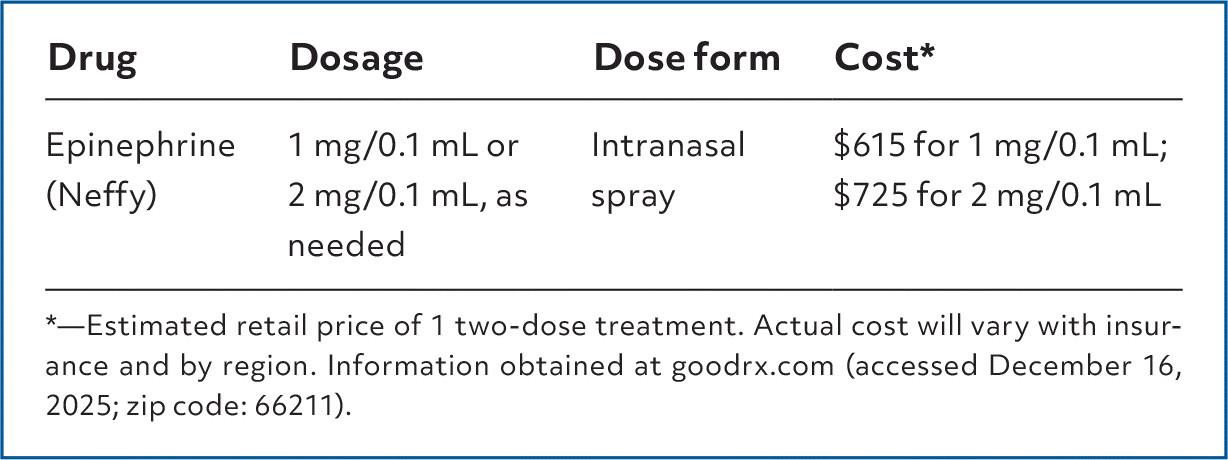
| Drug | Dosage | Dose form | Cost* |
|---|---|---|---|
| Epinephrine (Neffy) | 1 mg/0.1 mL or 2 mg/0.1 mL, as needed | Intranasal spray | $615 for 1 mg/0.1 mL; $725 for 2 mg/0.1 mL |
*—Estimated retail price of 1 two-dose treatment. Actual cost will vary with insurance and by region. Information obtained at goodrx.com (accessed December 16, 2025; zip code: 66211).
Epinephrine nasal spray (Neffy) is an alpha-and beta-adrenergic receptor agonist labeled for the emergency treatment of type I allergic reactions including anaphylaxis.1 It is administered as a single-use nasal spray. Similar to the action of intramuscular epinephrine during anaphylaxis, it decreases vasodilation and vascular permeability through its action on alpha-adrenergic receptors and induces bronchial smooth muscle relaxation to alleviate respiratory symptoms through its beta-adrenergic receptor action. It is labeled for use in patients 4 years and older weighing at least 15 kg (33 lb).
SAFETY
Nasal epinephrine has not been compared directly with other methods of epinephrine administration to determine its relative safety, but the safety concerns are similar to those of other treatment methods. The main risks are cardiac effects, including inducement of arrhythmias and angina. Patients with existing cardiac disease are most at risk, although epinephrine is not contraindicated for these patients because it is crucial in treating acute, life-threatening conditions such as anaphylaxis.1
Certain conditions, including hyperthyroidism, Parkinson disease, diabetes, and kidney impairment, can be temporarily exacerbated after administration of epinephrine.1 Nasal epinephrine contains sodium metabisulfite, an additive to which some people are allergic, but this common preservative is also found in autoinjector and other epinephrine formulations.1 Patients with underlying structural and anatomic nasal conditions were not included in clinical pharmacology studies of this drug and should be prescribed another form of epinephrine.1
TOLERABILITY
The most common adverse effects are dose related and transient. Nasal discomfort in 10% to 13% of adults and headache in 6% to 18% of adults can occur. Adverse effects in adults may also include rhinorrhea, dizziness, nausea, vomiting, and throat irritation. Children may experience nasal congestion, intranasal paresthesia, epistaxis, dry throat, fatigue, or feelings of jitteriness.1
EFFECTIVENESS
Intranasal epinephrine has not been directly studied in people experiencing severe allergic reactions. As with other forms of epinephrine, need for its use is a rare occurrence and it is unethical to induce anaphylaxis for study. All research on the effectiveness of intranasal epinephrine has been conducted in healthy subjects, evaluating the pharmacokinetics and pharmacodynamics in comparison with other methods of administration.
The pharmacokinetic metrics of intranasal epinephrine are similar to those of epinephrine autoinjectors (Epipen, Symjepi) and manually administered intramuscular epinephrine.2,3 Autoinjector administration produces the highest maximum plasma concentrations in the shortest times, followed by intra-nasal and manually administered intramuscular epinephrine treatments.2,3
The pharmacodynamics of intranasal administration are also similar to those of the other treatment methods. Nasal epinephrine increases systolic blood pressure and heart rate comparably with other methods. It is the only treatment that increases diastolic blood pressure initially after administration, but all methods resulted in similar diastolic values within 2 hours.
Read the full article
Get immediate access, anytime, anywhere.
Choose a single article, issue, or full-access subscription.
Earn up to 14 CME credits per issue.
