

DETAILS FOR THIS REVIEW
Study Population: 68,964 adults with an average age of 84 years (72% female) living in residential care facilities
Efficacy End Points: primary: rate of falls (number of falls per patient-year) and risk of falling; secondary: risk of fall-related fracture and cost-effectiveness outcomes
Harm End Points: Adverse events (complications from interventions)
THE NUMBERS
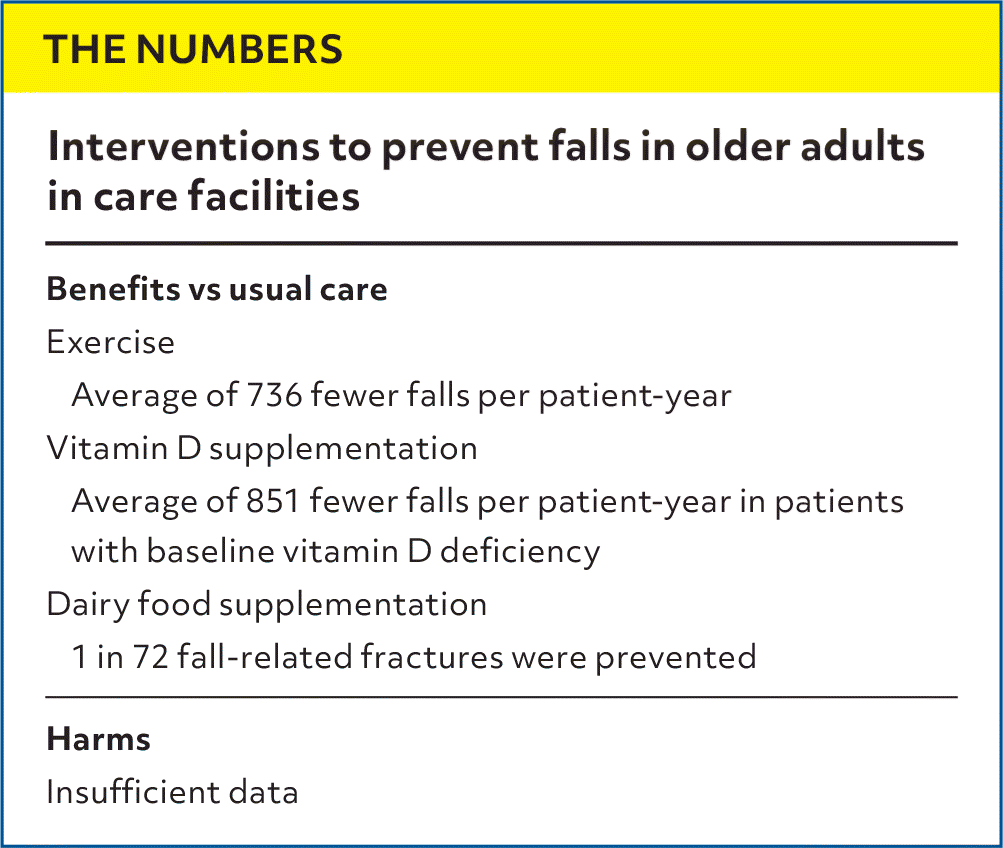
| Benefits vs usual care |
| Exercise |
| Average of 736 fewer falls per patient-year |
| Vitamin D supplementation |
| Average of 851 fewer falls per patient-year in patients with baseline vitamin D deficiency |
| Dairy food supplementation |
| in 72 fall-related fractures were prevented |
| Harms |
| Insufficient data |
Narrative: Falls are common, with more than 25% of adults older than 65 years falling at least once per year.1 Falls in care facilities likely have higher rates than in the community, typically involve multifactorial causes with modifiable risk factors, and are associated with significant morbidity and mortality (10% of falls cause serious injuries).2 Falls are associated with substantial health care expenses, with costs totaling $50 billion annually.1,3
The Cochrane review discussed here assessed the benefits and harms of interventions designed to reduce the incidence of falls in older adults (most participants were older than 65 years or the mean participant age was 65 years or older) living in residential care facilities.4 Care facilities were defined as settings in which permanent care is provided, including some level of health-related or rehabilitative care (eg, nursing homes, residential aged care facilities).
The systematic review includes 104 randomized controlled trials (RCTs) with 68,964 participants, comparing any intervention to reduce falls with usual care or placebo.4 This was an update of a review originally published in 2018, with 33 new trials added (56 individually randomized and 48 cluster-randomized trials) from 25 countries (14 studies in the United States). Studies were excluded if they were conducted in residential communities that did not provide health-related care (eg, retirement villages, shelters); conducted in community, hospital, emergency department, or outpatient settings; or involved patients post-cerebrovascular accident or with known Parkinson disease.
Interventions were classified as multifactorial (ie, two or more categories of intervention provided based on an individualized risk assessment), multiple (ie, two or more set interventions provided to all patients), or single (eg, exercise, medication optimization, vitamin D supplementation, dairy food supplementation). Outcomes reported over a 12-month follow-up period included rate of falls (number of falls per patient-year) and number of fallers (risk of experiencing one or more falls). Key additional outcomes included risk of fracture, adverse events from interventions, and economic outcomes.
In multifactorial intervention trials, the patient was assessed by a multidisciplinary team or nurse practitioner or with a risk assessment tool to determine the most appropriate interventions for their individualized risks. The most common multifactorial interventions were medication optimization, environmental assessment, exercise, social environment interventions, knowledge interventions, and assessment of need for assistive devices.
Read the full article
Get immediate access, anytime, anywhere.
Choose a single article, issue, or full-access subscription.
Earn up to 14 CME credits per issue.
