


FUNDED CONTENT BY WILEY
This educational activity is supported by an independent medical educational grant from Bayer.
This grant-funded resource is made available by the AAFP to provide convenient access to information that may be of interest. It should not be considered an AAFP endorsement or recommendation of the grantor’s products, services, policies, or procedures. Journal editors were not involved in the development of this content.
A group of multidisciplinary experts from primary care, endocrinology, and gastroenterology settings convened to explore perspectives across practice settings on addressing constipation associated with glucagon-like peptide-1 receptor agonists (GLP-1 RAs).
CLAIM CME CREDIT
CME Quiz available at www.medscape.org/journal/constipation-glp1
Interprofessional Continuing Education
In support of improving patient care, Medscape, LLC is jointly accredited
with commendation by the Accreditation Council for Continuing Medical
Education (ACCME), the Accreditation Council for Pharmacy Education
(ACPE), and the American Nurses Credentialing Center (ANCC), to provide
continuing education for the healthcare team.
For Physicians
Medscape, LLC designates this enduring material for a maximum of
0.25 AMA PRA Category 1 Credit(s)™. Physicians should claim only the
credit commensurate with the extent of their participation in the activity.
Learning Objectives: Upon completion of this activity, participants will:
- Have increased knowledge regarding the
Pathophysiologic mechanisms associated with GLP-1 RA/incretin-associated constipation
Current evidence on the use of OTC treatments for managing GLP-1 RA/incretin-associated constipation - Have greater competence related to
Designing strategies to help manage GLP-1 RA/incretin-associated constipation
SEGMENT 1: The Rising Use of GLP-1 RA/Incretin Therapies
What Do Current Epidemiologic Data Show About the Rapid Expansion of GLP-1 RA/Incretin Use?
Rapid market expansion:
Prescription volumes are dramatically expanding, driven by increased awareness, popularity, and improved availability and access. Data suggest that about 12% of Americans are currently using GLP-1 RA therapy (about 1 in 8 people), about 18% have used GLP-1 RA therapy, and 22% would be interested in using it.1 Although these aren't new drugs, with exenatide being used since 2005, they gained popularity in part through celebrity endorsement and media attention, in addition to their efficacy.
Evidence-based growth:
Strong medical evidence supports expanding use, with new beneficial studies continuing to emerge. Incretin-based therapies, including GLP-1 RAs and the dual glucose-dependent insulinotropic polypeptide (GIP)/GLP-1 RA, have become first-line therapies for type 2 diabetes (T2D) and obesity,2–4 with improving cost and access.
These agents have been shown to improve cardiovascular risk factors, such blood pressure and waist circumference, and they also reduce major adverse cardiovascular events (MACE) in certain populations with T2D and/or obesity.5–8
The benefits of these agents also extend beyond glycemic control and weight loss to include improvements in sleep apnea,9 renal function,10 metabolic dysfunction-associated steatohepatitis (MASH),11 knee osteoarthritis,12 and heart failure with preserved ejection fraction.13–15
These expanding indications are also contributing to broader use and will likely sustain their increased uptake for the foreseeable future.16
Multispecialty adoption:
Primary care and endocrinology are leading prescribing patterns with T2D and overweight/obesity being disease states driving growth, and adoption is expanding to cardiology, gastroenterology, sleep medicine, and nephrology settings. Gastrointestinal (GI) experts observe that many of their patients arrive already on GLP-1 RAs that were prescribed in the primary care setting—some, despite underlying constipation or motility concerns. A decline in bariatric surgery has also been noted due to using these therapies.17
Are There Other Reasons So Many People Are Using GLP-1 RA/Incretin Therapies?
Experts described that weight loss requirements before procedures (hernia repair, joint replacement, etc) creates an urgent need for medical weight management that often cannot be achieved without pharmaceutical intervention.
Many patients obtain GLP-1 RAs through online resources regardless of physician prescribing. Experts noted that even patients without clear indications and without insurance coverage will seek therapy through telehealth companies for cash-pay access and compounding pharmacies that offer lower-priced alternatives. Click pen formulations enable “microdosing” to reduce costs, and some GI patients are seeking off-label “microdoses” for inflammatory conditions.18
SEGMENT 2: Constipation as a Side Effect
How Often Are You Seeing GLP-1 RA-Associated Constipation?
Endocrinology experts report that 10% to 20% of patients overall develop GLP-1 RA-associated constipation, with higher rates occurring in those with baseline constipation history. Among patients with preexisting advanced constipation, GI specialists observe that approximately 50% experience worsening bowel movements when starting GLP-1 RAs, requiring intensified laxative regimens.
Baseline bowel habits must be established before medication initiation, with emphasis on distinguishing between reduced frequency due to decreased food intake vs true constipation by asking about tenesmus, discomfort, and stool consistency.
While data are limited directly comparing constipation occurrence between agents, a key factor to successful use of any agent is dosing appropriately and starting with low doses, even when switching between agents.
What Surveillance Strategies Should Clinicians Adopt?
Constipation is a common adverse effect requiring systematic monitoring. Recognition comes through careful history about bowel movement frequency and form. It is necessary to take a comprehensive history, including inflammatory bowel disease, irritable bowel syndrome, gastroparesis, pancreatitis, and medullary thyroid cancer.
Regular follow-up is essential and avoiding simply refilling prescriptions without patient contact is key. In primary care, telehealth visits work well for focused medication monitoring. Gastrointestinal specialists emphasize close collaboration with prescribing providers to optimize management of underlying constipation/gastroparesis before starting therapy.
Furthermore, patients initiating incretin therapy should have high motivation for lifestyle changes, in-depth understanding of dietary modifications required, and the ability to communicate side effects effectively.
What Patient Factors Increase Vulnerability to Constipation?
Experts identified several high-risk groups: older patients, those with baseline constipation history, and individuals with poorly controlled or longstanding diabetes (especially with neuropathy complications). Patients with a lower body mass index and T2D are more susceptible to GI adverse effects. Although gastroparesis history increases risk, well-controlled gastroparesis may not be an absolute contraindication if treatment benefits outweigh risks.
Experts emphasize the importance of conducting a baseline medication review, including current use of antidiarrheal or laxative therapies. Patients taking multiple medications that affect gastric motility (polypharmacy) are at increased risk for constipation. These medications include anticholinergics, antimuscarinics, opioids, and calcium channel blockers. Notably, ondansetron is frequently prescribed for nausea but worsens constipation, so alternatives like ginger are recommended.
SEGMENT 3: Pathophysiology
What Clinical Signs Suggest Slowed Gastric Emptying Is Driving Constipation?
Delayed gastric emptying and altered gut motility are the main mechanisms associated with constipation from GLP-1 RAs.19 Key indicators that delayed gastric emptying may be causing constipation include early satiety, nausea, bloating, and postprandial fullness. Specific questioning about stool frequency, form, and recent changes can help identify constipation. Assessment of stool consistency using the Bristol Stool Chart20 can detect constipation, even if it's not reported by patients. Rapid weight loss correlates with increased constipation risk, and constipation should be assessed in these patients.21
Experts noted that GI symptoms may worsen even with low initial doses and during slow dose titration, which may limit the ability to escalate doses.22
When Do You Consider Objective Testing?
It is not routine to perform gastric emptying studies prior to GLP-1 RA initiation. Gastrointestinal specialists may order updated gastric emptying studies to reevaluate patients with a former diagnosis of gastroparesis. Testing may also be considered sooner for patients who already have classic gastroparesis symptoms and want to start GLP-1 RA therapy. Testing must be performed while off GLP-1 RA therapy to establish a true baseline. Endocrinologists reserve testing for longstanding diabetes with gastroparesis concerns. In most primary care settings, testing is not routine, could delay necessary therapy, and requires GI referral.
SEGMENT 4: Managing Constipation
What Resources Are Available for Clinicians?
Beyond dose adjustment protocols to mitigate GI adverse effects, evidence on other mitigation strategies is limited. While literature is scarce, consensus has been developed to guide avoidance and mitigation of overall GI adverse effects.19,22 Because recommendations specific to constipation are limited, this group of multidisciplinary experts provided clinical guidance on management based on available literature and their practical expertise.
What Dietary Changes and Meal Timing Do You Recommend?
Gastrointestinal specialists recommend a “small particle” diet that avoids bulky fibers while maintaining protein and healthy fats and uses techniques like blenderizing or thorough cooking for better tolerability without major dietary shifts. They emphasize education on nutrition quality over quantity.23
Lifestyle modifications are the management cornerstone with hydration and mobility being critical.22,23 Walking and yoga studies show benefits for defecation,24–25 and experts believe medication works better on days with better hydration. Additionally, stool softeners including docusate can be incorporated. While they are helpful for some people, particularly for prevention, they are not always effective for constipation management.
What Is Your Stepwise OTC Laxative Approach?
First-line therapy consensus:
All experts agree on polyethylene glycol (PEG 3350) as first-line pharmacotherapeutic treatment (Figure 1). Gastrointestinal specialists suggest starting with quarter doses and titrating powdered formulations and initiating PEG 3350 1 week before GLP-1 RA start in at-risk patients, targeting 2 to 3 complete bowel movements weekly. Other osmotic laxatives such as lactulose or sorbitol can be considered but are limited by poor tolerance.26
Figure 1. Expert Proposed Algorithm for Management of GLP-1 RA-Associated Constipation
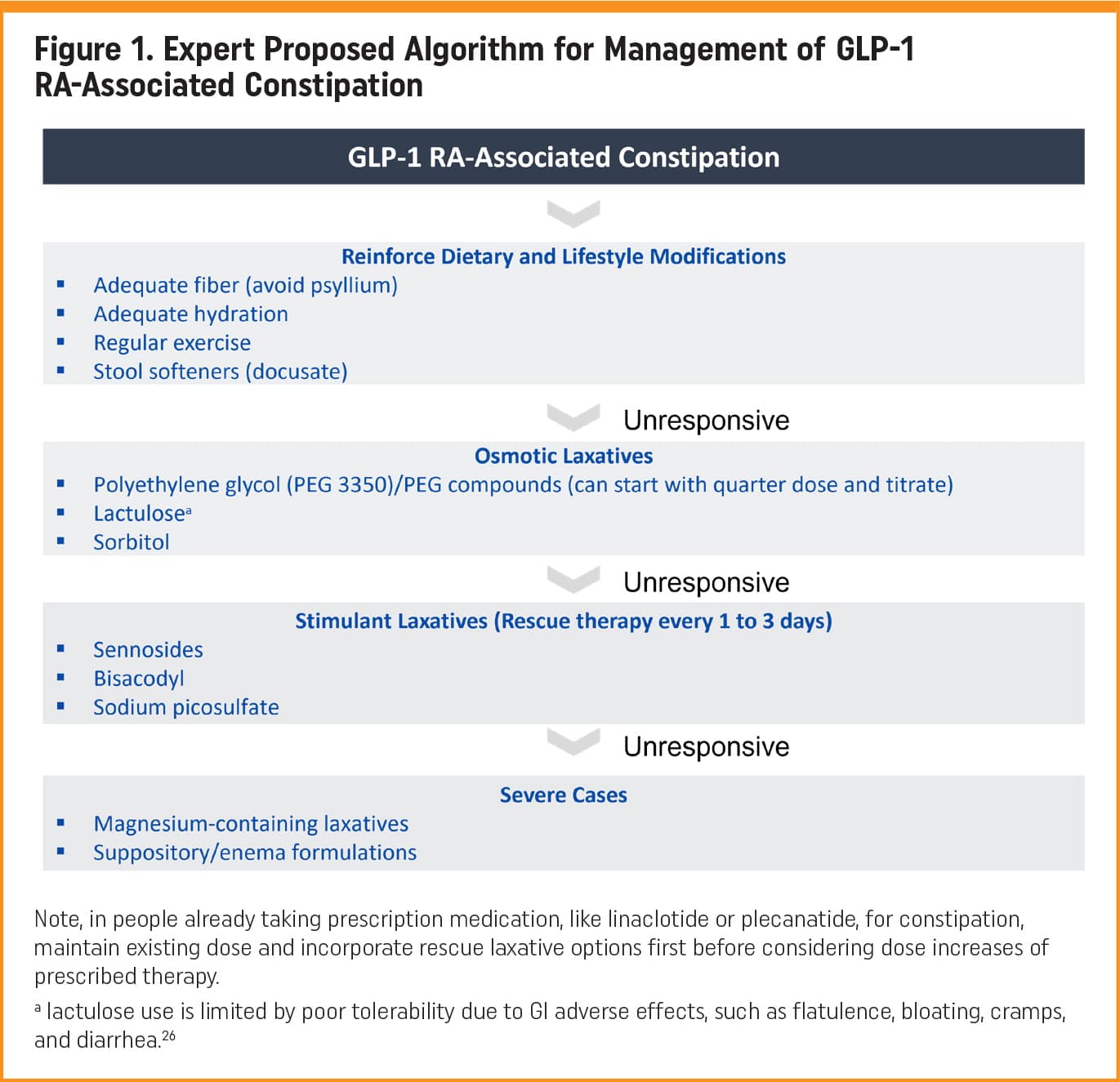
Note, in people already taking prescription medication, like linaclotide or plecanatide, for constipation, maintain existing dose and incorporate rescue laxative options first before considering dose increases of prescribed therapy.
a lactulose use is limited by poor tolerability due to GI adverse effects, such as flatulence, bloating, cramps, and diarrhea.26
Escalation strategies:
Second-line treatment includes a stimulant laxative (sennosides, bisacodyl, or sodium picosulfate), with rescue dosing every 1 to 3 days. For severe cases, magnesium citrate is an option. Occasionally, suppositories or enemas are used, but patients generally prefer alternatives.
In people already taking prescription medication, like linaclotide or plecanatide, for constipation, GI specialists maintain existing dose and incorporate rescue laxative options before considering dose increases of the prescribed therapy.
Fiber supplement considerations:
People on GLP-1 RAs often gravitate toward a high protein diet, missing important dietary fiber. Although psyllium offers benefits for diabetes, weight loss, and cholesterol, it may worsen delayed gastric emptying. Gastrointestinal specialists prefer PEG 3550 over psyllium use in people with gastroparesis.
How Should Multidisciplinary Teams Structure Follow-Up and Monitoring?
Primary care should manage most constipation using standard modalities. Referral thresholds include unmitigated constipation requiring further workup or when considering delayed gastric emptying testing or gastroparesis evaluation. Dose reduction or slower dose titration along with OTC management of GI side effects is often enough to avoid therapy discontinuation.
Frequent follow-up with multidisciplinary collaboration between primary care, endocrinology, GI, nurses, pharmacists, and dieticians is needed. Pharmacists provide interim monitoring between physician visits. Gastrointestinal specialists maintain close communication with prescribing providers before recommending therapy changes. While all experts strongly endorse dietician referrals, it's important for all team members to help educate patients on lifestyle and OTC management approaches for constipation.
SEGMENT 5: Patient Counseling
How Do You Structure Anticipatory Counseling for Patients Starting GLP-1 RA Therapy?
Standardized counseling approach:
Use the same framework as any new medication: indications, contraindications, expected benefits, realistic expectations, and monitoring. Discuss common adverse effects and emphasize that they are often transient and can be mitigated. Establish a communication plan for quick follow-up and encourage patient portal messages.
Follow-up frequency and timing:
Most experts schedule some form of follow-up after 1 month of therapy to assess tolerance before dose escalation. Even if patients tolerate the initial dose and first titration, continued assessment is still important. When supply interruptions occur, it often requires dose reinitiation protocols.
Avoid ordering multiple month supplies with automatic dose escalation without patient reassessment. Remember patients don't need maximum doses; individualize doses based on tolerance. The best approach is to maintain open communication with appropriate individualized follow-up timing.
What Self-Management Steps Do You Teach?
Nutrition importance extends beyond GI adverse effects to hair loss, fatigue, and potential muscle and bone loss from nutritional deficiencies due to the calorie reduction induced by incretin therapies. Increased protein intake and strength training are important lifestyle modifications in addition to what was already discussed.27 Daily walking is specifically recommended for gastric motility improvement. Lastly, experts recommend strategic injection day selection, avoiding family dinner days for weekly agents.
How Do You Adapt Counseling for Different Populations?
Health literacy and cultural and socioeconomic status should be considered. Addressing language barriers and cultural preferences in counseling approaches through appropriate interpreters or translated materials and making necessary adjustments to adapt communication methods to patient capabilities, resources, and cultural backgrounds are critical.
Summary
Effective GLP-1 RA management requires slow dose titration, with preference for maintaining effective lower doses and multidisciplinary team approaches with individualized in-person assessment. Most associated constipation can be managed in primary care with lifestyle adjustments and OTC options.
