

Carpal tunnel syndrome (CTS) is caused by compression of the median nerve as it travels through the carpal tunnel. Patients commonly experience pain, paresthesia, and, less often, weakness in the distribution of the median nerve. Provocative maneuvers, such as the Phalen test and Tinel sign, have varying sensitivity and specificity for the diagnosis of CTS. Thenar atrophy is a late finding and highly specific for CTS. Although patients with a classic presentation of CTS do not need additional testing for diagnosis, electrodiagnostic studies can confirm the diagnosis in atypical cases, exclude other causes, and gauge severity for surgical prognosis. An abnormal nerve conduction study is useful for ruling in CTS, but a normal test does not necessarily exclude it. Over-the-counter analgesics, such as nonsteroidal anti-inflammatory drugs and acetaminophen, have not shown benefit for CTS. Patients with mild to moderate CTS initially may be offered nonsurgical treatments, such as splinting or local corticosteroid injections. Night-only splinting is as effective as continuous wear. A neutral wrist splint may be more effective than an extension splint. In patients with recent onset of CTS, corticosteroid injections provide slightly greater improvement of symptoms compared with splinting at 6 weeks, with similar outcomes at 6 months. Patients with severe CTS, including objective weakness or sensory deficits, should be offered surgical decompression. Endoscopic and open carpal tunnel release techniques are equally effective.
Carpal tunnel syndrome (CTS), caused by compression of the median nerve as it travels through the carpal tunnel, is the most common entrapment neuropathy of the upper extremity. This article provides a brief summary of the best available patient-oriented evidence for CTS.
SORT: KEY RECOMMENDATIONS FOR PRACTICE
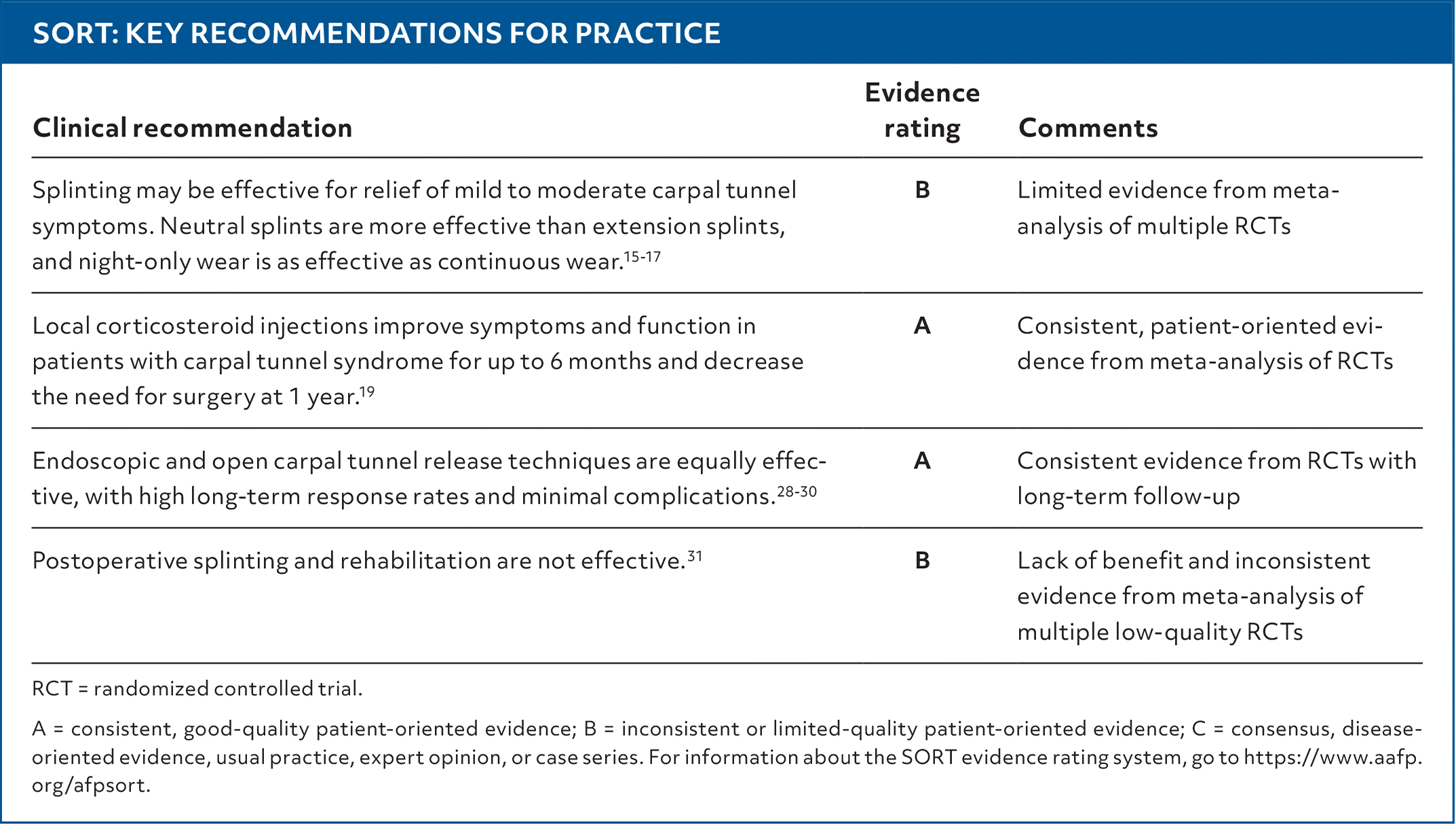
| Clinical recommendation | Evidence rating | Comments |
|---|---|---|
| Splinting may be effective for relief of mild to moderate carpal tunnel symptoms. Neutral splints are more effective than extension splints, and night-only wear is as effective as continuous wear.15–17 | B | Limited evidence from meta-analysis of multiple RCTs |
| Local corticosteroid injections improve symptoms and function in patients with carpal tunnel syndrome for up to 6 months and decrease the need for surgery at 1 year.19 | A | Consistent, patient-oriented evidence from meta-analysis of RCTs |
| Endoscopic and open carpal tunnel release techniques are equally effective, with high long-term response rates and minimal complications.28–30 | A | Consistent evidence from RCTs with long-term follow-up |
| Postoperative splinting and rehabilitation are not effective.31 | B | Lack of benefit and inconsistent evidence from meta-analysis of multiple low-quality RCTs |
RCT = randomized controlled trial.
A = consistent, good-quality patient-oriented evidence; B = inconsistent or limited-quality patient-oriented evidence; C = consensus, disease-oriented evidence, usual practice, expert opinion, or case series. For information about the SORT evidence rating system, go to https://www.aafp.org/afpsort.
EPIDEMIOLOGY
- The incidence of CTS in the United States is estimated to be 3.8 per 1,000 person-years and increases with age.1 Risk factors include a body mass index greater than 25 kg per m2, activities with repetitive or forceful wrist motion, female sex, diabetes mellitus, arthritis, pregnancy, and hypothyroidism.2–4
Read the full article
Get immediate access, anytime, anywhere.
Choose a single article, issue, or full-access subscription.
Earn up to 14 CME credits per issue.
