

Prostatitis is a common clinical syndrome classified into four categories: acute bacterial, chronic bacterial, chronic prostatitis/chronic pelvic pain syndrome, and asymptomatic. Bacterial prostatitis (acute and chronic) is primarily diagnosed with history and microbiologic studies, although physical examination can be helpful to localize infection within the genitourinary system. Bacterial prostatitis is treated with antibiotics; the span of treatment is guided by the duration of symptoms and presence of complications. Chronic prostatitis/chronic pelvic pain syndrome is the most common form of prostatitis and is a diagnosis of exclusion with no standardized treatments. Asymptomatic prostatitis does not require treatment and is usually diagnosed incidentally during the workup for other urologic presentations.
Prostatitis encapsulates a spectrum of clinical syndromes that affects approximately 10% to 15% of individuals assigned male at birth.1–3 It presents with varying degrees of lower urinary tract symptoms (e.g., obstructive, irritative, storage related), pelvic pain, sexual dysfunction, and systemic features. The National Institutes of Health organizes prostatitis into four categories. Categories I and II constitute 10% of cases and include acute and chronic bacterial prostatitis, respectively. Category III (chronic prostatitis/chronic pelvic pain syndrome [CPPS]) and category IV (asymptomatic inflammatory prostatitis) are noninfectious and comprise the remaining 90% of cases.4 Identifying prostatitis as bacterial (categories I and II) or nonbacterial (categories III and IV) is critical for timely treatment and appropriate antibiotic use (Table 1).5
SORT: KEY RECOMMENDATIONS FOR PRACTICE
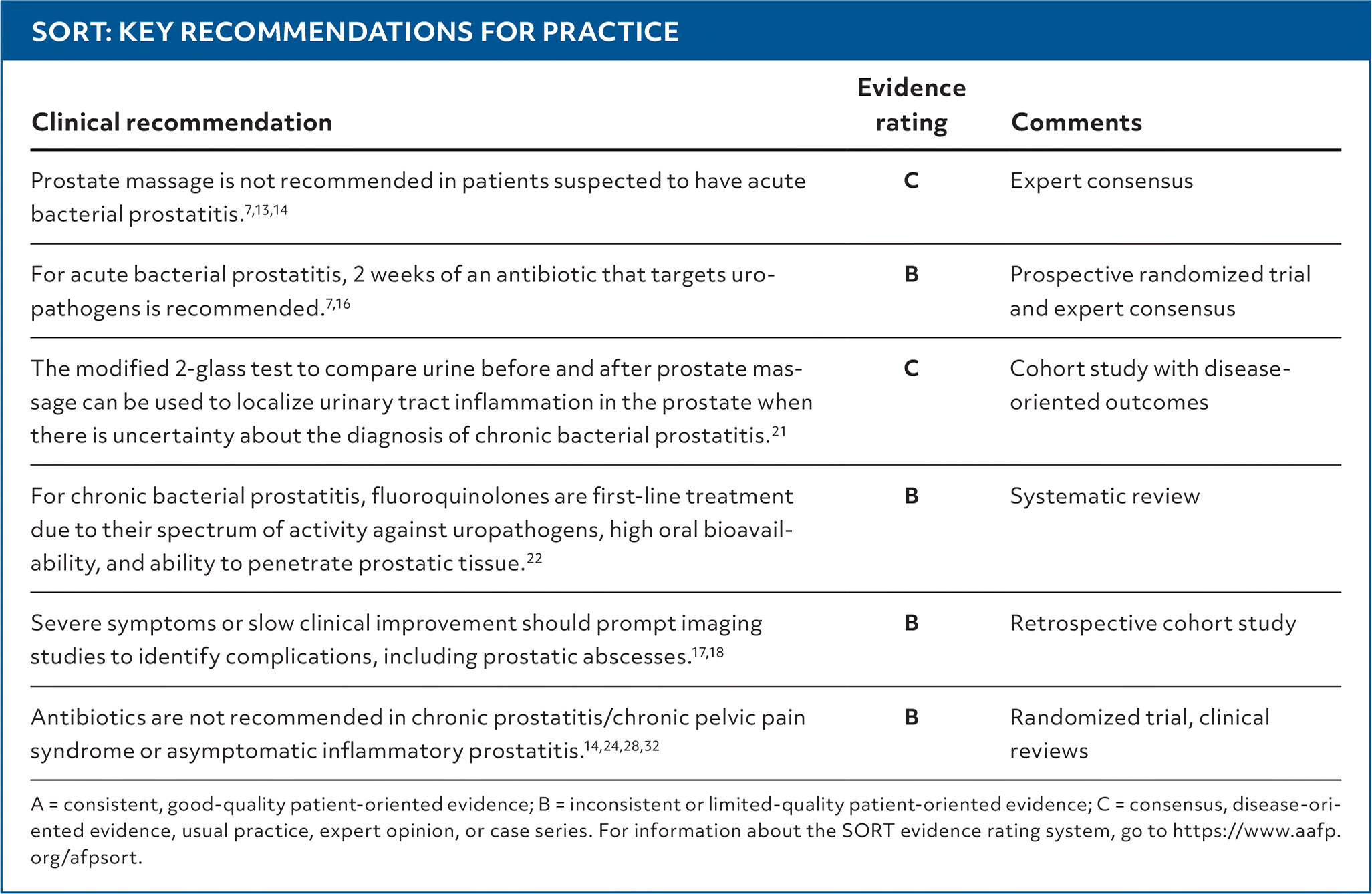
A = consistent, good-quality patient-oriented evidence; B = inconsistent or limited-quality patient-oriented evidence; C = consensus, disease-oriented evidence, usual practice, expert opinion, or case series. For information about the SORT evidence rating system, go to https://www.aafp.org/afpsort.
TABLE 1. Evaluation and Treatment of Prostatitis
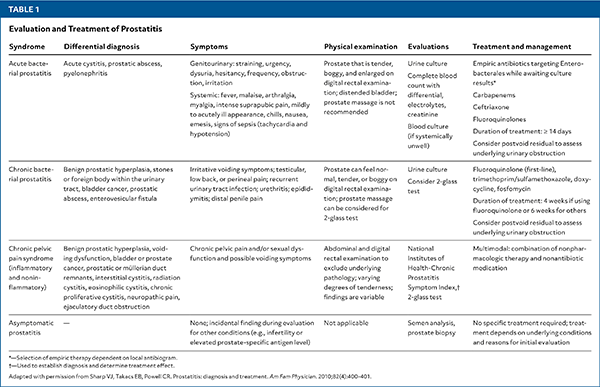
| Syndrome | Differential diagnosis | Symptoms | Physical examination | Evaluations | Treatment and management |
|---|---|---|---|---|---|
| Acute bacterial prostatitis | Acute cystitis, prostatic abscess, pyelonephritis | Genitourinary: straining, urgency, dysuria, hesitancy, frequency, obstruction, irritation Systemic: fever, malaise, arthralgia, myalgia, intense suprapubic pain, mildly to acutely ill appearance, chills, nausea, emesis, signs of sepsis (tachycardia and hypotension) | Prostate that is tender, boggy, and enlarged on digital rectal examination; distended bladder; prostate massage is not recommended | Urine culture Complete blood count with differential, electrolytes, creatinine Blood culture (if systemically unwell) | Empiric antibiotics targeting Enterobacterales while awaiting culture results* Carbapenems Ceftriaxone Fluoroquinolones Duration of treatment: ≥ 14 days Consider postvoid residual to assess underlying urinary obstruction |
| Chronic bacterial prostatitis | Benign prostatic hyperplasia, stones or foreign body within the urinary tract, bladder cancer, prostatic abscess, enterovesicular fistula | Irritative voiding symptoms; testicular, low back, or perineal pain; recurrent urinary tract infection; urethritis; epididymitis; distal penile pain | Prostate can feel normal, tender, or boggy on digital rectal examination; prostate massage can be considered for 2-glass test | Urine culture Consider 2-glass test | Fluoroquinolone (first-line), trimethoprim/sulfamethoxazole, doxycycline, fosfomycin Duration of treatment: 4 weeks if using fluoroquinolone or 6 weeks for others Consider postvoid residual to assess underlying urinary obstruction |
| Chronic pelvic pain syndrome (inflammatory and noninflammatory) | Benign prostatic hyperplasia, voiding dysfunction, bladder or prostate cancer, prostatic or müllerian duct remnants, interstitial cystitis, radiation cystitis, eosinophilic cystitis, chronic proliferative cystitis, neuropathic pain, ejaculatory duct obstruction | Chronic pelvic pain and/or sexual dysfunction and possible voiding symptoms | Abdominal and digital rectal examination to exclude underlying pathology; varying degrees of tenderness; findings are variable | National Institutes of Health-Chronic Prostatitis Symptom Index,† 2-glass test | Multimodal: combination of nonpharmacologic therapy and nonantibiotic medication |
| Asymptomatic prostatitis | — | None; incidental finding during evaluation for other conditions (e.g., infertility or elevated prostate-specific antigen level) | Not applicable | Semen analysis, prostate biopsy | No specific treatment required; treatment depends on underlying conditions and reasons for initial evaluation |
*—Selection of empiric therapy dependent on local antibiogram.
†—Used to establish diagnosis and determine treatment effect.
Adapted with permission from Sharp VJ, Takacs EB, Powell CR. Prostatitis: diagnosis and treatment. Am Fam Physician. 2010;82(4):400–401.
Read the full article
Get immediate access, anytime, anywhere.
Choose a single article, issue, or full-access subscription.
Earn up to 14 CME credits per issue.
