Primary Care of Adult Cancer Survivors

Stephen Carek, MD, CAQSM
John F. Emerson, MD
Jatin Patel, MD

American Family Physician. 2024;110(1):37-44.

Author disclosure: No relevant financial relationships.

This clinical content conforms to AAFP criteria for CME.

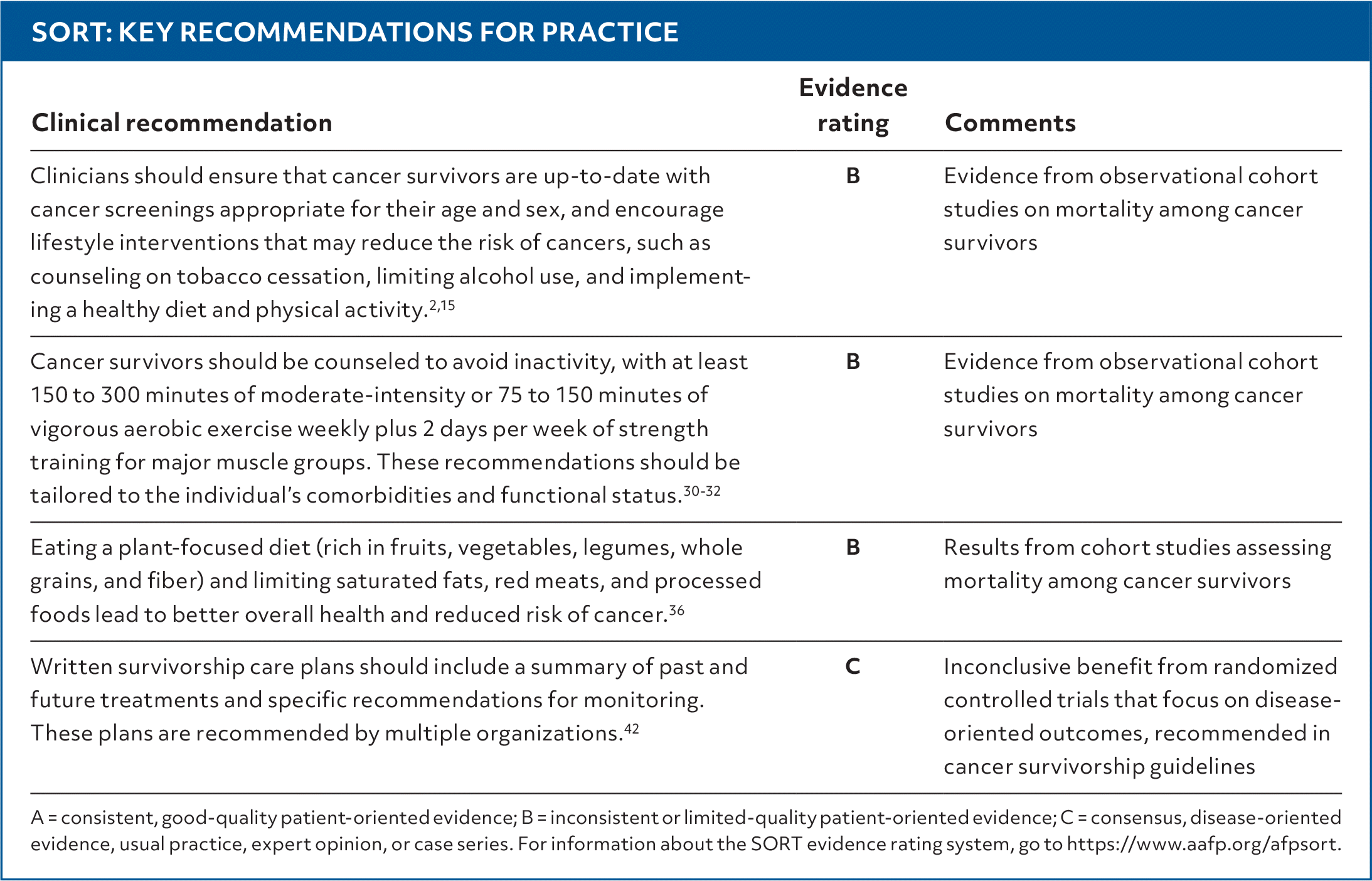
By 2040, there will be an estimated 26 million cancer survivors in the United States. The essential components of survivorship care are (1) surveillance for cancer recurrence, (2) surveillance for new primary cancers, (3) management of physical and psychological long-term effects of treatment, (4) prevention or mitigation of late treatment effects, and (5) coordination of care between the oncology team and primary care clinicians. Recommendations for surveillance to detect recurrence vary with cancer type and stage at diagnosis. Screening for new primary cancers is the same as for the general population. Although many cancer survivors do not undergo recommended surveillance or screening, family physicians can encourage and facilitate adherence. Family physicians should also monitor and manage the physical and psychological effects of cancer diagnosis and treatment, such as depression, lymphedema, pain, and sexual dysfunction. Cardiovascular disease is a leading cause of death for cancer survivors, often as a long-term effect of cancer treatments. Clinicians should counsel patients on cessation of tobacco and alcohol use, participation in recommended levels of physical activity, and adherence to optimal nutrition recommendations. Finally, family physicians should work with the cancer care team to coordinate the care plan and assure that all recommended components are achieved. Written survivorship care plans should be provided to cancer survivors to help them transition from active treatment to posttreatment monitoring.

.

STEPHEN CAREK, MD, CAQSM, is program director of and an assistant professor in the Department of Family Medicine at Prisma Health/University of South Carolina School of Medicine Greenville.

JOHN F. EMERSON, MD, is an associate professor in the Department of Family Medicine at Prisma Health/University of South Carolina School of Medicine Greenville.

JATIN PATEL, MD, is an assistant professor in the Department of Family Medicine at Prisma Health/University of South Carolina School of Medicine Greenville.

Address correspondence to Stephen Carek, MD, CAQSM, at stephen.carek@prismahealth.org.

Author disclosure: No relevant financial relationships.

  1. 1.Bluethmann SM, Mariotto AB, Rowland JH. Anticipating the “silver tsunami”: prevalence trajectories and comorbidity burden among older cancer survivors in the United States. Cancer Epidemiol Biomarkers Prev. 2016;25(7):1029-1036.
  2. 2.Sung H, Hyun N, Leach CR, et al. Association of first primary cancer with risk of subsequent primary cancer among survivors of adult-onset cancers in the United States [published correction appears in JAMA. 2021; 325(19): 2020]. JAMA. 2020;324(24):2521-2535.
  3. 3.American Cancer Society. Cancer treatment & survivorship. Facts & Figures 2022–2024. Accessed October 11, 2023. https://www.cancer.org/research/cancer-facts-statistics/survivor-facts-figures.html
  4. 4.Hewitt M. Institute of Medicine, National Research Council. From Cancer Patient to Cancer Survivor. National Academies Press; 2006.
  5. 5.American Academy of Family Physicians. Cancer care. January 2022. Accessed January 12, 2024. https://www.aafp.org/about/policies/all/cancer-care.html
  6. 6.Grunfeld E, Levine MN, Julian JA, et al. Randomized trial of long-term follow-up for early-stage breast cancer. J Clin Oncol. 2006;24(6):848-855.
  7. 7.Grunfeld E, Fitzpatrick R, Mant D, et al. Comparison of breast cancer patient satisfaction with follow-up in primary care versus specialist care. Br J Gen Pract. 1999;49(446):705-710.
  8. 8.Crabtree BF, Miller WL, Howard J, et al. Cancer survivorship care roles for primary care physicians. Ann Fam Med. 2020;18(3):202-209.
  9. 9.NCCN guideline version 1.2024 survivorship. Accessed January 28, 2024. https://www.nccn.org/professionals/physician_gls/pdf/survivorship.pdf
  10. 10.NCCN guidelines. Treatment by cancer type. Accessed October 4, 2023. https://www.nccn.org/guidelines/category_1
  11. 11.Doubeni CA, Field TS, Ulcickas Yood M, et al. Patterns and predictors of mammography utilization among breast cancer survivors. Cancer. 2006;106(11):2482-2488.
  12. 12.Cooper GS, Kou TD, Reynolds HL. Receipt of guideline-recommended follow-up in older colorectal cancer survivors. Cancer. 2008;113(8):2029-2037.
  13. 13.Salloum RG, Hornbrook MC, Fishman PA, et al. Adherence to surveillance care guidelines after breast and colorectal cancer treatment with curative intent. Cancer. 2012;118(22):5644-5651.
  14. 14.Donin N, Filson C, Drakaki A, et al. Risk of second primary malignancies among cancer survivors in the United States, 1992 through 2008. Cancer. 2016;122(19):3075-3086.
  15. 15.Ganz PA, Casillas JN. Incorporating the risk for subsequent primary cancers into the care of adult cancer survivors: moving beyond 5-year survival. JAMA. 2020;324(24):2493-2495.
  16. 16.Gao Y, Perez CA, Chhor C, et al. Breast cancer screening in survivors of childhood cancer. Radiographics. 2023;43(4):e220155.
  17. 17.Children’s Oncology Group. Long-term follow-up guidelines for survivors of childhood, adolescent, and young adult cancers. Version 6.0. October 2023. Accessed February 10, 2024. http://www.survivorshipguidelines.org
  18. 18.Gallaway MS, Townsend JS, Shelby D, et al. Pain among cancer survivors. Prev Chronic Dis. 2020;17:E54.
  19. 19.Ren Y, Kebede MA, Ogunleye AA, et al. Burden of lymphedema in long-term breast cancer survivors by race and age. Cancer. 2022;128(23):4119-4128.
  20. 20.Jackson SE, Wardle J, Steptoe A, et al. Sexuality after a cancer diagnosis: a population-based study. Cancer. 2016;122(24):3883-3891.
  21. 21.National Coalition for Cancer Survivorship. State of survivorship survey: 2023. Accessed January 26, 2024. https://canceradvocacy.org/wp-content/uploads/NCCS-2023-State-of-Survivorship-Survey-Report-Fn.pdf
  22. 22.Florido R, Daya NR, Ndumele CE, et al. Cardiovascular disease risk among cancer survivors. J Am Coll Cardiol. 2022;80(1):22-32.
  23. 23.Denlinger CS, Sanft T, Moslehi JJ, et al. NCCN guidelines insights. J Natl Compr Canc Netw. 2020;18(8):1016-1023.
  24. 24.Bagnardi V, Rota M, Botteri E, et al. Alcohol consumption and site-specific cancer risk. Br J Cancer. 2015;112(3):580-593.
  25. 25.Gandini S, Botteri E, Iodice S, et al. Tobacco smoking and cancer: a meta-analysis. Int J Cancer. 2008;122(1):155-164.
  26. 26.Ramaswamy AT, et al. Smoking, cessation, and cessation counseling in patients with cancer. Cancer. 2016;122(8):1247-1253.
  27. 27.Derry HM, et al. Yoga and self-reported cognitive problems in breast cancer survivors. Psychooncology. 2015;24(8):958-966.
  28. 28.Zhu G, Zhang X, Wang Y, et al. Effects of exercise intervention in breast cancer survivors. Onco Targets Ther. 2016;9:2153-2168.
  29. 29.Medysky ME, Temesi J, Culos-Reed SN, et al. Exercise, sleep and cancer-related fatigue. Neurophysiol Clin. 2017;47(2):111-122.
  30. 30.Rock CL, Thomson CA, Sullivan KR, et al. American Cancer Society nutrition and physical activity guideline for cancer survivors. CA Cancer J Clin. 2022;72(3):230-262.
  31. 31.World Cancer Research Fund International. Third expert report. Diet, nutrition, physical activity and cancer: a global perspective. April 23, 2018. Accessed February 10, 2024. https://www.wcrf.org/diet-and-cancer-update-programme/about-the-third-expert-report/
  32. 32.Runowicz CD, Leach CR, Henry NL, et al. American Cancer Society/American Society of Clinical Oncology breast cancer survivorship care guideline. CA Cancer J Clin. 2016;66(1):43-73.
  33. 33.Campbell KL, Winters-Stone KM, Wiskemann J, et al. Exercise guidelines for cancer survivors. Med Sci Sports Exerc. 2019;51(11):2375-2390.
  34. 34.Kroenke CH, Fung TT, Hu FB, et al. Dietary patterns and survival after breast cancer diagnosis. J Clin Oncol. 2005;23(36):9295-9303.
  35. 35.Kwan ML, Weltzien E, Kushi LH, et al. Dietary patterns and breast cancer recurrence and survival among women with early-stage breast cancer. J Clin Oncol. 2009;27(6):919-926.
  36. 36.Schwedhelm C, Boeing H, Hoffmann G, et al. Effect of diet on mortality and cancer recurrence among cancer survivors. Nutr Rev. 2016;74(12):737-748.
  37. 37.Meyerhardt JA, Niedzwiecki D, Hollis D, et al. Association of dietary patterns with cancer recurrence and survival in patients with stage III colon cancer. JAMA. 2007;298(7):754-764.
  38. 38.Fiolet T, Srour B, Sellem L, et al. Consumption of ultra-processed foods and cancer risk. BMJ. 2018;360:k322.
  39. 39.Renehan AG, Tyson M, Egger M, et al. Body-mass index and incidence of cancer. Lancet. 2008;371(9612):569-578.
  40. 40.de Lemos ML. Effects of soy phytoestrogens genistein and daidzein on breast cancer growth. Ann Pharmacother. 2001;35(9):1118-1121.
  41. 41.Yang WS, Va P, Wong MY, et al. Soy intake is associated with lower lung cancer risk. Am J Clin Nutr. 2011;94(6):1575-1583.
  42. 42.Hill RE, Wakefield CE, Cohn RJ, et al. Survivorship care plans in cancer. Oncologist. 2020;25(2):e351-e3724.
  43. 43.Wilbur J. Surveillance of the adult cancer survivor. Am Fam Physician. 2015;91(1):29-36.
  44. 44.Sunga AY, Eberl MM, Oeffinger KC, et al. Care of cancer survivors. Am Fam Physician. 2005;71(4):699-706.

Copyright © 2026 by the American Academy of Family Physicians.

This content is owned by the AAFP. A person viewing it online may make one printout of the material and may use that printout only for his or her personal, non-commercial reference. This material may not otherwise be downloaded, copied, printed, stored, transmitted or reproduced in any medium, whether now known or later invented, except as authorized in writing by the AAFP. See permissions for copyright questions and/or permission requests.