Obstructive Sleep Apnea in Adults: Common Questions and Answers

Breanna Gawrys, DO
Taran W. Silva, DO
Joel Herness, MD

American Family Physician. 2024;110(1):27-36.

Author disclosure: No relevant financial relationships.

This clinical content conforms to AAFP criteria for CME.

Patient information: A handout on sleep apnea testing for patients with cardiovascular disease is available.

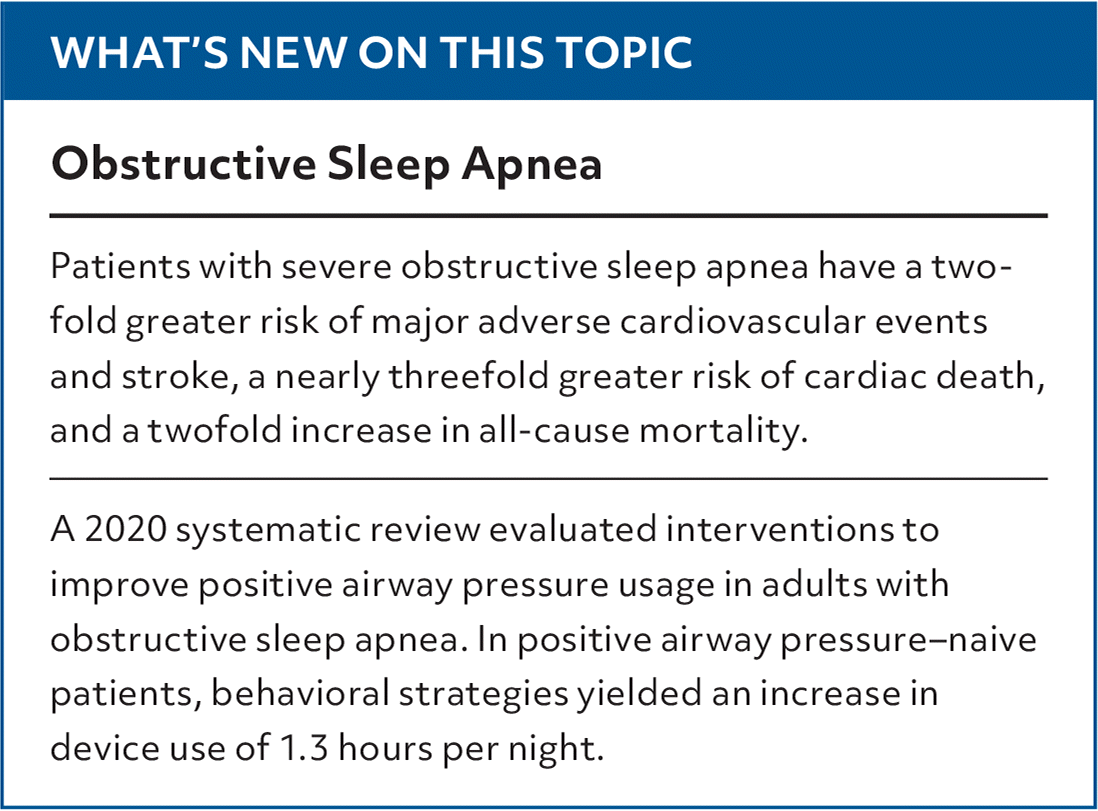
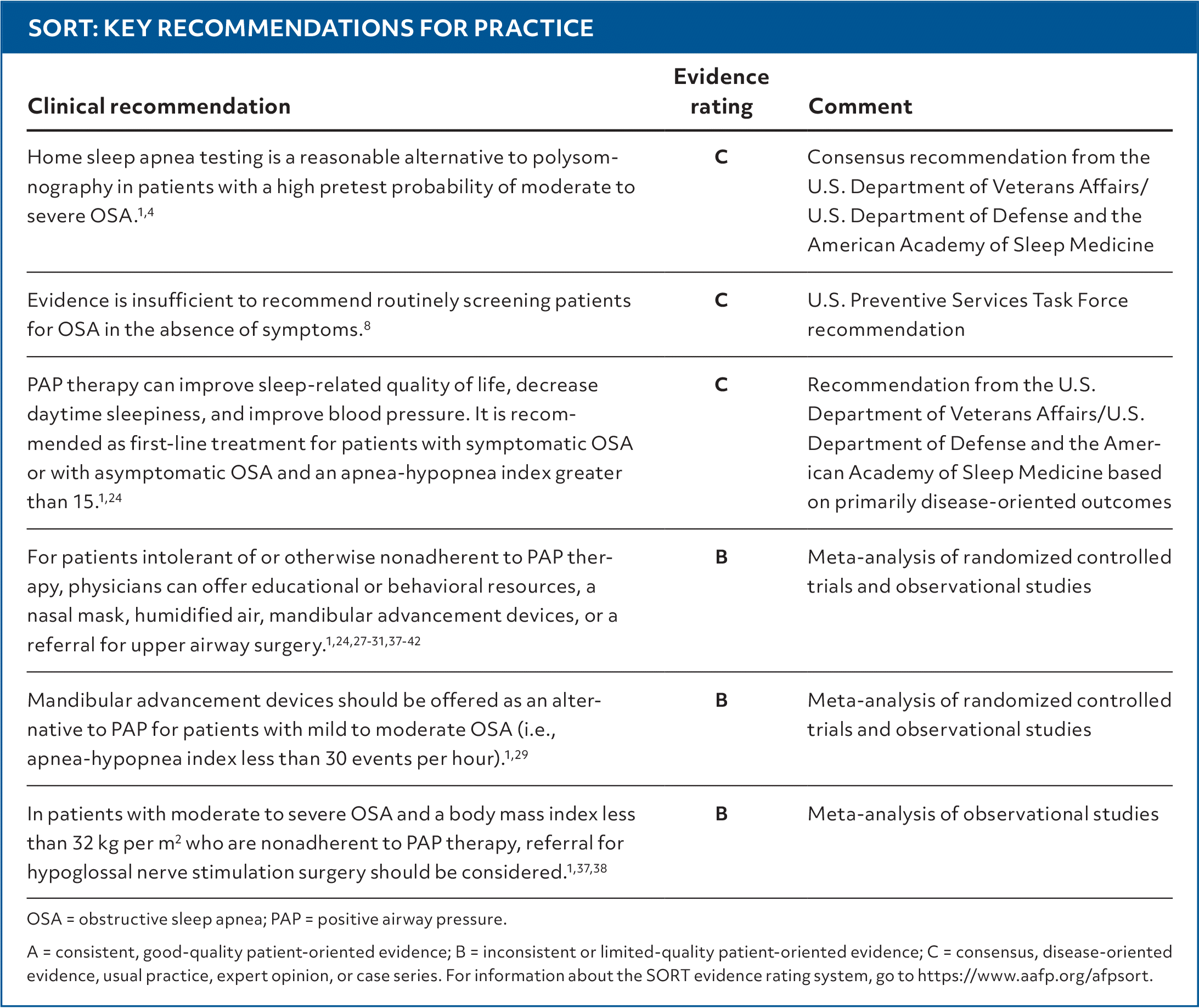
Obstructive sleep apnea (OSA) is a common disorder that affects quality of life and is associated with comorbidities such as hypertension, atrial fibrillation, heart failure, coronary heart disease, type 2 diabetes mellitus, and stroke. OSA is characterized by a reduction or cessation of breathing during sleep, resulting in intermittent hypoxemia, autonomic fluctuation, and sleep fragmentation. The U.S. Preventive Services Task Force states that there is insufficient evidence to recommend routine screening for OSA in the absence of symptoms. OSA should be considered in patients with excessive daytime fatigue, unrestful sleep, persistent snoring, and nocturnal awakenings with gasping or choking. The STOP-BANG questionnaire is the most sensitive screening tool for OSA, and the diagnostic standard is polysomnography with an observed apnea-hypopnea index greater than 5 in the presence of symptoms or greater than 15 without symptoms. Home sleep apnea testing is a useful diagnostic option in patients who have symptoms consistent with moderate to severe OSA without significant cardiopulmonary comorbidities. Positive airway pressure, with a humidified nasal or facial mask, is the first-line treatment for adults with OSA. Weight loss is a beneficial adjunct to treatment through intensive lifestyle modification, medications, or bariatric surgery. Alternatives for patients intolerant of or nonadherent to positive airway pressure include changing the type of mask used, mandibular advancement devices, hypoglossal nerve stimulation, and other surgical interventions. Although many OSA therapies effectively improve daytime sleepiness and blood pressure, none have demonstrated a mortality benefit in randomized controlled trials.

BREANNA GAWRYS, DO, FAAFP, DipABLM, is associate program director of the David Grant USAF Medical Center Family Medicine Residency Program, Travis Air Force Base, Calif.; an associate professor in the Department of Family Medicine at the Uniformed Services University of the Health Sciences, Bethesda, Md.; and an associate professor of family medicine at the University of California Davis School of Medicine.

TARAN W. SILVA, DO, is faculty at the David Grant USAF Medical Center Family Medicine Residency Program, and an assistant professor in the Department of Family Medicine at the Uniformed Services University of the Health Sciences.

JOEL HERNESS, MD, FAAFP, is faculty at the David Grant USAF Medical Center Family Medicine Residency Program, and an assistant professor in the Department of Family Medicine at the Uniformed Services University of the Health Sciences.

Address correspondence to Breanna Gawrys, DO, at Breanna.L.gawrys.mil@health.mil.

Author disclosure: No relevant financial relationships.

  1. 1.Mysliwiec V, Martin JL, Ulmer CS, et al. The management of chronic insomnia disorder and obstructive sleep apnea: synopsis of the 2019 U.S. Department of Veterans Affairs and U.S. Department of Defense clinical practice guidelines [published correction appears in Ann Intern Med. 2021;174(4):584]. Ann Intern Med. 2020;172(5):325-336.
  2. 2.Yeghiazarians Y, Jneid H, Tietjens JR, et al. Obstructive sleep apnea and cardiovascular disease: a scientific statement from the American Heart Association [published correction appears in Circulation. 2022;145(2):e775]. Circulation. 2021;144(3):e56-e67.
  3. 3.International Classification of Sleep Disorders. 3rd ed., text revision. American Academy of Sleep Medicine; 2023.
  4. 4.Kapur VK, Auckley DH, Chowdhuri S, et al. Clinical practice guideline for diagnostic testing for adult obstructive sleep apnea: an American Academy of Sleep Medicine clinical practice guideline. J Clin Sleep Med. 2017;13(3):479-504.
  5. 5.Deshpande P, Salcedo B, Haq C. Common sleep disorders in children. Am Fam Physician. 2022;105(2):168-176.
  6. 6.Kaufmann CN, Spira AP, Wickwire EM, et al. Disparities in the diagnosis and treatment of obstructive sleep apnea among middle-aged and older adults in the United States. Ann Am Thorac Soc. 2023;20(6):921-926.
  7. 7.Obesity in pregnancy: ACOG Practice Bulletin, Number 230. Obstet Gynecol. 2021;137(6):e128-e144.
  8. 8.Feltner C, Wallace IF, Aymes S, et al. Screening for obstructive sleep apnea in adults: updated evidence report and systematic review for the US Preventive Services Task Force. JAMA. 2022;328(19):1951-1971.
  9. 9.André S, Andreozzi F, Van Overstraeten C, et al. Cardiometabolic comorbidities in obstructive sleep apnea patients are related to disease severity, nocturnal hypoxemia, and decreased sleep quality. Respir Res. 2020;21(1):35.
  10. 10.Gleeson M, McNicholas WT. Bidirectional relationships of comorbidity with obstructive sleep apnoea. Eur Respir Rev. 2022;31(164):210256.
  11. 11.Semelka M, Wilson J, Floyd R. Diagnosis and treatment of obstructive sleep apnea in adults. Am Fam Physician. 2016;94(5):355-360.
  12. 12.Gottlieb DJ, Punjabi NM. Diagnosis and management of obstructive sleep apnea: a review. JAMA. 2020;323(14):1389-1400.
  13. 13.Conwell WD, Tsai SC. Managing comorbid illness in obstructive sleep apnea: what can we learn from other diseases?. Sleep Med Clin. 2016;11(3):313-321.
  14. 14.Xie C, Zhu R, Tian Y, et al. Association of obstructive sleep apnoea with the risk of vascular outcomes and all-cause mortality: a meta-analysis. BMJ Open. 2017;7(12):e013983.
  15. 15.Myers KA, Mrkobrada M, Simel DL. Does this patient have obstructive sleep apnea?: The rational clinical examination systematic review. JAMA. 2013;310(7):731-741.
  16. 16.Mokhlesi B, Masa JF, Brozek JL, et al. Evaluation and management of obesity hypoventilation syndrome. An official American Thoracic Society clinical practice guideline [published correction appears in Am J Respir Crit Care Med. 2019;200(10):1326]. Am J Respir Crit Care Med. 2019;200(3):e6-e24.
  17. 17.Paudel D, Lin Q, Yan C, et al. A false alarm of narcolepsy: obstructive sleep apnea masquerading as narcolepsy and depression. Sleep Breath. 2019;23(3):873-877.
  18. 18.Romigi A, Caccamo M, Vitrani G, et al. A false alarm of narcolepsy: obstructive sleep apnea masquerading as narcolepsy and vice-versa: two further controversial cases. Sleep Breath. 2021;25(1):367-370.
  19. 19.National Institute for Health and Care Excellence. Obstructive sleep apnoea/hypopnoea syndrome and obesity hypoventilation syndrome in over 16s. NICE guideline [NG202]. August 20, 2021. Accessed June 18, 2023. https://www.nice.org.uk/guidance/ng202
  20. 20.Chung F, Yegneswaran B, Liao P, et al. STOP questionnaire: a tool to screen patients for obstructive sleep apnea. Anesthesiology. 2008;108(5):812-821.
  21. 21.Fietze I, Herberger S, Wewer G, et al. Initiation of therapy for obstructive sleep apnea syndrome: a randomized comparison of outcomes of telemetry-supported home-based vs. sleep lab-based therapy initiation. Sleep Breath. 2022;26(1):269-277.
  22. 22.Kapoor M, Greenough G. Home sleep tests for obstructive sleep apnea (OSA). J Am Board Fam Med. 2015;28(4):504-509.
  23. 23.Dominguez JE, Cantrell S, Habib AS, et al. Society of Anesthesia and Sleep Medicine and the Society for Obstetric Anesthesia and Perinatology consensus guideline on the screening, diagnosis, and treatment of obstructive sleep apnea in pregnancy. Obstet Gynecol. 2023;142(2):403-423.
  24. 24.Patil SP, Ayappa IA, Caples SM, et al. Treatment of adult obstructive sleep apnea with positive airway pressure: an American Academy of Sleep Medicine clinical practice guideline. J Clin Sleep Med. 2019;15(2):335-343.
  25. 25.Yu J, Zhou Z, McEvoy RD, et al. Association of positive airway pressure with cardiovascular events and death in adults with sleep apnea: a systematic review and meta-analysis. JAMA. 2017;318(2):156-166.
  26. 26.Mokhlesi B, Ayas NT. Cardiovascular events in obstructive sleep apnea - can CPAP therapy SAVE lives?. N Engl J Med. 2016;375(10):994-996.
  27. 27.Askland K, Wright L, Wozniak DR, et al. Educational, supportive and behavioural interventions to improve usage of continuous positive airway pressure machines in adults with obstructive sleep apnoea. Cochrane Database Syst Rev. 2020;(4):CD007736.
  28. 28.Kennedy B, Lasserson TJ, Wozniak DR, et al. Pressure modification or humidification for improving usage of continuous positive airway pressure machines in adults with obstructive sleep apnoea. Cochrane Database Syst Rev. 2019;(12):CD003531.
  29. 29.Ramar K, Dort LC, Katz SG, et al. Clinical practice guideline for the treatment of obstructive sleep apnea and snoring with oral appliance therapy: an update for 2015. J Clin Sleep Med. 2015;11(7):773-827.
  30. 30.Araghi MH, Chen YF, Jagielski A, et al. Effectiveness of lifestyle interventions on obstructive sleep apnea: systematic review and meta-analysis. Sleep. 2013;36(10):1553-1562.
  31. 31.Morgenthaler TI, Kapen S, Lee-Chiong T, et al.; Standards of Practice Committee; American Academy of Sleep Medicine. Practice parameters for the medical therapy of obstructive sleep apnea. Sleep. 2006;29(8):1031-1035.
  32. 32.Pitre T, Mah J, Roberts S, et al. Comparative efficacy and safety of wakefulness-promoting agents for excessive daytime sleepiness in patients with obstructive sleep apnea: a systematic review and network meta-analysis. Ann Intern Med. 2023;176(5):676-684.
  33. 33.Li P, Ning XH, Lin H, et al. Continuous positive airway pressure versus mandibular advancement device in the treatment of obstructive sleep apnea: a systematic review and meta-analysis. Sleep Med. 2020;72:5-11.
  34. 34.Rueda JR, Mugueta-Aguinaga I, Vilaró J, et al. Myofunctional therapy (oropharyngeal exercises) for obstructive sleep apnoea. Cochrane Database Syst Rev. 2020;(11):CD013449.
  35. 35.Srijithesh PR, Aghoram R, Goel A, et al. Positional therapy for obstructive sleep apnoea. Cochrane Database Syst Rev. 2019;(5):CD010990.
  36. 36.Mason M, Welsh EJ, Smith I. Drug therapy for obstructive sleep apnoea in adults. Cochrane Database Syst Rev. 2013;(5):CD003002.
  37. 37.Kent D, Stanley J, Aurora RN, et al. Referral of adults with obstructive sleep apnea for surgical consultation: an American Academy of Sleep Medicine clinical practice guideline. J Clin Sleep Med. 2021;17(12):2499-2505.
  38. 38.Ratneswaran D, Guni A, Pengo MF, et al. Electrical stimulation as a therapeutic approach in obstructive sleep apnea: a meta-analysis. Sleep Breath. 2021;25(1):207-218.
  39. 39.Zaghi S, Holty JEC, Certal V, et al. Maxillomandibular advancement for treatment of obstructive sleep apnea: a meta-analysis. JAMA Otolaryngol Head Neck Surg. 2016;142(1):58-66.
  40. 40.He M, Yin G, Zhan S, et al. Long-term efficacy of uvulopalatopharyngoplasty among adult patients with obstructive sleep apnea: a systematic review and meta-analysis. Otolaryngol Head Neck Surg. 2019;161(3):401-411.
  41. 41.Boyd SB, Walters AS, Song Y, et al. Comparative effectiveness of maxillomandibular advancement and uvulopalatopharyngoplasty for the treatment of moderate to severe obstructive sleep apnea. J Oral Maxillofac Surg. 2013;71(4):743-751.
  42. 42.Camacho M, Riaz M, Capasso R, et al. The effect of nasal surgery on continuous positive airway pressure device use and therapeutic treatment pressures: a systematic review and meta-analysis. Sleep. 2015;38(2):279-286.
  43. 43.Wong AM, Barnes HN, Joosten SA, et al. The effect of surgical weight loss on obstructive sleep apnoea: a systematic review and meta-analysis. Sleep Med Rev. 2018;42:85-99.
  44. 44.Schroeder R, Garrison JM, Johnson MS. Treatment of adult obesity with bariatric surgery. Am Fam Physician. 2011;84(7):805-814.
  45. 45.Victor LD. Treatment of obstructive sleep apnea in primary care. Am Fam Physician. 2004;69(3):561-568.
  46. 46.Victor LD. Obstructive sleep apnea. Am Fam Physician. 1999;60(8):2279-2286.

Copyright © 2026 by the American Academy of Family Physicians.

This content is owned by the AAFP. A person viewing it online may make one printout of the material and may use that printout only for his or her personal, non-commercial reference. This material may not otherwise be downloaded, copied, printed, stored, transmitted or reproduced in any medium, whether now known or later invented, except as authorized in writing by the AAFP. See permissions for copyright questions and/or permission requests.