

DETAILS FOR THIS REVIEW
Study Population: 50 trials including 8,857 patients considered susceptible to recurrent urinary tract infections (UTIs)
Efficacy End Points: Number of participants with symptomatic, culture-verified UTIs
Harm End Points: Adverse events (e.g., gastrointestinal problems)
THE NUMBERS
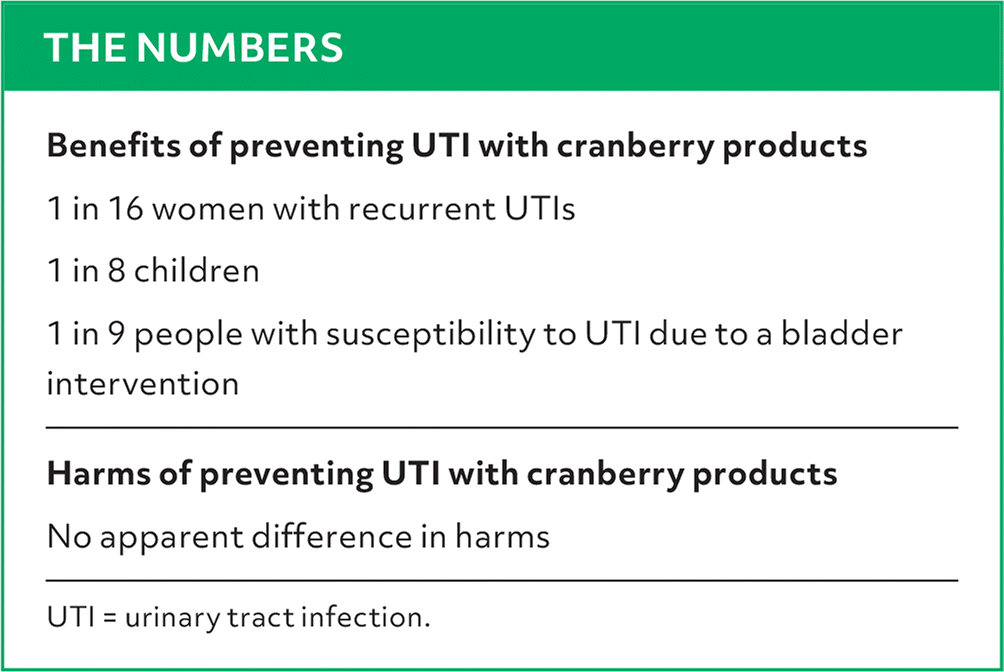
| Benefits of preventing UTI with cranberry products |
| 1 in 16 women with recurrent UTIs |
| 1 in 8 children |
| 1 in 9 people with susceptibility to UTI due to a bladder intervention |
| Harms of preventing UTI with cranberry products |
| No apparent difference in harms |
UTI = urinary tract infection.
Narrative: UTIs affect more than 150 million individuals globally each year and impose a substantial financial burden on health care systems.1 The annual incidence of acute uncomplicated UTIs reaches 7% among women of all ages, and 30% of these women may experience a recurrence within 6 to 12 months.2,3
For decades, cranberry products have been used in the treatment and prevention of UTIs. Cranberries' mechanism of action uses proanthocyanidins, which inhibit the adherence of p-fimbriated bacteria (e.g., Escherichia coli) to urothelial cells.4 The systematic review and meta-analysis discussed here explores the effectiveness of cranberry products in preventing UTI.
The Cochrane review included 50 randomized controlled trials (N = 8,857) and compared cranberry products with placebo, no treatment, or other interventions (e.g., antibiotics, probiotics) for prevention of UTI.5 The review focused on six populations that are susceptible to UTI: women with recurrent UTI (usually two or more in the past 12 months), older men and women in institutions, pregnant women, children, adults with neuromuscular dysfunction of the bladder and incomplete bladder emptying, and people susceptible to UTIs following an intervention (e.g., bladder radiotherapy, urogenital surgery, kidney transplantation).5
The Cochrane review showed moderate-certainty evidence that compared with placebo or control (water or nonspecific treatment), cranberry products reduced the risk of UTI in women with a history of recurrent UTI (risk ratio [RR] = 0.74; 95% CI, 0.55 to 0.99; absolute risk reduction [ARR] = 6.3%; number needed to treat [NNT] = 16) and in children (RR = 0.53; 95% CI, 0.36 to 0.78; ARR = 13.6%; NNT = 8). The review showed low-certainty evidence of benefit for those susceptible to UTI due to an intervention (RR = 0.47; 95% CI, 0.37 to 0.61; ARR = 12.2%; NNT = 9). However, in older men and women who are institutionalized, pregnant women, and adults with neuromuscular bladder dysfunction with incomplete bladder emptying, no apparent treatment benefit was observed.5
The most commonly reported harms associated with cranberry products were gastrointestinal adverse effects; moderate-certainty evidence demonstrated no difference between the groups.
Caveats: The trials used different cranberry forms (i.e., juice, tablet, capsule) and amounts; therefore, there is no consensus dose of proanthocyanidins for UTI risk reduction. The available information is derived from small-scale studies, which introduces uncertainty. Statistical heterogeneity among the trials was mostly low or moderate. Approximately one-half of the trials reported intervention compliance rates, and no apparent relationship was found between compliance and the efficacy end points.5
About one-half of the trials in the review demonstrated low risk of bias, with selection bias noted as the major issue. Most of the included trials compared cranberry products with no treatment, water, or placebo. The Cochrane review found insufficient data to compare cranberry products with antibiotics or probiotics for UTI risk reduction.4
Read the full article
Get immediate access, anytime, anywhere.
Choose a single article, issue, or full-access subscription.
Earn up to 14 CME credits per issue.
