

Acute bronchitis is a clinical diagnosis and accounts for more than 3 million outpatient office visits in the United States annually. The differential diagnosis includes exacerbations of preexisting conditions, such as asthma, chronic obstructive pulmonary disease, and heart failure or other causes of acute cough, including pertussis, COVID-19, influenza, and community-acquired pneumonia. Acute cough may present with or without sputum production. Diagnostic testing is not indicated unless there is concern for other potential causes, such as community-acquired pneumonia, influenza, or COVID-19. Acute bronchitis is a self-limiting disease. Evidence does not support the use of antitussives, honey, antihistamines, anticholinergics, oral nonsteroidal anti-inflammatory drugs, or inhaled or oral corticosteroids. Antibiotics do not contribute to the overall improvement of acute bronchitis; although they may decrease the duration of cough by approximately 0.5 days, their use exposes patients to antibiotic-related adverse effects. Therefore, symptom relief and patient education regarding the expected duration of cough (2–3 weeks) are recommended for the management of acute bronchitis. Strategies shown to decrease antibiotic prescribing include delayed antibiotic prescriptions and describing acute bronchitis as a chest cold.
Acute bronchitis is a common cause of acute cough. This article provides a summary of the best available patient-oriented evidence for the diagnosis and management of acute bronchitis in the primary care setting.
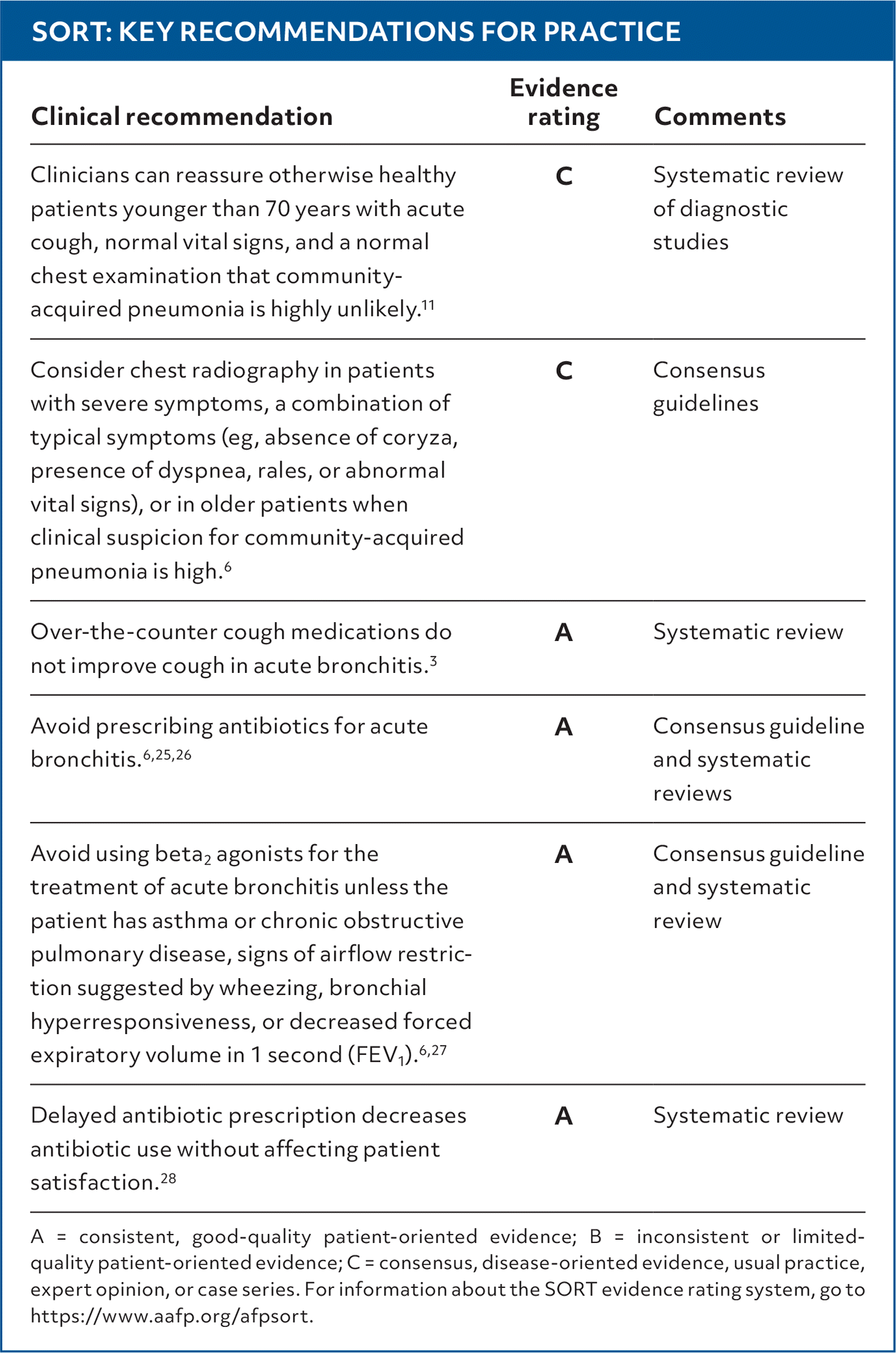
SORT: KEY RECOMMENDATIONS FOR PRACTICE
| Clinical recommendation | Evidence rating | Comments |
|---|---|---|
| Clinicians can reassure otherwise healthy patients younger than 70 years with acute cough, normal vital signs, and a normal chest examination that community-acquired pneumonia is highly unlikely.11 | C | Systematic review of diagnostic studies |
| Consider chest radiography in patients with severe symptoms, a combination of typical symptoms (eg, absence of coryza, presence of dyspnea, rales, or abnormal vital signs), or in older patients when clinical suspicion for community-acquired pneumonia is high.6 | C | Consensus guidelines |
| Over-the-counter cough medications do not improve cough in acute bronchitis.3 | A | Systematic review |
| Avoid prescribing antibiotics for acute bronchitis.6,25,26 | A | Consensus guideline and systematic reviews |
| Avoid using beta2 agonists for the treatment of acute bronchitis unless the patient has asthma or chronic obstructive pulmonary disease, signs of airflow restriction suggested by wheezing, bronchial hyperresponsiveness, or decreased forced expiratory volume in 1 second (FEV1).6,27 | A | Consensus guideline and systematic review |
| Delayed antibiotic prescription decreases antibiotic use without affecting patient satisfaction.28 | A | Systematic review |
A = consistent, good-quality patient-oriented evidence; B = inconsistent or limited-quality patient-oriented evidence; C = consensus, disease-oriented evidence, usual practice, expert opinion, or case series. For information about the SORT evidence rating system, go to https://www.aafp.org/afpsort.
EPIDEMIOLOGY
- Acute bronchitis is defined as acute cough with symptoms of lower respiratory tract infection, such as sputum production and wheezing, in the absence of pneumonia or chronic lung disease (eg, chronic obstructive pulmonary disease).1–3
- Cough may be present with or without sputum production and without indications for another cause such as pneumonia, upper respiratory tract infection, or pertussis.1–3
- In the United States, acute bronchitis accounts for more than 3 million outpatient office visits and more than 1 million emergency department visits per year.4,5
- It is estimated that more than 90% of cases of acute bronchitis in healthy adults are caused by a virus.6,7 Influenza, parainfluenza, rhinovirus, adenovirus, coronavirus, human metapneumovirus, and respiratory syncytial virus are the most common causes.1,6,7
- Bacterial causes, including Mycoplasma pneumoniae, Chlamydophila pneumoniae, and Bordetella pertussis, are rarely detected.1,6
Read the full article
Get immediate access, anytime, anywhere.
Choose a single article, issue, or full-access subscription.
Earn up to 14 CME credits per issue.
