Chronic Pelvic Pain in Women: Evaluation and Treatment

Erica S. Meisenheimer, MD, MBA
Ann M. Carnevale, MD, MS

American Family Physician. 2025;111(3):218-229.

Author disclosure: No relevant financial relationships.

This clinical content conforms to AAFP criteria for CME.

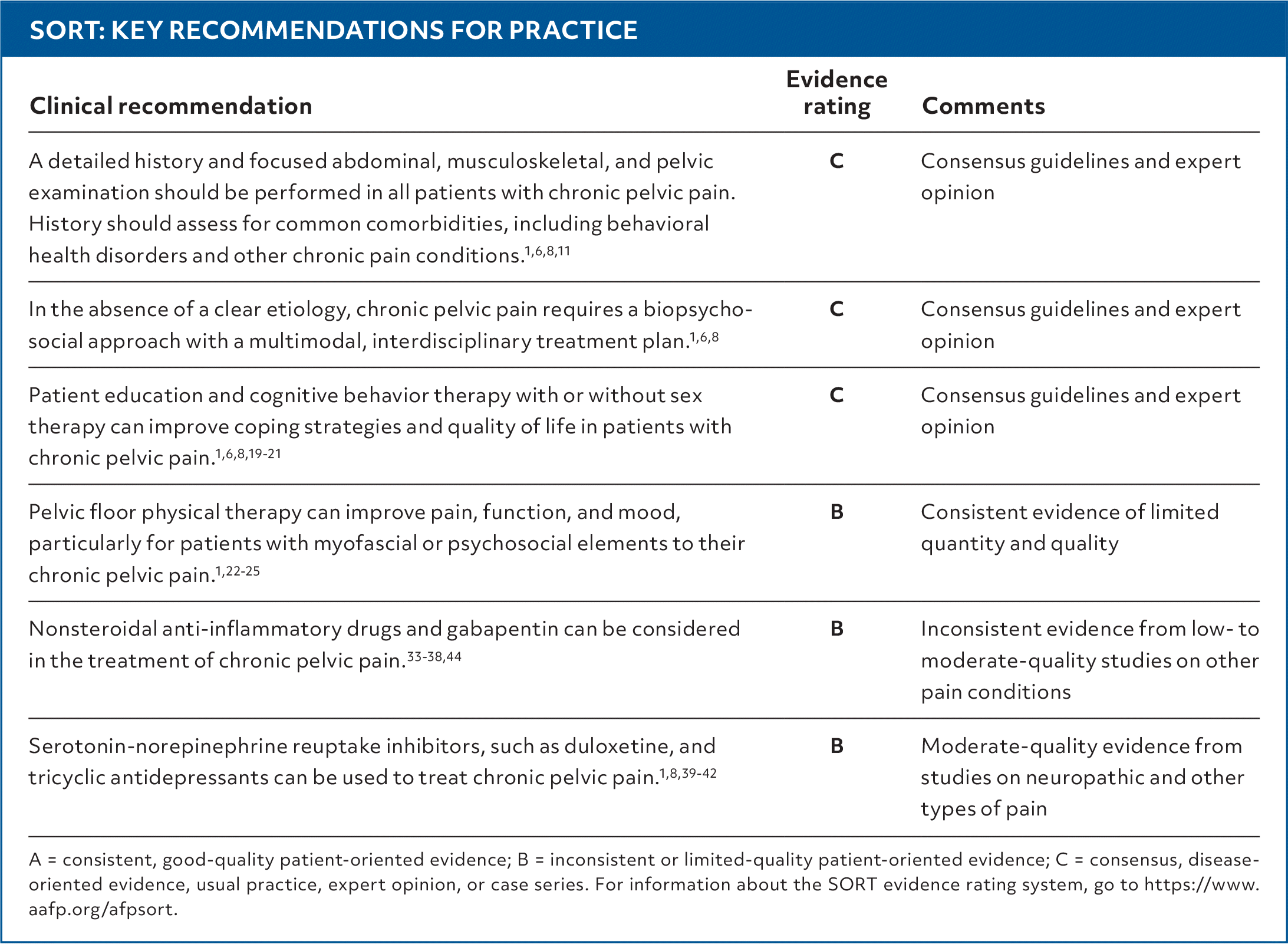
Chronic pelvic pain affects up to 26% of individuals with female anatomy and is defined as at least 6 months of pain that is perceived to originate in the pelvis. Chronic pelvic pain is highly correlated with psychosocial comorbidities, including depression, anxiety, and history of abuse. Although common causes include irritable bowel syndrome, bladder pain syndrome (interstitial cystitis), pelvic floor dysfunction, and endometriosis, chronic pelvic pain is most often the result of multiple coexisting pain conditions and central nervous system hypersensitivity. Evaluation requires a biopsychosocial approach, beginning with a complete history and physical examination to ensure an accurate and timely diagnosis. Diagnostic laboratory and imaging tests are of limited utility and should be tailored to investigate presenting symptoms and examination findings. When a single etiology is identified, treatment should follow disease-specific guidelines; otherwise, the management of undifferentiated chronic pelvic pain should follow an interdisciplinary approach to improve function and quality of life. Multimodal treatment includes pain education, self-care, behavioral therapy, physical therapy, and pharmacotherapy, with limited indications for surgical interventions. Regular follow-up to review progress is necessary. Clinicians should have a low threshold for referral to interdisciplinary pain management or other subspecialties when improvement is not seen.

ERICA S. MEISENHEIMER, MD, MBA, is a faculty physician at the National Capital Consortium Family Medicine Residency at Alexander T. Augusta Military Medical Center, Fort Belvoir, Virginia, and an assistant professor in the Department of Family Medicine at the Uniformed Services University of the Health Sciences, Bethesda, Maryland.

ANN M. CARNEVALE, MD, MS, is the chief resident at the National Capital Consortium Family Medicine Residency at Alexander T. Augusta Military Medical Center.

Address correspondence to Erica S. Meisenheimer, MD, MBA, at erica.sturtevant@gmail.com.

Author disclosure: No relevant financial relationships.

  1. 1.American College of Obstetricians and Gynecologists. Chronic pelvic pain: ACOG practice bulletin, number 218. Obstet Gynecol. 2020;135(3):e98-e109.
  2. 2.Della Corte L, Di Filippo C, Gabrielli O, et al. The burden of endometriosis on women's lifespan: a narrative overview on quality of life and psychosocial wellbeing. Int J Environ Res Public Health. 2020;17(13):4683.
  3. 3.Till SR, As-Sanie S, Schrepf A. Psychology of chronic pelvic pain: prevalence, neurobiological vulnerabilities, and treatment. Clin Obstet Gynecol. 2019;62(1):22-36.
  4. 4.Bondesson E, Larrosa Pardo F, Stigmar K, et al. Comorbidity between pain and mental illness - evidence of a bidirectional relationship. Eur J Pain. 2018;22(7):1304-1311.
  5. 5.Meltzer-Brody S, Leserman J, Zolnoun D, et al. Trauma and posttraumatic stress disorder in women with chronic pelvic pain. Obstet Gynecol. 2007;109(4):902-908.
  6. 6.Lamvu G, Carrillo J, Ouyang C, et al. Chronic pelvic pain in women: a review. JAMA. 2021;325(23):2381-2391.
  7. 7.Till SR, Nakamura R, Schrepf A, et al. Approach to diagnosis and management of chronic pelvic pain in women: incorporating chronic overlapping pain conditions in assessment and management. Obstet Gynecol Clin North Am. 2022;49(2):219-239.
  8. 8.Allaire C, Yong PJ, Bajzak K, et al. Guideline no. 445: Management of chronic pelvic pain. J Obstet Gynaecol Can. 2024;46(1):102283.
  9. 9.Cardaillac C, Levesque A, Riant T, et al. Evaluation of a scoring system for the detection of central sensitization among women with chronic pelvic pain. Am J Obstet Gynecol. 2023;229(5):530.e1-530.e17.
  10. 10.Royal College of Obstetricians & Gynaecologists. The initial management of chronic pelvic pain, Green-top guideline no. 41. Published May 2012. Accessed January 28, 2025. https://www.rcog.org.uk/media/muab2gj2/gtg_41.pdf
  11. 11.Pelvic Pain Education Program. Healthcare Professionals. Accessed January 28, 2025. https://www.pelvicpaineducation.com/healthcare-professionals
  12. 12.Levesque A, Riant T, Ploteau S, et al. Clinical Criteria of Central Sensitization in Chronic Pelvic and Perineal Pain (Convergences PP Criteria): elaboration of a clinical evaluation tool based on formal expert consensus. Pain Med. 2018;19(10):2012.
  13. 13.Lamvu G, Carrillo J, Witzeman K, et al. Musculoskeletal considerations in female patients with chronic pelvic pain. Semin Reprod Med. 2018;36(2):107-115.
  14. 14.Bachmann GA, Rosen R, Arnold LD, et al. Chronic vulvar and other gynecologic pain: prevalence and characteristics in a self-reported survey. J Reprod Med. 2006;51(1):3-9.
  15. 15.Khoder W, Hale D. Pudendal neuralgia. Obstet Gynecol Clin North Am. 2014;41(3):443-452.
  16. 16.Andres MP, Borrelli GM, Ribeiro J, et al. Transvaginal ultrasound for the diagnosis of adenomyosis: systematic review and meta-analysis. J Minim Invasive Gynecol. 2018;25(2):257-264.
  17. 17.Dunselman GAJ, Vermeulen N, Becker C, et al.; European Society of Human Reproduction and Embryology. ESHRE guideline: management of women with endometriosis. Hum Reprod. 2014;29(3):400-412.
  18. 18.Edi R, Cheng T. Endometriosis: evaluation and treatment. Am Fam Physician. 2022;106(4):397-404.
  19. 19.US Department of Health and Human Services. Pain Management Best Practices Inter-Agency Task Force Report. May 6, 2019. Accessed January 28, 2025. https://www.hhs.gov/sites/default/files/pain-mgmt-best-practices-draft-final-report-05062019.pdf
  20. 20.National Institute for Health and Care Excellence. Chronic pain (primary and secondary) in over 16s: assessment of all chronic pain and management of chronic primary pain. NICE guideline [NG193]. Published April 7, 2021. Accessed January 28, 2025. https://www.nice.org.uk/guidance/ng193
  21. 21.European Association of Urology. Chronic pelvic pain. Published 2024. Accessed January 28, 2025. https://uroweb.org/guidelines/chronic-pelvic-pain
  22. 22.Wallace SL, Miller LD, Mishra K. Pelvic floor physical therapy in the treatment of pelvic floor dysfunction in women. Curr Opin Obstet Gynecol. 2019;31(6):485-493.
  23. 23.Tracey A. Pelvic floor physical therapy and its merit in the treatment of female urogenital pain. Curr Pain Headache Rep. 2022;26(10):775-782.
  24. 24.Bittelbrunn CC, de Fraga R, Martins C, et al. Pelvic floor physical therapy and mindfulness: approaches for chronic pelvic pain in women–a systematic review and meta-analysis. Arch Gynecol Obstet. 2023;307(3):663-672.
  25. 25.van Reijn-Baggen DA, Han-Geurts IJM, Voorham-van der Zalm PJ, et al. Pelvic floor physical therapy for pelvic floor hypertonicity: a systematic review of treatment efficacy. Sex Med Rev. 2022;10(2):209-230.
  26. 26.Valentine LN, Deimling TA. Opioids and alternatives in female chronic pelvic pain. Semin Reprod Med. 2018;36(2):164-172.
  27. 27.Shim JY, Laufer MR, King CR, et al. Evaluation and management of endometriosis in the adolescent. Obstet Gynecol. 2024;143(1):44-51.
  28. 28.Dowell D, Ragan KR, Jones CM, et al. Prescribing opioids for pain - the new CDC clinical practice guideline. N Engl J Med. 2022;387(22):2011-2013.
  29. 29.McDonagh MS, Selph SS, Buckley DI, et al.; Agency for Healthcare Research and Quality. Nonopioid pharmacologic treatments for chronic pain. Comparative effectiveness review, no. 228. Rockville, Md.: 2020. Accessed January 28, 2025. https://www.ncbi.nlm.nih.gov/books/NBK556277/
  30. 30.Harden RN, McCabe CS, Goebel A, et al. Complex regional pain syndrome: practical diagnostic and treatment guidelines, 5th ed. Pain Med. 2022;23(suppl 1):S1-S53.
  31. 31.Flatow V, Uy-Kroh J, Carey ET, et al. Skeletal muscle relaxants for the treatment of myofascial pelvic pain and high tone pelvic floor disorders. Curr Opin Obstet Gynecol. 2023;35(4):311-315.
  32. 32.Stone RH, Abousaud M, Abousaud A, et al. A systematic review of intravaginal diazepam for the treatment of pelvic floor hypertonic disorder. J Clin Pharmacol. 2020;60(suppl 2):S110-S120.
  33. 33.Cheong YC, Smotra G, Williams ACDC. Non-surgical interventions for the management of chronic pelvic pain. Cochrane Database Syst Rev. 2014(3):CD008797.
  34. 34.Horne AW, Vincent K, Hewitt CA, et al.; GaPP2 collaborative. Gabapentin for chronic pelvic pain in women (GaPP2): a multicentre, randomised, double-blind, placebo-controlled trial. Lancet. 2020;396(10255):909-917.
  35. 35.AbdelHafeez MA, Reda A, Elnaggar A, et al. Gabapentin for the management of chronic pelvic pain in women. Arch Gynecol Obstet. 2019;300(5):1271-1277.
  36. 36.Andrade MA, Soares LC, de Oliveira MAP. The effect of neuromodulatory drugs on the intensity of chronic pelvic pain in women: a systematic review. Rev Bras Ginecol Obstet. 2022;44(9):891-898.
  37. 37.Marchand G, Masoud AT, Govindan M, et al. Systematic review and meta-analysis of the efficacy of gabapentin in chronic female pelvic pain without another diagnosis. AJOG Glob Rep. 2021;2(1):100042.
  38. 38.Fan XM, Ren YF, Fu X, et al. Gabapentin has longer-term efficacy for the treatment of chronic pelvic pain in women: a systematic review and pilot meta-analysis. Pain Ther. 2021;10(2):1673-1689.
  39. 39.Lunn MPT, Hughes RAC, Wiffen PJ. Duloxetine for treating painful neuropathy, chronic pain or fibromyalgia. Cochrane Database Syst Rev. 2014(1):CD007115.
  40. 40.Birkinshaw H, Friedrich CM, Cole P, et al. Antidepressants for pain management in adults with chronic pain: a network meta-analysis. Cochrane Database Syst Rev. 2023(5):CD014682.
  41. 41.Moore RA, Derry S, Aldington D, et al. Amitriptyline for neuropathic pain in adults. Cochrane Database Syst Rev. 2015(7):CD008242.
  42. 42.Moore RA, Derry S, Aldington D, et al. Amitriptyline for fibromyalgia in adults. Cochrane Database Syst Rev. 2015(7):CD011824.
  43. 43.Damm T, Lamvu G, Carrillo J, et al. Continuous vs. cyclic combined hormonal contraceptives for treatment of dysmenorrhea: a systematic review. Contracept X. 2019;1:100002.
  44. 44.Marjoribanks J, Ayeleke RO, Farquhar C, et al. Nonsteroidal anti-inflammatory drugs for dysmenorrhoea. Cochrane Database Syst Rev. 2015(7):CD001751.
  45. 45.Fouad LS, Pettit PD, Threadcraft M, et al. Trigger point injections for pelvic floor myofascial spasm refractive to primary therapy. J Endometr Pelvic Pain Disord. 2017;9(2):125-130.
  46. 46.Spruijt MA, Klerkx WM, Kelder JC, et al. The efficacy of botulinum toxin a injections in pelvic floor muscles in chronic pelvic pain patients: a systematic review and meta-analysis. Int Urogynecol J. 2022;33(11):2951-2961.
  47. 47.Meister MR, Brubaker A, Sutcliffe S, et al. Effectiveness of botulinum toxin for treatment of symptomatic pelvic floor myofascial pain in women: a systematic review and meta-analysis. Female Pelvic Med Reconstr Surg. 2021;27(1):e152-e160.
  48. 48.Knapman BL, Li FG, Deans R, et al. Botulinum toxin for the management of pelvic floor tension myalgia and persistent pelvic pain: a systematic review and meta-analysis. Obstet Gynecol. 2024;143(1):e7-e17.
  49. 49.Greig J, Mak Q, Furrer MA, et al. Sacral neuromodulation in the management of chronic pelvic pain: a systematic review and meta-analysis. Neurourol Urodyn. 2023;42(4):822-836.
  50. 50.Leonardi M, Armour M, Gibbons T, et al. Surgical interventions for the management of chronic pelvic pain in women. Cochrane Database Syst Rev. 2021(12):CD008212.
  51. 51.Cockrum R, Tu F. Hysterectomy for chronic pelvic pain. Obstet Gynecol Clin North Am. 2022;49(2):257-271.
  52. 52.Lin KYH, Chang YC, Lu WC, et al. Analgesic efficacy of acupuncture on chronic pelvic pain: a systemic review and meta-analysis study. Healthcare (Basel). 2023;11(6):830.
  53. 53.Zheng J, Lai X, Zhu W, et al. Effects of acupuncture combined with rehabilitation on chronic pelvic pain syndrome in females: a meta-analysis running head - acupuncture combined with rehabilitation on chronic pelvic pain. J Healthc Eng. 2022;2022:8770510.
  54. 54.Russell N, Daniels B, Smoot B, et al. Effects of yoga on quality of life and pain in women with chronic pelvic pain: systematic review and meta-analysis. J Womens Health Phys Therap. 2019;43(3):144-154.
  55. 55.Speer LM, Mushkbar S, Erbele T. Chronic pelvic pain in women. Am Fam Physician. 2016;93(5):380-387.
  56. 56.Ortiz DD. Chronic pelvic pain in women. Am Fam Physician. 2008;77(11):1535-1542.

Copyright © 2026 by the American Academy of Family Physicians.

This content is owned by the AAFP. A person viewing it online may make one printout of the material and may use that printout only for his or her personal, non-commercial reference. This material may not otherwise be downloaded, copied, printed, stored, transmitted or reproduced in any medium, whether now known or later invented, except as authorized in writing by the AAFP. See permissions for copyright questions and/or permission requests.