
Just a resolution? How one med student turned an idea into AAFP policy
By Christian Cepeda
If you grew up watching Schoolhouse Rock! cartoons (or have seen the musical Schoolhouse Rock Live!) you probably remember “I’m Just a Bill,” which follows a bill on its journey through Congress to the White House en route to becoming a law.
As I was writing my first resolution during the National Congress of Student Members at the AAFP’s FUTURE conference, I could not help but think my resolution was taking a similar journey on its way to becoming AAFP policy.
My resolution’s journey started months before the conference in Kansas City, Missouri. Before it became a resolution, it was just an idea.
Before FUTURE: Just an idea
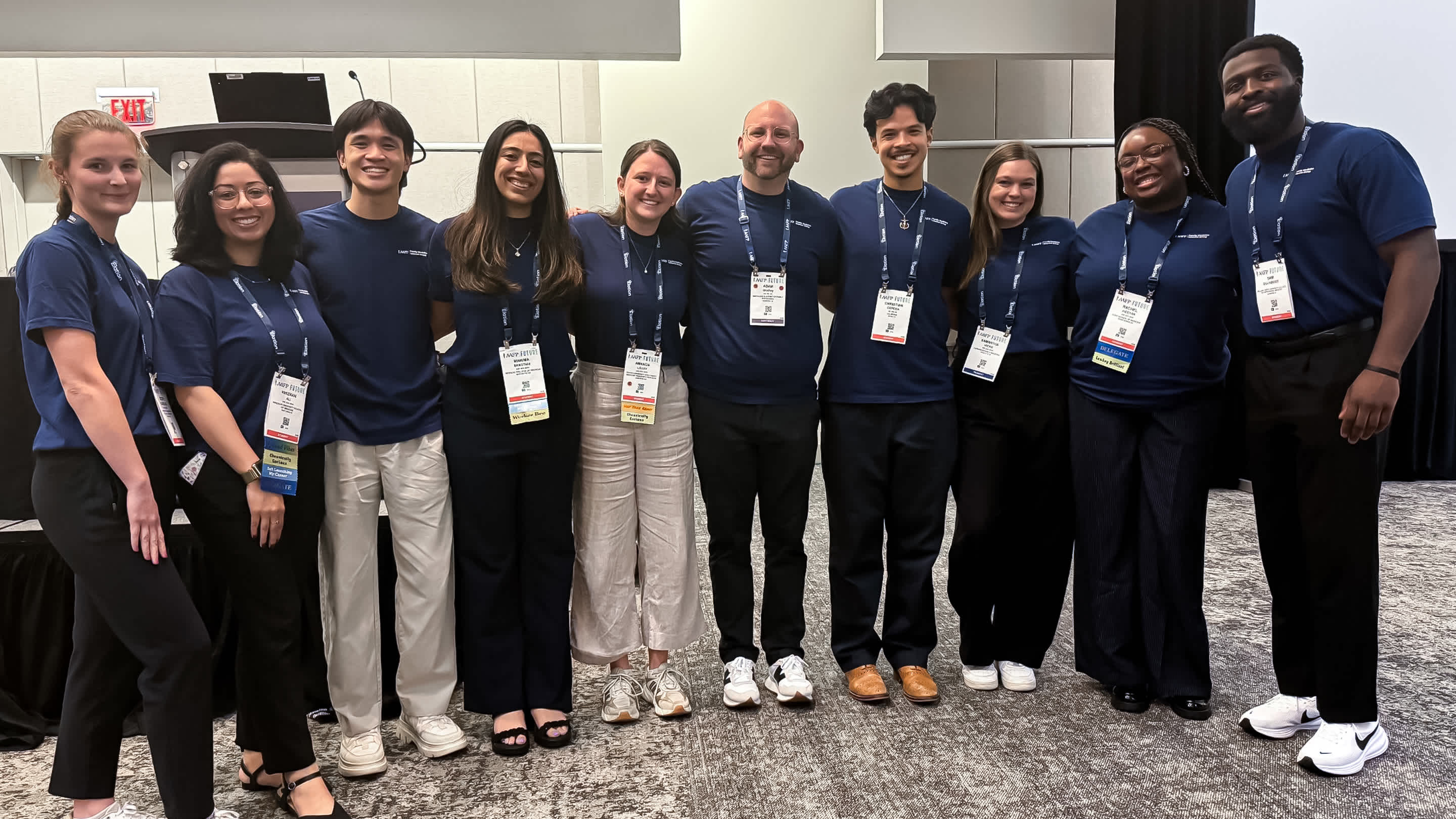
Here I am at FUTURE with the AAFP’s National FMIG Network Leaders and AAFP staffer Adam Bradley. As the AAFP student liaison to the Latino Medical Student Association, I had the opportunity to see how valuable partnerships between the AAFP and national medical student organizations can be.
LMSA and the Student National Medical Association already have student liaisons who help strengthen collaboration with the Academy, but I realized there were no comparable liaison positions for the Association of Native American Medical Students, the First-Generation and/or Low-Income Medical Student Association or the Asian Pacific American Medical Student Association.
Expanding the student liaison program could help the AAFP build stronger relationships with these organizations and reach even more students interested in family medicine. That idea became the basis of my resolution.
During the next few months, I researched previous resolutions, gathered supporting evidence and started writing my draft. By the time I arrived at FUTURE, I had something I was excited to submit.
Thursday: Just a resolution

Before FUTURE, I had never written a resolution, and I will admit that the format intimidated me. Every paragraph starts with either “WHEREAS” or “RESOLVED.” At first glance, it looks more like a legal document than something a medical student would write.
Fortunately, the first Student Congress session on Thursday included a presentation explaining exactly how resolutions work. Once I looked through some examples, I realized they all follow the same structure. Suddenly, the format that had seemed so intimidating became one of the easiest parts.
After the session, everyone gathered at tables outside the Student Congress meeting room to begin writing.
This was one of my favorite parts of the conference.
Every table was filled with students brainstorming ideas, proofreading each other’s work, and debating wording that could make a resolution stronger. Residents walked from table to table answering questions, sharing advice and helping students refine their ideas. It never felt competitive. Everyone genuinely wanted each other’s resolutions to succeed.
Since I had already written a draft before arriving, I spent my time asking the students around me to review my wording and suggest improvements.
One resident also shared advice that I was grateful to hear. Because of the quick turnaround before the reference committee hearings, only the first 21 submitted resolutions would be considered. I made sure to submit mine well before the deadline.
Just like that, my work was officially a resolution.
Friday: Off to committee

If this were Schoolhouse Rock!, this is the part where I would be sent to a congressional committee. On Friday, the reference committee held hearings where students could provide testimony in support of submitted resolutions. After the hearing, the committee would meet and write a report for the congress in which it recommended whether resolutions should be adopted, not adopted or adopted with changes.
I was nervous.
Once the hearing started, though, I realized it was one of the most welcoming parts of the conference. Everyone is there because they want to improve family medicine, and every student has the opportunity to explain why their idea matters.
Giving testimony gave me the opportunity to share references that supported my resolution but were not included in the written submission itself. It was equally rewarding to hear other students testify in support of my resolution and explain why they believed these additional student leadership positions would benefit the AAFP.
Saturday: Back to congress

On Saturday, my resolution returned to Student Congress.
Before FUTURE, I assumed this session would simply be a final vote. Instead, I learned that students could still discuss the reference committee’s recommendations, propose changes and even vote to reject the committee’s recommendations. It reinforced how important it is to stay engaged throughout the entire process.
When my resolution came before the Student Congress, I was excited to hear that the reference committee had recommended that a condensed version of it be adopted, and it was.
Seeing something that had started as a simple idea months earlier make it through every step of the process was incredibly rewarding.
My biggest takeaway
Just like I’m Just a Bill, resolutions do not get anywhere by themselves. They need students who are willing to identify a problem. They need classmates who are willing to proofread a draft. They need residents who are willing to mentor first-time writers. They need students who are willing to stand up and give testimony. Most importantly, they need someone willing to write down an idea and submit it.
Before FUTURE, I thought writing a resolution was something reserved for experienced leaders. Now I know it is something any student can do.
If you attend FUTURE next year and find yourself sitting outside the Student Congress meeting room wondering whether your idea is worth writing down, my advice is simple.
Just like the bill on Capitol Hill, I’d say “Oh, yeah!”
Who knows? Your resolution might be the next one making its own journey through Student Congress.
Christian Cepeda is a third-year student at the University of California Irvine School of Medicine.
Disclaimer
The opinions and views expressed here are those of the authors and do not necessarily represent or reflect the opinions and views of the American Academy of Family Physicians. This blog is not intended to provide medical, financial, or legal advice.